
2026 Best Distributed Seawater Desalination Solutions

Time:2026-10-26 Author:Henry
0%

By 2026, Distributed Seawater Desalination is becoming a practical option for coastal communities, resorts, ports, and remote industries. Instead of relying on one massive facility, these systems place smaller treatment units closer to users. This approach can shorten pipelines, reduce transmission losses, and improve water security during local emergencies. It also creates new design responsibilities.

The strongest solutions combine seawater intake systems, pretreatment, reverse osmosis, energy recovery devices, and carefully monitored brine management. Engineers must evaluate salinity, seasonal temperature, marine conditions, electricity availability, and local demand before selecting equipment. A compact plant may fit beside a harbor, with membrane skids protected inside a corrosion-resistant enclosure. Operators can then inspect pressure readings, filter condition, and product-water quality from a nearby control room.

Small details matter.

This guide examines the best distributed desalination solutions for 2026 through performance, reliability, maintainability, and environmental responsibility. It considers modular expansion, renewable-energy integration, smart monitoring, and lifecycle costs rather than focusing only on initial purchase prices. Experienced operators often report that simple access to filters and pumps prevents longer outages. That lesson is easy to overlook.

No single system suits every coastline. Pretreatment can perform differently after storms, while energy costs may change the preferred operating schedule. Brine discharge also requires site-specific assessment and responsible management. Therefore, the recommendations ahead should support professional feasibility studies, qualified installation, regular testing, and compliance with applicable water-quality and environmental requirements. Practical evidence remains more valuable than impressive specifications alone.
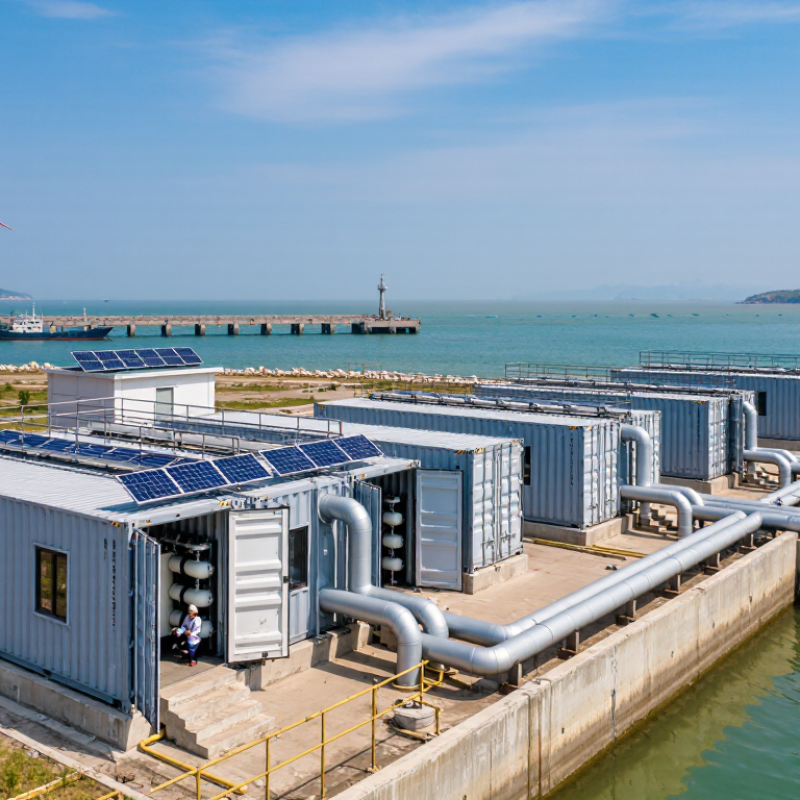
2026 Best Distributed Seawater Desalination Solutions

What Distributed Seawater Desalination Means in 2026

Distributed seawater desalination in 2026 means producing drinking water closer to users, not relying only on massive coastal plants. Small, modular systems can serve islands, remote towns, ports, and emergency facilities. This reduces long pipelines and may improve resilience when storms damage central networks. The UNESCO World Water Development Report 2024 estimates that 2.2 billion people lack safely managed drinking water. That gap makes local production increasingly practical.

Energy remains the difficult part. The World Bank reports that modern seawater reverse osmosis can require roughly 3–4 kWh per cubic metre, depending on intake conditions and recovery systems. Distributed projects should therefore combine efficient pumps, renewable electricity, and battery storage where possible. Brine management also needs local monitoring. A compact plant is not automatically a sustainable plant. That assumption needs challenging.

Tips: Measure real demand before selecting capacity. Leave room for seasonal peaks. Test intake water regularly, especially after heavy rain. Track energy use, membrane pressure, chemical dosing, and brine salinity. Operators should publish these results, even when performance is disappointing. Transparent data builds trust and reveals design problems early. WHO guidance on drinking-water quality should support routine testing and public reporting.

2026 Best Distributed Seawater Desalination Solutions

What Distributed Seawater Desalination Means in 2026

Distributed seawater desalination places modular treatment capacity close to coastal users, reducing dependence on long-distance water transfers. Modern seawater reverse osmosis generally requires less energy than thermal desalination, making it the leading option for decentralized installations when reliable electricity and responsible brine management are available.

Planning benchmark: typical specific energy demand in kWh per cubic metre of produced water. Values are representative midpoints from established desalination engineering ranges; actual performance varies with feedwater salinity, temperature, recovery rate, pretreatment, and energy-recovery equipment.

How Distributed Desalination Systems Work

2026 Best Distributed Seawater Desalination Solutions

Distributed desalination systems produce fresh water close to where it is needed. A seawater intake sends water through screens and pretreatment filters. These stages remove sand, algae, and suspended particles before reverse osmosis begins. High-pressure pumps push filtered water through membranes. The membranes separate dissolved salts from water. Energy recovery devices can reduce electricity demand, although performance changes with salinity and temperature.

Each local unit usually includes sensors, storage tanks, post-treatment, and automatic controls. Operators monitor pressure, conductivity, flow, and membrane fouling. Treated water may receive minerals for safer distribution and better taste. Brine must also be managed carefully through an approved discharge design. Poor dilution can harm nearby marine habitats. Small systems are easier to expand, but they may require more maintenance points, spare parts, and trained technicians. That trade-off is sometimes underestimated.

Tips: Keep intake pipes away from muddy seabeds and heavy boat traffic. Clean pretreatment filters before pressure rises sharply. Test water quality after membrane treatment, not only at the outlet tank. Use backup power for essential controls and alarms. Do not treat remote monitoring as a replacement for site inspections. A sensor can drift. A blocked pipe can look normal for hours. Good designs leave room for human judgment, even when automation seems reliable.

Key Technologies for Small-Scale Seawater Treatment

2026 Best Distributed Seawater Desalination Solutions

Small-scale seawater treatment is moving from emergency equipment to permanent local infrastructure. UNESCO’s United Nations World Water Development Report 2024 states that 2.2 billion people lacked safely managed drinking water in 2022. That gap makes compact, maintainable systems valuable for islands, ports, and remote communities.

Seawater reverse osmosis remains the leading technology. The World Bank’s 2019 assessment places modern seawater RO energy use at roughly 2.5–4.0 kWh per cubic metre, before distribution. High-pressure pumps, energy-recovery devices, and variable-speed drives influence practical efficiency.

Pretreatment is equally important. Disc filters, ultrafiltration, and controlled dechlorination reduce fouling, but they add cost and operating skill. Small systems need sensors for pressure, conductivity, turbidity, and temperature. Simple alarms matter.

Renewable coupling can reduce diesel dependence. Solar photovoltaic power with batteries suits daytime production, while storage can support evening demand. Brine management needs site-specific permits and monitoring; dilution is not automatically safe. International Desalination Association market data show desalination capacity continues expanding globally, yet capacity figures can hide downtime and inconsistent water quality.

A containerized plant may look elegant. It may still fail when membranes clog, spare parts arrive late, or operators lack training. Designing for local repair, modular replacement, and transparent water testing is less glamorous, but more reliable. Small does not mean simple.

How to Compare Energy Use, Capacity, and Water Quality

Comparing distributed seawater desalination solutions requires more than reading a single energy figure. Check specific energy consumption in kilowatt-hours per cubic meter. Also examine whether the figure includes intake pumping, pretreatment, and post-treatment. A system may appear efficient at steady flow but consume more during startup or low-demand periods. Measure real operating data, not only laboratory results.

Capacity should match local demand patterns. A compact unit serving a coastal clinic may need 20 cubic meters daily, while a small town may require several hundred. Compare average output, peak output, recovery rate, and expansion options.

Modular systems can grow gradually, but their controls and maintenance needs may become complicated. That trade-off is easy to underestimate.

Water quality deserves equal attention. Test salinity, boron, turbidity, microorganisms, and treatment chemicals in the source water. Then verify permeate quality after remineralization and disinfection. Taste can change when minerals are removed too aggressively. Field engineers should review sensor calibration, membrane replacement intervals, cleaning frequency, and operator training. Keep records.

No comparison is perfect. Seasonal seawater changes can expose weaknesses hidden during a short pilot. I would question any proposal using only nominal capacity and best-case energy use. A useful evaluation combines monitored performance, independent laboratory testing, lifecycle costs, and local operating experience. The cheapest unit on paper may demand the most attention at the shoreline.

Best Applications and Selection Criteria for 2026

2026 Best Distributed Seawater Desalination Solutions

Distributed seawater desalination suits islands, coastal villages, ports, and emergency water hubs. It reduces dependence on long pipelines and central treatment plants. The UN World Water Development Report 2024 states that 2.2 billion people lacked safely managed drinking water in 2022. Local treatment can respond faster where freshwater networks remain weak.

Application determines the technology. Small resorts may need compact reverse osmosis units with battery storage. Fishing communities may prefer modular systems with simple pretreatment and local operators.

The International Energy Agency reports that seawater reverse osmosis commonly requires about 3–4 kWh per cubic metre. Solar and wind integration can reduce operating emissions, but storage and maintenance still need careful planning. Power quality matters.

Selection should compare feedwater salinity, intake conditions, recovery rate, energy use, and brine management.

The World Bank’s water project guidance emphasizes lifecycle cost, not purchase price alone. A low-cost unit may create expensive membrane replacement problems later. Screen fouling is often underestimated. Harbors carry oils, algae, and suspended solids.

No selection matrix is perfect. Field data can be incomplete. Pilot testing for several months is safer than trusting a brochure. Operators should also verify spare-part access, remote monitoring, worker training, and discharge permits before procurement.

FAQS

What is a distributed seawater desalination system?

It produces fresh water near the communities or facilities that need it. Seawater passes through screens, filters, membranes, and post-treatment stages.

How does reverse osmosis remove salt from seawater?

High-pressure pumps push filtered seawater through special membranes. The membranes allow water through while rejecting dissolved salts and other impurities.

What pretreatment does seawater usually need?

Screens and filters remove sand, algae, mud, and suspended particles. Cleaner feed water helps protect membranes from rapid fouling.

How much water can a local unit produce?

Capacity depends on local demand and system design. A small clinic might need 20 cubic meters daily, while a town may need several hundred.

How should energy use be compared?

Check energy consumption in kilowatt-hours per cubic meter. Confirm whether intake pumping, pretreatment, and post-treatment are included.A single figure can mislead.

How can operators protect water quality?

Test salinity, boron, turbidity, microorganisms, and treatment chemicals. Check treated water after remineralization and disinfection, not only inside storage tanks.

What maintenance does a distributed system require?

Operators should monitor pressure, conductivity, flow, and membrane fouling. Filters need cleaning before pressure rises sharply.A sensor can drift.

How should brine and marine impacts be managed?

Brine needs an approved discharge design with adequate dilution. Poor dilution can damage nearby marine habitats and should not be underestimated.

Are automatic controls enough for reliable operation?

No. Remote monitoring supports inspections but cannot replace them. A blocked intake pipe may appear normal for hours, so human judgment still matters.

What are the main trade-offs of modular desalination units?

Modular units can expand gradually and serve changing demand. However, they add maintenance points, spare-part needs, and training requirements.The trade-off is easy to miss.

Conclusion

Distributed Seawater Desalination in 2026 refers to compact, modular systems that produce freshwater close to where it is needed, rather than relying only on large centralized plants. These systems typically use seawater intake, pretreatment, membrane filtration, energy recovery, and post-treatment to provide reliable water for coastal communities, remote facilities, islands, emergency services, and industrial sites. Their decentralized design can reduce transmission losses, simplify expansion, and improve resilience during supply disruptions.

The most effective small-scale solutions combine efficient reverse osmosis, intelligent monitoring, renewable or hybrid power, and durable components suited to marine conditions. When comparing options, decision-makers should evaluate energy consumption, daily capacity, feedwater quality, recovery rate, operating costs, maintenance needs, and the consistency of finished water. Selection should also consider local infrastructure, environmental requirements, workforce availability, and future demand. In 2026, the best Distributed Seawater Desalination systems will balance water quality, energy efficiency, affordability, scalability, and dependable long-term operation.

Henry

Henry

Henry is a dedicated marketing professional with a profound expertise in the company's offerings. With years of experience in the industry, he possesses an impressive understanding of the market dynamics and consumer behaviors that drive success. Henry is committed to sharing his insights through......