
China Top 10 Decentralized Seawater Desalination Suppliers
China’s expanding water-treatment sector is reshaping the market for Decentralized Seawater Desalination. Small coastal communities, islands, resorts, and industrial parks increasingly need reliable water without depending on distant municipal networks. This shift has created demand for compact reverse-osmosis systems, containerized plants, solar-assisted units, and smart monitoring platforms.
Professor Menachem Elimelech, a leading desalination researcher, captures the challenge clearly: “Desalination is not a silver bullet.” His warning matters. Energy use, brine management, membrane replacement, and maintenance still determine whether a project succeeds. A small plant may look efficient on paper, yet poor pretreatment can quickly damage membranes in warm, algae-rich seawater.
This overview examines China’s top 10 Decentralized Seawater Desalination suppliers through practical and technical criteria. These include system capacity, energy consumption, membrane technology, automation, corrosion protection, after-sales support, and experience in coastal installations. Supplier transparency also matters. Published specifications should be checked against operating conditions, not accepted blindly.
Field experience often reveals details that brochures omit. How easily can operators clean the intake screen? Can technicians replace a pump locally? Does the control system remain stable during unstable grid supply? These questions are not glamorous. They are decisive.
The selected companies represent different strengths, including engineering integration, modular manufacturing, renewable-energy compatibility, and industrial water expertise. However, no supplier is ideal for every location. Site salinity, seasonal demand, shipping access, and local regulations can change the final choice. This ranking should guide further evaluation, not replace pilot testing, independent verification, and careful lifecycle-cost analysis.
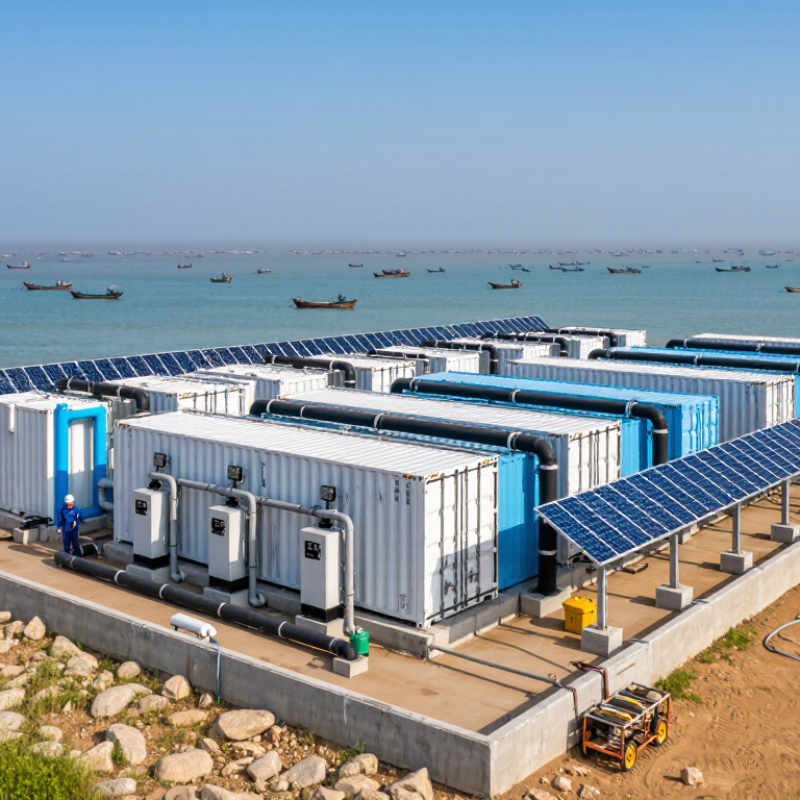
What Decentralized Seawater Desalination Means and Why It Matters
China Top 10 Decentralized Seawater Desalination Suppliers
What Decentralized Seawater Desalination Means and Why It Matters
Decentralized seawater desalination produces fresh water near the people who use it. Small coastal facilities can serve islands, resorts, ports, and remote communities. Water travels a shorter distance through fewer pipelines. That can reduce leakage, construction costs, and dependence on one large plant.
A typical system draws seawater through screened intake pipes. Pretreatment removes sand, algae, and suspended particles. Reverse osmosis membranes then separate dissolved salts under high pressure. Energy use remains a serious concern. Solar power, battery storage, and energy recovery devices may improve operating efficiency, but results depend on local conditions.
For a reliable supplier, equipment capacity is only one consideration. Buyers should examine membrane performance, corrosion protection, remote monitoring, maintenance access, and brine discharge planning. A responsible supplier should provide testing records, operating data, and clear replacement schedules. It should also explain how the system handles storms, biofouling, and seasonal changes.
Small systems are not automatically better. They may require more frequent servicing and skilled operators. Some coastal villages lack stable electricity or technical staff. That weakness is easy to overlook. Site surveys, pilot testing, and transparent life-cycle costs can expose problems before installation. In China’s growing desalination market, the strongest suppliers are those that match system design with local water demand, environmental limits, and real operating experience.
| Rank | Supplier Profile | Typical Deployment | Common Technology | Typical Capacity | Specific Energy Consumption | Typical Recovery Rate | Feedwater Salinity | Key Decentralized Value |
|---|---|---|---|---|---|---|---|---|
| 1 | Modular Coastal RO Integrator | Island communities, fishing ports, and small coastal towns | Seawater reverse osmosis with pretreatment and energy-recovery equipment | 500–5,000 m³/day | 3.0–4.5 kWh/m³ | 35%–45% | 30–45 g/L TDS | Factory-assembled modules shorten installation time and reduce civil-work requirements. |
| 2 | Containerized Emergency-Water Supplier | Disaster relief, temporary camps, and emergency municipal supply | Containerized seawater RO with automatic chemical dosing and remote monitoring | 100–1,000 m³/day | 3.5–5.0 kWh/m³ | 30%–40% | 30–42 g/L TDS | Rapid transport, plug-and-play connections, and limited site preparation support fast deployment. |
| 3 | Renewable-Powered Desalination Specialist | Remote islands, off-grid facilities, and coastal renewable-energy projects | RO powered by solar photovoltaic systems, batteries, or hybrid microgrids | 50–2,000 m³/day | 3.5–6.0 kWh/m³ | 30%–45% | 30–45 g/L TDS | Integrates water production with variable renewable power where grid access is limited. |
| 4 | Industrial Utility-Water Supplier | Coastal factories, industrial parks, and utility corridors | Multi-stage RO with multimedia filtration, cartridge filtration, and post-treatment | 1,000–10,000 m³/day | 3.0–4.5 kWh/m³ | 35%–50% | 30–45 g/L TDS | Provides stable process or utility water without relying entirely on centralized municipal networks. |
| 5 | Small Municipal Water-System Supplier | County-level cities, coastal villages, and satellite settlements | Skid-mounted seawater RO with conventional pretreatment and disinfection | 2,000–20,000 m³/day | 3.2–4.8 kWh/m³ | 35%–45% | 30–42 g/L TDS | Supports distributed water security and reduces the need for long-distance freshwater pipelines. |
| 6 | Low-Maintenance Island-System Supplier | Tourism islands, offshore settlements, and small resort communities | Compact RO with automated cleaning, corrosion-resistant components, and remote alarms | 200–3,000 m³/day | 3.5–5.0 kWh/m³ | 30%–45% | 30–45 g/L TDS | Emphasizes simple operation, remote diagnostics, and reduced dependence on specialist personnel. |
| 7 | High-Turbidity Pretreatment Specialist | Estuaries, nearshore industrial zones, and waters affected by seasonal sediment | Coagulation, dissolved-air flotation or ultrafiltration, followed by seawater RO | 500–8,000 m³/day | 3.5–5.5 kWh/m³ | 30%–45% | 25–45 g/L TDS | Improves membrane protection and operational stability when seawater quality changes rapidly. |
| 8 | Shipyard and Offshore-Facility Supplier | Shipyards, offshore platforms, marine construction bases, and port facilities | Marine-grade modular RO with compact pretreatment and corrosion-resistant piping | 100–2,500 m³/day | 3.5–5.5 kWh/m³ | 30%–40% | 30–45 g/L TDS | Designed for constrained footprints, mobile operation, and demanding marine environments. |
| 9 | Brackish-and-Seawater Hybrid Supplier | Coastal industrial parks and areas with mixed saline-water sources | Configurable RO trains for brackish water and seawater with variable-pressure operation | 500–6,000 m³/day | 1.5–4.5 kWh/m³ | 40%–75% | 5–45 g/L TDS | Allows one decentralized platform to operate across changing source-water conditions. |
| 10 | Smart Remote-Operation Supplier | Unstaffed water stations, remote villages, and distributed coastal assets | Automated RO with supervisory control, sensor-based optimization, and cloud monitoring | 100–5,000 m³/day | 3.0–5.0 kWh/m³ | 30%–45% | 30–45 g/L TDS | Uses digital monitoring to reduce site visits, detect faults early, and improve operational continuity. |
FAQS
It produces fresh water near coastal users. Small facilities can serve islands, ports, resorts, and remote communities. Shorter pipelines may reduce leakage and construction costs. But smaller does not always mean better.
Screened intake pipes remove shells, seaweed, and large particles. Pretreatment reduces sand, oils, algae, and microorganisms. High-pressure pumps push water through reverse osmosis membranes. The membranes retain most salts and dissolved impurities.
Energy demand depends on salinity, temperature, equipment condition, and daily output. Energy recovery devices can reuse pressure from concentrated brine. Solar power and batteries may reduce conventional electricity use. Cloudy weather can expose weaknesses.
Review daily capacity, salt rejection, energy consumption, and maintenance intervals. Ask for testing records and operating references. Inspect corrosion protection and replacement schedules. Attractive brochures are not enough.
Pretreatment protects membranes from silt, algae, oils, and suspended particles. Poor filtration can shorten membrane life quickly. Operators may need frequent cleaning during algae growth. This detail is easy to underestimate.
Operators should inspect filters, clean membranes, and test product water regularly. Spare pumps, cartridges, and sensors can reduce downtime. Trained local technicians remain important. Automation cannot fix every problem.
Engineers should assess discharge locations, currents, depth, and nearby marine habitats. The plan must follow applicable environmental requirements. A suitable method varies by site. One standard design may fail elsewhere.
Storage tanks can provide short-term water during maintenance or power interruptions. Remote monitoring can track pressure, conductivity, flow, and membrane condition. However, one pump failure may affect the whole community. Simple alarms and local training often matter more than advanced controls.
Conclusion
Decentralized Seawater Desalination is an increasingly practical approach for supplying fresh water to coastal communities, islands, industrial parks, ports, and remote facilities. Unlike large centralized plants, decentralized systems are built closer to the point of use, reducing water transportation requirements, improving supply flexibility, and allowing projects to expand in stages. This article explains how these systems collect and pretreat seawater, use membrane-based desalination and energy recovery, manage brine, and monitor water quality through automated controls.
It also presents a structured overview of China’s top 10 decentralized seawater desalination suppliers, focusing on their technical capabilities, system integration experience, equipment adaptability, service coverage, and project reliability rather than brand promotion. Readers will learn how to compare suppliers according to capacity, energy efficiency, feedwater conditions, installation environment, maintenance needs, budget, and long-term operating goals. The article provides practical guidance for selecting a suitable solution for different decentralized water supply requirements.
