
Solar Powered Seawater Desalination is moving from research trials toward practical water supply. The strongest systems combine photovoltaic power with reverse osmosis, then manage storage, pretreatment, and brine responsibly. Some use solar thermal energy instead. Each design faces a real test: Can it deliver safe, steady water when clouds pass and demand rises?
The economics are changing. IRENA’s Renewable Power Generation Costs in 2023 reported a global weighted-average cost of electricity of USD 0.044 per kilowatt-hour for newly commissioned utility-scale solar PV. That figure is a useful benchmark, not a promise of cheap desalinated water. Pumps, membranes, batteries, maintenance, and water transport also shape costs. MIT desalination researcher John H. Lienhard’s work underscores a practical point: evaluate energy demand alongside water production. This is a paraphrase, not a direct quotation.
Look closely at the hardware. A well-designed plant needs dependable intake screening, pressure control, and clear plans for membrane cleaning. It also needs an honest answer about cloudy days. No system is effortless. The comparison that follows considers output, energy use, reliability, and operating needs—not just panel capacity. A bright site helps. It does not solve everything.
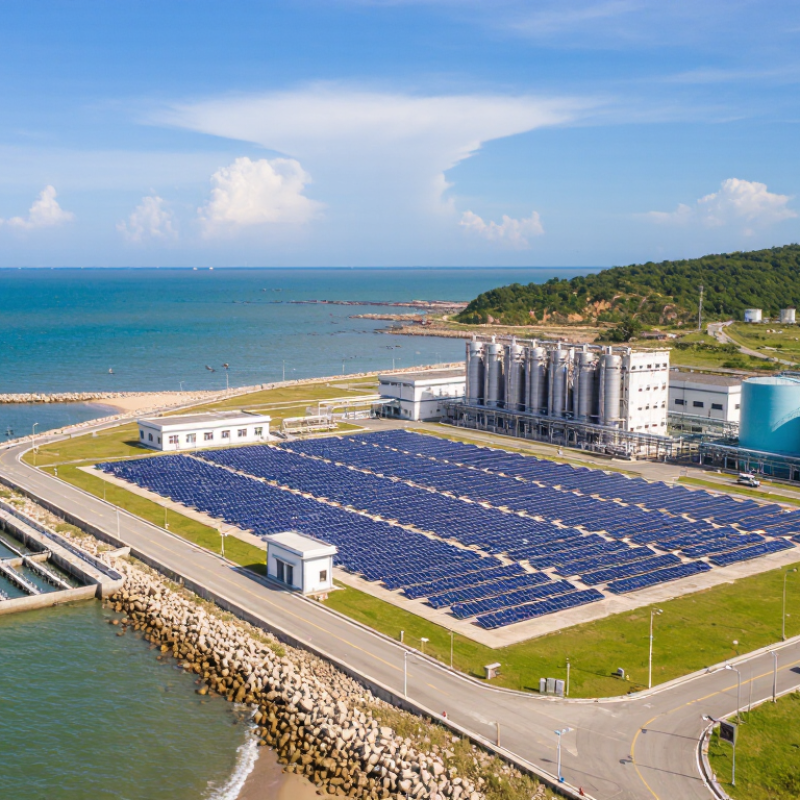
Solar-powered seawater desalination usually relies on photovoltaics driving reverse osmosis, or on heat for evaporation-based methods. In RO, a pump pushes seawater through a membrane, leaving most dissolved salts behind. Solar stills use sunlight to evaporate water beneath a clear cover; the droplets condense and collect in a channel. Simple, but slow. Membrane distillation uses heat and a hydrophobic membrane, and can make use of low-grade solar heat.
The often-cited 0.78 kWh/m³ figure is a thermodynamic lower-bound estimate for separating fresh water from seawater under specified conditions. It is not a realistic electricity target for a complete RO plant. Pumps, pretreatment, pressure losses, and water recovery all add energy demand. Practical systems consume more, and the exact amount depends on feed salinity and operating conditions. That distinction is easy to blur.
A field check should include the full system boundary: energy supply, intake screening, filters, pumps, controls, and brine handling. For example, a cloudy afternoon can reduce PV output just as a clogged prefilter raises pressure demand. Batteries or water storage can smooth the mismatch, but both add cost and maintenance. The 0.78 figure is useful as a benchmark, not a promise. Salt scaling and membrane fouling remain stubborn details, even in a well-designed setup.
Photovoltaic reverse osmosis (PV-RO) uses solar electricity to push seawater through membranes that separate much of its dissolved salt. For typical seawater, the desalination process may use about 3–4 kilowatt-hours per cubic metre of product water. That is roughly the energy needed to run a small appliance for several hours, though the comparison depends on the appliance.
That figure is useful, but easy to misuse. It may describe the reverse-osmosis process alone, not the full system, including seawater intake, pretreatment, controls, and water delivery. Actual consumption varies with salinity, water temperature, membrane condition, and the pressure required. A coastal site with warmer, saltier water may not match a published estimate.
Solar output also changes through the day. Without batteries or another power source, a PV-RO system may produce more water at midday and less under cloud or near dusk. That uneven rhythm matters. A storage tank can keep taps flowing when sunlight fades, while steady operation may help avoid frequent starts and stops. In field use, operators should measure both electricity and water output over changing weather; one tidy number cannot describe every site. And measurements can be imperfect.
Solar-thermal desalination uses collected heat, not photovoltaic electricity, to separate fresh water from seawater. In a multi-effect distillation system, seawater evaporates in one chamber, and its vapor heats the next chamber at a lower pressure. Each effect reuses some heat. A clear pipe run and steady vacuum matter as much as the collector field. Small leaks can reduce output.
Multi-stage flash systems heat brine, then move it through chambers at progressively lower pressures. A portion flashes into vapor at each pressure drop. The vapor condenses on tubes carrying incoming seawater, recovering some heat. MSF can handle large flows, but it needs substantial thermal input and careful control of scaling and corrosion. Heat is not free.
A practical design matches collector output to the plant’s temperature needs and daily operating pattern. Thermal storage can carry heat into cloudy periods, though storage adds cost and losses. Feedwater filtration and routine cleaning protect heat-transfer surfaces; neglected deposits can quietly cut performance. MED often suits lower-temperature heat, while MSF favors robust, high-capacity operation. These are tendencies, not rules. A tidy design drawing may still miss seasonal sunlight, local water chemistry, or the hours operators can realistically maintain the system.
Indicative design ranges for thermal desalination systems. Actual performance depends on feed-water salinity, plant design, ambient conditions, operating strategy, and the solar-heat system.
| System design | Thermal operating range | Indicative energy demand | Typical GOR | Solar-thermal integration | Design considerations |
|---|---|---|---|---|---|
| Solar-assisted MED | Typically about 60–75°C at the top brine temperature. | Approximately 40–70 kWhth/m³ of product water, plus roughly 1.5–2.5 kWhe/m³ for electricity. | About 8–15. | Can use low- to medium-temperature heat from flat-plate, evacuated-tube, or concentrating solar collectors, subject to the required heat-transfer temperature. | Multiple effects reuse vapor heat. Lower operating temperatures can reduce scaling risk, but pretreatment and careful brine chemistry remain important. |
| Solar-assisted MSF | Typically about 90–110°C at the top brine temperature. | Approximately 70–120 kWhth/m³ of product water, plus roughly 3–5 kWhe/m³ for electricity. | About 6–10. | Generally requires higher-temperature solar heat; concentrating collectors or another suitable high-temperature heat source may be needed. | Seawater flashes into vapor across successive pressure stages. High-temperature operation increases the need to manage scaling, corrosion, and heat losses. |
| MED with thermal storage | Usually designed around a MED top brine temperature of about 60–75°C. | The MED process demand is broadly similar to solar-assisted MED; storage adds equipment and thermal losses. | About 8–15, depending on the number of effects and operating conditions. | A hot-water or other thermal store can shift collected solar heat to cloudy periods or later operating hours. | Storage can smooth heat supply, but its capacity, insulation, charging temperature, and backup-heat strategy affect cost and reliability. |
| MSF with thermal storage | Usually designed around an MSF top brine temperature of about 90–110°C. | The MSF process demand is broadly similar to solar-assisted MSF; storage adds equipment and thermal losses. | About 6–10, depending on stage count and operating conditions. | Thermal storage can provide heat after solar input falls, while a control system maintains the required feed-heating and brine-temperature profile. | Higher temperature requirements can increase collector and storage complexity. Stable operation also depends on heat recovery and scale control. |
Notes: GOR (gained output ratio) is the mass of distillate produced per mass of heating steam or equivalent heat input, as defined for the particular plant. Energy figures are indicative ranges, not guaranteed performance values; thermal and electrical energy are listed separately.
Hybrid PV-thermal systems can produce electricity and useful heat from the same solar field. Photovoltaic output can power pumps and reverse-osmosis units, while collected heat can prewarm feedwater or serve thermal processes such as membrane distillation. The match depends on the desalination method; heat is not automatically valuable to every plant.
Timing matters. Solar output peaks at midday, but household demand often rises later. A modest insulated hot-water tank can shift thermal energy into evening operation, while batteries may support pumps and controls. The IEA has estimated that desalination accounted for about 0.4% of global electricity use in 2016, underscoring the value of reducing grid demand. Still, storage adds cost and maintenance, and cloudy weather can expose weak system sizing.
IRENA’s Renewable Power Generation Costs in 2023 reported a global average utility-scale solar PV cost of 4.4 US cents per kilowatt-hour. That figure is not a PV-thermal price, but it shows why solar electricity can be attractive for water treatment. Designers should compare hourly water demand with local sunlight, feedwater salinity, and thermal needs—not just annual energy totals. A small pilot can reveal fouling, heat losses, or awkward operating schedules before full deployment. Some estimates will be imperfect; real demand rarely follows a neat curve.
Illustrative clear-sky profile for a 20 kWp PV-T array; values are representative, not site measurements. The chart compares electrical output with an example steady 8 kW desalination load. Batteries, flexible operation, or water storage can help bridge periods when solar supply is below demand. PV-T heat may support thermal desalination processes but is not included in the electrical output shown.
A solar-powered seawater desalination system should be judged by usable water delivered, not its advertised peak capacity. Ask how many liters it produces on an ordinary sunny day, and how output changes under cloud cover. For example, at a 40 percent recovery rate, 1,000 liters of seawater yields about 400 liters of freshwater; the rest becomes concentrated brine. Actual recovery depends on salinity, pressure, pretreatment, and equipment design. Numbers need context. A small coastal clinic may value steady daily supply more than a high noon-time production figure.
Storage changes the comparison. A tank holding treated water can cover evening demand without adding battery costs, while batteries can keep pumps running after sunset. These options solve different problems. Check tank capacity, expected daily use, and how many cloudy days the system can bridge. Water quality also needs routine testing, especially where membranes or filters require regular maintenance. That matters.
Cost estimates should include more than panels and the desalination unit. Pumps, pretreatment filters, storage, replacement membranes, installation, and skilled servicing affect the lifetime cost per liter. Ask for assumptions behind any quoted figure, including local labor and energy storage. A low purchase price can be misleading. Even careful comparisons have gaps: actual sunshine, seawater quality, and maintenance habits vary from site to site, so pilot measurements may reveal issues that a product sheet misses.
Solar panels can power pumps that push seawater through a membrane. Most dissolved salts remain behind.
No. It is a theoretical lower-bound estimate under specified conditions, not a full plant’s electricity requirement. Pumps, filters, pressure losses, and brine handling add energy use.
Include solar supply, intake screens, filters, pumps, controls, and brine handling. A clogged prefilter can raise pressure demand. Small details matter.
Sunlight evaporates water beneath a clear cover. Droplets condense and run into a collection channel. Output is simple, but slow.
MED reuses vapor heat across chambers operating at lower pressures. MSF moves heated brine through pressure stages, where some water flashes into vapor. Heat is not free.
Hybrid systems can power pumps with photovoltaic electricity and collect heat for feedwater prewarming or thermal processes. Heat is not automatically useful to every plant.
Solar output often peaks at midday, while water demand may rise later. Batteries can support pumps and controls; insulated tanks can shift heat. Both add cost and maintenance.
A small pilot can reveal membrane fouling, heat losses, and awkward operating schedules. Compare hourly water demand with local sunlight and feedwater salinity. Estimates will still be imperfect.
Solar Powered Seawater Desalination combines solar energy with processes that separate salts from seawater. Reverse osmosis (RO) uses pressurized membranes; about 0.78 kWh per cubic meter represents a theoretical energy limit, while practical photovoltaic-powered RO systems typically use around 3–4 kWh per cubic meter. Solar-thermal systems instead provide heat for multi-effect distillation (MED) or multi-stage flash (MSF), making them suitable where a steady thermal supply can be maintained.
Hybrid PV-thermal designs can balance electricity and heat production with changing sunlight and water demand. Comparing options requires looking beyond energy use: plant capacity, recovery rate, storage needs, operating conditions, and overall cost all affect performance. The best system depends on local solar resources, the required volume and reliability of water, and whether energy storage or backup supply is available.
