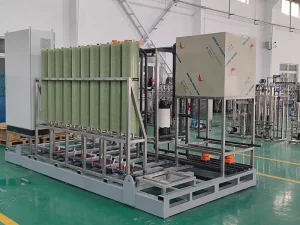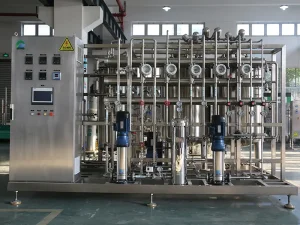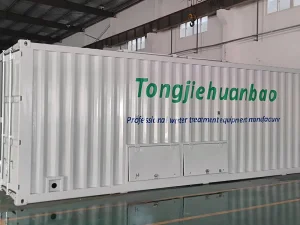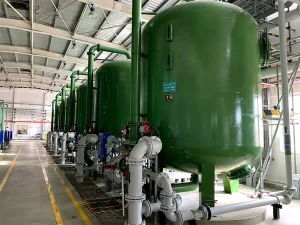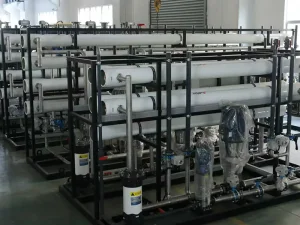
Featured Desalination & Pure Water Platforms
Engineered for high-salinity marine intake, off-grid water stabilization, and severe-fouling industrial water recycling.
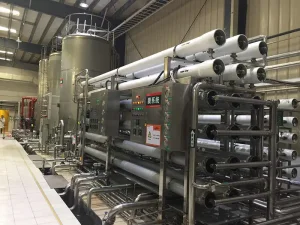
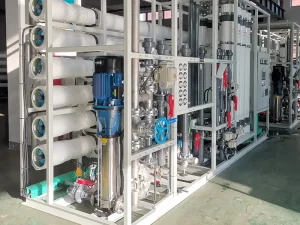
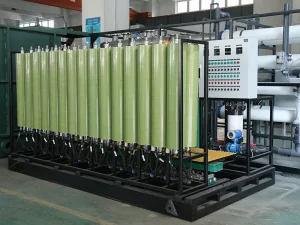
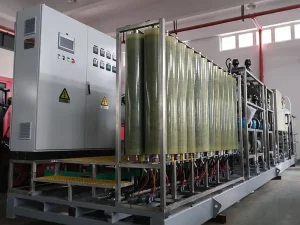
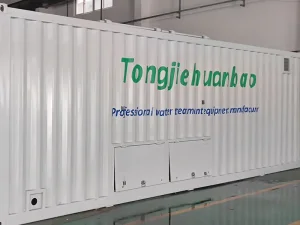
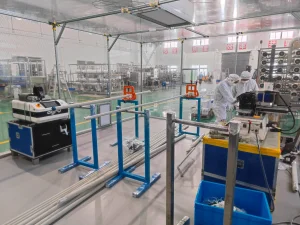
Global Desalination Procurement: Macro Market Realities
Industrial expansion, acute climate variability, and environmental mandates require enterprise-scale membrane solutions that balance high osmotic pressures with low Lifecycle Operating Expenditures (OPEX).
Specific Energy Optimization (SEC)
The foremost hurdle in contemporary Seawater Reverse Osmosis (SWRO) procurement is minimizing specific energy consumption (kWh/m³). Industrial operators demand integration with high-efficiency isobaric Energy Recovery Devices (ERDs) to recapture up to 96-98% of hydraulic brine energy, decreasing plant baseline draw down below 3.0 kWh/m³ in standard marine conditions.
Metallurgical & Chloride Resilience
Coastal and offshore environments demand strict adherence to high-grade metallurgy. Process skids operating in seawater environments must deploy Super Duplex Stainless Steels (2507 / UNS S32750) and titanium Grade 2 on the high-pressure side (up to 83 bar) to prevent pitting, crevice corrosion, and catastrophic chloride stress cracking under elevated operating temperatures.
Fast Modular Commissioning
Global projects—such as emergency municipal backup, coastal mining infrastructure, and island utilities—no longer accept long civil construction schedules. Factory-assembled, containerized SWRO packages pre-commissioned under Factory Acceptance Testing (FAT) shorten deployment windows from years to weeks, securing immediate off-grid water independence.
17+
Years Engineering Pedigree
38+
Invention & Utility Patents
≤ 2.8
kWh/m³ Modern SWRO SEC Range
100%
CE Machinery & PED Compliant
Engineering Deep-Dive: Membrane Desalination Architecture
A reliable desalination facility depends on a coordinated process train that limits membrane fouling, controls silt density indices, and manages hydraulic recovery.
1. Intake & Pretreatment Protection
Raw seawater contains suspended solids, biological contaminants, and red tide alga. Tongjie engineers multi-media filtration (sand, anthracite) combined with automatic backwash micro-strainers and pressurized Ultrafiltration (UF) hollow-fiber membranes. This locks the Silt Density Index (SDI15) consistently below 3.0, protecting the downstream spiral-wound RO elements from irreversible mechanical fouling.
2. High-Pressure Pumping & Isobaric ERD
Overcoming osmotic pressures of 35,000–45,000 mg/L TDS seawater demands 55 to 70 bar of continuous operating pressure. Tongjie couples high-pressure positive displacement or multi-stage centrifugal pumps with state-of-the-art Isobaric Ceramic Pressure Exchangers. Concentrated brine transfers its kinetic and hydraulic pressure directly to incoming feed water at efficiencies exceeding 97%.
3. SWRO Separation & Boron Removal
Using premium polyamide thin-film composite membranes with salt rejection ratings ≥ 99.8%, our multi-stage designs control monovalent ions along with critical trace contaminants like Boron (B). Single-pass or two-pass configurations satisfy both World Health Organization (WHO) drinking standards (< 0.5 mg/L B) and high-purity boiler-feed specifications.
4. Remineralization & PLC Stabilization
Desalinated permeate is naturally corrosive (low Langelier Saturation Index) and requires stabilization before municipal distribution or industrial use. Tongjie includes limestone calcite dissolution filters, carbon dioxide dosing, sodium hypochlorite or UV disinfection, and Siemens or Allen-Bradley SCADA automation for remote conductivity and flow telemetry.
| Process Stage | Primary Technology Implemented | Feed Parameters | Output Target Spec | Key Operational Benefit |
|---|---|---|---|---|
| Raw Seawater Intake | Subsurface Beach Wells or Open Intake + Coarse Screening | TDS: 32,000 – 45,000 mg/L | TSS < 50 mg/L | Bio-fouling and marine macro-organism exclusion |
| Fine Pretreatment | Dual Media Filtration + Ultrafiltration (UF) Skids | Turbidity 5 – 25 NTU | SDI15 < 2.5, Turbidity < 0.1 NTU | Protects RO guarantee terms and flux rates |
| High-Pressure Core | Polyamide SWRO Membranes + Isobaric ERD (Pressure Exchanger) | Operating Pressure: 55 – 82 bar | TDS < 350 mg/L, Boron < 0.5 mg/L | Consistently lowers energy consumption to 2.8 kWh/m³ |
| Zero Liquid Discharge / DTRO | Disc Tube Reverse Osmosis (DTRO) & MVR Evaporators | Brine TDS: 65,000 – 120,000 mg/L | Dry Salt Cake + Reclaimed Permeate | Total elimination of liquid waste for zero environmental discharge |
CE Mark Conformity & Engineering Compliance
Exporting high-pressure water treatment systems across the European Union and global regulated markets requires verified safety, electrical compatibility, and pressure equipment compliance.
Pressure Equipment Directive (PED 2014/68/EU)
Desalination units operate at pressures up to 83 bar (1,200 psi). Tongjie manufactures membrane pressure vessels, high-pressure piping manifolds, and safety relief mechanisms in full alignment with PED Module H/H1, verifying hydrostatic safety margins, radiographic weld checks, and certified material test reports (EN 10204 3.1).
Machinery Directive (2006/42/EC)
Every skid and containerized desalination system undergoes risk assessment and mechanical isolation validation. Our rotating equipment, including high-pressure booster pumps and chemical dosing systems, incorporates failsafe emergency-stop logic, thermal run-dry sensors, and noise dampening to safeguard plant operators.
Low Voltage (LVD) & EMC Directives
Built with high-tier electrical assemblies compliant with EN 60204-1, Tongjie control panels prevent electromagnetic interference with surrounding telecommunications and plant automation, featuring certified ingress protection ratings up to IP56/NEMA 4X for humid marine environments.
Technology Roadmap: Next-Generation Desalination
Tongjie’s dedicated R&D center focuses on green desalination, AI-optimized predictive recovery, and high-salinity brine management.
Off-Grid Solar & Renewable Hybridization
Tongjie designs modular SWRO units that match the fluctuating outputs of photovoltaic (PV) solar farms and offshore wind generation. Using variable-frequency drives (VFD) and intelligent load ramping, our systems adjust recovery rates based on available renewable power without risking membrane scaling or hydraulic shock.
AI-Driven Membrane Health & Predictive CIP
By applying neural network diagnostics to differential pressures (ΔP), temperature-compensated permeability, and normalized flux, our systems predict membrane fouling trends 14 days in advance. Automated Clean-in-Place (CIP) sequences deploy only when needed, cutting chemical consumption by up to 35%.
Ultra-High Pressure RO for Near-ZLD
To reduce thermal evaporator capital costs, Tongjie utilizes Disc Tube Reverse Osmosis (DTRO) and Special Tube Reverse Osmosis (STRO) operating up to 120–160 bar. This pre-concentrates wastewater brine to over 120,000 mg/L TDS, reducing the energy draw and footprint of final thermal crystallization.
Desalination Process & CE Compliance FAQ
Clear, technical explanations answering common engineering and procurement questions regarding seawater reverse osmosis systems.
What specific directives must be satisfied for a Desalination Plant to carry the CE mark?
A CE-marked desalination system must comply with the Pressure Equipment Directive (PED 2014/68/EU) for vessels, piping, and relief instrumentation operating over 0.5 bar; the Machinery Directive (2006/42/EC) covering rotating equipment and structural integrity; the Low Voltage Directive (LVD 2014/35/EU); and the Electromagnetic Compatibility Directive (EMC 2014/30/EU). Every Tongjie system is delivered with an official EU Declaration of Conformity and comprehensive Technical Construction File (TCF).
What design considerations determine the operational life of SWRO membranes in high-salinity seawater?
SWRO membrane longevity relies on pre-treatment design: maintaining SDI15 below 3.0, eliminating free halogens/chlorine to protect the thin-film polyamide layer from oxidation, and dosing specialized phosphonate antiscalants to prevent calcium sulfate and silica scale formation. In high-salinity conditions (such as the Arabian Gulf, ~45,000 mg/L TDS), flux rates must be kept conservative (12 to 15 LMH) to prevent severe concentration polarization.
How does Tongjie's isobaric energy recovery system lower operational expenditure (OPEX)?
Isobaric Energy Recovery Devices (ERDs) utilize ceramic rotor technology to transfer the high pressure (60–75 bar) of the reject concentrate stream directly to a portion of the incoming feed stream. Operating at up to 97-98% mechanical transfer efficiency, this drops the high-pressure pump sizing by up to 55-60%, reducing total desalination energy draw to 2.8 - 3.2 kWh per cubic meter of finished potable water.
Can containerized SWRO units run directly in extreme desert or maritime environments?
Yes. Tongjie builds plug-and-play containerized water systems housed in ISO-certified 20-foot and 40-foot high-cube containers. Features include polyurethane thermal insulation, heavy-duty industrial HVAC systems rated for ambient temperatures up to 55°C, marine-grade epoxy coatings (C5-M specification), motorized louvers with sand-storm filters, and integrated leakage containment basins.
What baseline data is needed to size and price a custom industrial desalination plant?
We require a comprehensive water analysis (including TDS, temperature range, pH, total suspended solids, silica, calcium, magnesium, barium, strontium, and boron content), target permeate production rate (m³/day or GPD), product water application (potable, pharmaceutical, or boiler-feed), available power specifications, and site boundary footprint constraints.
Engineered Membrane & ZLD Processing Systems
Turnkey skids for industrial purified water, oilfield flowback recovery, and high-pressure membrane concentration.