
Primary Industrial Water Treatment Units & Modular Skids
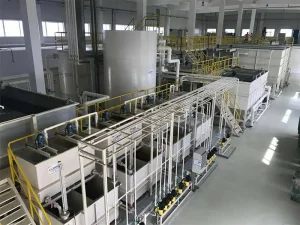
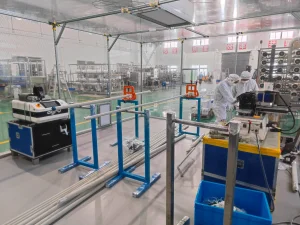
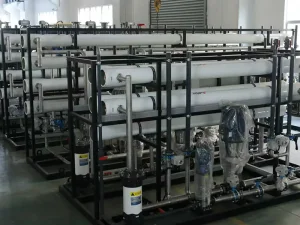
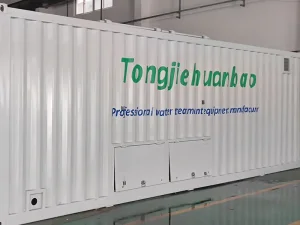
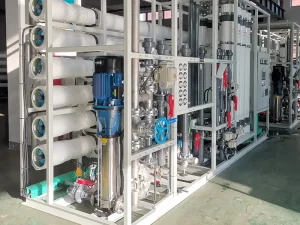
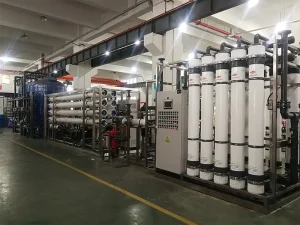
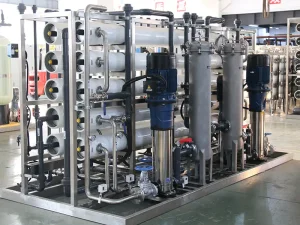
Precision-manufactured in Shanghai under strict factory acceptance testing (FAT), integrating ultrafiltration, disc-tube reverse osmosis (DTRO), continuous electro-deionization (CEDI), and thermal crystallizers.
The Macroeconomic & Regulatory Evolution of Industrial Water Plants
Global industrial water treatment has pivoted from localized effluent neutralization to closed-loop chemical reclamation, high-efficiency desalination, and Zero Liquid Discharge (ZLD) paradigms driven by ESG criteria and stringent water extraction quotas.
Escalating Freshwater Quotas & Scarcity
Depleting ground water reserves and strict regional regulatory limits on per-megawatt or per-ton industrial water intake compel plants to reach 85% to 98% internal recycling ratios. Factories in water-stressed basins can no longer expand capacity without proving closed-cycle water infrastructure.
Stricter Heavy Metal & Salinity Limits
Discharging brine with high Total Dissolved Solids (TDS > 35,000 mg/L), volatile organics, and toxic ionic metals triggers catastrophic environmental penalties. Modern industrial engineering mandates selective salt separation (NaCl vs. Na2SO4) and solid cake reclamation.
Decarbonization & OPEX Compression
Thermal evaporation accounts for upwards of 60% of effluent handling budgets. Advanced membrane brine concentrators, isobaric energy recovery devices (ERDs), and mechanical vapor recompression (MVR) reduce specific electrical consumption to under 2.8 kWh/m³ for desalination.
| Evaluation Parameter | Legacy Regional EPC Custom Builds | Standard Catalog Assemblers | Tongjie Integrated Membrane Factory (China) |
|---|---|---|---|
| Pre-Engineering Verification | Field-tested on-site; frequent piping and P&ID layout delays. | Fixed catalogue configurations; zero raw water chemistry adaptability. | Factory skid FAT in Shanghai; CFD-simulated manifolds and real feed simulation. |
| Lead Times (200-2,000 m³/day) | 36 to 52 weeks due to disjointed sub-contracting. | 16 to 24 weeks; modular assembly limitations. | 8 to 14 weeks; containerized modular pre-fabrication with full valve tracing. |
| Component Traceability | Scattered bills of materials; complex warranty tracking. | Proprietary closed architectures locking buyer into single-supplier consumables. | Global standard Tier-1 interchangeability (Dow/DuPont, Hydranautics, Grundfos, Siemens). |
| Commissioning Footprint | Extensive civil engineering and field hot-work required. | Loose components shipped for field interconnects. | Plug-and-produce container skids; complete integrated electrical & SCADA panels. |
Integrated Macro Solutions Engineered by Shanghai Tongjie
Over 17 years of specialized membrane fluid mechanics, covering everything from open seawater intake to sub-ppb semiconductor ultrapure water polishing and hazardous leachate abatement.
1. Modular Containerized Seawater Reverse Osmosis (SWRO)
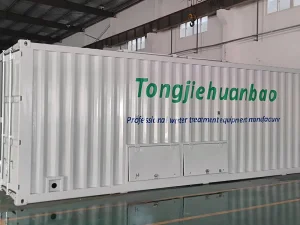
Engineered for island communities, offshore rigs, power plants, and coastal industrial enclaves. Tongjie containerized SWRO units treat seawater with TDS ranging from 32,000 mg/L up to 45,000 mg/L (Arabian Gulf spec). Incorporating high-grade Super Duplex 2507 stainless steel wetted parts, high-pressure positive displacement or split-case pumps, and energy recovery devices that salvage up to 96% of reject hydraulic pressure.
2. High-Purity Demineralized & Semiconductor Ultrapure Water (UPW)
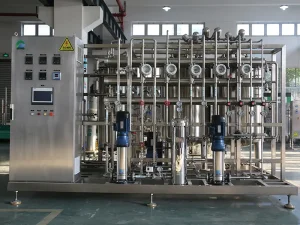
Serving microelectronics fabrication, photovoltaic cell manufacturing, and high-pressure supercritical boiler loops. Tongjie two-pass reverse osmosis combined with Continuous Electrodeionization (CEDI) and catalytic deoxygenation membrane contactors eliminates ions without hazardous bulk acid/caustic regenerants.
3. High-Salinity Wastewater Brine Concentration & ZLD
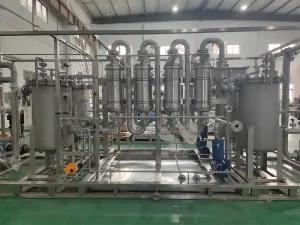
Designed for chemical complexes, dye manufacturers, and mining effluent. The process couples softening clarifiers, Disc Tube RO (DTRO) operating up to 120-160 bar, Osmosis Assisted RO (OARO), and MVR falling-film evaporators. It achieves salt crystallization into market-grade industrial salts while reclaiming 98%+ of liquid content as distilled boiler feed.
4. Oilfield Produced Water & Fracturing Flowback Reclaim
Handling harsh feeds containing emulsified crude, drilling polymers, aromatic hydrocarbons, and scaling barium/strontium ions. Skid-mounted systems with micro-bubble dissolved air flotation, ceramic membrane ultrafiltration, and foul-resistant DTRO yield reinjection-ready water or boiler steam-generator feedwater.
Engineering Credibility & Operational Scale
Headquartered in Shanghai with direct manufacturing, precision CNC machining, cleanroom membrane potting, and full automation staging bays.
How Global EPCs & Industrial Owners Source From China
International engineering directors look beyond FOB price tags. Sourcing industrial water treatment systems demands strict scrutiny of metallurgy, instrumentation protocols, weld passivity, and FAT documentation.
1. Raw Water Characterization Audit
Procurement failures often stem from incomplete baseline feed analysis. Tongjie engineers verify 32 distinct chemical parameters before sizing, including seasonal temperature extremes, reactive silica, free chlorine, barium, strontium, COD fractions, and Silt Density Index (SDI15).
2. Metallurgy & Severe Service Valves
Chloride stress corrosion cracking ruins standard stainless steels in high-salinity seawater and brine. We standardize on Duplex 2205 or Super Duplex 2507 for high-pressure brine headers (>40 bar), and virgin PVDF/PTFE or rubber-lined ductile iron for low-pressure corrosive media.
3. Factory Acceptance Testing (FAT) Protocol
Avoid high site labor costs abroad. Every Tongjie skid undergoes full hydrostatic pressure holding tests at 1.5x design pressure, complete I/O loop checkouts, dynamic wet testing with simulated brine, and video-documented calibration prior to export packaging.
Industry-Specific Treatment Blueprints
Standardized equipment often underperforms when confronting sector-specific fouling. Tongjie tailors internal process trains to exact industry compliance standards.
Pharmaceutical & Biotechnology
Regulatory Target: cGMP, USP <645>, Ph. Eur., FDA Title 21 CFR Part 11 electronic records.
Sanitary design incorporating orbitally welded 316L stainless steel piping (Ra < 0.4 μm with electropolishing), continuous hot water sanitization (85°C), seal-less magnetic drive circulation, and dead-leg-free diaphragm valves for Purified Water (PW) and Water for Injection (WFI) pretreatment.
Chemical & Petrochemical Complexes
Process Challenge: Highly refractory chemical oxygen demand (COD), fluctuating pH spikes, and elevated organic fouling.
Pre-treatment employs catalytic Fenton advanced oxidation, coagulant-assisted lamella precipitation, and ceramic microfiltration ahead of high-pressure secondary reverse osmosis, ensuring membranes are protected from volatile hydrocarbons and heavy scaling agents.
Electroplating, Mining & Metallurgy
Target Contaminants: Hexavalent chromium (Cr6+), nickel, copper, cyanide complexes, and high sulfate ions.
Chelating ion exchange beds combined with closed-loop multi-stage concentration recover precious electrolytic metals back into plating baths, reducing toxic sludge production by over 90% while achieving full zero liquid discharge.
Strict QA/QC, Factory FAT & International Compliance Assurance
Eliminating international procurement risk through rigorous engineering documentation, certified structural welding, and turn-key factory skid fabrication.
ASME / CE PED Compliance
Pressure vessels, FRP membrane housings, and stainless piping headers comply with ASME Boiler & Pressure Vessel Code Section VIII and European Pressure Equipment Directive (PED 2014/68/EU).
IEC / UL 508A Electricals
Control panels are engineered to IEC 61439 standards with optional UL 508A listing. Built with Siemens S7-1500 or Allen-Bradley ControlLogix PLCs, featuring multi-lingual high-resolution touch HMIs.
WPS & PQR Certified Welding
TIG orbital automated and manual welders are qualified under ASME Section IX. Full endoscopic camera inspections, radiographic NDT tests, and acid passivation bath treatments accompany every stainless assembly.
Comprehensive Document Dossier
Every export shipment includes verified 3D CAD models, P&ID blueprints, Electrical Schematics, Instrument Data Sheets, IO Lists, Operation & Maintenance (O&M) Manuals, and full material test reports (MTRs).
AI-Empowered Smart Water Treatment: Next-Generation Roadmap
Modern industrial water plants are evolving from static mechanical assemblies into self-optimizing cyber-physical assets. Tongjie integrates smart sensor networks and predictive control algorithms into its plant architectures.
Predictive Membrane Fouling Neural Models
By evaluating continuous streams of differential pressure (ΔP), normalized permeate flow, temperature-compensated conductivity, and feed turbidity, machine learning models forecast biofouling and inorganic scaling 7 to 14 days before irreversible membrane compaction occurs.
Dynamic Antiscalant & CIP Dosage Optimization
Eliminating fixed chemical dosing. Real-time Langelier Saturation Index (LSI) and Stiff & Davis Index (S&DSI) algorithmic calculations continuously modulate metering dosing pumps, reducing chemical consumable expenditure by 22% while extending membrane lifespan by over 18 months.
Cloud-Connected Global SCADA & Digital Twin
Secure industrial IoT telemetry links remote installations in the Middle East, Central Asia, South America, and Southeast Asia to our Shanghai engineering nerve center for 24/7 technical diagnostics, remote virtual commissioning, and preventive maintenance dispatching.
Frequently Asked Engineering Questions
Technical clarifications addressing capacity sizing, metallurgy, delivery, warranties, and international operational support.
Advanced Membrane, Desalination & High-Purity Equipment
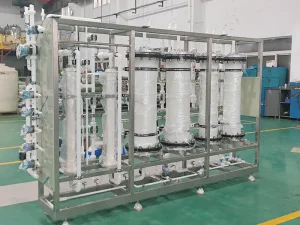
Complete turn-key industrial skids, gas-transfer contactors, and high-purity water assemblies engineered to international project requirements.
Submit Your Feed Water Profile & Project Requirements
Connect directly with our senior process engineers. Receive a comprehensive feasibility review, mass balance projection, membrane array recommendation, and itemized budgetary quotation within 24 to 48 hours.