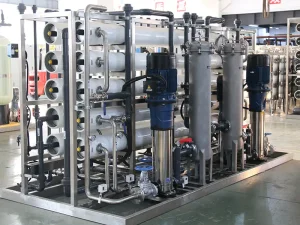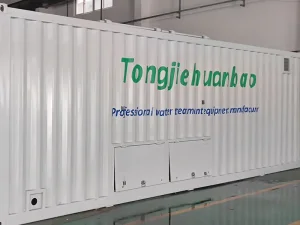
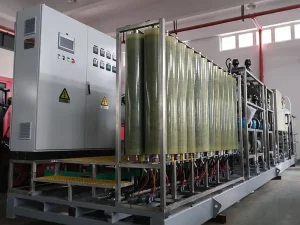
Direct Production Line
Engineered Seawater & High-Salinity Treatment Units
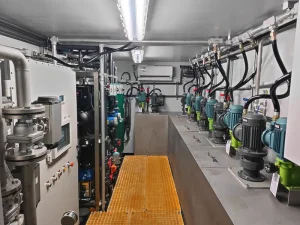
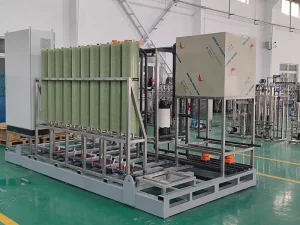
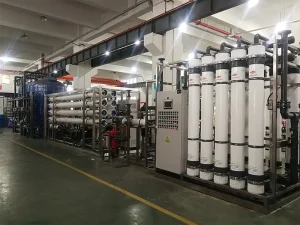
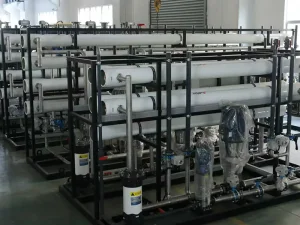
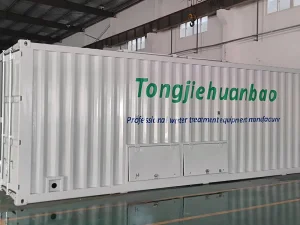
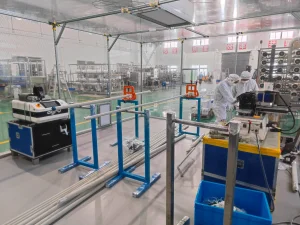
Precision-fabricated modular container skids, ultrafiltration barriers, and heavy-duty high-pressure membrane blocks manufactured to ISO 9001 and CE directives.
Industrial Procurement Demand
The Global Industrial Shift in Seawater Desalination Procurement
Evaluating macroeconomic drivers, structural water stress, and the transition toward decentralized containerized RO infrastructure.
As climate-induced meteorological shifts and rapid industrial expansion intensify baseline water scarcity across arid and coastal economic corridors, large-scale industrial consumers are fundamentally re-evaluating their capital allocation models for process water procurement. Historical dependencies on municipal piped freshwater networks, depleted coastal aquifers, or unbuffered river basins expose mega-scale petrochemical refineries, thermal power installations, offshore mining operations, and green hydrogen electrolyzer hubs to acute regulatory and volumetric supply risks. In response, global engineering procurement teams are adopting autonomous, decentralized Sea Water Reverse Osmosis (SWRO) systems as a primary risk mitigation vehicle.
3.0 kWh/m³
Specific Power Consumption (SWRO)
>99.7%
Average Sodium Chloride Rejection
38+
Proprietary Inventions & Patents
15 Days
Modular Skid Commissioning Window
However, procuring modern seawater desalination infrastructure is fraught with technical complexities. EPC contractors and plant directors frequently encounter proprietary lock-ins, inflated civil construction timelines, and severe operational vulnerability caused by raw seawater intake fluctuations—most notably red tides, fluctuating silt density index (SDI), and high boron concentrations that compromise downstream industrial standards. As a premier original design manufacturer (ODM), Shanghai Tongjie Environmental Protection Technology Co., Ltd. (established in 2010) bridges this engineering gap. Tongjie integrates process simulation, mechanical fabrication, automation software, and lifecycle chemical regimens into field-validated skid-mounted and containerized SWRO units, delivering turnkey predictability to projects across the Middle East, Southeast Asia, Central Asia, and Latin America.
Holistic Systems Engineering
Macro Solutions: Eliminating Membrane Degradation and Energy Penalties
Addressing thermodynamic limits, biological fouling, and parasitic loads with unified membrane process trains.
Isobaric Energy Recovery (ERD)
Seawater desalination requires overcoming osmotic pressures exceeding 28 to 35 bar, often requiring operating pressures up to 65–80 bar. Tongjie equips its ODM desalination plants with state-of-the-art ceramic pressure exchangers that capture hydraulic energy from the concentrated reject stream, returning up to 98% of waste pressure back into the membrane feed line. This slashes specific power consumption to benchmark levels under 2.8–3.2 kWh/m³.
Advanced Pretreatment Integration
Membrane fouling from marine organic matter, silt, and bacterial blooms is the primary operational cause of premature flux decline and frequent clean-in-place (CIP) interruptions. Our macro architecture pairs multi-media auto-backwashing sand-anthracite beds with pressurized hollow-fiber Ultrafiltration (UF) systems (0.02-micron pore size), consistently driving raw water Silt Density Index (SDI15) below 2.5 regardless of intake turbidity.
ZLD Integration & Brine Mining
Rather than discharging hypersaline brine straight back into fragile marine biospheres, Tongjie provides Osmosis-Assisted Reverse Osmosis (OARO) and Disc Tube Reverse Osmosis (DTRO) modules. These intermediate stages concentrate brine to over 120,000–180,000 mg/L TDS before sending it to mechanical vapor recompression (MVR) evaporators and crystallizers, enabling zero liquid discharge and commercial-grade salt recovery.
R&D Roadmap
Technical Roadmap: The Next Era of Seawater Desalination
Bridging nanomaterial design, digital twins, and direct-coupled renewable power architecture.
Thin-Film Nanocomposite (TFN) Membranes
Standard polyamide membranes face intrinsic trade-offs between water permeability and solute selectivity. Tongjie’s engineering teams are deploying thin-film nanocomposite (TFN) barriers embedded with covalent organic frameworks (COFs) and functionalized silica nanoparticles. This increases water flux by up to 25% while maintaining rejection ratios >99.8% for sodium chloride and >93% for boron in single-pass setups, lowering total vessel requirements.
Predictive AI & Cloud SCADA
Dynamic scaling models and bio-film proliferation predictions run via embedded edge computers directly on our containerized skids. Real-time mass balance, osmotic pressure differentials, and thermal expansion parameters are continuously calculated against baseline curves. Automated chemical dosing skids adjust antiscalant and biocide injection rates autonomously, preventing unexpected shutdowns and extending membrane lifespans past 5–7 operational years.
Direct-Coupled Solar & Wind Desalination
Traditional SWRO demands steady grid supplies; power fluctuations cause irreversible pressure drops that compromise membrane integrity. Tongjie has mastered variable-frequency drive (VFD) pressure balancing architectures specifically designed to tolerate the ramping and intermittencies of off-grid solar PV and wind turbine systems. This enables zero-emission potable water generation for off-grid coastal mining and remote island developments.
Commercial Reality
Global Commercial Footprint: Tailoring to Regional Water Matrices
Engineered solutions customized for distinct marine chemometrics, climates, and regulatory environments.
Middle East (GCC) & Red Sea Basins
Raw seawater in the Arabian Gulf frequently exceeds 45,000 mg/L TDS with sea surface temperatures exceeding 38°C in summer. These thermal and salinity extremes elevate osmotic pressures and increase calcium sulfate scaling tendencies. Tongjie engineers specialized duplex and super-duplex (2507) stainless steel manifold piping, 1,200 psi rated FRP pressure vessels, and high-temperature membrane modules to ensure durable performance under harsh Gulf desert environments.
Southeast Asia & Island Resorts
For decentralized archipelagos throughout Indonesia, the Philippines, and the Maldives, land acquisition costs and civil construction overhead are prohibitive. Tongjie supplies self-contained 20-foot and 40-foot insulated marine-grade containerized units. Equipped with integrated chlorination, sand media filtration, cartridge filtration, single-pass SWRO, and calcite remineralization beds, they produce potable WHO-standard drinking water directly upon hookup to local diesel or solar grids.
Central Asia & High-Salinity Energy Fields
In regions such as Kazakhstan, hydraulic fracturing flowback and high-salinity oilfield produced waters present complex challenges containing emulsified hydrocarbons, toxic barium scales, and extreme TDS levels. Tongjie’s hybrid DTRO systems and skid-mounted softening units process flowback waters to achieve reinjection specifications (≤5 mg/L oil, ≤1 mg/L suspended solids), supporting zero liquid discharge reuse in remote desert oil fields.
E-E-A-T Reliability Framework
Engineering Verification, Compliance & Factory Acceptance Testing (FAT)
Eliminating commissioning hazards through strict quality assurance standards and verified certifications.
Shanghai Tongjie operates under an integrated management framework certified to ISO 9001 (Quality), ISO 14001 (Environmental), and ISO 45001 (Occupational Health & Safety), alongside CE certification for all mechanical pressure assemblies and electrical control enclosures. Recognized as a National High-Tech Enterprise and a Shanghai Specialized & Sophisticated Enterprise, Tongjie holds national Class II Contracting Qualifications in Environmental Protection Engineering and Mechanical & Electrical Installation.
100% Factory Hydraulic Testing
Every skid and containerized SWRO system undergoes wet pressure-cycle testing at 1.5x design operating pressure before dispatch from our Shanghai manufacturing facility. Pumps, automatic valves, pressure transmitters, and safety interlocks are verified live on simulated seawater brine, eliminating on-site integration errors and reducing deployment times from months to roughly 15 days.
Metallurgical & Corrosion Controls
Given the aggressive galvanic nature of warm concentrated brine, Tongjie enforces strict metallurgical standards. Wetted high-pressure components use Super Duplex 2507 (UNS S32750), high-alloy austenitic stainless steels (904L), or titanium grade 2. Piping welds undergo passivation and non-destructive testing (NDT), preventing pitting and crevice corrosion across decades of service life.
Turnkey Lifecycle Documentation
All delivered systems include comprehensive engineering documentation: isometric piping layouts, electrical schematics (EPLAN), P&IDs, functional design specifications (FDS), spare parts lists, and detailed Operation & Maintenance (O&M) manuals. This complete data trail provides EPC clients with seamless handover protocols, regulatory compliance records, and predictable asset lifecycles.
Technical Clarifications
Industrial Desalination & ODM Plant Procurement FAQ
Direct technical answers to the most common questions raised by procurement managers, process engineers, and plant operators.
What raw water parameters are mandatory for Tongjie to formulate a definitive SWRO skid proposal?
To provide a fully guaranteed process design, our engineering team requires:
1. Complete chemical water analysis: Total Dissolved Solids (TDS), electrical conductivity, pH, and ionic concentrations (specifically Sodium, Chloride, Calcium, Magnesium, Barium, Strontium, Silica, and Boron).
2. Physical and biological indicators: Seasonal temperature ranges, Silt Density Index (SDI15), turbidity, total organic carbon (TOC), and free chlorine content.
3. Project site parameters: Required daily permeate capacity (m³/day), desired permeate quality (potable drinking standards vs. industrial demineralized water), site electrical specifications (voltage/frequency), and footprint limitations.
How do isobaric energy recovery devices affect total lifecycle operating expenses (OPEX)?
Isobaric energy recovery devices (ERDs), such as rotary ceramic pressure exchangers, operate at thermodynamic efficiencies up to 98%. In a seawater RO plant operating at 40–45% recovery, the remaining 55–60% of feed volume exits the membranes as pressurized brine (around 60–65 bar). Transferring this hydraulic pressure directly back to the incoming feed stream slashes the mechanical duty required of the high-pressure booster pump by 50% to 60%. This reduces electrical energy consumption from roughly 7.0–8.0 kWh/m³ down to 2.8–3.2 kWh/m³, yielding substantial electrical savings that amortize the ERD hardware cost within 12 to 24 months.
How does containerized modular design compare with traditional stick-built civil infrastructure?
Containerized systems offer three distinct technical advantages:
Accelerated Timelines: Manufacturing occurs in parallel with site civil preparations. Skids and containers are fully assembled and pre-wired inside our climate-controlled factory, cutting project delivery schedules by 60%.
Zero Field Construction Risk: Stick-built projects often suffer from field welding flaws, dust exposure, and installation mistakes. Containerized units arrive fully factory-tested, requiring only power, intake, and discharge pipe connections.
Mobility and Scalability: Containerized systems can be relocated as needs evolve or expanded easily by placing additional 20ft or 40ft units in parallel, which is ideal for mining camps, seasonal resorts, and industrial expansions.
What provisions are engineered to manage marine algal blooms (red tides) and high organic fouling?
Tongjie addresses severe marine organic excursions using a multi-barrier defense strategy:
1. Coagulation & Flocculation: Dosing controlled polyaluminum chloride (PAC) or ferric chloride destabilizes microscopic organic colloids.
2. Dissolved Air Flotation (DAF) or Media Filtration: High-turbidity intake passes through specialized DAF or auto-backwashing dual-media filter beds.
3. Pressurized Ultrafiltration (UF): PVDF hollow-fiber membranes provide a strict physical pore barrier (0.02 micron) that filters out bacteria, algae cells, and silt, delivering a consistent SDI15 < 2.5 to protect the high-pressure reverse osmosis membranes downstream.
What ODM/OEM personalization options does Tongjie offer to EPC partners and system integrators?
Tongjie offers extensive ODM/OEM customization for EPC engineering firms and global water treatment brands. This covers custom skid footprint geometries, container thermal insulation and marine anti-corrosion paint specs (C5-M), metallurgy choices (Super Duplex, 904L, Titanium), branded PLC/HMI programming (Siemens, Allen-Bradley, Schneider), localized UI languages, white-label chassis branding, and client-tailored technical manuals and documentation packages.
Comprehensive Solutions Portfolio
Specialized Membrane Systems & ZLD Equipment
Browse our advanced range of flowback reuse systems, high-salinity brine concentrators, and zero liquid discharge modules.