
Precision Engineered Desalination & High-Recovery Skids
Pre-engineered, factory-tested (FAT) marine and industrial desalination solutions ready for worldwide deployment.
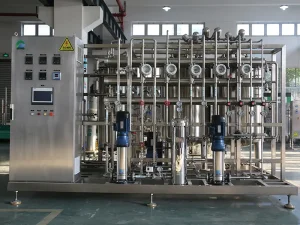
CE Certification High-Quality Pharmaceutical Purified Water & WFI System
Explore Specifications →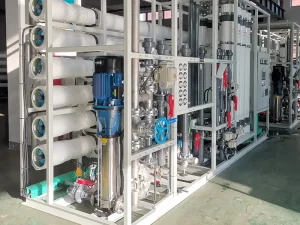
OEM Compact Reverse Osmosis Seawater Desalination System
Explore Specifications →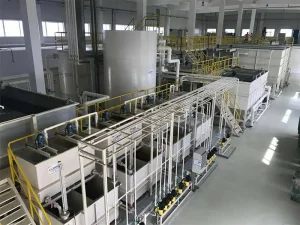
OEM High-Ratio Water Reuse Equipment for High-Salinity Wastewater
Explore Specifications →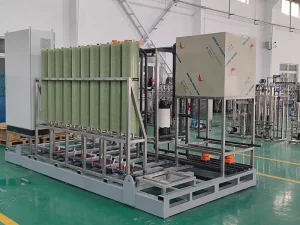
Wholesale High-Salinity Wastewater Treatment System | OARO Membrane
Explore Specifications →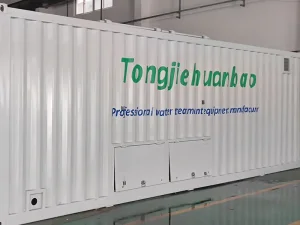
ODM Modular Containerized Seawater Desalination Equipment
Explore Specifications →
Wholesale Compact Seawater Desalination System for Small Freshwater Needs
Explore Specifications →
Wholesale High-Salinity Wastewater Reduction System | ZLD Technology
Explore Specifications →
OEM High-Ratio Water Reuse Equipment | Multi-Stage Treatment
Explore Specifications →Global State of Purifying Seawater into Potable Drinking Water
Thermal desalination obsolescence, acute coastal urbanization, and the engineering necessity of custom ODM membrane architectures.
Severe Water Stress Realities
Over 40% of the world's population resides within 100 kilometers of a coastline, yet over 2.1 billion individuals lack reliable potable municipal water. The rapid exhaustion of coastal aquifers caused by over-extraction has triggered irreversible seawater intrusion, forcing reliance on seawater reverse osmosis (SWRO).
Thermal to Membrane Transition
Legacy thermal plants (MSF/MED) consuming upwards of 12-18 kWh/m³ are obsolete. Modern isobaric energy recovery devices (ERD) partnered with high-rejection polyamide thin-film composite membranes have depressed specific energy consumption (SEC) down to 2.2 – 3.0 kWh/m³, establishing SWRO as standard.
Decentralization & Turnkey Demands
Global developers are pivoting away from monolithic mega-plants with 5-year lead times. Extreme climate events and offshore expansions drive the demand for plug-and-play containerized desalination units engineered to endure hostile coastal marine environments immediately upon delivery.
China Factory Efficiency: Industrial Synergy & Precision Scaling
How Shanghai Tongjie leverages vertical integration, complete supply-chain ecosystems, and certified ISO/CE quality systems to compress project CAPEX and lead times.
Metallurgical Engineering & Metallurgy
Desalination involves raw seawater operating at pressures up to 70–85 bar, creating intense localized crevice corrosion and pitting risks. Chinese integrated industrial clusters allow us to procure and weld Super Duplex Stainless Steel (2507 / UNS S32750), 1.4547 (254 SMO), and marine-grade coated structural frames with full argon shielding at fractionally scaled costs.
Full In-House FAT Testing Rig
Unlike Western assemblers reliant on subcontractors, Tongjie executes 100% of wet load factory acceptance tests (FAT) in our Shanghai workshops. Systems are run at operational hyper-salinities (up to 45,000 ppm TDS) with automated data acquisition checking vibration, motor harmonics, and seal integrity prior to ocean crating.
Cost-Competitive Modular Skids
Modularized shipping containers (20ft and 40ft High Cube) are completely fitted with insulated panels, industrial air conditioning, chemical dosing suites, and clean-in-place (CIP) skids. Procurement teams realize a 30% to 45% CAPEX savings while achieving verified CE and ISO compliance.
Localized Applications & Engineered Environments
From isolated atolls to heavy coastal petrochemical refineries: tailoring the pretreatment, membrane selection, and remineralization process.
Off-Grid Island Resorts & Atolls
Locations like the Maldives, Caribbean, and South Pacific lack municipal power and land. Our systems feature dual-pass SWRO with integrated energy recovery devices (ERD) designed to seamlessly interface with solar PV microgrids, eliminating brownout risks and providing fresh water meeting WHO drinking standards (<200 ppm TDS).
Offshore Marine & Drilling Rigs
Naval platforms, jack-up oil rigs, and commercial shipping require vibration-isolated, compact footprint skids. Utilizing automated seawater chlorination, high-efficiency sand filtration, and anti-scalant dosing, our marine SWRO platforms supply clean drinking, cooking, and process water with minimal crew maintenance.
Coastal Mining & Power Generation
In regions such as coastal Chile, Western Australia, and the Arabian Gulf, massive volumes of fresh water are demanded for mineral processing and boiler-feed preconditioning. Containerized high-pressure SWRO trains operate reliably alongside harsh coastal conditions, delivering millions of liters per day.
Engineering Trade-Offs in Seawater Desalination Architecture
A deep-dive technical comparison for EPC procurement managers evaluating membrane configurations against thermal installations.
| Evaluation Parameter | Legacy Thermal (MSF / MED) | Standard Commercial SWRO | Tongjie Engineered Modular SWRO |
|---|---|---|---|
| Specific Energy Consumption | 12.0 - 18.5 kWh/m³ equivalent | 3.8 - 5.0 kWh/m³ | 2.2 - 2.9 kWh/m³ (ERD Isobaric) |
| CAPEX / Footprint Ratio | Extreme footprint / Concrete heavy | Moderate skid footprint | ISO High-Cube Containerized (Plug & Play) |
| Pretreatment Resiliency | High tolerance to silt / No fouling | Standard Dual Media Sand Filter | UF Pre-filtration + Auto-Flushing Cartridge |
| Boron & Chloride Rejection | 99.9% (Distillate purity) | Single Pass: ~88-91% Boron Rejection | Dual Pass with pH Boost: <0.5 mg/L Boron |
| Project Lead Time & Onsite FAT | 24 to 48 months | 9 to 14 months | 60 to 90 Days (Complete Pre-Tested FAT) |
| SCADA & Digital Controls | Manual / Semi-Distributed DCS | Basic Relay / PLC interface | Siemens/Allen-Bradley PLC + Remote IoT Cloud |
End-to-End Seawater to Potable Water Process Train
A multi-barrier purification system guaranteeing WHO compliance under extreme sea surface temperatures and algal bloom events.
Intake & Bio-Inhibition
Subsea beach wells or open-sea intake equipped with sodium hypochlorite shock dosing and coarse strainer grids to eliminate macro-fouling organisms.
Ultrafiltration Pretreatment
Hollow fiber UF membranes or automated multi-media filters maintaining Silt Density Index (SDI15) consistently below 2.5, even during severe red tides.
Isobaric SWRO Desalination
Super Duplex high-pressure plunger pumps push saline water through 8040 spiral wound membranes, equipped with Energy Recovery Turbines recycling hydraulic energy.
Second-Pass Polishing
Optional brackish water RO (BWRO) stage operating under alkaline pH condition, removing residual boron and bromides below WHO potable limits.
Remineralization & UV
Calcite contactor beds replenish essential calcium and magnesium ions, correcting LSI balance, concluded by closed-loop UV sterilizers and chlorine dioxide.
Global Enterprise Procurement Demands & Industry Horizons
What global procurement committees look for when shortlisting international ODM seawater desalination manufacturing partners.
Stringent ASME & CE Metallurgical Traceability
Overseas EPC groups require total material test reports (MTR) according to EN 10204 3.1 for all pressurized piping. Welds on high-pressure piping must pass 100% radiographic or penetrant testing to avoid catastrophic corrosion under 80-bar hypersaline operating loads.
Integration of Renewable Microgrids
Global projects increasingly mandate variable-frequency drive (VFD) high-pressure pumps coordinated with off-grid photovoltaic (PV) solar and wind generators. Smart control algorithms buffer pressure fluctuations caused by intermittent cloud cover, preventing membrane compaction.
Brine Concentration & Valorization (ZLD)
Discharging hypersaline brine back into sensitive coastal ecosystems faces heavy regulatory penalties. Leading procurement teams are seeking integrated SWRO systems that pair with DTRO and crystallizers to transition the plant toward zero liquid discharge and valuable mineral extraction.
Frequently Asked Questions on Seawater Desalination
Direct technical answers addressing hydraulic recoveries, membrane longevity, and international delivery protocols.
What essential baseline data is required to engineer a bespoke SWRO plant?
How does your energy recovery device (ERD) depress running electrical costs?
How does the system ensure drinking water compliance regarding Boron and Minerals?
What metallurgy is used to prevent severe pitting and crevice corrosion?
Can Tongjie containerized desalination units be deployed in remote locations rapidly?
High-Pressure Membrane Concentration & Water Reuse Units
Comprehensive industrial systems for high-salinity volume reduction, brine concentration, and containerized off-grid water production.
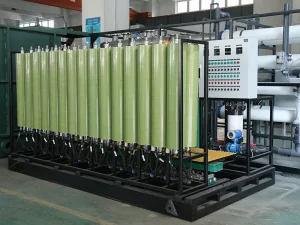
OEM High-Pressure DTRO & STRO Membrane Concentration System
Explore Specifications →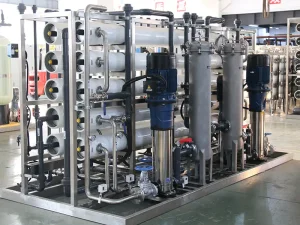
CE Certification Osmosis-Assisted Reverse Osmosis System
Explore Specifications →
High-Pressure DTRO & STRO Concentration Engineering Systems
Explore Specifications →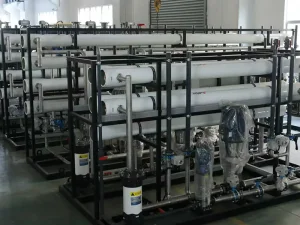
ODM Brine Concentration & Volume Reduction Systems
Explore Specifications →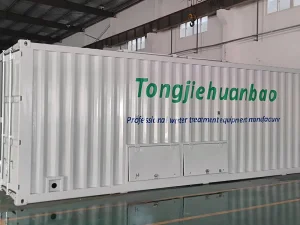
Integrated Containerized Seawater Desalination Plants for Off-Grid Solar
Explore Specifications →
High-Pressure Membrane Concentration System | DTRO & STRO Technology
Explore Specifications →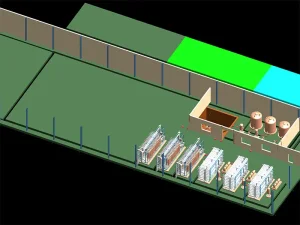
Customized Environmental Water Treatment & Engineering Solutions
Explore Specifications →