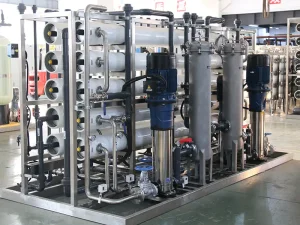
Pre-Commissioned Skids
High-Efficiency OEM Desalination & Brine Recovery Systems
Explore our core engineered units tested and verified in our Shanghai facility. Built to global utility standards with short site integration lead times.
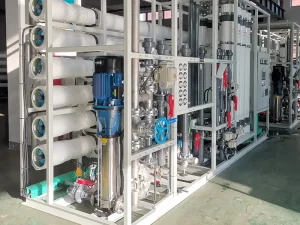
CE Certification Compact Seawater Desalination System for Freshwater Solutions
View Specifications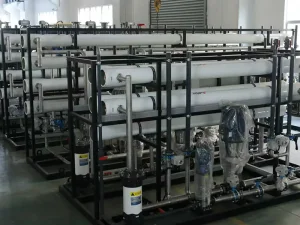
ODM Brine Concentration & Volume Reduction Industrial Desalination Systems
View Specifications
China Compact Seawater Desalination Equipment - Efficient Reverse Osmosis System
View Specifications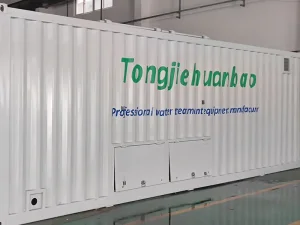
ODM China Modular Containerized Seawater Desalination Equipment Rapid Deployment
View Specifications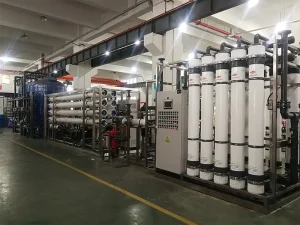
CE Certification High-Ratio Water Reuse Equipment - UF & RO Integrated Process
View Specifications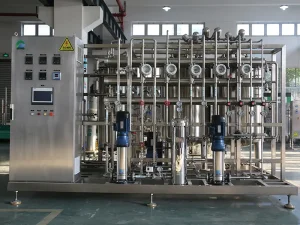
CE Certification High-Quality Pharmaceutical Purified Water & WFI System
View Specifications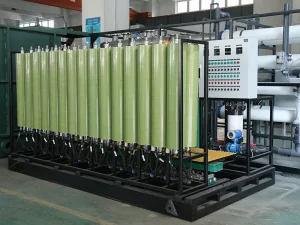
High-Pressure Membrane Concentration System - DTRO & STRO Desalination
View Specifications
Macro Dynamics
Evolution of the Global Desalinated Water Process Industry
The transition from legacy thermal distillation to high-recovery membrane systems is accelerating across municipal, energy, and semiconductor applications.
Renewable Energy Integration
Off-grid photovoltaic and wind-powered seawater reverse osmosis systems drastically slash Levelized Cost of Water (LCOW). Optimized energy recovery devices (ERDs) now enable specific energy consumption rates below 2.8 kWh/m³.
Extreme Recovery & Minimal Liquid Discharge
Utilizing high-pressure Osmosis-Assisted Reverse Osmosis (OARO) and Disc Tube RO (DTRO) up to 120 bar, modern systems elevate feed concentration to near saturation prior to crystallizer stages, slashing evaporator CAPEX by up to 45%.
Boron & Heavy Ion Stripping for High Tech
Stringent wafer fabrication standards require secondary RO passes paired with specialized ion-selective resins, suppressing boron concentrations beneath 0.5 mg/L while preserving electrical resistivity above 18.2 MΩ·cm.
Procurement Directives
Navigating International Desalination Sourcing Challenges
EPC contractors and enterprise facility heads operate under stringent operational and fiscal boundaries. OEM manufacturing must address specific lifecycle demands.
Fast Modular Commissioning
Remote island infrastructure, mine operations, and municipal shortages require containerized plug-and-play skids that achieve operational output in under 15 days upon landing.
Metallurgical Integrity
Seawater environments generate aggressive galvanic corrosion. Demands mandate 2507 Super Duplex Stainless Steel, Titanium, or specialized duplex piping rated to resist pitting indices (PREN > 42).
Data Telemetry & Scada
Decentralized installations depend on automated PLC diagnostics, membrane fouling predictive monitoring, remote cloud flushing regimens, and full integration into plant SCADA interfaces.
Total Compliance Documentation
Seamless execution depends on full traceability, comprehensive welding logs, non-destructive testing (NDT), CE marking, pressure vessel certificates, and IQ/OQ validation protocols.
Process Engineering
Architectural Comparison: Desalination Process Methodologies
Aligning raw water salinity indices, energy recovery budgets, and specific permeate goals to engineering design matrices.
| Process Train | Feed Salinity (TDS) | Energy Demand | Recovery Rate | Primary Industrial Sector |
|---|---|---|---|---|
| Standard SWRO + ERD | 25,000 – 45,000 mg/L | 2.7 – 3.5 kWh/m³ | 40% – 50% | Municipal Drinking Water, Island Resorts, Coastal Power |
| Modular DTRO / STRO | 40,000 – 90,000 mg/L | 5.5 – 8.0 kWh/m³ | 65% – 80% | Oil & Gas Produced Water, Landfill Leachate, ZLD Pre-treatment |
| Osmosis-Assisted RO (OARO) | 80,000 – 140,000 mg/L | 8.0 – 12.5 kWh/m³ | Up to 85% | Chemical Refining, Brine Volume Minimization |
| Two-Pass SWRO + EDI | 20,000 – 45,000 mg/L | 3.8 – 4.8 kWh/m³ | 38% – 46% | Semiconductor, Pharmaceutical WFI, Boiler Feed Steam |
Factory Assurance
Engineering Depth, High-Tech Credibility & Operational Scale
Shanghai Tongjie Environmental Protection Technology Co., Ltd. (established in 2010) combines advanced R&D with stringent end-to-end skid fabrication and testing.
17+
Years Industry Engineering
38+
Patents & Proprietary Designs
50+
In-House Chemical & ME Engineers
1,000+
Installed Turnkey Deployments
National High-Tech Enterprise Execution
Holding Class II qualifications in Environmental Protection Engineering and Mechanical & Electrical Installation Contracting, our Shanghai production facility strictly enforces ISO 9001, ISO 14001, and ISO 45001 frameworks. Every OEM seawater desalination skid undergoes complete Factory Acceptance Testing (FAT) with wet tests before packing, checking pipe seals, pressure drop characteristics, automation logic, and high-pressure sensor calibration.
Global Footprint
Compliance, Global Delivery & Operational Continuity
Custom engineering for varied regional standards, raw water chemistries, and local utility regulations.
Harsh Environment Packaging
Installations designed for high-salinity red tides, Gulf region thermal swings (up to 55°C ambient), and Central Asian winter freeze conditions with thermally insulated, climate-controlled container housing.
Global Certification & Codes
Full conformance with CE Machinery, Low Voltage, and Pressure Directives (PED). Pressure vessels are designed to ASME Section VIII standards, backed by certified component origins.
Lifecycle Commissioning & Spares
We supply modular replacement parts, remote telemetry support, onsite technician dispatch, and operator training programs to guarantee uptime on overseas projects.
Industrial Water Equipment
High Purity, Produced Water & Containerized Solutions
Precision systems engineered for microelectronics, energy exploration, and zero liquid discharge installations.
OEM Compact Seawater Desalination System for Drinking Water
View Specifications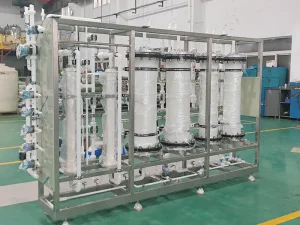
Ultra-Pure Water System for Semiconductor Manufacturing - 18.2 MΩ·cm
View Specifications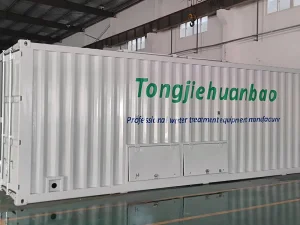
Integrated Containerized Seawater Desalination Plants for Solar Solutions
View Specifications
Factory-Integrated Containerized Seawater Desalination Plants for Off-Grid Supply
View Specifications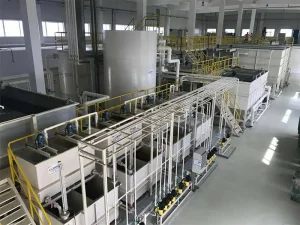
China Water Reuse Equipment High-Ratio Water Reuse Process Factory Supply
View Specifications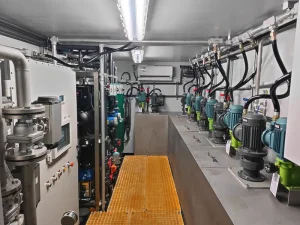
CE Certification Fracturing Flowback Water Reuse Treatment Equipment
View Specifications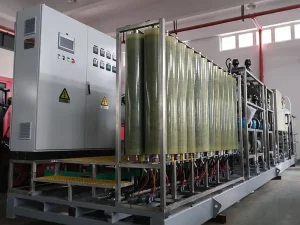
Advanced Fracturing Flowback Fluid Treatment System for Oilfield Injection
View Specifications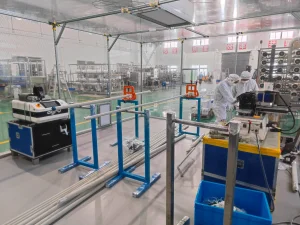
Eco-Friendly Water Treatment Solutions: Custom ODM Membrane Services
View Specifications
Direct Engineering Consultation
Frequently Asked Questions on Desalinated Water Processes
Straightforward answers addressing design sizing, lead times, fluid parameters, and OEM integration.
What core parameters are needed to size an OEM seawater desalination plant?
We require raw feed water TDS, operating temperature range, turbidity/SDI, silica, total hardness, target output quality (drinking water vs. high-pressure boiler feed), daily volumetric capacity (m³/day), and local power supply voltage/frequency.
How do you mitigate biofouling and scaling in high-salinity intake streams?
Our integrated trains feature multi-media depth filtration, automated coagulant dosing, continuous chlorination-dechlorination loops, ultrafiltration (UF) polishing, and high-pressure chemical antiscalant dosing, lowering SDI below 3.
Can containerized skids handle off-grid renewable power fluctuations?
Yes. We engineer variable-frequency drive (VFD) high-pressure pumping sets paired with adaptive PLC algorithms that dynamically modulate flux and recovery rates based on transient solar/wind input curves, protecting membrane life.
What is the standard production and shipping lead time for modular containers?
Standard skid designs are fabricated, assembled, and FAT tested within 6 to 9 weeks. Customized units with rare duplex alloys, explosion-proof classifications, or complex multi-stage EDI arrays average 10 to 14 weeks.