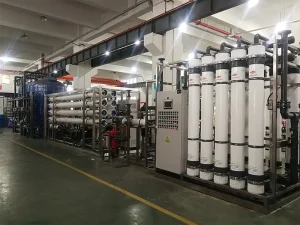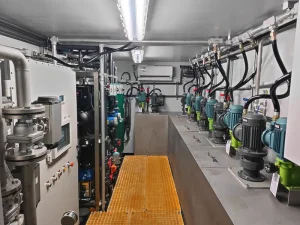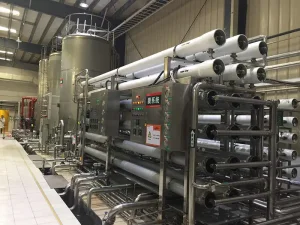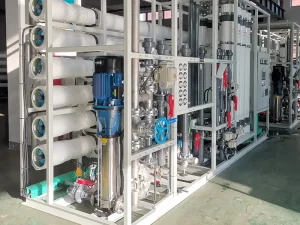
Primary Modular Seawater Desalination & Pure Water Skids
Pre-engineered, containerized SWRO units and high-salinity brine concentration trains custom configured for rapid global mobilization and off-grid reliability.
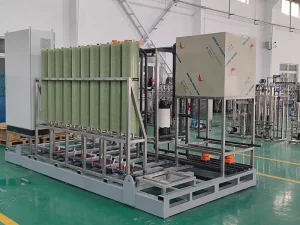
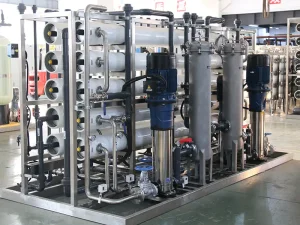
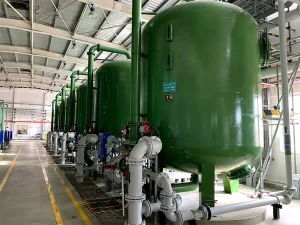
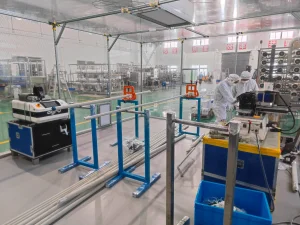
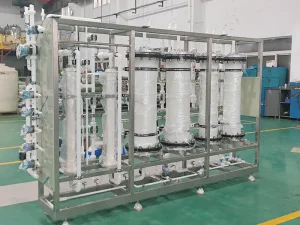
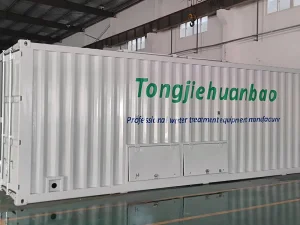
Technical Whitepaper: The Competitive Edge of Chinese SWRO Manufacturing
How complete vertical integration, precision metallurgic engineering, and stringent FAT qualification have redefined maritime reverse osmosis procurement.
Vertical Supply Ecosystem
Unlike Western system packagers who outsource components across fragmented regions, Shanghai Tongjie leverages an integrated domestic ecosystem encompassing Super Duplex 2507/1.4410 machining, ASME code pressure vessel fabrication, and localized high-pressure pump integration, cutting Capex by 28% to 42%.
100% Factory Acceptance (FAT)
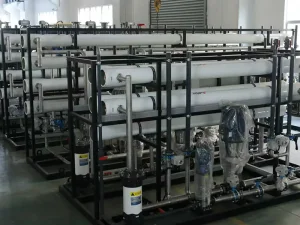
Every skid and containerized plant undergoes hydraulic pressure load tests, automated valve actuation diagnostics, and full PLC simulation before dispatch. Modules arrive as complete plug-and-play architectural packages, bypassing protracted field commissioning cycles on remote island and coastal worksites.
Energy Recovery Integration
By pairing high-pressure multi-stage centrifugal pumps with positive displacement isobaric Energy Recovery Devices (ERD) from leading global and certified domestic suppliers, our OEM seawater systems push specific energy consumption (SEC) down to ≤2.8 kWh/m³ under standard oceanic conditions.
Global Industry Evolution & Macro-Engineering Solutions
From energy-neutral desalination to industrial brine valorization: the technological vectors driving municipal utilities and EPC procurement through 2030.
Solar & Microgrid Desalination
Variable frequency drives (VFDs) dynamically synchronize SWRO operating pressures with intermittent renewable inputs from offshore wind and PV microgrids. Automated ramp-down protocols protect thin-film polyamide membranes from physical stress during solar dips, enabling authentic grid-independent fresh water generation.
Brine Concentration to ZLD
Regulatory mandates restricting hypersaline reject discharge near marine reserves have stimulated demand for Osmosis-Assisted Reverse Osmosis (OARO) and Disc Tube Reverse Osmosis (DTRO). Reject streams reaching 70,000 to 120,000 mg/L TDS are concentrated efficiently, drastically shrinking downstream crystallizer capital costs.
Ultrafiltration (UF) Pretreatment
Traditional granular multimedia filtration (sand/anthracite) struggles during seasonal algal blooms and storm turbidities. Modern Tongjie installations employ hollow-fiber PVDF pressurized ultrafiltration barrier membranes, stabilizing Silt Density Index (SDI15) consistently below 2.5 to prolong high-pressure element life.
System Recovery & Pressure
Standard Seawater Recovery
40% – 50%
Operating Pressure Range
55 – 75 bar (800-1100 psi)
Brine Stage Maximum Pressure
Up to 120 bar (DTRO)
Salt Rejection (NaCl)
≥99.7%
Feed Water Envelope
Design Feed Salinity (TDS)
32,000 – 45,000 mg/L
Inlet Temperature Span
5°C – 42°C
Turbidity Tolerance (with UF)
≤50 NTU peaks
Product Water Boron
<0.5 mg/L (Double Pass)
Metallurgy & Instrumentation
High-Pressure Piping
Super Duplex 2507 / 1.4410
Low-Pressure Piping
Sch 80 UPVC / 316L SS
PLC / Automation Backbone
Siemens S7 / Allen-Bradley
Remote Telemetry
4G/5G SCADA Cloud Gateway
Target Application Scenarios & Field Operational Matrices
Engineered for complex hydrological variables, high-salinity marine environments, and strict municipal drinking compliance standards worldwide.
Islands & Remote Coastal Resorts
Decentralized containerized SWRO units ranging from 50 to 1,500 m³/day yield WHO-standard potable water for hotels, eco-resorts, and military outposts, eliminating costly freshwater barging logistics.
Coastal Power & Petrochemical
Two-pass SWRO followed by Electrodeionization (EDI) provides boiler feed water (conductivity <0.1 μS/cm, SiO2 <10 ppb), mitigating regional groundwater depletion across chemical refineries.
Offshore Platforms & Marine Vessels
Compact skids built with anti-vibration structural dampening, explosion-proof ATEX/IECEx electrical cabinets, and marine-grade epoxy coatings for jack-up rigs, FPSOs, and bulk cargo vessels.
Mining & Mineral Extraction
Seawater desalination configured for copper, gold, and lithium processing facilities in arid littoral sectors (e.g., Atacama, Western Australia), supplying critical slurry transport fluid.
Global Enterprise Procurement: OEM / ODM Manufacturing Assurance
Addressing the strict vendor qualification mandates of international EPC contractors, consulting engineers, and multinational asset owners.
Full Engineering Submittal Dossiers
We provide comprehensive project execution documentation: 3D CAD step models, process flow diagrams (PFD), piping and instrumentation diagrams (P&ID), electrical schematics (EPLAN), mass & energy balances, and functional design specifications (FDS).
Metallurgical & Welding Integrity
All high-pressure piping assemblies undergo 100% Non-Destructive Testing (NDT / Radiographic Inspection). Weld procedures comply strictly with ASME Section IX guidelines, guaranteeing crevice corrosion immunity in high-chloride warm maritime feed waters.
Private-Label OEM Customization
For European and American equipment brands, we build private-label skids formatted with custom corporate color schemes, HMI skinning, localized documentation (English, Spanish, French, Arabic), and client-specified valve/sensor brands.
Frequently Asked Questions (FAQ) for Engineering Buyers
In-depth responses covering process metallurgy, membrane selection, energy consumption benchmarks, and delivery schedules.
What specific metallurgy does Tongjie employ to stop chloride pitting?
For high-pressure seawater circuits (>55 bar), we strictly utilize Super Duplex Stainless Steel (UNS S32750 / EN 1.4410) with a Pitting Resistance Equivalent Number (PREN) ≥42. For low-pressure seawater handling, we utilize heavy-wall UPVC, Schedule 80 PVDF, or rubber-lined 316L SS to deliver complete operational immunity to aggressive chloride pitting.
How do Tongjie SWRO plants achieve specific energy consumption under 3.0 kWh/m³?
Our systems incorporate isobaric chamber energy recovery devices (ERDs), which transfer the kinetic energy of the high-pressure concentrate brine stream directly to the incoming feed water at up to 97% mechanical efficiency. Combined with premium-efficiency IE4 motors and variable speed pump modulation, specific energy consumption remains between 2.6 and 3.0 kWh/m³.
Can containerized desalination systems operate in ambient temperatures above 45°C?
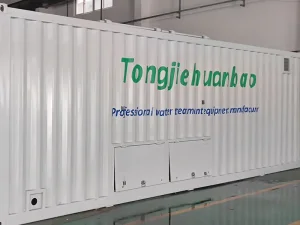
Yes. Our containerized SWRO enclosures are built using ISO high-cube shipping containers insulated with 50-75mm rockwool or polyurethane composite paneling. They are outfitted with heavy-duty industrial HVAC dual-redundant cooling units, motorized louvers, and corrosion-resistant air filtration designed specifically for harsh GCC Middle Eastern desert operations.
What design protocols protect membranes during Red Tide or algal blooms?
During seasonal algal blooms, total suspended solids and biopolymer foulants surge. We integrate automated coagulant/flocculant chemical dosing preceding pressurized ultrafiltration (UF) skids. The UF system provides an absolute particulate cutoff at 0.02 microns, ensuring the feed SDI15 to the seawater RO membranes stays strictly below 2.5 regardless of seawater bloom intensity.
What is typical factory lead-time for skid-mounted vs containerized RO units?
Standard skid-mounted units (100–500 m³/day) have a production cycle of approximately 6 to 8 weeks in our Shanghai facility. Fully containerized turnkey seawater RO plants (500–2,000 m³/day) with integrated pretreatment, chemical CIP systems, and remineralization columns are typically manufactured, tested, and pre-commissioned within 10 to 14 weeks.
Do you support customer FAT audits and third-party inspection agencies?
Yes. We regularly host third-party inspection agencies such as SGS, Bureau Veritas, DNV, and TÜV, as well as EPC client engineering delegations for live hydrostatic tests, electrical Megger insulation checks, valve stroking, and full PLC/SCADA simulation prior to container sealing and ocean transit.
Specialized Membrane Separation & Advanced Reuse Systems
Explore our deep-salinity water reuse, oilfield produced water DTRO, and municipal effluent recovery equipment manufactured to international specifications.