China China Deoxygenation Membrane Equipment Factory - Suppliers of Physical Degassing Technology for Water Treatment Manufacturers, Manufacturer

Introducing our advanced deoxygenation membrane equipment, a cutting-edge solution based in China for removing dissolved oxygen from water using hydrophobic hollow fiber membrane gas-liquid mass transfer technology. This innovative equipment operates on a physical degassing principle, eliminating the need for chemical agents or heat, and effectively reduces dissolved oxygen concentrations to the ppb level. Ideal for various industrial applications, our deoxygenation equipment is perfect for ultrapure water preparation in electronics and semiconductors, boiler makeup water deoxygenation, pharmaceutical water treatment, food and beverage deoxygenation, and petrochemical water injection deoxygenation. As a leading supplier and factory in China, we are committed to providing high-quality solutions tailored to your needs

Product Description

⚙ Working Principle

The core working principle of the deoxygenation membrane equipment is based on Henry's Law and the gas-liquid mass transfer process. Henry's Law states that at a constant temperature, the equilibrium concentration of a dissolved gas in a liquid is directly proportional to the partial pressure of that gas in the gas phase.

The equipment uses a hydrophobic microporous hollow fiber membrane as the gas-liquid contact interface, creating a dissolved oxygen concentration gradient across the membrane that drives oxygen molecules to migrate from the liquid phase to the gas phase.

The membrane material is selected from hydrophobic polymers such as polypropylene (PP) or polyvinylidene fluoride (PVDF). The pore size ranges from 0.01 to 0.1 micrometers, preventing water penetration while allowing gas molecules to pass freely.

Deoxygenation Membrane Equipment Principle
Hollow Fiber Membrane Structure

🎛 Operation Modes

🌀 Vacuum Deoxygenation Mode

A vacuum pump creates a negative pressure environment on the gas phase side, bringing oxygen partial pressure close to zero. Oxygen molecules are continuously discharged. Outlet dissolved oxygen can be reduced to below 1 μg/L.

🎈 High-purity Nitrogen Mode

High-purity nitrogen (≥ 99.999%) is introduced as a sweep gas. It maintains extremely low oxygen partial pressure. Outlet dissolved oxygen can be reduced to below 5 μg/L.

Vacuum mode is ideal for strict dissolved oxygen requirements, while nitrogen sweep mode is suitable for sites with a stable nitrogen supply. Operating range: 5 to 40°C; Inlet water pressure: 0.1 to 0.5 MPa.

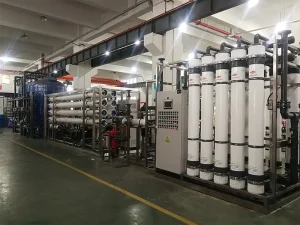
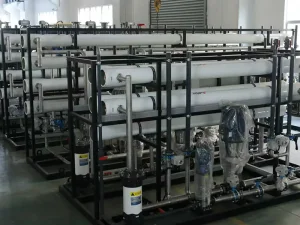
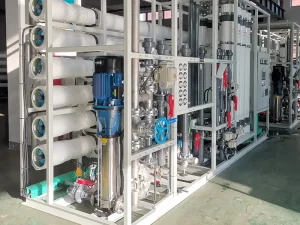
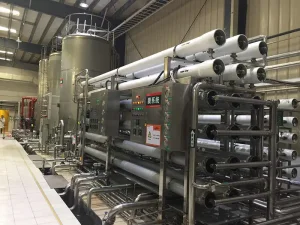
🧱 Equipment Structure & Core Components

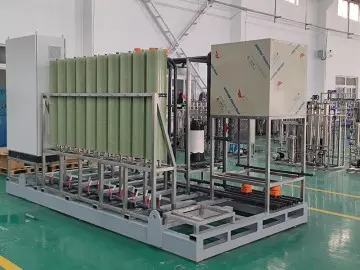
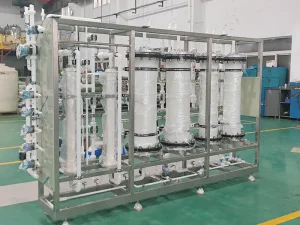
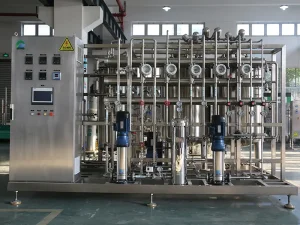
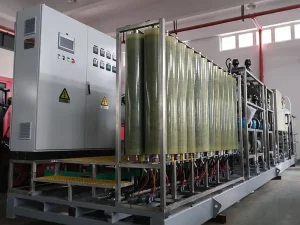
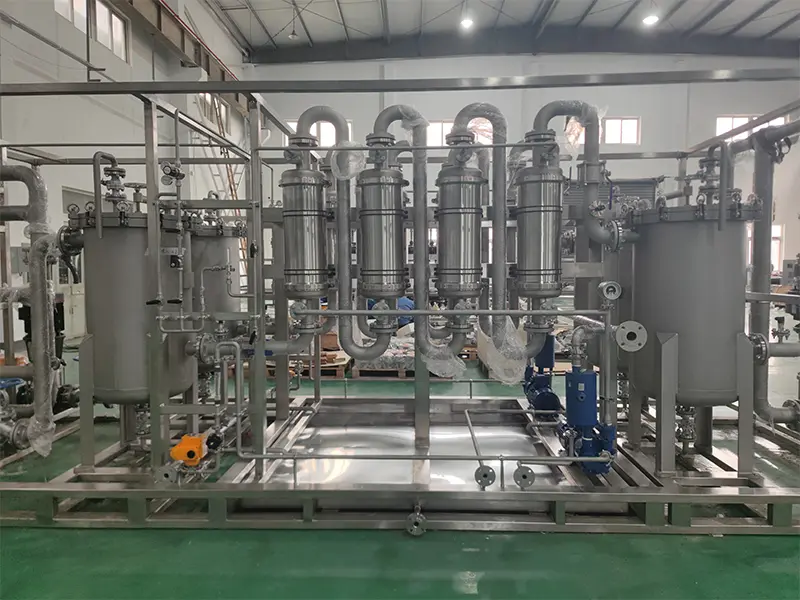
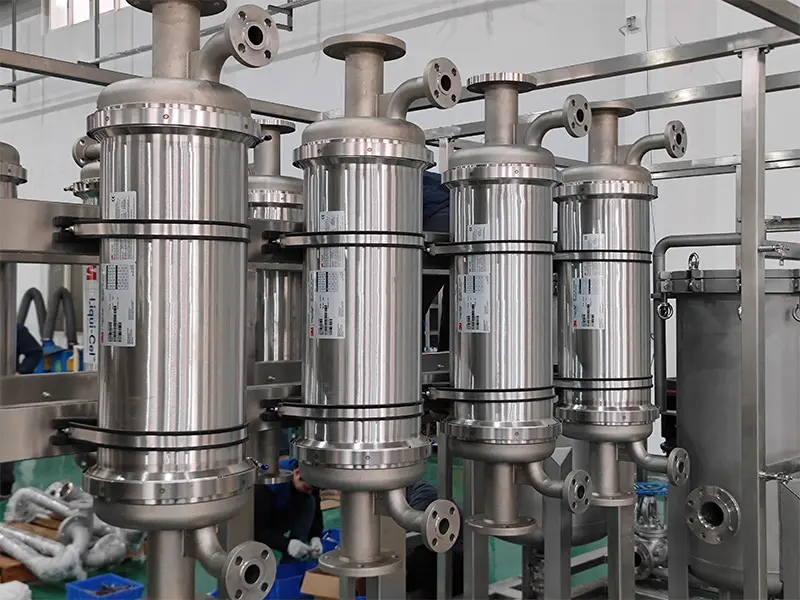
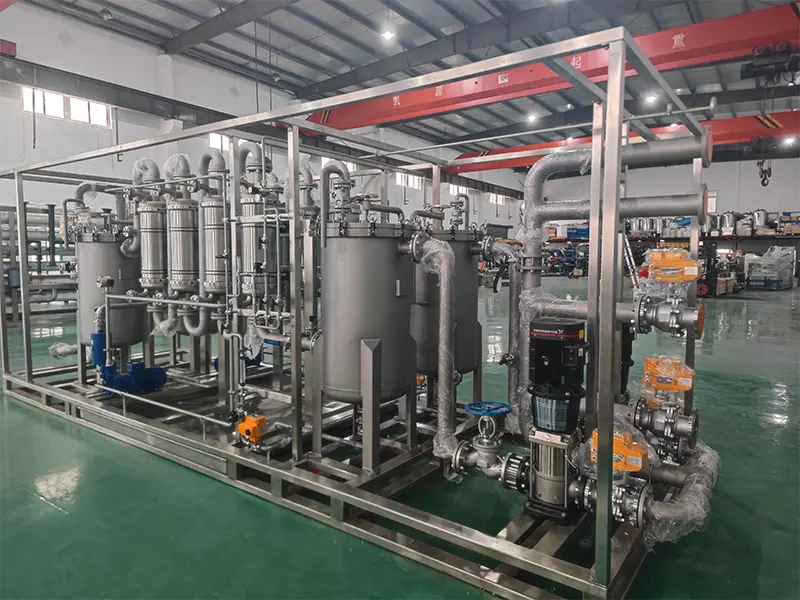
  • Membrane Contactor Unit: Internally packed with hollow fiber membrane bundles in stainless steel or plastic housing.
  • Vacuum/Sweep System: Liquid-ring or rotary vane vacuum pumps, or nitrogen supply lines.
  • Control System: Flow control valves, pressure gauges, vacuum indicators, and online dissolved oxygen monitors.
  • Configuration: Four-port design (two for liquid, two for gas) with inside-out or outside-in flow paths.
An ideal solution for decentralized water supply demands

🔄 System Process Flow

Connection: Series connection after RO or EDI modules. RO/EDI permeate is pressurized and sent to the shell side of the membrane.

Advanced Degassing: For requirements below 5 ppb, a two-stage process is used (Stage 1: Vacuum; Stage 2: Nitrogen Sweep + Vacuum).

Water Quality Requirements: Turbidity

🏢 Application Fields

◈ Electronics & Semiconductor (Ultrapure water)
◈ Power & Heating (Boiler makeup water)
◈ Pharmaceutical (Water for injection)
◈ Food & Beverage (Delay oxidation)
◈ Petrochemical (Corrosion reduction)
◈ Laboratory (Precision cleaning)

📦 Other Products

Seawater Desalination

Modular Seawater Desalination

ZLD System

Wastewater ZLD System

Demineralized Water

Industrial Demineralized Water

❓ Frequently Asked Questions

Q1: What is the maximum oxygen removal efficiency of the membrane?
A: Using the vacuum deoxygenation mode, the dissolved oxygen concentration can be reduced to below 1 μg/L (1 ppb).
Q2: What materials are the membranes made of?
A: The membranes are typically made from hydrophobic polymers like Polypropylene (PP) or Polyvinylidene Fluoride (PVDF).
Q3: Can this equipment replace traditional thermal deaerators?
A: Yes, it is an efficient physical degassing alternative for boiler makeup water in the power and heating industries.
Q4: What are the feed water quality requirements?
A: To ensure longevity, inlet water should have turbidity
Q5: How does the system handle different temperature ranges?
A: The equipment is designed to operate stably within a temperature range of 5 to 40 degrees Celsius.
Q6: Is it possible to monitor oxygen levels in real-time?
A: Yes, the control system includes online dissolved oxygen monitors and PLC integration for real-time parameter tracking.

Related Products