
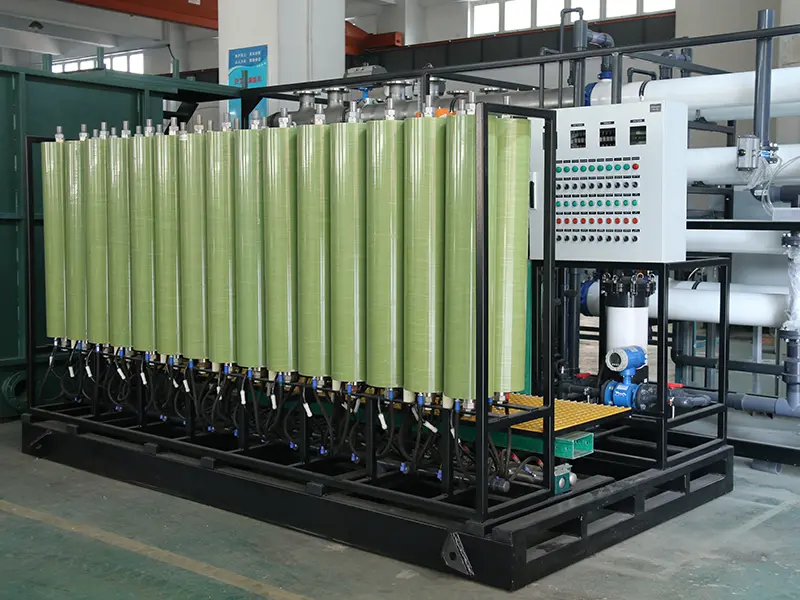
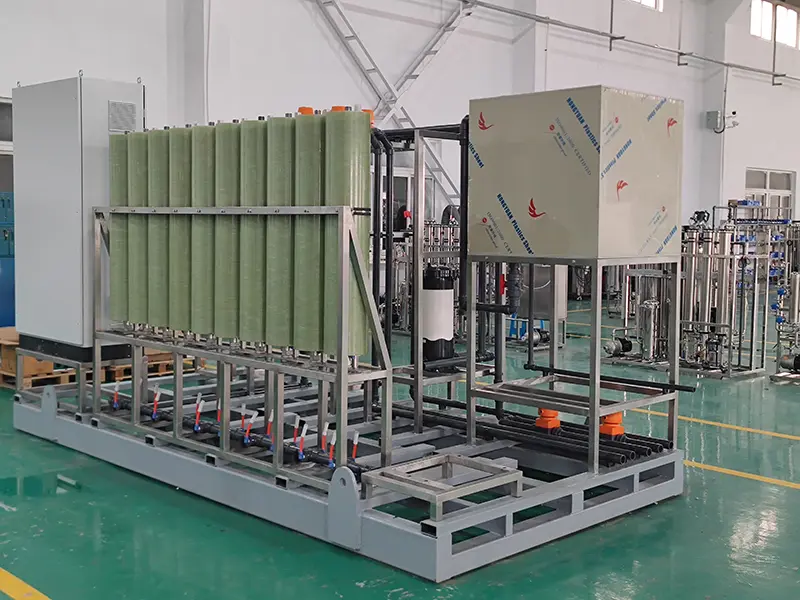
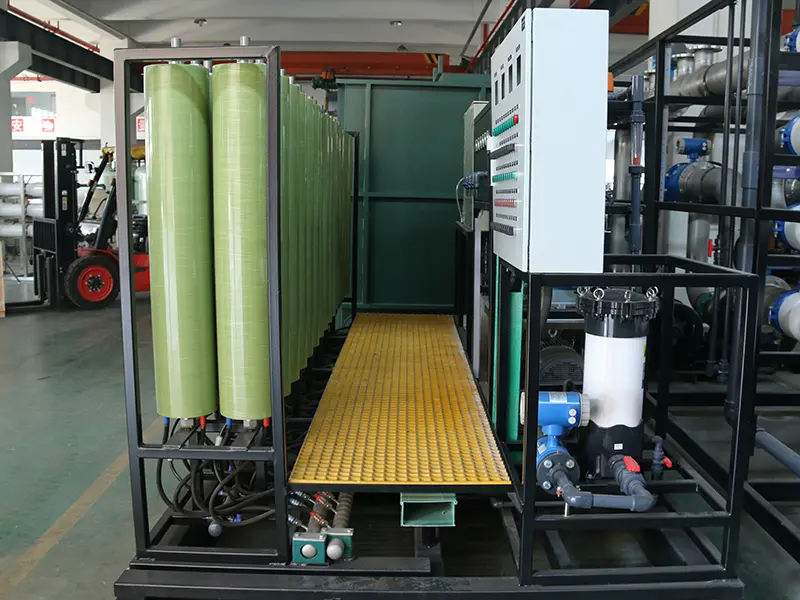
Wholesale High-Pressure DTRO&STRO Membrane Concentration System from China Suppliers & Factory for High-Salinity Wastewater Treatment Factories, Suppliers
Product Description
Our Solution
Shanghai Tongjie Environmental Protection's high-salt wastewater reduction and resource recovery system employs a combined process of OARO (Optical Advanced Reverse Osmosis) for high-salt concentration, DTRO (Dialysis-Treated Reverse Osmosis) for high-pressure reverse osmosis, and MVR (Membrane Vapor Recovery) for evaporation and crystallization. The raw water has a TDS concentration of 10,000–50,000 ppm, which is concentrated to over 150,000 ppm TDS, achieving zero wastewater discharge and salt resource recovery.
Adapted for high-salt industries: Chemical engineering, electroplating, lithium salts, coal chemical industry, pharmaceuticals, and printing and dyeing.
Core Advantages
When wastewater TDS exceeds tens of thousands mg/L and COD remains high, conventional reverse osmosis membrane elements quickly fail due to concentration polarization and membrane fouling. System recovery drops sharply, cleaning cycles shorten to just a few days, and evaporation/crystallization costs remain prohibitive.
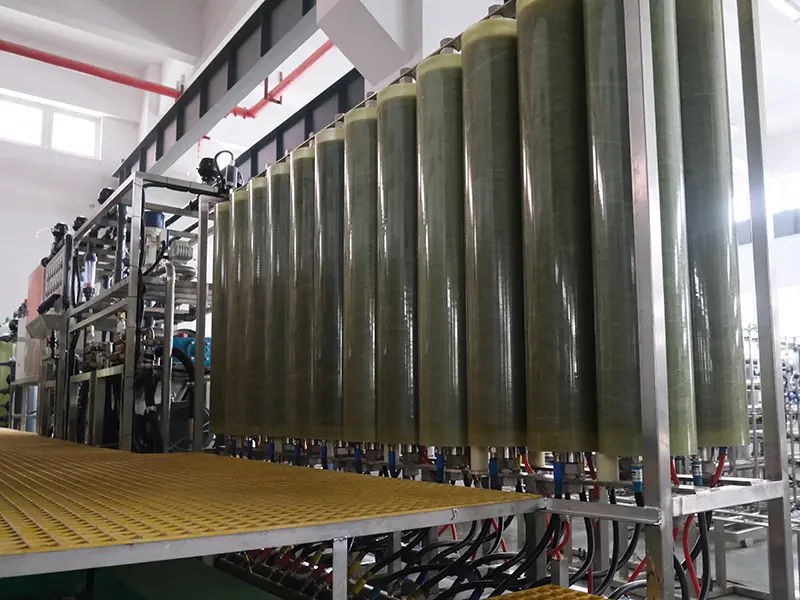
DTRO (Disc-Tube Reverse Osmosis) and STRO (Spiral Tube Reverse Osmosis) are specialized high-pressure membrane technologies engineered for extreme conditions. Both share open-channel flow path designs and high-pressure operation capabilities, each with its own process route, achieving high-ratio concentration and stable permeate production that conventional membranes cannot reach. Whether treating complex landfill leachate or high-salinity wastewater from coal chemicals, electroplating, pharmaceuticals, etc., they enable efficient high-concentration volume reduction at lower cost, significantly reducing the load on downstream zero liquid discharge processes.
Standard Process Flow
DTRO System Flow
Raw water → Pretreatment (sand filter/UF) → Primary DTRO membrane modules → Recirculation → Permeate → UV disinfection → Reuse/discharge; Concentrate → Secondary DTRO → Evaporation/crystallization or resource recovery.
STRO System Flow
Raw water → Softening/UF → Primary RO concentration → Secondary RO concentration → STRO superconcentration → Permeate reuse → High-density brine → Evaporation/crystallization.
Application Scenarios
◈ Landfill Leachate Full Treatment
Landfill leachate has high COD, high ammonia nitrogen (200–2,000 mg/L), and fluctuating salinity. Conventional RO membranes almost inevitably foul in such harsh water. DTRO’s 3.0 mm wide channel design and open flow paths allow high turbidity, high SS feed to pass without clogging. At feed TDS up to 25,000 mg/L and SS 50–200 mg/L, membrane flux remains stable at 20–50 LMH, recovery 75–90%, and continuous operation for 12 months without irreversible fouling. Applications include landfill leachate, incineration plant leachate, leachate concentrate ZLD, biogas slurry resource recovery, food waste wastewater, and transfer station leachate.
◈ Coal Chemical & Coking Wastewater ZLD
Coal gasification wastewater contains high levels of phenols, cyanides, and ammonia nitrogen with poor biodegradability; conventional membrane elements cannot tolerate such conditions. STRO has been successfully applied here – for example, a Yangmei coal chemical ethylene glycol project in China used Jiarong STRO high ratio concentration technology, design capacity 1,000 m³/d, in stable operation since 2017. Actual operation shows STRO concentrates TDS from 30,000 mg/L to 80,000 mg/L, reducing power consumption by 0.72 kWh/m³ compared to evaporation/crystallization, cutting operating costs by 60%, and achieving salt resource recovery.
◈ Power Plant Desulfurization Wastewater & Cooling Tower Blowdown
Desulfurization wastewater has low flow but high salinity, high hardness, and fluctuating COD. DTRO can directly treat high hardness, high salinity wastewater without softening, offering significantly better operational stability than conventional processes. Suitable for extreme concentration volume reduction of coal fired power plant desulfurization wastewater and cooling tower blowdown.
◈ Electroplating & Pharmaceutical High Salinity Wastewater Salt Separation & Recovery
Electroplating wastewater has complex composition with heavy metal ions and high salt content. After concentrate volume reduction, subsequent evaporation steps are significantly shortened, energy consumption reduced, and valuable product water recovery increased. Coupled with nanofiltration salt separation, sodium chloride, sodium sulfate and other salts can be recovered as industrial grade by products, achieving a virtuous cycle of “pollution control coupled with profit generation”.
◈ Steel & Non Ferrous Metals High Salinity Wastewater
Concentrated high salinity brine can be treated by nanofiltration to separate and recover valuable metal ions such as sodium and potassium. Heavy metals become enriched in the concentrate, facilitating subsequent resource extraction.
◈ Oil & Gas Produced Water and Mine Water Treatment
Oil & gas produced water and mine water have high salinity and complex composition. After STRO high ratio concentration, permeate can be reused for drilling mud preparation or industrial water, while concentrate volume is greatly reduced, significantly lowering off site disposal costs.
◈ Marine / Island Desalination
With its high pressure tolerance and compact modular design, STRO is suitable for ship/naval vessel desalination, offshore platform water supply, and small island desalination units.
Other Products
-
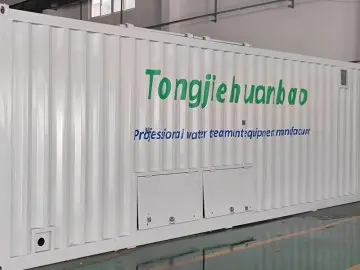
Modular Containerized Seawater De...
+ -
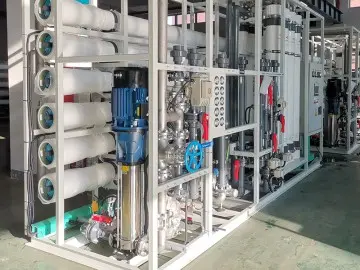
Seawater desalting equipment
+ -
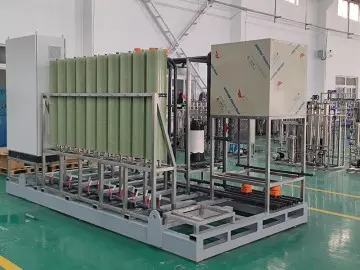
High-Salinity Wastewater Volume R...
+ -
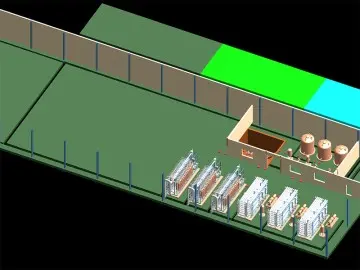
OEM Precision Manufacturing
+ -
ODM Full Value Chain Innovation
+ -
Water Reuse Equipment (Pretreatme...
+ -
Water Reuse Equipment High-Ratio ...
+ -
Industrial Demineralized Water Eq...
+









