
Wholesale High-Ratio Water Reuse Equipment from China Suppliers - Advanced Pretreatment, UF, and RO Factory Solutions Factory, Manufacturer
Product Description
Process Flow and Principle
Raw water first enters the pretreatment unit, which typically consists of a multimedia filter or self-cleaning filter, retaining suspended particles larger than 50 micrometers and reducing the fouling load on downstream membrane units. The pretreatment effluent then enters the Ultrafiltration (UF) unit. The UF membrane has a molecular weight cut-off (MWCO) ranging from 100,000 to 200,000 Daltons, with a pore size of approximately 0.01–0.02 micrometers. It separates colloids, bacteria, and macromolecular organic matter from the water. The UF permeate turbidity is reduced to below 0.1 NTU, and the Silt Density Index (SDI) is controlled below 3.
The UF permeate is pressurized by a booster pump and enters the Reverse Osmosis (RO) unit. The RO membrane is a polyamide composite membrane with a salt rejection rate of not less than 97%. Driven by pressure, water molecules pass through the RO membrane, while the majority of dissolved salts, organic matter, and microorganisms are retained and concentrated. The conductivity of the RO permeate can be reduced to below 50 μS/cm, meeting the requirements for circulating cooling water makeup or process water. The system recovery rate is designed between 60% and 75% based on the raw water quality. A concentrate discharge and control valve is provided on the concentrate side.
Equipment Structure and Core Components
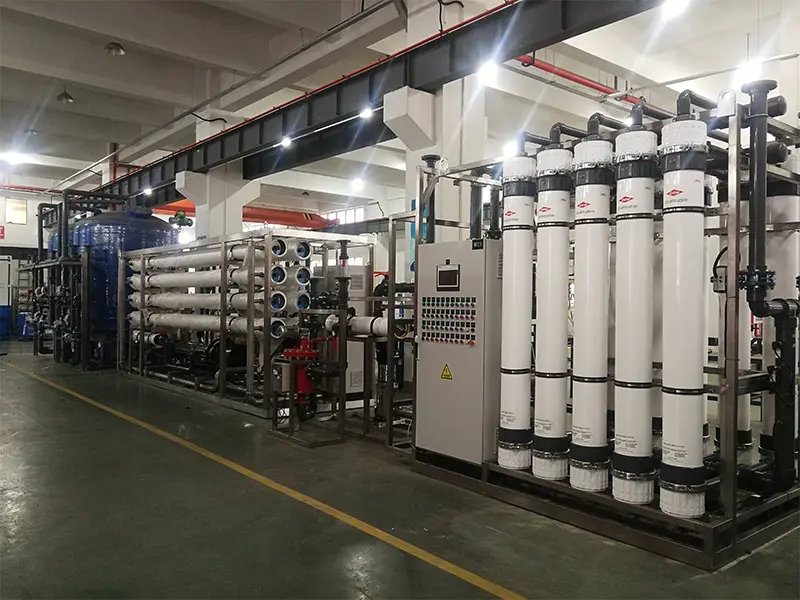
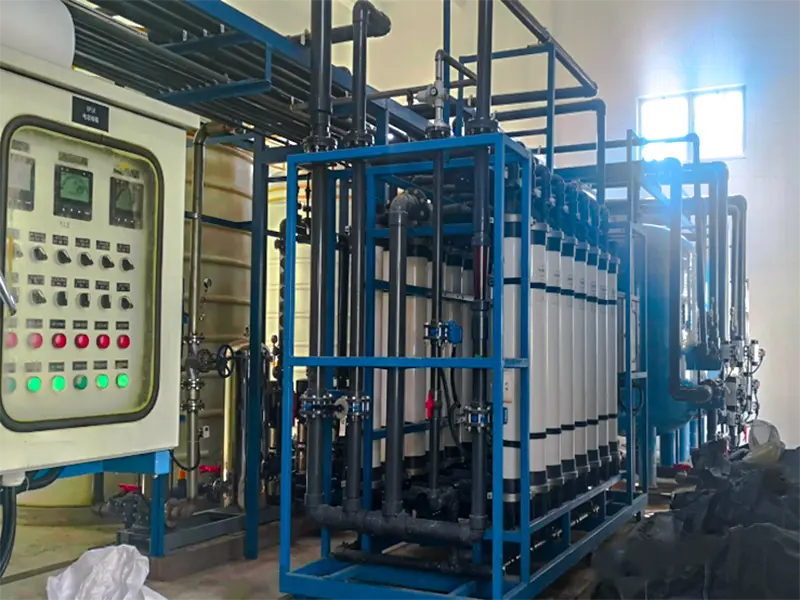
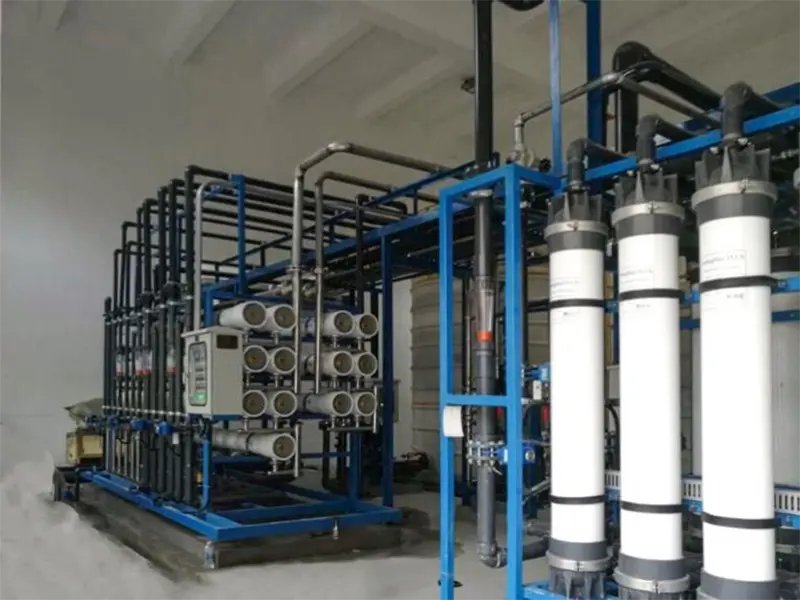
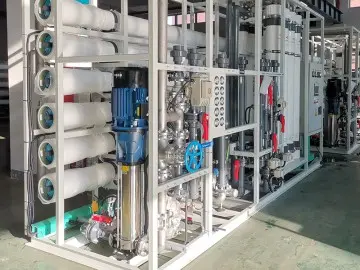
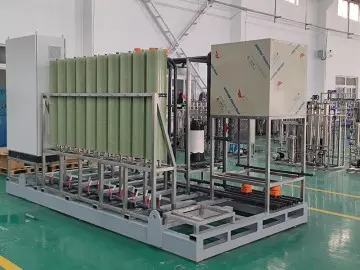
The equipment consists of pretreatment filters, UF membrane modules, RO membrane modules, a high-pressure pump, a chemical dosing system, a cleaning system, and a PLC control cabinet. The UF membrane uses hollow fiber PVDF material, available in outside-in or submerged configurations, and is equipped with automatic backwash and chemically enhanced backwash (CEB) sequences. The RO membrane elements are spiral-wound membranes with pressure vessels made of FRP or stainless steel, arranged in either single-stage two-pass or single-stage three-pass configurations. The system includes anti-scalant dosing, reducing agent dosing, and pH adjustment devices to control membrane scaling and oxidation risks. The control unit uses a PLC to achieve automatic operation, product water flushing, and fault alarms.
Key Performance Indicators and Applicable Standards
The determination of product water quality targets is based on two inputs: (1) the water quality requirements for reclaimed water reuse specified in current national and industry standards; and (2) the customer's proposed end-use for the product water, downstream process integration requirements, and on-site water source conditions. Based on this information, the company develops a targeted indicator plan.
Based on the customer's water quality report and volume requirements, the company provides a process scheme and guaranteed performance values covering the above indicators during the design phase. These values are mutually confirmed and used as the acceptance criteria for the equipment.
Application Fields
This equipment is used for wastewater reuse in industries such as electronics, chemicals, textiles, and food, as well as for upgrading municipal wastewater treatment plants and utilizing reclaimed water. The produced water can be directly used as makeup water for open circulating cooling water systems, for plant irrigation, floor washing, or as pretreatment feed water for purified water preparation or boiler makeup water treatment systems.
Other Products
-
Modular Containerized Seawater Desalination Equipment
-
Seawater desalting equipment
-
High-Salinity Wastewater Volume Reduction & ZLD System
-
OEM Precision Manufacturing
-
ODM Full Value Chain Innovation
-
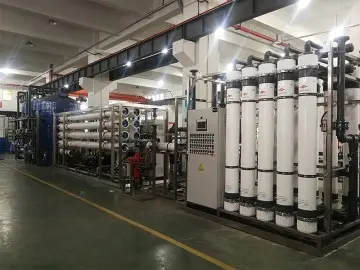
Water Reuse Equipment (Pretreatment + UF + RO Process)
-
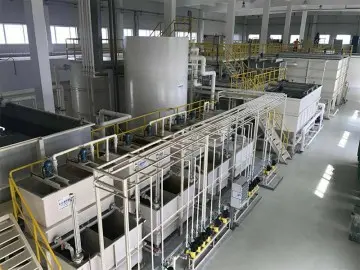
Water Reuse Equipment High-Ratio Water Reuse Process
-
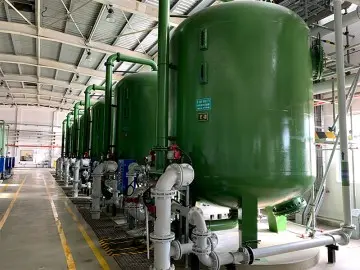
Industrial Demineralized Water Equipment
Send Inquiry
Frequently Asked Questions
The system combines multimedia pretreatment, Ultrafiltration (UF), and Reverse Osmosis (RO). Pretreatment and UF eliminate suspended particles (>50 μm), colloids, bacteria, and macromolecules, bringing turbidity below 0.1 NTU and SDI below 3. The RO system subsequently strips dissolved salts, micro-pollutants, and organics at an exceptional rejection rate (≥97%).
The RO permeate exhibits a conductivity of less than 50 μS/cm with deep demineralization. This high-grade reclaimed water can directly satisfy the stringent feed requirements for open circulating cooling towers, boiler makeup systems, floor washing, irrigation, or subsequent ultrapure water polishing systems.
Membrane health is maintained through a multi-tier defense approach: hollow-fiber PVDF UF modules with automatic hydraulic and Chemically Enhanced Backwash (CEB) sequences, continuous chemical dosing (anti-scalants, reducing agents, pH modulators), integrated CIP cleaning skids, and automated PLC product water flushing on shutdown.
The system recovery rate is engineered between 60% and 75%, calibrated specifically against raw water salinity, silica levels, and organic concentration to ensure stable operational pressure and long membrane lifetime without irreversible scaling.
Yes. Every unit is engineered around the client's laboratory water analysis report and target discharge/reuse standards. We deliver custom membrane pass configurations (single-stage two-pass or three-pass), tailored metallurgy (FRP/Stainless Steel), and turnkey automation programs confirmed prior to manufacturing.
This system is widely deployed in semiconductor & electronics manufacturing, chemical processing, textile and dyeing facilities, food & beverage processing, and municipal advanced wastewater reclamation projects looking to reduce fresh water intake and comply with zero liquid discharge (ZLD) roadmap targets.









