Certified Water Treatment & Desalination Plant Systems
Prefabricated skids and modular containerized systems engineered to meet international CE directives, ASME high-pressure standards, and ISO 9001 quality criteria.
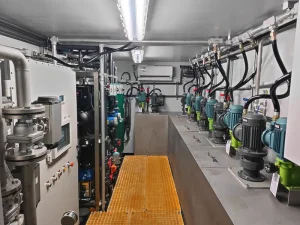
CE Certification China Suppliers Factory for Fracturing Flowback Water Reuse Treatment Equipment for Oil & Gas Field Stimulation Suppliers, Supplier
Explore Technical Specs
OEM China Suppliers Factory Fracturing Flowback Water Reuse Treatment Equipment for Oil & Gas Field Operations Manufacturers, Manufacturer
Explore Technical Specs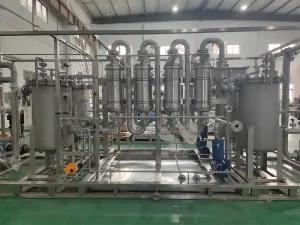
China China Suppliers Deoxygenation Membrane Equipment Factory for Efficient Physical Degassing of Water Factory, Supplier
Explore Technical Specs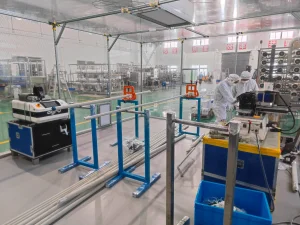
China China ODM Suppliers: Eco-Friendly Water Treatment Solutions from a Leading Factory Factory, Supplier
Explore Technical Specs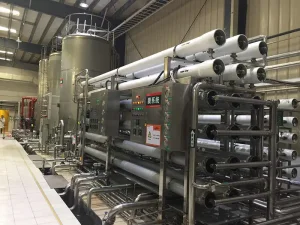
OEM China Suppliers Factory Purified Water System for Food & Beverage Production – Ensure Quality and Safety Factories, Suppliers
Explore Technical Specs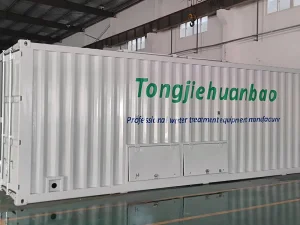
Wholesale China Suppliers of Factory-Integrated Containerized Seawater Desalination Plants for Off-Grid Solar Solutions Factories, Manufacturer
Explore Technical Specs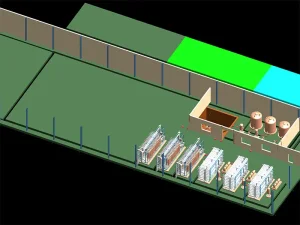
ODM OEM Precision Manufacturing Factories, Manufacturer
Explore Technical Specs
ODM OEM Precision Manufacturing: Leading China Suppliers and Factory for Customized Environmental Water Treatment Solutions Factories, Factory
Explore Technical SpecsGlobal Seawater Desalination Landscape & Commercial Imperatives
Addressing industrial freshwater scarcity, baseline energy efficiency, thermodynamic limits, and regional compliance mandates across global coastal corridors.
Thermodynamic & Energy Realities
Theoretical minimum work for desalting standard seawater (35,000 ppm TDS at 25°C) is roughly 1.06 kWh/m³ at zero recovery, rising to ~1.56 kWh/m³ at a typical 50% recovery rate.
- Modern isobaric energy recovery achieves overall system draw of < 2.8 kWh/m³
- Thermal MSF/MED phase-out driven by heavy steam and OPEX penalties
- VFD-driven high-pressure booster pumps curtail peak electrical demand
Regional Market Densities
Global mega-installations span the GCC hyper-saline waters (Arabian Gulf up to 45,000 ppm TDS) to Mediterranean coastlines and arid industrial corridors across Australia and the Americas.
- Middle East: Escalating shift from thermal desalination toward RO retrofits
- Southeast Asia & Caribbean: High demand for modular containerized SWRO
- Western Europe: Stricter environmental brine outfall and chemical regulations
Membrane Fouling Dynamics
Raw ocean feed is chemically variable and biologically active. Suspended marine particles, biofouling, and scaling ions (Ca²⁺, Mg²⁺, SO₄²⁻) challenge membrane longevity without proactive multi-barrier defenses.
- Silt Density Index (SDI₁₅) strictly moderated to < 3.0 via pressurized media or UF
- Dissolved Air Flotation (DAF) integrated to safeguard against red-tide algal blooms
- Continuous biocide dosing combined with non-oxidizing sodium bisulfite (SBS)
Critical Engineering Trade-offs: Boron Rejection, Flux, and Recovery Limits
Industrial operations and municipal agricultural supply demand stringent permeate boron limits (often < 0.5 mg/L to prevent crop toxicity). Because boric acid (B(OH)₃) is neutral at typical seawater pH (~8.0), standard single-pass SWRO rejection rates range between 75% and 88%. Tongjie engineers employ a dedicated second-pass treatment with pH elevation (dosing NaOH to reach pH 9.5–10.0), converting uncharged boric acid into negatively charged borate ions (B(OH)₄⁻), which reverse osmosis membranes reject at efficiencies exceeding 98.5%.
CE Directives, Metallurgy & Structural Safety Architecture
Full compliance roadmap for Pressure Equipment Directive (PED), Machinery Directive (MD), Low Voltage Directive (LVD), and marine corrosion-resistant alloys.
Pressure Equipment Directive (PED 2014/68/EU)
High-pressure RO stages operate under intense hydrostatic loads ranging from 60 to 85 bar (870 to 1,230 psi). Under PED Category III/IV, all piping manifolds, membrane pressure vessels, high-pressure dampeners, and safety valves must undergo verified design examination, third-party hydrostatic pressure testing (at 1.43× design pressure), and non-destructive weld testing (NDT/radiography) with full material traceability (EN 10204 3.1 certification).
Machinery Directive (2006/42/EC) & EN ISO 12100
Governs rotating machinery hazards involving multi-stage centrifugal high-pressure pumps and isobaric energy recovery devices. Tongjie integrates standardized physical guarding, automated overpressure burst mitigation, safety interlocks tied directly into dual-channel emergency stop architectures, and thorough risk mitigation dossiers aligned with EN 809 fluid pump safety protocols.
Low Voltage (LVD 2014/35/EU) & EMC (2014/30/EU)
Industrial control panels, Variable Frequency Drives (VFDs), and motor control centers (MCC) feature IP55/NEMA 4X minimum protection. High harmonic attenuation filters isolate VFD-generated distortion from plant power grids. Complete galvanic isolation of analog transmitter circuits protects sensor loops (conductivity, pH, ORP, flow, and pressure) from electromagnetic interference.
Metallurgy Selection: Combating Marine Pitting (PREN > 40)
Seawater with high chloride concentration rapidly degrades conventional 304 or 316L stainless steel through pitting and crevice corrosion. Tongjie utilizes Super Duplex Stainless Steel (2507 / UNS S32750 / 1.4410) with a Pitting Resistance Equivalent Number (PREN = %Cr + 3.3%Mo + 16%N) exceeding 42 for all high-pressure brine and feed wetted sections, complemented by high-grade ASME Section X FRP vessels.
| Plant Section | Process Environment | Standard Material Grade | Design Pressure Range | CE Harmonized Standard |
|---|---|---|---|---|
| Raw Seawater Intake | Unfiltered, high bio-load, SDI > 6 | Non-metallic HDPE / GRP / Duplex 2205 | 3 – 6 bar (Low Pressure) | EN 12201 / ISO 14692 |
| Pretreatment Filtration | Flocculated, chlorinated/dechlorinated | Epoxy-lined carbon steel / FRP | 4 – 8 bar (Low Pressure) | EN 13121 (FRP Vessels) |
| HP Feed Manifold | TDS 35,000–45,000 ppm, saturated O₂ | Super Duplex 2507 (PREN > 42) | 60 – 85 bar (High Pressure) | EN 13480 / PED Cat III |
| Membrane Vessels | High salinity reverse osmosis feed | ASME Sec X FRP / Multi-port Side Entry | 80 – 120 bar Max Rating | PED 2014/68/EU Module H |
| Permeate Post-Treatment | Corrosive soft permeate, pH 6.0–6.8 | Stainless Steel 316L / Food Grade PVC-U | 2 – 5 bar (Delivery Loop) | EN 1672-2 / Food Grade |
Turnkey Modular Applications Across Key Economic Sectors
From remote island resorts and off-grid facilities to oilfield exploration and green hydrogen production feed loops.
Remote Islands & Coastal Eco-Resorts
Isolated geographies suffer from high electricity costs and fragile ecosystems. Tongjie deploys fully containerized (20ft/40ft High Cube) SWRO plants equipped with isobaric energy recovery and automated Clean-in-Place (CIP) systems that link directly to solar PV arrays.
- Footprint: Standard CSC-certified marine shipping containers
- Acoustic insulation reduces operating noise to < 68 dB(A) at 1 meter
- Plug-and-play installation: Water production ready within 72 hours of delivery
Oilfield & Produced Water Reclamation
Upstream fracturing and produced fluids carry high salinity, emulsified hydrocarbons, and scaling minerals. Tongjie combines advanced oil-water separation with Disc Tube Reverse Osmosis (DTRO) platforms to achieve reinjection or zero-discharge compliance.
- Effluent purity: Residual oil content ≤ 5 mg/L, suspended solids ≤ 1 mg/L
- Open-channel DTRO modules overcome membrane fouling without blockage
- Rapid field commissioning: Turnkey operation achieved within ~15 days
Green Hydrogen Electrolysis Feed
Proton Exchange Membrane (PEM) and Alkaline water electrolyzers require feed water with electrical conductivity below 0.1 µS/cm and ultra-low TOC. Converting raw ocean water into high-purity demineralized feed water demands multi-barrier polishing.
- Integrated Process Train: Primary SWRO + Secondary Brackish RO + EDI
- Continuous deionization eliminates hazardous chemical regeneration on site
- Guaranteed water resistivity: Stable 10 to 18.2 MΩ·cm for electrolyzer protection
The Next Era of Industrial Desalination & Brine Mining
From high-recovery reverse osmosis to mechanical vapor recompression (MVR) and AI-driven predictive control algorithms.
Ultra-High Pressure RO (UHPRO)
Pushing hydraulic pressures up to 120–150 bar using specialized membrane vessels and composite flat-sheet chemistry. This enables brine concentration beyond 120,000 ppm TDS, shrinking thermal crystallizer footprints significantly.
Isobaric Energy Recovery Advances
Integrating 4th-generation ceramic rotary pressure exchangers (PX) that push net energy transfer efficiencies above 97.5%. High-pressure brine directly pressurizes raw seawater feed without intermediate motor conversion losses.
AI Smart Digital Twins
Deploying IoT-connected edge PLCs that stream normalized flux, differential pressure, and temperature data to deep-learning models. Algorithms predict mineral scaling and biofouling 14 days in advance, automating CIP schedules.
Mineral Mining & ZLD Synergy
Evolving SWRO concentrate discharge into a valuable source for strategic mineral recovery. Concentrated brines feed nanofiltration and electrodialysis metathesis to recover industrial-grade gypsum, high-purity NaCl, and magnesium salts.
Frequently Asked Engineering & Procurement Questions
Authoritative technical answers to common queries on sizing, compliance, metallurgy, and plant operations.
Engineers require a comprehensive lab analysis detailing Total Dissolved Solids (TDS), major cations (Na⁺, Ca²⁺, Mg²⁺, Ba²⁺, Sr²⁺), anions (Cl⁻, SO₄²⁻, HCO₃⁻), silica (SiO₂), boron, pH, Silt Density Index (SDI₁₅), total suspended solids (TSS), and temperature fluctuations across seasons. Feed salinity and seasonal temperature dictate membrane flux, osmotic pressure, and high-pressure pump motor sizing.
CE compliance for water treatment machinery integrates multiple EU directives: Pressure Equipment Directive (PED 2014/68/EU) covers all vessels, valves, and piping pressurized beyond 0.5 bar; Machinery Directive (2006/42/EC) verifies mechanical risk controls for high-pressure pumps; and the Low Voltage/EMC Directives validate electrical safety and control architecture. A notified body examines technical files, weld qualifications, and hydrostatic tests before issuing the Declaration of Conformity.
Seawater high-pressure feed typically contains chloride levels ranging from 19,000 to 25,000 mg/L under pressures up to 85 bar. Grade 316L stainless steel has a PREN of ~25, making it susceptible to rapid pitting and crevice corrosion under high aeration and static stagnation. Super Duplex 2507 (1.4410) provides a PREN exceeding 42, ensuring structural resilience against localized chloride attack and stress corrosion cracking.
High-performance polyamide thin-film composite SWRO membranes typically deliver an operating life of 4 to 7 years. Longevity depends on effective pretreatment: keeping feed SDI₁₅ below 3.0, ensuring zero exposure to free chlorine via online ORP/sodium bisulfite control, dosing antiscalants to prevent sulfate/carbonate precipitation, and executing automated low-pressure permeate flushes during every scheduled or emergency plant shutdown.
Containerized desalination packages shift 90% of structural piping, electrical wiring, PLC control integration, and pressure testing from the remote field site to an ISO-controlled factory environment. Skids undergo complete Factory Acceptance Testing (FAT) with wet commissioning prior to export, reducing field installation schedules from six months to under two weeks, while eliminating on-site hot-work permits and fabrication errors.
Yes. Tongjie produced water treatment trains utilize open-channel Disc Tube Reverse Osmosis (DTRO) modules. Unlike standard spiral-wound configurations that foul when exposed to residual hydrocarbons and high TSS, DTRO modules feature wide flow pathways and hydrodynamic disc spacers that tolerate high silt loads and total salinity up to 100,000 ppm TDS, enabling long continuous service cycles.
Ultra-Pure, Demineralization & Zero Liquid Discharge Packages
High-specification membrane separation hardware designed for food and beverage, electronics, oilfields, and pharmaceutical applications.
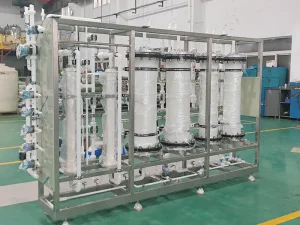
Wholesale China Ultra-Pure Water System for Semiconductor & Electronics | Top Suppliers & Factory Quality Solutions Suppliers, Manufacturers
Explore Technical Specs
ODM China Suppliers Factory Purified Water System for Food & Beverage - Two-Stage RO and Deep Disinfection Technology Suppliers, Supplier
Explore Technical Specs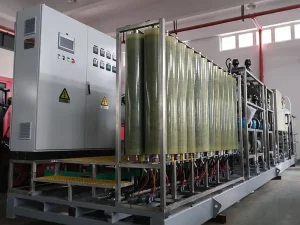
ODM China Suppliers Factory for Oilfield Fracturing Flowback Fluid Treatment System with Zero-Discharge Technology Suppliers, Manufacturer
Explore Technical Specs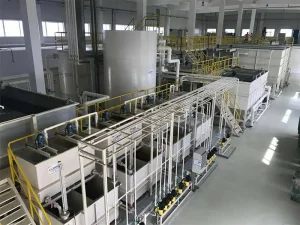
China High-Ratio Water Reuse Process Equipment Suppliers in China | Advanced Wastewater Treatment Factory Manufacturers, Manufacturer
Explore Technical Specs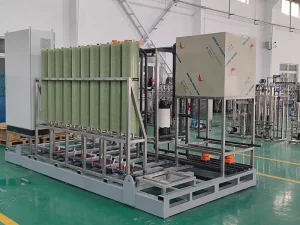
ODM High-Salinity Wastewater Treatment System | China Suppliers & Factory for ZLD Solutions Suppliers, Manufacturers
Explore Technical Specs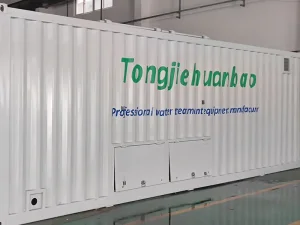
China China Modular Containerized Seawater Desalination Equipment | Rapid Deployment by Leading Suppliers and Factory Factories, Suppliers
Explore Technical Specs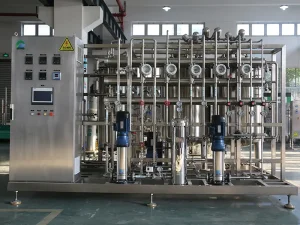
China China Pharmaceutical Purified Water & WFI System Suppliers | High-Quality Factory Solutions for the Pharmaceutical Industry Factories, Factory
Explore Technical Specs