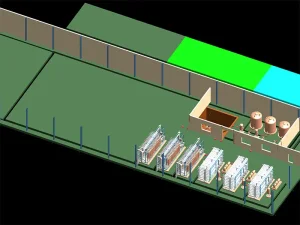
Factory-Engineered Seawater Desalination & High-Purity Systems
Explore our flagship industrial, marine, and mobile skid solutions engineered in our Shanghai manufacturing headquarters for global deployment.
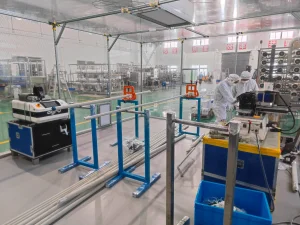
OEM ODM Full Value Chain Innovation Factories, Factory
View Technical Specs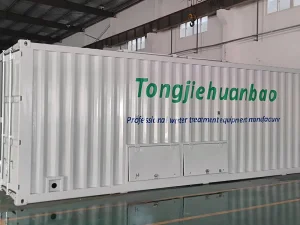
China China Suppliers: Factory-Integrated Containerized Seawater Desalination Plants for Instant Water Production Factories, Manufacturers
View Technical Specs
China China Suppliers of Containerized Seawater Desalination Plants - Factory-Integrated Mobile Solutions for Water Needs Suppliers, Supplier
View Technical Specs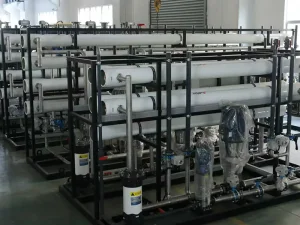
OEM High-Efficiency Brine Concentration Systems from China Suppliers | Advanced Membrane Technology Factory Factory, Manufacturer
View Technical Specs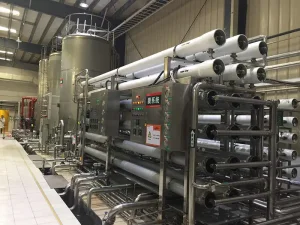
ODM China Food & Beverage Process Water System - Reliable Suppliers and Factory Solutions for Purified Water Factory, Manufacturers
View Technical Specs
CE Certification China Suppliers: Factory-Integrated Containerized Seawater Desalination Plants for Off-Grid Solar Water Production Factories, Manufacturer
View Technical Specs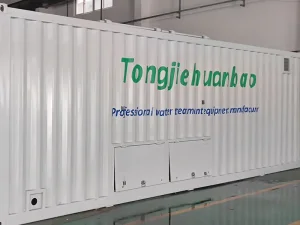
Wholesale Modular Containerized Seawater Desalination Equipment from China Suppliers | Factory-Ready for Rapid Deployment Supplier, Manufacturer
View Technical Specs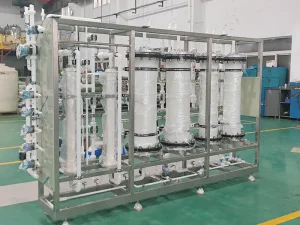
CE Certification China Suppliers Factory Electronic Ultra-Pure Water System for Semiconductor & Microelectronics with 18.2 MΩ·cm Resistivity Factories, Manufacturer
View Technical SpecsThe Global Commercial & Industrial Landscape of Seawater Reverse Osmosis (SWRO)
In an era marked by accelerating aquifer depletion, climate variability, and intensive coastal industrialization, Seawater Reverse Osmosis (SWRO) has decisively emerged as the cornerstone of planetary water security. Over the past decade, technological innovation has shifted desalination from an energy-intensive municipal subsidy model to an indispensable, highly economical industrial asset. Globally, installed desalination capacity surpasses 100 million cubic meters per day, with membrane-based SWRO commanding more than 85% of all newly commissioned municipal and industrial plants.
Across key geographic zones—including the Gulf Cooperation Council (GCC) countries, the Mediterranean basin, coastal Latin America, and island archipelagos throughout Southeast Asia and the Caribbean—the demand profile for desalination equipment has matured. Plant asset managers and EPC contractors no longer prioritize initial procurement expenditure alone; instead, their criteria focus on thermodynamic efficiency, lifecycle membrane longevity, automated resilience to severe marine biofouling, and documented conformity with rigorous international regulatory benchmarks such as the European Union’s CE marking directives.
The Anatomy of CE Certification in Seawater Reverse Osmosis Plants
Procuring industrial water treatment machinery for international infrastructure projects requires verified, non-negotiable compliance. A genuine CE Certificate is not merely a trading label; it is a legally binding verification that the entire high-pressure hydrodynamic, electrical, and structural assembly conforms to European harmonized health, safety, and environmental protection directives. Shanghai Tongjie holds verified CE compliance and ISO 9001, ISO 14001, and ISO 45001 certifications, supported by Class II Contracting Qualifications in Environmental Protection Engineering and Mechanical & Electrical Installation.
| EU Regulatory Directive | Mandatory Engineering Scope | Tongjie Manufacturing Execution & Quality Control |
|---|---|---|
| PED 2014/68/EU (Pressure Equipment Directive) |
High-pressure RO vessels, duplex manifolding, surge vessels, and safety relief valves operating up to 85 bar. | 100% radiographic weld testing, non-destructive hydrostatic pressure testing at 1.5× design pressure, Super Duplex stainless steel (2507 / 1.4410) construction with PREN > 42 to prevent pitting and crevice corrosion. |
| Machinery Directive 2006/42/EC | Mechanical safety, rotating equipment hazards, structural integrity of container skid systems, and ergonomic access. | Fail-safe emergency shutdown systems, vibration monitoring sensors on high-pressure booster pumps, acoustic soundproofing insulation (<72 dB(A)), and FEM-analyzed structural frames. |
| LVD 2014/35/EU (Low Voltage Directive) |
Electrical distribution assemblies, variable frequency drives (VFD), high-voltage isolation, and ground protection. | IP55/IP65 ingress-rated electrical cabinets, climate-controlled PLC automation enclosures, Schneider/Siemens electrical protection components, and full galvanic isolation. |
| EMC 2014/30/EU (Electromagnetic Compatibility) |
Electromagnetic emissions and immunity of instrumentation, PLCs, and VFD inverters against power fluctuations. | Integrated line reactors, active harmonic filters suppressing THD < 5%, shielded signal conduits, and rigorous noise immunity testing to ensure uninterrupted telemetry. |
High-Efficiency Desalination Technological Architecture
Our multi-barrier process trains integrate advanced pretreatment, thermodynamic energy recovery, and precision membrane separation to ensure stable water production under harsh seawater conditions.
Pretreatment & UF Barrier
Seawater quality fluctuates dynamically with red tides, silt, and algae blooms. Our multi-stage pretreatment combines coagulation, multi-media filtration, and pressurized hollow-fiber Ultrafiltration (UF) modules to guarantee SDI < 2.5 and turbidity < 0.1 NTU before feedwater touches RO membranes.
- Automatic backwash with air scouring
- Real-time Turbidity & SDI online analyzers
- Dosing skids: Coagulant, Sodium Bisulfite, Antiscalant
Isobaric Energy Recovery (ERD)
High-pressure pumping represents the principal operational cost of SWRO. Tongjie integrates state-of-the-art Isobaric Pressure Exchangers (PX), transferring energy from the high-pressure concentrate stream directly to feed seawater with net transfer efficiencies up to 98%.
- Specific Energy Consumption: 2.5 – 3.2 kWh/m³
- Direct ceramic rotor pressure transfer
- Significant CAPEX & OPEX reduction on motor sizing
Advanced Polyamide Array
Configured with high-rejection, fouling-resistant spiral-wound thin-film composite polyamide membranes. Engineered array geometry maximizes recovery (40% to 50%) while preventing concentration polarization and chemical scaling across lead and end vessels.
- Salt rejection: ≥ 99.7% to 99.85%
- Boron rejection customized for agricultural limits (<0.5 mg/L)
- Integrated Clean-In-Place (CIP) & permeate flush skid
Engineered Solutions for Critical Industrial Applications
From isolated islands to heavy petrochemical refineries and offshore marine platforms, Tongjie delivers customized SWRO plants designed around site constraints, power infrastructure, and localized seawater profiles.
Island & Coastal Resorts
Decentralized communities and luxury island hospitality require quiet, odorless, and completely automated potable water supply complying with WHO drinking water standards.
- Footprint-optimized standard 20ft/40ft containers
- Post-mineralization calcite filters for palate taste
- Unattended operation with smartphone telemetry
Power & Petrochemical
Thermal power plants, hydrogen electrolyzer arrays, and chemical refineries demand high-volume boiler feed water and low-conductivity process water derived from open-intake coastal seawater.
- Two-pass SWRO + EDI producing < 0.1 μS/cm pure water
- Heavy-duty instrumentation (Endress+Hauser/Rosemount)
- Corrosion-resistant super austenitic/titanium metallurgy
Offshore & Marine Skids
Engineered for commercial vessels, floating production storage and offloading (FPSO) units, and offshore oil platforms where pitch, roll, and extreme marine atmospheres dominate.
- DNV / BV marine class certification compliance
- Vibration-damped structural base frames
- Explosion-proof ATEX / IECEx certified junction boxes
Mining in Arid Basins
Copper, lithium, and gold mines in Chile, Western Australia, and the Middle East rely on massive high-pressure seawater conveyance and robust RO skids for continuous ore leaching and processing.
- High operating pressure limits (up to 85 bar)
- Tolerance for extreme thermal fluctuations (5°C to 45°C)
- Coupling capability with high-recovery ZLD systems
Emerging Industry Trends & Next-Gen Technology Roadmap
The desalination industry is experiencing a profound transition driven by renewable energy integration, artificial intelligence process optimization, and circular economy brine management.
Solar & Wind Hybridization
Direct coupling of containerized SWRO units with PV arrays and battery energy storage (BESS). Variable frequency drives dynamically modulate high-pressure pump speeds to match intermittent green power availability.
AI Digital Twins & Predictive CIP
Machine learning models continuously evaluate feed salinity, temperature, normalized differential pressure, and salt passage to predict biofouling before it occurs, triggering automated low-chemical micro-cleans.
Graphene & Biomimetic Membranes
Deployment of next-generation carbon nanotube and aquaporin-infused membranes that deliver up to 300% higher water flux at equivalent pressure thresholds, dramatically shrinking the physical skid footprint.
Brine Mining & ZLD Circularity
Integrating Disc Tube Reverse Osmosis (DTRO), Electrodialysis Reversal (EDR), and Mechanical Vapor Recompression (MVR) crystallization to extract high-purity industrial salts and valuable lithium from SWRO reject brine.
Frequently Asked Questions: SWRO Engineering & Procurement
Detailed technical answers for EPC engineers, procurement executives, and plant managers specifying seawater reverse osmosis systems.
Q How does Shanghai Tongjie protect high-pressure components against aggressive seawater corrosion?
Seawater containing upwards of 35,000 to 45,000 mg/L TDS poses severe risks of localized pitting and crevice corrosion. Tongjie utilizes Super Duplex stainless steel (UNS S32750 / EN 1.4410) with a Pitting Resistance Equivalent Number (PREN) > 42 for all high-pressure piping manifolds, high-pressure pump wet ends, and energy recovery interconnections. Low-pressure manifolds utilize non-metallic UPVC, PVDF, or marine-grade GRP.
Q What specific data points are needed to generate an exact thermodynamic system design?
To produce an authoritative mass balance, P&ID, and projected electrical load profile, our engineering team requires: (1) Complete raw water chemical analysis including TDS, Boron, Silica, Barium, Iron, and Hardness; (2) Feedwater temperature range (minimum and maximum); (3) Silt Density Index (SDI15) or turbidity profile; (4) Desired daily permeate flow (m³/day); (5) Permeate water quality target (e.g., WHO drinking water, boiler feed, or agricultural limits); and (6) Available power grid specifications (voltage, frequency).
Q How quickly can a factory-integrated containerized SWRO system be commissioned on-site?
Because every Tongjie containerized plant undergoes comprehensive mechanical, electrical, and hydrodynamic Factory Acceptance Testing (FAT) with simulated saline water in our Shanghai manufacturing plant prior to export, on-site commissioning is compressed to 5–15 days. Operators merely anchor the container, connect the feed intake, brine discharge, permeate lines, and main 3-phase electrical supply.
Q What is the typical membrane operating lifespan in a Tongjie industrial SWRO plant?
Under continuous industrial operation with our automated chemical dosing, UF membrane pretreatment barrier, and scheduled permeate flushes during shutdown, spiral-wound polyamide membranes consistently deliver a lifespan of 3 to 5 years. Our automated PLC controls prevent hydraulic shock through VFD soft-starts and automatically initiate Clean-In-Place (CIP) sequences whenever normalized differential pressure rises by 15%.
Q Can Tongjie SWRO units operate with variable or off-grid solar photovoltaic power?
Yes. Tongjie has engineered direct-coupled and hybrid solar-diesel containerized desalination configurations. Utilizing proprietary software logic and variable speed drive control, our systems can throttle flow rates across changing solar radiation curves without triggering high-pressure shutdowns or inducing membrane compaction, making them ideal for remote islands and mining exploration camps.
Q Does Shanghai Tongjie supply complete zero liquid discharge (ZLD) systems for brine management?
Yes. In environmentally sensitive coastal bays or inland mining zones where brine return to the ocean is prohibited, Tongjie engineers complete Zero Liquid Discharge (ZLD) trains. We integrate Disc Tube Reverse Osmosis (DTRO) to pre-concentrate brine up to 120,000 mg/L TDS, followed by Mechanical Vapor Recompression (MVR) evaporators and crystallizers to convert the waste stream into reusable distillate and solid commercial salts.
Specialized Industrial Water & Wastewater Treatment Systems
Explore our advanced water reuse, fracturing flowback, pharmaceutical ultra-pure, and specialized industrial wastewater treatment equipment lines manufactured to global export standards.
Wholesale China Suppliers Factory Mobile Containerized Seawater Desalination Plants for Instant Water Production Factories, Factory
View Technical Specs
China China Ultra-Pure Water System for Semiconductor & Electronics - Reliable Suppliers & Factory Solutions Factory, Suppliers
View Technical Specs
China Eco-Friendly Water Treatment Solutions from China's Leading Suppliers and Factory with ODM Services Supplier, Manufacturers
View Technical Specs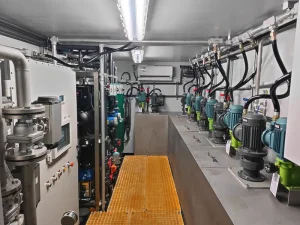
Wholesale Fracturing Flowback Water Reuse Treatment Equipment - China Suppliers & Factory for Oil & Gas Field Operations Manufacturers, Manufacturer
View Technical Specs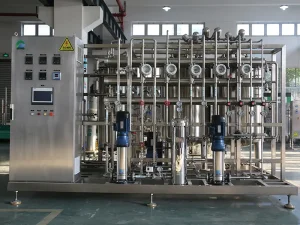
CE Certification High-Quality Pharmaceutical Purified Water & WFI System - Top China Suppliers & Factory Solutions Manufacturers, Manufacturer
View Technical Specs
China China ODM Suppliers: Eco-Friendly Water Treatment Solutions from a Leading Factory Factory, Supplier
View Technical Specs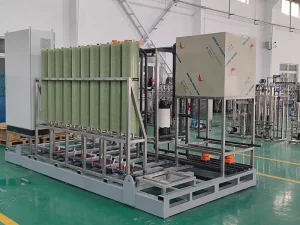
ODM High-Salinity Wastewater Treatment System | China Suppliers & Factory for ZLD Solutions Suppliers, Manufacturers
View Technical Specs