
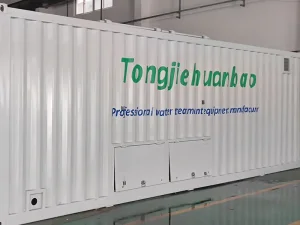
Modular Containerized Seawater Desalination Equipment | Rapid Deployment
Explore ConfigurationBrowse factory-direct configurations built to international municipal and industrial purity standards. Each unit is pre-assembled, skid-mounted, and tested for immediate plug-and-play field deployment.
Modular Containerized Seawater Desalination Equipment | Rapid Deployment
Explore Configuration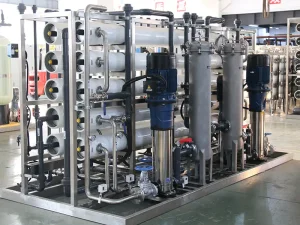
CE Certified Osmosis-Assisted Reverse Osmosis (OARO) System
Explore Configuration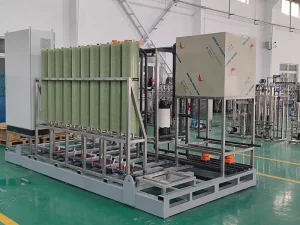
ODM High-Salinity Wastewater Reduction & Zero Liquid Discharge (ZLD)
Explore Configuration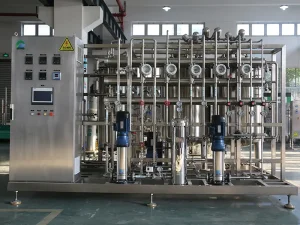
OEM Pharmaceutical Grade Purified Water & Water For Injection (WFI)
Explore Configuration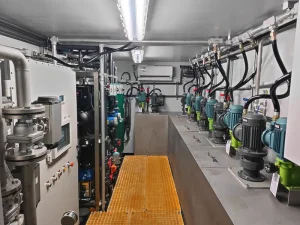
Fracturing Flowback Water Reuse Equipment for Oil & Gas Facilities
Explore Configuration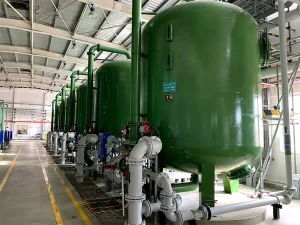
Industrial Demineralized Water Equipment - Dual RO & Continuous EDI
Explore Configuration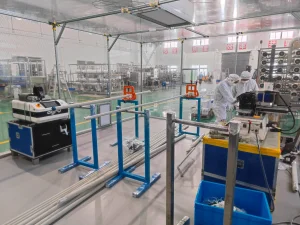
Eco-Friendly Industrial Water Recycling with Comprehensive ODM Services
Explore Configuration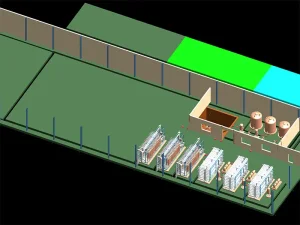
Precision Skid-Mounted Custom Enclosure Engineering & Assembly
Explore ConfigurationGlobal water stress, driven by aquifer depletion and rapid industrial expansion along coastal economic corridors, has transformed seawater desalination from an emergency backup measure into an indispensable municipal and industrial baseline utility. Modern seawater reverse osmosis (SWRO) facilities represent the pinnacle of chemical separation engineering.
Through the deployment of isobaric pressure exchangers (ERDs) and high-efficiency variable-frequency drive (VFD) positive displacement pumps, contemporary SWRO systems have reduced energy consumption from historically punitive levels of >8 kWh/m³ down to an economically competitive 2.8 – 3.5 kWh/m³.
Cross-linked aromatic polyamide composite membranes demonstrate salt rejection rates exceeding 99.85%. Advanced surface modifications inhibit bio-fouling and colloidal deposition, guaranteeing multi-year structural integrity even under harsh hyper-saline oceanic conditions with Total Dissolved Solids (TDS) exceeding 45,000 ppm.
The global municipal paradigm is rapidly shifting away from multi-billion dollar centralized civil structures toward agile, containerized modules. Prefabricated container systems slash onsite engineering lead times by 70%, allowing island resorts, mining enclaves, and naval stations to establish secure drinking water networks.
Raw marine conditions vary drastically across geographical regions. Sizing a robust desalination train requires precise engineering adjustments tailored directly to oceanic salinity profiles, thermal swings, and local regulatory mandates.
Isolated hospitality properties and island townships require high acoustic damping, zero vibration transmission, and compact spatial designs. Automated remineralization calcite filters and continuous ultraviolet (UV) sterilization cycles ensure permeate complies rigorously with WHO potability criteria without chemical residue.
For naval operations and offshore oil rigs, structural resilience against marine atmospheric corrosion is mandatory. Skid modules are fabricated from Super Duplex Stainless Steel (2507) and 316L, paired with automated fresh-water flushing sequences that stop crystallization during intermittent shutdowns.
Coastal petrochemical, fertilizer, and metallurgical refineries require dual-stream systems: producing potable domestic water for onsite workers alongside high-purity demir water (conductivity < 0.1 µS/cm) for high-pressure boiler feed trains, achieved via secondary pass RO coupled with Continuous Electrodeionization (CEDI).
As a National High-Tech Enterprise and Shanghai Specialized & Sophisticated Enterprise, Shanghai Tongjie merges comprehensive digital fabrication with complete vertical integration, providing an unrivaled global competitive edge in cost, build quality, and delivery speed.
We directly control precision welding, laser tube profiling, and pressure vessel manufacturing. With Class II Contracting Qualifications in Environmental Protection Engineering and M&E Installation, structural tolerances are inspected to micro-millimeter precision before assembly.
Every seawater RO container is subjected to rigorous hydraulic pressure testing (up to 120 bar) and raw water simulations in our Shanghai test bay. Data integrity is confirmed before packaging, minimizing on-site commissioning to under 15 days.
We provide complete architectural and electrical engineering flexibility for international EPC partners, including PLC logic adaptation (Siemens, Allen-Bradley, Schneider), localized UI language configurations, and tailored physical dimensions.
To address the environmental challenges of brine discharges and high grid dependencies, our R&D facility in Shanghai is executing an advanced engineering roadmap focusing on sustainability and AI optimization.
Pioneering direct DC-coupled photovoltaic and battery energy storage architectures that dynamically vary high-pressure pump speeds based on solar irradiance curves, achieving 100% off-grid freshwater production for remote equatorial islands.
Integrating machine learning algorithms within our proprietary PLC modules to monitor real-time Silt Density Index (SDI), trans-membrane pressure (TMP), and temperature, allowing automated optimization of chemical dosing and automated backwashing cycles.
Closing the loop by pairing SWRO brine reject with high-pressure Disc Tube Reverse Osmosis (DTRO), Osmosis-Assisted RO (OARO), and mechanical vapor recompression (MVR) crystallization to extract commercial-grade industrial salts.
Engineering reliable water plants demands stringent compliance with global health, environmental, and mechanical standards. Tongjie guarantees full audit traceability and comprehensive documentation across every delivered vessel.
Certified under EU Pressure Equipment Directive (PED 2014/68/EU) and Machinery Directive (2006/42/EC), ensuring safe integration into high-specification European projects.
Certified under ISO 9001:2015 Quality Management, ISO 14001:2015 Environmental Systems, and ISO 45001:2018 Occupational Health & Safety frameworks.
All high-pressure piping manifolds, super duplex headers, and structural skids undergo x-ray non-destructive weld testing (NDT) according to ASME Section IX codes.
Remote SCADA diagnostics allow Shanghai-based lead engineers to troubleshoot field anomalies in real time, backed by global courier networks for rapid spare component dispatch.
Direct answers to the critical process and logistical questions evaluated by mechanical engineers and municipal procurement officers prior to equipment procurement.
Review our high-efficiency deoxygenation membranes, containerized plants, and extreme-pressure concentration technologies available for direct export and turnkey engineering deployment.
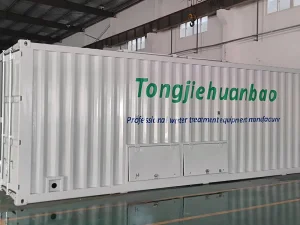
OEM Containerized Desalination Plants for Instant Off-Grid Production
Explore Configuration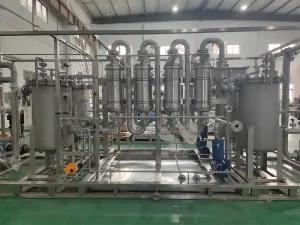
Physical Degassing Deoxygenation Membrane Systems for Ultrapure Feeds
Explore Configuration
Wholesale High-Salinity OARO Membrane Solutions for Industrial Effluent
Explore Configuration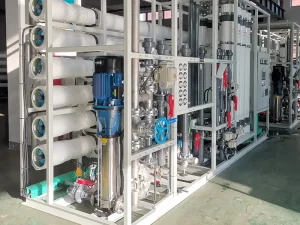
Compact Seawater Desalination Systems for Coastal Municipalities & Islands
Explore Configuration
Factory-Direct Containerized Mobile Water Purification Systems
Explore Configuration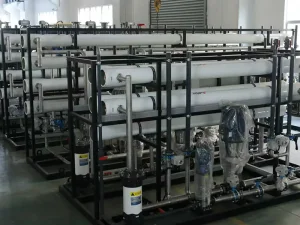
High-Efficiency Industrial Brine Concentration Systems for Zero Liquid Discharge
Explore Configuration
CE Certified Sanitary Pharmaceutical Purified Water & WFI Generation
Explore Configuration
Ultra High-Pressure DTRO & STRO Membrane Concentration Systems
Explore Configuration