
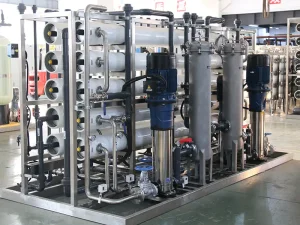
Next-Gen High Pressure Membrane Systems: Batch 01
Pre-engineered, factory-tested skids and containerized units optimized for osmotic challenges, high TDS concentration, and harsh petrochemical operations.
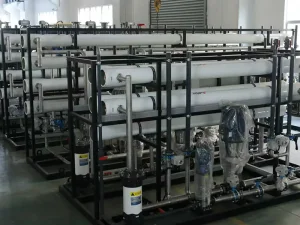
ODM Brine Concentration & Volume Reduction Systems Factories, Manufacturers
View Specifications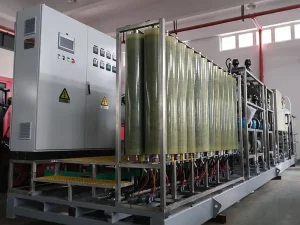
CE Certification China Oilfield Fracturing Flowback Fluid Treatment System
View Specifications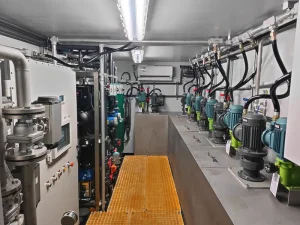
Wholesale Fracturing Flowback Water Reuse Treatment Equipment for Oil & Gas
View Specifications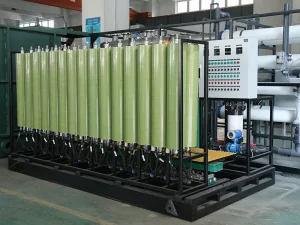
China DTRO & STRO High-pressure Membrane Concentration System
View Specifications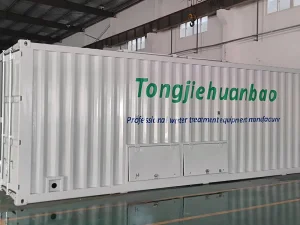
ODM Factory-Direct Containerized Seawater Desalination Plants (Off-Grid Solar Ready)
View Specifications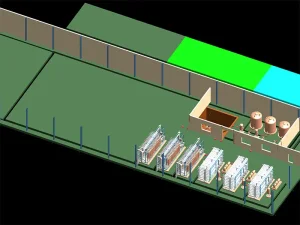
ODM OEM Precision Manufacturing for Customized Water Treatment Solutions
View Specifications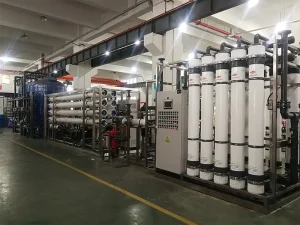
CE Certification High-Ratio Water Reuse Equipment - UF & RO Advanced Process
View SpecificationsIndustrial State: The Paradigm Shift in High Pressure Membrane Engineering
Global industrial water management is transitioning from end-of-pipe dilution and basic biological treatment toward true Zero Liquid Discharge (ZLD) and high-recovery resource reclamation. Historically, handling high-salinity brines containing dissolved solids (TDS) exceeding 35,000 mg/L relied solely on thermal evaporation mechanisms, such as Mechanical Vapor Recompression (MVR) and Multi-Stage Flash (MSF). However, the massive capital expenditure and intensive energy footprints of purely thermal systems (often requiring 40 to 70 kWh per cubic meter of treated water) forced an engineering shift toward high-pressure membrane concentration.
As an established China High Pressure Membrane System Factory and Supplier, Shanghai Tongjie Environmental Protection Technology Co., Ltd. (Tongjie) engineers ultra-high pressure membrane assemblies capable of operating reliably at pressures from 75 bar up to 160 bar (1080 to 2320 psi). By concentrating refractory brines up to 120,000–180,000 mg/L TDS before thermal crystallizers, our membrane arrays cut evaporative load volumes by 60% to 80%, shrinking overall facility OPEX by more than half while drastically lowering lifecycle carbon intensity.
DTRO (Disc Tube Reverse Osmosis)
Features an open-channel geometry where octagonal membrane cushions are layered between hydraulic discs. The open flow pattern mitigates colloidal deposition, accommodates extreme feed SDI (>5), and facilitates turbulent shear velocities that suppress concentration polarization up to 160 bar hydraulic pressures.
STRO (Spiral Tube Reverse Osmosis)
Combines the volumetric packing density of spiral wound modules with optimized wide-channel feed spacers (up to 80-120 mil). STRO excels in intermediate high-pressure passes (75 to 100 bar), yielding reduced capital footprint while offering superior resistance to biological and inorganic scaling.
OARO & Osmotically-Assisted Processes
Utilizes staged counter-current saline sweep streams on the permeate side to reduce trans-membrane net osmotic pressure (NOP). This breakthrough allows standard polyamide selective layers to dewater brines up to near-saturation salinities without requiring mechanically unviable hydrostatic pressures.
Engineering Matrix: Membrane Systems Comparison
Comprehensive operational envelope benchmarking standard spiral RO against high-pressure DTRO, STRO, and thermal alternatives.
| Parameter / Architecture | Conventional Spiral RO | STRO High-Pressure | DTRO Ultra-High Pressure | Thermal Evaporation (MVR) |
|---|---|---|---|---|
| Operating Pressure Limit | 55 - 82 bar | 70 - 100 bar | 90 - 160 bar | Atmospheric / Vacuum |
| Max Allowable TDS (Concentrate) | 45,000 - 65,000 mg/L | 75,000 - 100,000 mg/L | 120,000 - 180,000 mg/L | Up to Crystallization (>300k) |
| Feed Silt Density Index (SDI) | < 3.0 required | < 5.0 permissible | < 15.0 accommodated | Not sensitive to SDI |
| Energy Demand (per m³ permeate) | 2.5 - 4.5 kWh/m³ | 4.5 - 8.0 kWh/m³ | 7.0 - 14.0 kWh/m³ | 35.0 - 65.0 kWh/m³ |
| Fouling Cleaning Frequency | Frequent (strict prep required) | Moderate (wide-channel spacer) | Low (open channel turbulent disc) | Scaling mitigation mandatory |
| Capital Cost Comparison | Baseline (1.0x) | 1.3x - 1.6x | 1.8x - 2.2x | 4.5x - 7.0x |
Macro-Scale Turnkey Solutions: Sector Applications
Engineered skid packages solving complex effluent chemistry, high chemical oxygen demand (COD), and extreme salinity across tough environments.
Coal Chemical & Petrochemical ZLD
Coal-to-olefins, gasification blowdown, and refinery wastewater contain high concentrations of chloride, sulfate, silica, and refractory polycyclic hydrocarbons. Tongjie deploys softening and catalytic ozone pretreatment followed by 120-bar DTRO systems, achieving >85% recovery before sending residual concentrate to our containerized MVR crystallizers.
Oilfield Produced & Frac Flowback Fluids
Unconventional fracturing returns encounter severe salinity fluctuations alongside emulsified hydrocarbons. Engineered for clients across Central Asia (Kazakhstan) and the Middle East, our mobile skids leverage micro-bubble DAF, selective softening, and open-channel DTRO to bring oil content down to ≤5 mg/L and SS ≤1 mg/L for certified underground reinjection.
Landfill Leachate & Mining Acid Runoff
Leachate is notorious for extreme humic substances, ammonia-nitrogen, and heavy metal ions that immediately plug ordinary spiral configurations. Utilizing disc-stack high-pressure membranes with automated hydraulic backflushing and specialized CIP procedures, our plants recover high-purity permeate complying with surface discharge criteria.
Future Outlook: AI Optimization & Carbon-Neutral Membrane Technologies
The road ahead for high-pressure membrane systems is intrinsically linked to material science advances, digital twinning, and autonomous control architectures. At Tongjie's Shanghai R&D center, current engineering programs target three transformative vectors:
1. 200+ Bar Ultra-High Pressure Operation: Moving past the current industry ceiling of 160 bar, next-generation disc plates molded from carbon-fiber reinforced polyamides and duplex 2507 stainless steel housings are under stress endurance validation. Achieving 200 bar allows direct membrane concentration up to 220,000 mg/L TDS, pushing concentration limits toward solid salt precipitation within the membrane stage itself.
2. AI Predictive Flux & Smart Antiscalant Modulation: Modern plants incorporate digital sensors measuring differential pressure profiles across individual membrane discs. Machine learning algorithms model real-time mineral saturation indexes (CaSO4, BaSO4, SiO2), dynamically dosing antiscalants and scheduling brief forward-flushes before micro-nucleation scales the selective layers.
3. Direct Integration with Off-Grid Photovoltaics: Fluctuating renewable power presents pressure surges fatal to conventional RO skids. Tongjie's patented variable-frequency high-pressure pumping algorithms buffer solar intermittency, letting containerized desalination and ZLD plants ramp operational output in synch with solar yields without membrane delamination.
Engineering & Procurement FAQ
Technical guidance addressing real-world system design, recovery parameters, metallurgy, and operational safety.
How do DTRO and STRO systems manage concentration polarization at extreme TDS levels?
Concentration polarization occurs when rejected ions accumulate along the boundary layer of the membrane surface. DTRO counters this via an open-channel geometry featuring disc deflectors that create high Reynolds numbers and continuous turbulent shear across the membrane cushion. STRO uses customized wide-mesh feed spacers that disrupt laminar boundary layers, keeping scaling precursors suspended in the bulk stream.
What metallurgy is specified for 90 to 160 bar chloride-rich brine systems?
Chloride stress corrosion cracking is a primary failure mode at elevated pressures. Tongjie utilizes Super Duplex Stainless Steel (UNS S32750 / 1.4410) or 254 SMO for all high-pressure manifolds, instrument ports, and pressure vessel heads. For extreme acidic or high-H2S conditions, Hastelloy C-276 wetted parts are integrated to ensure structural integrity across extended service lives.
What is the typical operational lifecycle of high-pressure DTRO membrane cushions?
Under correct operating conditions and routine enzymatic or chemical cleaning-in-place (CIP), DTRO membrane cushions typically achieve a lifespan of 24 to 36 months in difficult wastewater applications (e.g., landfill leachate or coal chemical ZLD). Because cushions are independent components within the module, individual damaged elements can be replaced without discarding the entire vessel assembly.
How does Tongjie factory-test containerized skids prior to export?
Every system undergoes stringent Factory Acceptance Testing (FAT) at our Shanghai facility. This includes hydrostatic pressure testing at 1.5x design pressure, 48-hour continuous wet operational simulation using synthetic brine, electrical PLC/SCADA loop checks, and automated emergency relief validation to guarantee seamless plug-and-play commissioning on arrival.
Next-Gen High Pressure Membrane Systems: Batch 02
Specialized solutions for deoxygenation, pharmaceutical-grade pure water, rapid-deployment modular installations, and ZLD brine management.
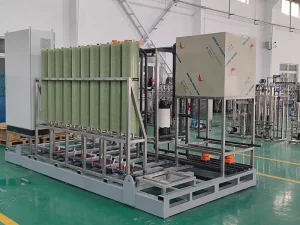
ODM High-Salinity Wastewater Treatment System | Factory for ZLD Solutions
View Specifications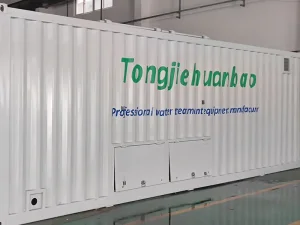
Wholesale Modular Containerized Seawater Desalination Equipment - Rapid Deployment
View Specifications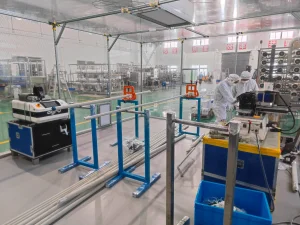
China Eco-Friendly Water Treatment Solutions from China's Leading Factory with ODM
View Specifications
China High-Efficiency Brine Concentration Systems - Advanced Factory Solutions
View Specifications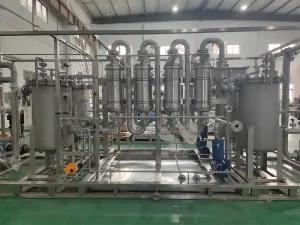
Wholesale China Deoxygenation Membrane Equipment - Physical Degassing Technology
View Specifications
CE Certification China Oilfield Fracturing Flowback Fluid Treatment System Solutions
View Specifications
China High-Efficiency Brine Concentration System for Wastewater Treatment Factory Solutions
View Specifications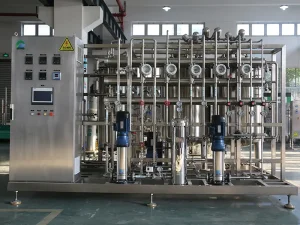
Wholesale China Pharmaceutical Purified Water & WFI System for APIs
View SpecificationsVerified Manufacturing Credentials & Global Delivery Integrity
Direct from Shanghai: Fully audited management, design qualifications, and rigorous fabrication execution.
Certifications & Contracting Grade
CE Certification across all pressure equipment directives. Class II Contractor in Environmental Protection Engineering and Mechanical & Electrical Installation. Full management compliance certified under ISO 9001, ISO 14001, and ISO 45001.
R&D Patents & Process Mastery
National High-Tech Enterprise and Shanghai "Specialized & Sophisticated" Enterprise. Tongjie holds over 38 invention and utility patents covering open-channel spacer design, dynamic CIP sequences, and intelligent energy recovery device (ERD) integration.
Full OEM/ODM EPC Project Support
From custom P&ID generation, 3D modular containerization, and customized human-machine interfaces (HMI) to on-site commissioning and global lifecycle parts replenishment, Tongjie serves as an agile, reliable engineering partner for global EPCs.