
Standardized SWRO & Core Separation Machinery
Explore our core engineering catalog of modular, skid-mounted, and containerized seawater conversion infrastructure manufactured in Shanghai.
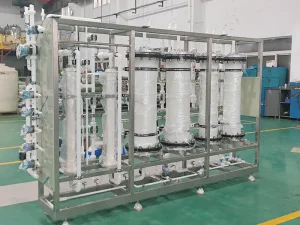
CE Certification China Ultra-Pure Water System for Semiconductor & Electronics Manufacturing | Suppliers & Factory
View Technical Matrix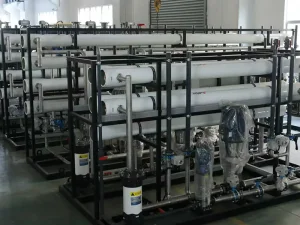
China High-Efficiency Brine Concentration Systems from China Suppliers - Advanced Factory Solutions for Wastewater Treatment
View Technical Matrix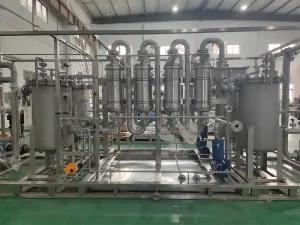
OEM Deoxygenation Membrane Equipment - China Suppliers and Factory for Effective Physical Degassing Solutions
View Technical Matrix
China High-Efficiency Brine Concentration Systems by China Suppliers | Factory Solutions for Wastewater Treatment
View Technical Matrix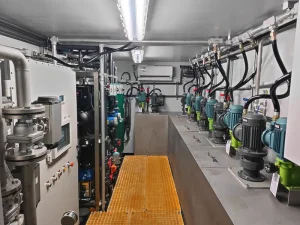
Wholesale Fracturing Flowback Water Reuse Treatment Equipment - China Suppliers & Factory for Oil & Gas Field Operations
View Technical Matrix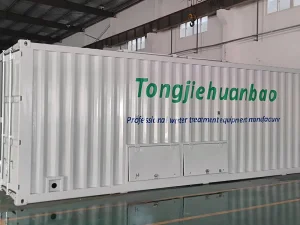
Wholesale China Suppliers Factory Mobile Containerized Seawater Desalination Plants for Instant Water Production
View Technical Matrix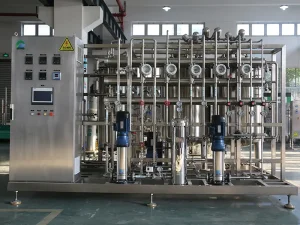
ODM Pharmaceutical Purified Water & WFI System - Reliable China Suppliers and Factory Solutions
View Technical Matrix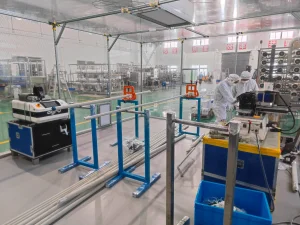
CE Certification Eco-Friendly Water Treatment Solutions - ODM Services from China Suppliers & Factory
View Technical MatrixTransforming Saline Hydrology Into Potable Capital
Addressing structural water scarcity through high-recovery membrane architecture and thermodynamically optimized separation processes.
As freshwater withdrawal caps reach ecological thresholds worldwide, the commercial capability to turn salt water into drinking water has transitioned from an emergency mitigation tactic to a baseload utility imperative. Conventional thermal distillation (MSF/MED), while robust against severe fouling, demands heavy thermodynamic footprints (often requiring upwards of 10–15 kWh/m³ equivalent). Modern engineered seawater reverse osmosis (SWRO) facilities manufactured in China operate at specific energy consumption metrics below 2.8 kWh/m³, leveraging isobaric Energy Recovery Devices (ERDs) and high-flux spiral-wound polyamide nanocomposite membranes.
Severe Oceanic Hydrology
Seawater conditions vary dynamically from the Arabian Gulf (TDS > 45,000 ppm, temperatures reaching 38°C) to open marine zones (TDS ~35,000 ppm). Chinese engineering designs incorporate multi-stage hydraulic buffering, anti-scalant dosing calibration, and customized osmotic backwash systems to sustain operational uptime without premature flux decline.
Boron & Bromide Depletion
Converting oceanic brine into verified municipal potable water requires strict chemical compliance with WHO parameters. Standard single-pass systems often leave boron concentrations above 1.5 mg/L. Our factory configurations utilize advanced second-pass brackish RO polishing with pH adjustment, driving boron below 0.5 mg/L to safeguard agricultural security and human physiological thresholds.
Ecological Brine Dispersion
Discharging high-density brine without adequate environmental consideration risks coastal hypoxia and thermal plume disruption. Modern turn-key desalination implementations engineered by Tongjie integrate variable-depth multiport diffuser models and energy dissipation valves to maximize dilution dynamics within local hydrographic mixing zones.
Application Archetypes: From Offshore Drilling to Island Grids
Deploying specialized water conversion units calibrated for remote geographics, space restrictions, and variable water sources.
Island Resorts & Sovereign Outposts
Remote island municipalities lack surface hydrology and face catastrophic logistics costs importing barged water. Containerized plug-and-play SWRO systems provide decentralized independence. Systems feature fully automated multi-media filtration and integrated hypochlorite disinfection to supply hotels, resorts, and permanent residents with potable water conforming strictly to WHO Guidelines.
Offshore Oil Platforms & Marine Vessels
Marine environments necessitate rugged corrosion containment. Tongjie's skid-mounted SWRO skids utilize Duplex 2205, Super Duplex 2507, and SMO 254 stainless steels for high-pressure flow paths, resisting pit and crevice corrosion under continuous high chloride exposure. Small footprints with explosion-proof electrics make them ready for marine rigs.
Coastal Mega-Industrial Parks & Refineries
Petrochemical, fertilizer, and metal smelting complexes require hundreds of thousands of cubic meters daily for cooling tower make-up and high-pressure boiler feed. Our direct-intake SWRO designs prevent municipal tap exhaustion, incorporating micro-flocculation DAF (Dissolved Air Flotation) clarifiers to protect membranes during red-tide algae blooms.
Engineering Benchmarks: Seawater Desalination Matrix
Comprehensive design specifications verified across standard skid-mounted and containerized deployments.
| System Architecture Indicator | Standard Island Model (TJ-SW-500) | Offshore Heavy Industrial (TJ-SW-2500) | Municipal Skid Array (TJ-SW-10000) |
|---|---|---|---|
| Nominal Permeate Output | 500 m³/day (20.8 m³/h) | 2,500 m³/day (104.1 m³/h) | 10,000 m³/day (416.6 m³/h) |
| Feed Salinity Limits (TDS) | Up to 38,000 ppm | Up to 45,000 ppm | Up to 42,000 ppm |
| Pretreatment Infrastructure | Dual Media Filtration + 5μm Cartridge | Ultrafiltration (PVDF UF) + 1μm Polish | DAF Clarification + UF Skids |
| Membrane Metallurgy Class | SS316L / Duplex 2205 Manifolds | Super Duplex 2507 Wetted Parts | Super Duplex 2507 + Non-metallic FRP |
| Energy Recovery Device (ERD) | Hydraulic Turbocharger (>82% recov.) | Isobaric Pressure Exchanger (>96%) | Isobaric Ceramic Rotor Array (>97%) |
| Permeate Quality Metrics | TDS < 400 mg/L, Boron < 0.8 mg/L | TDS < 200 mg/L, Boron < 0.5 mg/L | TDS < 150 mg/L, Boron < 0.4 mg/L |
| Automation Protocol | Siemens S7-1200 / Touch HMI | Siemens S7-1500 / SCADA Redundant | DCS Distributed / Dual Ethernet / Cloud |
Chinese Supply Chain Resilience & Shanghai Factory Delivery
Combining world-class component sourcing, integrated precision welding, and complete Factory Acceptance Testing (FAT) under one roof.
Vertical Integration
Shanghai Tongjie manages every aspect in-house: frame skid fabrication, automated robotic orbital pipe welding, control panel coding, and final hydraulic stress testing, slashing external outsourcing bottlenecks.
Rigorous Full-Load FAT
Every SWRO plant undergoes simulated wet testing in our Shanghai manufacturing bays using high-salinity test tanks prior to packaging, ensuring hydraulic integrity, zero flange leakage, and immediate site readiness.
Certified QA Governance
Our facility adheres strictly to ISO 9001, ISO 14001, and ISO 45001 management frameworks, and our machines carry valid CE directives for pressure equipment (PED), machinery safety, and low-voltage electrical standards.
Containerized Rapid Logistics
Housed in ISO standard 20-foot and 40-foot HQ insulated sea containers, our systems function as self-contained water utilities ready for deep-sea shipment directly from the Port of Shanghai to any destination globally.
Technology Roadmap: Next-Generation Desalination Paradigms
Iterating advanced material sciences, artificial intelligence telemetry, and zero-carbon hybrid power designs.
Graphene & Biomimetic Aquaporin Membranes
Collaborating with premier polymer institutes in Shanghai, Tongjie is bench-testing biomimetic aquaporin layers and graphene-enhanced hollow fibers to lower hydraulic pressure demands by another 18–24%.
Solar-PV & Wind Direct-Coupled SWRO
Developing dynamic frequency-matching high-pressure pumps capable of ramping seamlessly with intermittent renewable micro-grids without triggering membrane compaction or osmotic collapse, eliminating battery reliance.
AI Predictive Fouling Algorithms
Cloud-integrated edge controllers track real-time differential pressure (dP), temperature, normalized permeate flux, and raw feed SDI, deploying proactive CIP (Clean-In-Place) flushing cycles before irreversible foulant cake layers form.
Global Commissioning, Local Compliance & Field Support
Bridging Chinese engineering capacity with localized regulatory frameworks, field installation services, and rapid spare-parts distribution.
Regulatory Certification & Traceability
From raw material 3.1 Mill Test Certificates (MTC) to non-destructive weld testing (NDT/RT), full electrical schematics according to IEC standards, and complete documentation ready for local sanitary authority approvals.
Turnkey EPC Field Supervision
Our senior field commission engineers deploy worldwide to oversee intake subsea pipeline anchoring, high-voltage electrical hookup, membrane loading, CIP sanitization, and localized operator training.
Global Spare Parts Lifecycle
We stock critical operational spares—such as high-pressure seals, ERD cartridge bearings, high-rejection SWRO membranes, and dosing pumps—with fast international air-courier dispatch within 48 hours.
High-Salinity, Concentration & Modular Desalting Range
Advanced zero-liquid discharge, fracturing fluid reuse, and specialized compact desalination solutions for heavy operations.
OEM High-Efficiency Brine Concentration Systems from China Suppliers | Advanced Membrane Technology Factory
View Technical Matrix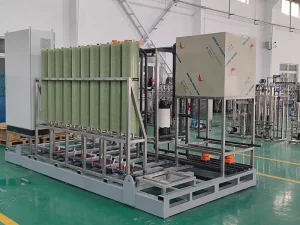
Wholesale High-Salinity Wastewater Reduction System - ZLD Technology by China Suppliers and Factory
View Technical Matrix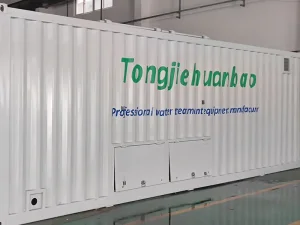
OEM Modular Seawater Desalination Equipment from China Suppliers | Factory Prefabricated Rapid Deployment
View Technical Matrix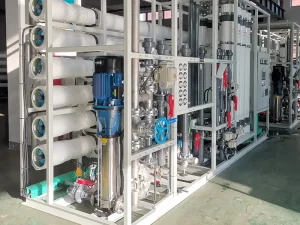
OEM Compact Reverse Osmosis Seawater Desalination System - China Suppliers & Factory for Freshwater
View Technical Matrix
China Compact China Seawater Desalination Equipment by Suppliers - Efficient Reverse Osmosis Factory System
View Technical Matrix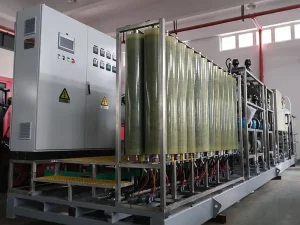
CE Certification China Fracturing Flowback Fluid Treatment System by Suppliers and Factory for Zero-Discharge Reuse
View Technical Matrix
Wholesale Compact Seawater Desalination System from China Suppliers - Efficient Factory Solutions for Small Needs
View Technical Matrix
China Seawater Desalting Equipment Factory, Suppliers Solutions
View Technical MatrixFrequently Asked Questions: Industrial Procurement & Engineering
Clear, unhedged technical responses to critical operational, commercial, and engineering questions.