Engineered Demineralization & Pure Water Platforms
Factory-assembled, skid-mounted, and containerized architectures manufactured under ISO 9001 and CE directives for global process and drinking water deployments.
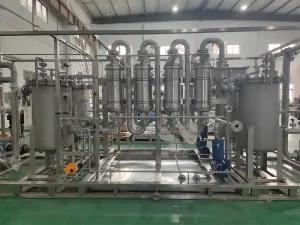
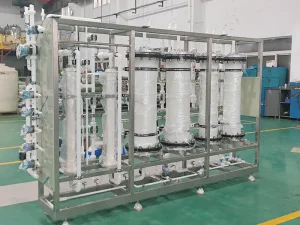
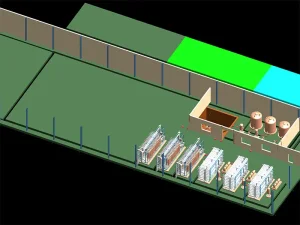
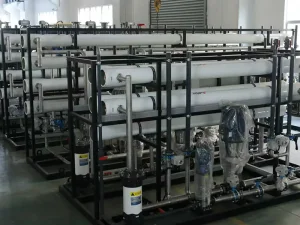
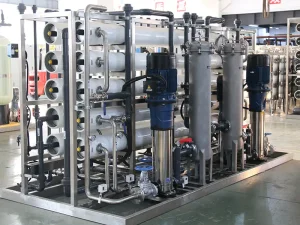
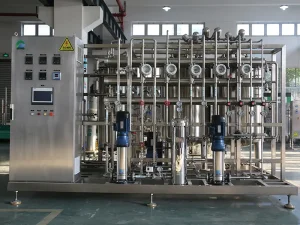
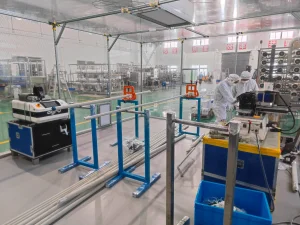
Engineering Drinkable Water from Demineralized Baselines: The Factory Paradigm
Bridging the gap between ultra-deep demineralization (RO/EDI) and biological potability through controlled electrolyte reintroduction and multi-barrier hygiene.
Total Dissolved Solids (TDS) Precision
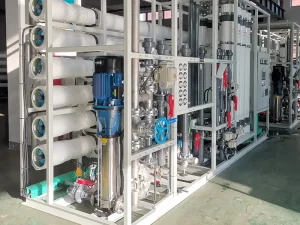
Raw seawater or heavily contaminated brackish sources are stripped down to TDS < 5 mg/L via high-rejection Dow FilmTec or Toray polyamide elements. High-pressure differential management eliminates salts, heavy metals, microplastics, and endocrine disruptors completely prior to biological stabilization.
Calcite & Mineral Re-Balancing
Direct consumption of demineralized water causes electrolyte leaching and rapid pipe corrosion. OEM factory integrations incorporate calibrated dosing skid modules injecting high-purity food-grade $Ca(HCO_3)_2$, $MgSO_4$, and micronutrients, elevating the Langelier Saturation Index (LSI) to a stabilized 0.1–0.3 window.
Sub-Micron Sanitary Polishing
Post-demineralization drinking systems implement multi-stage barrier loops: inline physical degassing columns, high-intensity 254nm ultraviolet germicidal irradiation, followed by 0.22μm absolute polyethersulfone (PES) filtration skids to guarantee zero endotoxins and coliform presence.
| Process Parameter | Raw Intake Water (Brackish / Seawater) | Demineralized Stage (RO/EDI Permeate) | OEM Final Potable Water Specification |
|---|---|---|---|
| Conductivity (μS/cm @ 25°C) | 1,200 – 55,000 | 0.06 – 5.0 | 150 – 300 |
| Total Dissolved Solids (TDS, mg/L) | 800 – 45,000 | < 2.0 | 100 – 250 (WHO Compliant) |
| Hardness (as $CaCO_3$, mg/L) | 350 – 6,000 | < 0.1 | 60 – 120 (Optimal Palatability) |
| pH Value | 6.8 – 8.4 | 5.5 – 6.2 (Unbuffered) | 7.2 – 7.8 (Buffered & Passivated) |
| Turbidity (NTU) | > 5.0 | < 0.1 | < 0.05 |
| Microbiological Contaminants | Uncontrolled | Negative | 0 CFU/100mL (Triple Sanitized) |
Global Commercial & Industrial Reality of Demineralized Drinking Water
Why multi-national EPC contractors, offshore oil platforms, and municipal utility providers rely on OEM factory manufacturing hubs in China.
Decentralized Island & Camp Water Security
Remote infrastructure projects, Caribbean resort complexes, and GCC mining camps require independent, high-availability freshwater ecosystems. By converting harsh ocean water or mine pit runoffs via demineralization-first architectures, dependence on fragile regional supply logistics is eliminated.
Offshore Oil & Gas / FPSO Platforms
Rigid safety criteria mandate dual-duty equipment: ultra-pure demineralized feedwater for high-pressure steam boilers and turbine wash, coupled with auxiliary mineralization skids generating World Health Organization (WHO) compliant drinking water for thousands of offshore crew members.
The Economics of Containerized CapEx vs. OpEx
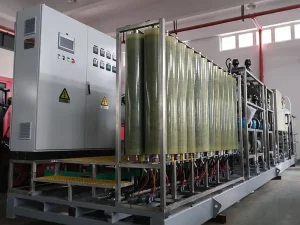
Standard site-built treatment facilities incur extreme civil labor overheads and multi-year construction risks. Integrated containerized OEM factories produce skid-mounted systems that arrive fully pre-commissioned, reducing capital deployment cycles from 24 months down to 90 days.
Localized Support, Environmental Adaptation & Compliance Assurance
How Shanghai Tongjie solves environmental stresses across varied geographic operating theaters through specialized materials selection and localized code alignment.
Middle East & GCC Desert Operations
Designed for ambient temperatures reaching 55°C. Containers feature double-wall thermal insulation, dual redundant explosion-proof HVAC systems, high-temperature RO membrane selections, and specialized heat dissipation systems for Schneider/Siemens variable frequency drives.
Coastal Corrosive Marine Applications
High chloride exposure environments require ultra-resilient metallurgy. High-pressure piping utilizes Super Duplex Stainless Steel (2507 / UNS S32750), while low-pressure fluid loops utilize Schedule 80 Industrial PVC or PVDF, eliminating pitting corrosion completely over 25-year design lifespans.
Regulatory Compliance & Certifications
All systems are engineered to surpass strict regional thresholds: European Union CE Machinery & Low Voltage Directives, Class II Environmental & Mechanical Contracting credentials, ISO 9001/14001/45001 standards, and regional potable water standards (NSF/ANSI 60/61, SASO, and WHO guidelines).
Technological Roadmap: The Next Era of Demineralized Water Production
Integration of predictive AI monitoring, ceramic membrane filtration, and carbon-neutral renewable desalination architectures.
AI-Driven Predictive Flux Control
Real-time feed forward algorithms continuously monitor transmembrane pressure (TMP), normalizing temperature fluctuations to predict fouling tendencies up to 72 hours before irreversible scaling occurs.
Next-Gen Ceramic Pre-Filtration
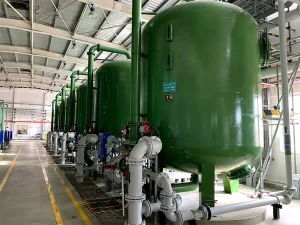
Transitioning from traditional sand/multimedia beds to silicon carbide (SiC) flat-sheet ceramic membranes, enabling continuous operations at high flux rates under harsh oil and chemical loadings.
Low-Energy Isobaric Recovery
Deployment of isobaric pressure exchangers (PX) recuperates up to 98% of hydraulic energy from high-pressure reject streams, reducing power draw below 2.8 kWh per cubic meter of finished water.
Direct Solar Photovoltaic Coupling
DC-direct micro-grid integration allows modular containerized factories to operate off-grid without heavy battery buffers, utilizing smart variable-flow pumping algorithms matched to solar irradiance.
Frequently Asked Technical Questions
Clear, authoritative technical answers on manufacturing, chemistry, and international equipment commissioning.
Is pure demineralized water safe to drink directly from the treatment plant?
What engineering information is required to size an OEM containerized water plant?
How fast can a containerized system be deployed and operational on-site?
How does the factory manage high chloride and aggressive water corrosion?
Does Tongjie support private-label OEM/ODM configurations for international EPC contractors?
High-Efficiency Water Treatment & Desalination Machinery
Explore specialized equipment lines deployed globally for industrial demineralization, brine recovery, zero liquid discharge, and modular potable supply.