Precision Engineering Solutions
Factory-Fabricated SWRO & High-Pressure Systems
Prefabricated containerized modules, high-pressure membrane skids, and customized industrial separation solutions built under strict ISO/CE certifications for rapid worldwide deployment.
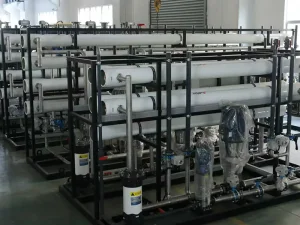
China DTRO&STRO High-pressure membrane Concentration System Factories, Manufacturers
Explore Specification
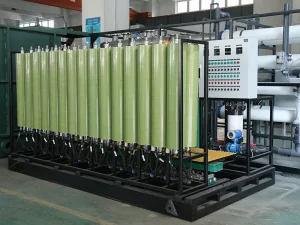
OEM High-Efficiency Brine Concentration Systems from China Suppliers | Membrane-Based Factory Solutions Factory, Manufacturers
Explore Specification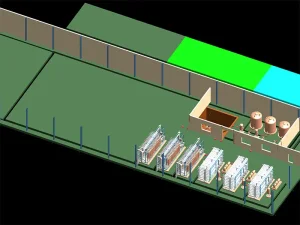
ODM OEM Precision Manufacturing Factories, Manufacturer
Explore Specification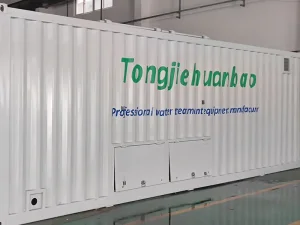
ODM China Suppliers Modular Containerized Seawater Desalination Equipment - Factory Prefabricated for Rapid Deployment Factories, Suppliers
Explore Specification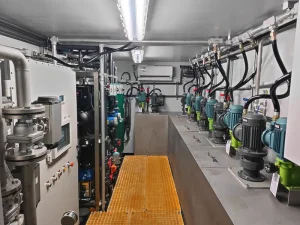
Wholesale Fracturing Flowback Water Reuse Treatment Equipment - China Suppliers & Factory for Oil & Gas Field Operations Manufacturers, Manufacturer
Explore Specification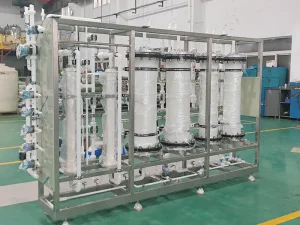
CE Certification China Suppliers Factory Ultra-Pure Water System for Semiconductor & Microelectronics Manufacturing - 18.2 MΩ·cm Resistivity Suppliers, Manufacturer
Explore Specification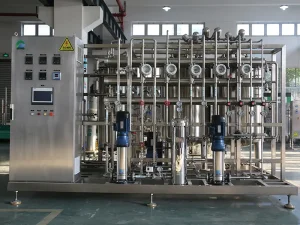
Wholesale China Pharmaceutical Purified Water & WFI System Suppliers - High-Quality Factory Solutions for APIs Factories, Manufacturers
Explore Specification
Industry Whitepaper Analysis
Decoding the Tampa Bay Desalination Architecture for OEM Procurement
The Tampa Bay Seawater Desalination Plant stands as North America's historic benchmark for large-scale utility membrane desalination. For global engineering procurement, replication of its performance requires advanced factory prefabrication, metallurgical reliability, and isobaric energy recovery.
Multi-Barrier Process Train: From Feed Intake to Permeate Stabilization
PHASE 01
Thermal Co-Location
Utilizing cooling water effluent lowers raw intake viscosity, optimizing membrane flux and saving pump head power.
PHASE 02
Coagulation & DAF/UF
Ferric chloride dosing, flocculation, and dual-media/ultrafiltration suppress SDI below 2.5 under red tide conditions.
PHASE 03
Isobaric Energy Recovery
Ceramic pressure exchangers (PX) transfer over 96% of reject concentrate hydraulic energy directly to incoming feed stream.
PHASE 04
Multi-Pass SWRO Arrays
High-rejection polyamide thin-film composite membranes running at 55–75 bar achieve >99.7% nominal salt rejection.
PHASE 05
Calcite Remineralization
CO2 and limestone contact beds adjust Langelier Saturation Index (LSI > 0) to ensure pipeline corrosion passivity.
Procurement Market Dynamics
Global Enterprise Demand for Tampa-Class Desalination Skids
From water-scarce coastal mining operations in Chile to mega-scale semiconductor fabrication clusters across the Indo-Pacific, global procurement departments require modular, high-capacity SWRO plants that eliminate civil site delays.
Heavy Industry & Petrochemical
Petrochemical refiners and power generation complexes require demineralized boiler feed and high-volume cooling makeup water unaffected by municipal rationing or seasonal drought.
- Continuous operating reliability (>98% plant uptime)
- Complete integration with downstream EDI polishers
- Silica suppression (<0.02 mg/L for boiler spec)
Municipal Utilities & Island Hubs
Governments, remote coastal municipalities, and tourism clusters replace dwindling aquifers with containerized seawater desalination requiring minimal onsite footprint.
- Plug-and-play ISO shipping container formats
- WHO and US EPA drinking water compliant TDS (<200 ppm)
- Unmanned operation with remote telemetry & SCADA
EPC Contractors & Equipment Brands
Global EPC contractors and international water technology brands rely on dedicated OEM factories like Shanghai Tongjie for private-label white-box skid production.
- Comprehensive Factory Acceptance Testing (FAT)
- ASME Section VIII & X vessel certifications
- Custom branding, P&ID tagging, and control coding
System Architecture
Macro-Industry Solutions: Reliability, Fouling & Brine Stewardship
Translating Tampa Bay's empirical operational history into scalable skid manufacturing requires mastering four engineering pain points: energy consumption, membrane biofouling, boron selectivity, and brine discharge dispersion.
Isobaric ERD Efficiency
By pairing high-pressure multi-stage booster pumps with ceramic rotor Energy Recovery Devices (ERDs), high-pressure concentrate kinetic energy is transferred with >96% mechanical efficiency, compressing specific energy demand to ≤2.8–3.2 kWh/m³.
Advanced Ultrafiltration
Seawater feed fluctuates widely with algal blooms and colloidal silts. Our OEM skids employ PVDF hollow fiber pressurized or submerged UF membranes, delivering an effluent SDI15 < 2.5 to eliminate premature SWRO chemical cleanings.
Two-Pass Boron Separation
Agricultural irrigation and sensitive industrial manufacturing demand boron concentrations <0.5 mg/L. Our split-partial second-pass designs utilize caustic (NaOH) dosing to ionize boric acid into easily rejected borate ions.
Thermal & Brine Co-Dilution
Following Tampa Bay’s hallmark environmental paradigm, our skid engineering incorporates high-velocity multi-port diffusers and power plant co-discharge manifolds that dilute brine 10:1 or 20:1 instantly, preventing benthic hypoxia.
Innovation Trajectory
Technological Roadmap: 2025–2035 Desalination Horizons
OEM seawater desalination is advancing into autonomous AI control, non-thermal brine crystallization, and biomimetic membrane polymers. Discover how our manufacturing facility integrates emerging research into factory-deliverable packages.
AI Digital Twin & Predictive CIP
Integrating pressure transducer telemetry, feed temperature, and raw conductivity directly into cloud-linked PLCs allows our proprietary algorithms to predict organic membrane scaling up to 14 days before trans-membrane pressure spikes occur.
- Chemical CIP cycle optimization saves 30% reagent cost
- Dynamic variable-frequency drive (VFD) power balancing
Biomimetic Aquaporin & Carbon Nanotubes
Next-generation membrane elements incorporating aquaporin biological water channels increase water permeability by up to 40% over traditional aromatic polyamide membranes while exhibiting superior organic foulant detachment.
- Permeate flux rates exceeding 25 LMH under low feed pressure
- High tolerance to chlorine spikes during biological shocks
DTRO / STRO Near-Zero Liquid Discharge (ZLD)
By coupling disc tube reverse osmosis (DTRO) and spacer tube reverse osmosis (STRO) directly to SWRO concentrate streams, salinity can be concentrated up to 160,000 mg/L TDS at 120 bar, dramatically reducing thermal crystallizer capital cost.
- 90%+ overall water recovery from marine feedstocks
- Extraction of high-purity industrial sodium chloride & gypsum
OEM Manufacturing Infrastructure
Factory Capabilities: Shanghai Tongjie Environmental Protection
Established in 2010, Shanghai Tongjie Environmental Protection Technology Co., Ltd. is a recognized National High-Tech Enterprise and Shanghai Specialized & Sophisticated Enterprise. With full Class II engineering contracting credentials and 38+ registered patents, we engineer, fabricate, and test world-class membrane skids under one roof.
Certified Quality Systems
Our Shanghai manufacturing facilities operate under stringent global credentials, including CE certification, ISO 9001 (Quality), ISO 14001 (Environmental Management), and ISO 45001 (Occupational Health & Safety).
- Class II Environmental Protection Contracting
- Class II Mechanical & Electrical Installation
- Full traceable MTR material test reports
Metallurgical & Welding Rigor
Corrosive warm seawater environments require uncompromising metallurgy. We specialize in orbital TIG and GTAW welding of Super Duplex 2507, 1.4410, 254SMO, and Grade 2 Titanium with full borescope and radiographic verification.
- Pinhole-free chemical pickling and passivation
- ASME B31.3 process piping compliance
- Hydrostatic testing up to 1.5x design pressure
Full Factory Acceptance Testing (FAT)
Every skid and containerized unit undergoes complete wet hydraulic FAT prior to port dispatch. We simulate actual feed salinities and verify instrument calibration, interlock logic, and emergency shutdowns in our test bays.
- Pre-wired Siemens / Allen Bradley PLC integration
- Plug-and-play field hookup in under 15 days
- Complete digital documentation & O&M manuals
Global EPC Coordination
Localization Support & Global Compliance Assurance
Navigating complex international codes is a cornerstone of our OEM manufacturing service. Whether your project is sited in North America, the Middle East, Central Asia, or South America, our engineering packages conform to local statutory and operational mandates.
Codes & Standards
Built to ASME Section X (fiberglass pressure vessels), ASME B31.3 (process piping), AWWA standards, ASTM material specs, and CE Machinery / Low Voltage Directives.
Harsh Environment Packaging
Insulated, climate-controlled container enclosures equipped with high-efficiency HVAC, sand trap louvers, and C5-M marine-grade exterior coating systems for desert or saline environments.
Electrical & Explosion Proof
Configurable for UL 508A, IEC, or ATEX/Class 1 Div 2 standards, featuring variable speed drives, safety relays, and industrial fieldbus communications (Profibus, Modbus, Ethernet/IP).
Field Commissioning & Spares
Multilingual commissioning engineers provide rapid on-site startup or remote augmented-reality commissioning, supported by guaranteed critical spare parts hubs worldwide.
Comprehensive OEM Catalog
Heavy-Duty Separation & Purified Water Equipment
From fracturing flowback water recycling and physical membrane degassing to high-salinity DTRO concentrations, browse our full manufactured equipment portfolio below.
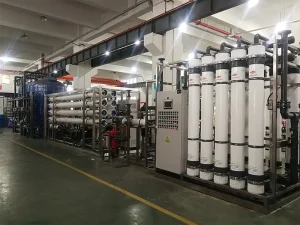
China High-Ratio Water Reuse Equipment Supplier in China - Advanced Pretreatment, UF, and RO Factory Solutions Manufacturers, Manufacturer
Explore Specification
ODM High-Pressure Membrane Concentration System for High-Salinity Wastewater - China Suppliers & Factory Solutions Factories, Manufacturers
Explore Specification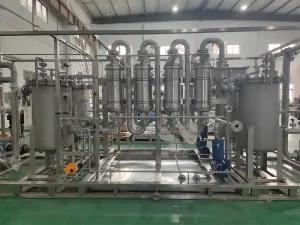
CE Certification China Suppliers Factory Deoxygenation Membrane Equipment for Physical Degassing of Water to ppb Levels Suppliers, Manufacturers
Explore Specification
OEM Drilling, Completion, and Workover Waste Fluids Supplier, Manufacturers
Explore Specification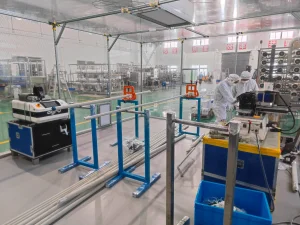
China Eco-Friendly Water Treatment Solutions: ODM Services by China Suppliers & Factory for Global Brands Suppliers, Supplier
Explore Specification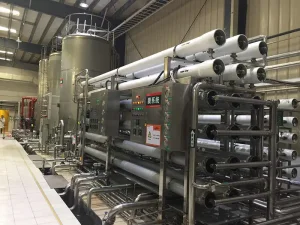
OEM Food&Beverage Process Water System Factory, Suppliers
Explore Specification
OEM China Suppliers Factory Fracturing Flowback Water Reuse Treatment Equipment for Oil & Gas Field Operations Manufacturers, Manufacturer
Explore Specification
ODM High-Pressure Membrane Concentration System for High-Salinity Wastewater | China Suppliers & Factory Factories, Factory
Explore Specification
Technical Clarifications
Frequently Asked Questions: Desalination Skid Engineering
Detailed technical answers for EPC procurement managers and municipal water authorities evaluating OEM reverse osmosis systems and factory capabilities.
How does an OEM skid achieve the operational energy efficiency demonstrated by the Tampa Bay Desalination facility?
Energy efficiency is achieved primarily by integrating ceramic rotor isobaric Energy Recovery Devices (PX / ERD) coupled with high-efficiency variable-frequency drive (VFD) booster pumps. The reject brine at 60–70 bar transfers its hydraulic pressure directly to an equivalent volume of pretreated feed water at over 96% mechanical transfer efficiency. This limits high-pressure pump sizing to only the permeate flow fraction plus friction losses, bringing overall plant specific energy consumption (SEC) down to ≤2.8–3.2 kWh/m³.
What raw water chemistry inputs are mandatory to engineer a customized SWRO skid?
We require a comprehensive laboratory water analysis covering: total dissolved solids (TDS), electrical conductivity, operating temperature min/max, pH, total suspended solids (TSS), turbidity, 15-minute Silt Density Index (SDI15), silica (reactive and colloidal), calcium, magnesium, sulfate, barium, strontium, iron, manganese, total organic carbon (TOC), and free chlorine. If boron rejection <0.5 mg/L or low bromide is mandated, second-pass polishing parameters must also be specified.
Why is Super Duplex Stainless Steel (2507 / PREN > 42) non-negotiable for high-pressure seawater manifolding?
High chloride concentrations (typically >19,000 mg/L in seawater) combined with operating pressures above 65 bar create extreme susceptibility to pitting and crevice corrosion in standard 316L stainless steel. We mandate Super Duplex 2507 (UNS S32750 / EN 1.4410) with a Pitting Resistance Equivalent Number (PREN) ≥ 42 for all high-pressure manifolds. All joints undergo controlled heat-input GTAW welding with 100% argon back-purging to ensure ferrite-austenite phase balance is strictly maintained at 40–60%.
What commissioning timelines can be anticipated for containerized desalination plants?
Because our containerized seawater reverse osmosis plants are 100% prefabricated, wired, piped, and hydraulically tested (FAT) inside our Shanghai factory prior to shipping, on-site commissioning is radically shortened. Once placed on a flat concrete foundation and hooked up to raw water intake, concentrate discharge, permeate lines, and power mains, plant startup and water production are normally finalized in 10 to 15 operational days.
Does Shanghai Tongjie support private-label OEM manufacturing for overseas water equipment brands?
Yes. We act as the dedicated ODM/OEM manufacturing back-end for international engineering companies, system integrators, and distributors across Europe, North America, and the GCC. Services include custom skid frame geometry, private labeling, client-specified PLC/HMI interface branding (Siemens, Rockwell, Schneider), localized code documentation (ASME, CE, CSA), and direct drop-shipping to project sites under complete confidentiality.
Accelerate Your Seawater Desalination EPC Project
Submit your raw water chemistry profile, target capacity, and site conditions. Our senior membrane engineering team will return a complete process design, mass balance projection, and factory quotation within 48 hours.