
Primary Seawater Desalination & High-Purity Water Systems
Pre-tested modular skids, containerized sea water reverse osmosis plants, and semiconductor-grade ultra-pure water systems factory-certified for international EPC deployment.
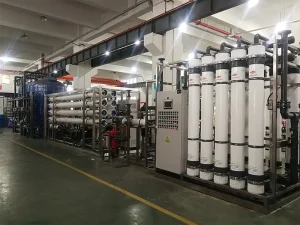
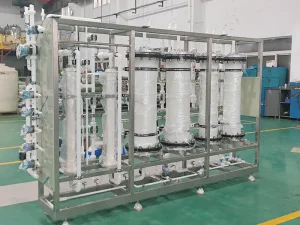
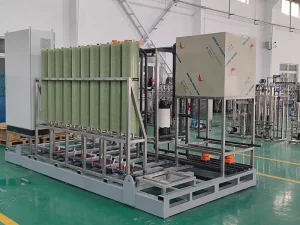
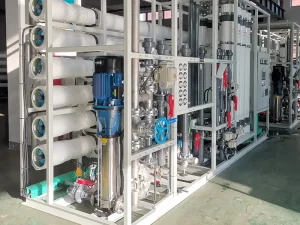
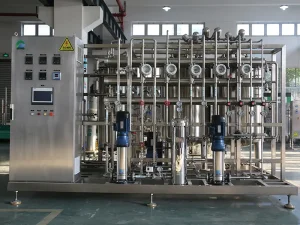
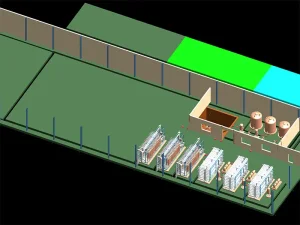
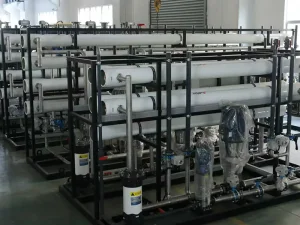
Global Landscape of Wholesale Seawater Purification Systems
Addressing extreme water scarcity, coastal industrialization, and energy transition imperatives with membrane engineering breakthroughs and standardized prefabrication.
Thermodynamics & Energy Transition in Modern SWRO
Global freshwater demand is expanding at an unprecedented rate, driven by accelerated urbanization, expanding semiconductor manufacturing facilities, and coastal energy corridors. Conventional thermal distillation methodologies—specifically Multi-Stage Flash (MSF) and Multi-Effect Distillation (MED)—are rapidly phasing out due to high thermodynamic footprints exceeding 12 to 18 kWh per cubic meter of clean water.
Modern wholesale seawater purification processes have transitioned overwhelmingly to high-recovery Seawater Reverse Osmosis (SWRO) integrated with isobaric Energy Recovery Devices (ERD). When engineered with high-surface-area thin-film composite (TFC) polyamide membranes and variable-frequency high-pressure pumps, specific energy consumption (SEC) drops to less than 2.8 to 3.2 kWh/m³, making large-scale desalination economically viable for municipal utilities, island resorts, and offshore petrochemical complexes.
Addressing Salinity Variability, Boron, & Silt Density Index
Seawater chemistry exhibits severe geographic variations. While the Pacific Ocean averages 34,000 to 35,000 ppm Total Dissolved Solids (TDS), the Arabian Gulf and Red Sea frequently surpass 45,000 to 52,000 ppm TDS, accompanied by ambient water temperatures reaching 38°C. This harsh marine operating environment elevates the osmotic pressure past 4.2 MPa (609 psi), necessitating operating feed pressures approaching 7.0 to 8.2 MPa (1,015 to 1,189 psi).
As an authoritative manufacturer, Shanghai Tongjie engineers process trains targeting critical foulants, elevated boron concentrations, and high Silt Density Indexes (SDI15). Through automated ultrafiltration (UF) pretreatment, multi-stage chemically enhanced backwashing (CEB), and precision anti-scalant dosing, our seawater purification solutions guarantee permeate boron concentrations under 0.5 mg/L, complying with the stringent guidelines of both the World Health Organization (WHO) and regional municipal drinking standards.
The Complete Industrial Sea Water Purification Process Train
A multi-barrier technological sequence designed for mechanical durability, biofouling mitigation, and consistent ultra-pure permeate production.
Intake & Screen
Deep-sea intake towers or coastal beach wells equipped with passive wedge-wire screens prevent marine biota entrainment and large particulate ingress (>500 μm).
Advanced Pretreatment
Coagulation, Dissolved Air Flotation (DAF), and pressurized PVDF Ultrafiltration (UF) modules lower turbidity to <0.1 NTU and ensure SDI15 remains strictly <2.5.
High-Pressure & ERD
Super Duplex stainless steel 2507 pumps supply working pressure. Rotary isobaric pressure exchangers recycle up to 98% of hydraulic energy from the concentrated brine stream.
Dual-Pass SWRO/BWRO
First-pass high-rejection SWRO rejects monovalent and divalent ions. Second-pass Brackish Water RO (BWRO) polishing removes residual boron, silica, and micro-contaminants.
Remineralization & CIP
Calcite contactors and CO2 infusion stabilize pH and balance Langelier Saturation Index (LSI). Integrated Clean-In-Place (CIP) skid maintains long-term membrane flux integrity.
| Operational Parameter | Standard Seawater Spec | High-Salinity Gulf Spec | Permeate Target (Potable / Technical) |
|---|---|---|---|
| Raw Water TDS | 32,000 - 36,000 mg/L | 42,000 - 52,000 mg/L | < 200 mg/L (Potable) / < 5 mg/L (Industrial) |
| Turbidity / Silt Index | Turbidity < 15 NTU, SDI > 5 | Turbidity < 30 NTU (Algae/Red Tide) | SDI15 < 2.5 (Entering RO Membranes) |
| Operating Pressure | 5.5 - 6.5 MPa (55 - 65 bar) | 6.8 - 8.3 MPa (68 - 83 bar) | Product Permeate: 0.2 - 0.4 MPa |
| Boron Concentration | 4.5 - 5.5 mg/L | 6.0 - 8.0 mg/L | < 0.5 mg/L (WHO Standards) |
| Hydraulic Recovery Rate | 40% - 48% | 35% - 42% | Net System Recovery: Up to 50% (Multi-stage) |
Engineered for Demanding Real-World Operating Environments
From extreme tropical humidity to arid desert coastlines, Tongjie customizes sea water purification processes to match regional geography and infrastructure constraints.
Remote Islands & Coastal Eco-Resorts
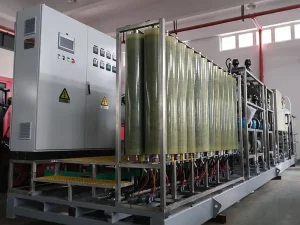
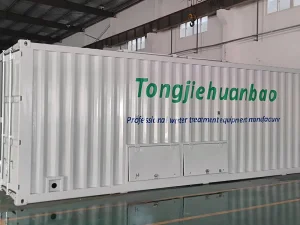
Off-grid archipelagos in Southeast Asia, the Maldives, and the Caribbean demand compact footprints, low noise emission (<72 dBA), and ultra-low chemical consumption. Containerized 40ft high-cube SWRO solutions integrate plug-and-play connections, marine-grade anti-corrosion exterior coatings, and built-in energy recovery, ensuring reliable drinking water without diesel supply dependency.
Coastal Petrochemical & Power Stations
Thermal power utilities, LNG terminals, and coastal chemical refineries require massive volumes of demineralized boiler feed and cooling tower makeup water. Our heavy-duty dual-train SWRO skids feature continuous duty redundancy (N+1), automated chemical cleaning systems, and ASME Class 300/600 high-pressure piping manifolds fabricated in Super Duplex 2507 stainless steel.
Semiconductor & Microelectronics
High-end electronics fabrication necessitates water with electrical resistivity of 18.2 MΩ·cm and ultra-low Total Organic Carbon (TOC < 2 ppb). Tongjie pairs high-efficiency seawater desalination with multi-pass Electrodeionization (EDI), vacuum membrane contactor degassing, and catalytic ultraviolet disinfection to supply uncompromising ultra-pure process streams.
China Factory Precision: Why Overseas EPCs Partner with Tongjie
Vertical integration across research, pressure vessel fabrication, precision machining, and pre-commissioning testing within our Shanghai manufacturing headquarters.
Full Supply Chain Resilience & Metallurgical Integrity
In high-pressure marine environments, catastrophic failure often stems from crevice corrosion, pitting, or weld fatigue. Shanghai Tongjie maintains rigorous control across the entire metallurgical procurement chain. We exclusively utilize Super Duplex Stainless Steel (UNS S32750 / EN 1.4410) and high-grade Titanium Grade 2 for wetted high-pressure components, completely eliminating chloride-induced stress corrosion cracking.
All pressure vessels comply with ASME Section X requirements for fiber-reinforced plastic (FRP) and withstand cyclic testing exceeding 100,000 pulses up to 1,200 psi. By sourcing premium components under long-term strategic alliances with global tier-1 pump and membrane manufacturers, we reduce lead times by 40% compared to typical European suppliers while maintaining strict ISO 9001 quality audits.
100% Factory Acceptance Testing (FAT) with Real Brine Simulation
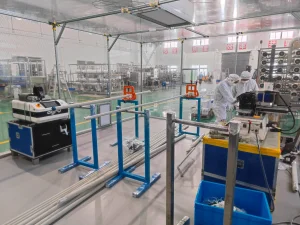
The largest financial risk for overseas procurement teams is commissioning failure after delivery. Tongjie mitigates this completely by conducting 100% full-load Factory Acceptance Testing (FAT) in Shanghai before container loading. Our test facility features closed-loop brine simulation basins capable of adjusting TDS levels from 15,000 to 55,000 ppm and temperatures from 10°C to 45°C.
Every skid is tested for hydraulic pressure hold, flux stabilization, sensor calibration, and PLC automatic shut-off triggers. We provide complete FAT documentation packages, including third-party radiographic weld inspections, hydrostatic test records, motor vibration spectrum analyses, and electrical safety certifications under CE directives.
The Future of Industrial Sea Water Purification
Anticipating next-generation membrane materials, carbon-neutral operation, and brine mining valorization.
AI-SCADA Digital Twins & Dynamic Antiscalant Dosing
Integration of cloud-connected SCADA platforms allows real-time calculation of feed-water osmotic dynamics, normalized permeate flow, and salt passage changes. Machine learning algorithms dynamically adjust antiscalant and acid injection rates to prevent scaling before trans-membrane pressure (TMP) spikes, prolonging chemical cleaning intervals from 3 months to over 9 months.
Graphene Oxide & Biomimetic Aquaporin Membranes
Next-generation membrane research at Tongjie targets biomimetic aquaporin and nano-composite graphene oxide flat sheets. These membranes achieve 30% higher water permeability under equivalent hydraulic pressure while demonstrating exceptional tolerance against free chlorine oxidation, radically simplifying intake biocide regimens.
Zero Brine Discharge & Critical Mineral Extraction
The environmental footprint of concentrated brine disposal is transformed into a commercial resource. Tongjie's advanced Zero Liquid Discharge (ZLD) technology pairs Osmotically Assisted Reverse Osmosis (OARO) with mechanical vapor recompression (MVR) crystallizers, recovering 99.5% clean water while harvesting high-purity industrial sodium chloride, magnesium, and battery-grade lithium salts.
Global Project Standards, Logistics, and Field Support
Ensuring frictionless site integration across the Middle East, Southeast Asia, Latin America, and Africa.
Turnkey CE & ISO Certification
Fully compliant with EU Machinery Directive 2006/42/EC, Low Voltage Directive 2014/35/EU, and ISO 9001/14001/45001 standards.
Shanghai Port Direct Logistics
Our proximity to Shanghai Port (the world's largest container hub) guarantees expedited shipping, specialized flat-rack packaging, and moisture-sealed crating.
24/7 Remote Telemetry & Field SAT
Experienced field engineers deploy globally for Site Acceptance Testing (SAT), client training, and remote telemetry connectivity.
Class II Contracting License
Tongjie holds official Class II qualifications in Environmental Protection Engineering and Mechanical & Electrical Installation.
Engineering Questions Frequently Asked by Overseas Buyers
Transparent technical parameters, design methodologies, and operational guidelines from our senior process engineering desk.
Q1 How do you guarantee membrane longevity against biofouling and red tide algae blooms?
We implement a robust multi-barrier pretreatment architecture. When marine feed water presents high organic loads or seasonal algae blooms (red tide), our process train pairs chemical shock chlorination and de-chlorination with pressurized Ultrafiltration (PVDF hollow fiber, 0.02 μm nominal pore size). This guarantees feed SDI15 < 2.5 and turbidity < 0.1 NTU, shielding thin-film SWRO membranes from foulants and guaranteeing an average membrane operating life of 3 to 5 years.
Q2 What energy recovery technology is integrated, and what is the typical SEC?
For systems with capacities exceeding 50 m³/day, we integrate isobaric rotary ceramic pressure exchangers (ERD) that operate with up to 98% hydraulic transfer efficiency. By transferring high pressure from the concentrated brine reject stream directly to the incoming sea feed stream, the specific energy consumption (SEC) of the reverse osmosis block is reduced to approximately 2.6 - 3.2 kWh/m³, representing an energy reduction of over 55% compared to systems utilizing Pelton wheels or turbochargers.
Q3 How does Tongjie solve boron compliance in municipal drinking water projects?
Boron occurs naturally in raw seawater as uncharged boric acid (H3BO3) at concentrations of 4.5 to 7.0 mg/L. Standard single-pass SWRO elements reject only 85-90% of uncharged boric acid, leaving 0.8-1.5 mg/L in permeate. Tongjie applies a dual-pass configuration wherein the pH of the first-pass permeate is elevated to 9.5-10.0 using food-grade NaOH, converting boric acid into negatively charged borate ions (H4BO4-). Second-pass brackish water membranes reject borate at >99%, easily delivering final product boron <0.5 mg/L in compliance with WHO drinking guidelines.
Q4 What metallurgy is selected for high-pressure seawater manifolds?
Seawater containing up to 45,000 ppm chloride creates aggressive galvanic and pitting environments. For all piping downstream of the high-pressure pump up to the membrane vessel inlet, Tongjie exclusively utilizes Super Duplex Stainless Steel (UNS S32750 / 2507, 1.4410) with a Pitting Resistance Equivalent Number (PREN) > 42. Low-pressure manifolds utilize UPVC, CPVC, or 316L stainless steel, while non-metallic FRP pressure vessels comply with ASME Section X.
Q5 Can your containerized SWRO units operate completely off-grid with solar power?
Yes. Tongjie engineers direct-coupled photovoltaic (PV) solar desalination solutions. Utilizing variable frequency drive (VFD) technology on positive displacement or multistage centrifugal pumps, our PLC automation dynamically modulates freshwater output according to solar radiation curves. We also supply battery energy storage systems (BESS) housed in insulated climate-controlled ISO containers for continuous 24-hour baseline operation in remote mining or island locations.
Q6 What are the standard delivery lead times for wholesale containerized units?
Standard skid-mounted units (100 m³/day to 1,000 m³/day) feature a factory fabrication, assembly, and wet-testing cycle of 45 to 60 business days. Large custom plants (5,000 m³/day and above) typically require 90 to 120 days. Since our production base is located in Jiading District, Shanghai, equipment is transported directly to Shanghai Port within 24 hours of final crating, significantly speeding up transit times to global destinations.
Q7 What documentation accompanies every shipment for engineering validation?
Overseas EPC contractors receive a comprehensive vendor data package (VDP): Process & Instrumentation Diagrams (P&ID), 3D General Arrangement drawings (STEP/DWG), comprehensive mass balance sheets, detailed membrane projection simulations, electrical schematics (EPLAN), EN 10204 3.1 material test certificates for all Super Duplex piping, hydrostatic pressure test logs, calibration reports, and bilingual Operation & Maintenance (O&M) manuals.
Q8 Do you support OEM / ODM private-labeling for international engineering distributors?
Yes, Shanghai Tongjie is a trusted ODM/OEM manufacturing partner for top-tier environmental engineering brands across Europe, North America, and the GCC. We provide custom skid frame color coding, customized HMI interface graphics, private-label documentation, client-specific component brand integration (e.g., Siemens or Allen-Bradley PLCs, Danfoss or Grundfos pumps), and complete confidentiality under binding NDAs.
High-Salinity Wastewater, ZLD, and Containerized Mobile Desalting
Heavy industrial water treatment solutions engineered for zero liquid discharge, off-grid produced water reuse, and containerized mobile freshwater production.
Request a Tailored Water Treatment Engineering Proposal
Provide your raw water analysis (TDS, temperature, turbidity, target capacity), and our Shanghai engineering team will deliver a comprehensive process projection, P&ID layout, and equipment quote within 24 hours.