OEM ODM Full Value Chain Innovation Factories, Factory
Explore Specifications
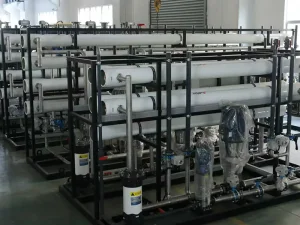
Engineered to withstand harsh marine, mining, and hyper-saline industrial environments with high-recovery energy recovery devices (ERD) and automated SCADA integration.
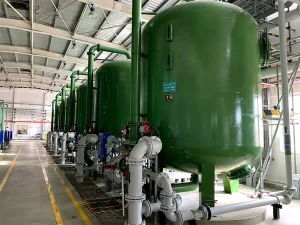
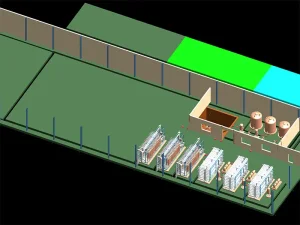
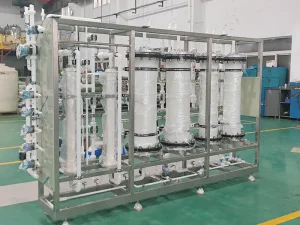
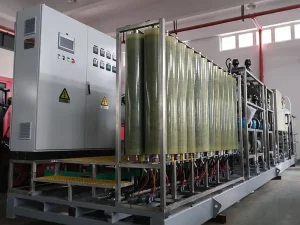
How Shanghai Tongjie solves membrane fouling, boron pass-through, and excessive specific energy consumption across commercial and municipal sea intakes.
Utilizing isobaric pressure exchangers (PX) to transfer pressure directly from concentrated brine to the seawater feed stream at up to 98% efficiency. Reduces specific energy consumption (SEC) to below 2.8 - 3.2 kWh/m³, delivering immense operational cost savings over continuous duty cycles.
All wetted high-pressure piping, manifolds, and pump impellers are fabricated using Super Duplex Stainless Steel (2507 / UNS S32750) or high-grade SMO 254 with a Pitting Resistance Equivalent Number (PREN) > 42, mitigating localized crevice corrosion and pitting in hyper-saline conditions.
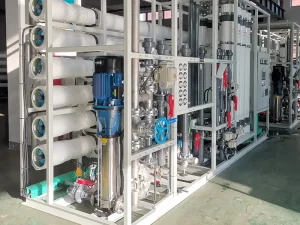
Multi-barrier intake design matching Dissolved Air Flotation (DAF), automatic backwashing disc filtration, and pressurized Ultrafiltration (UF) skids. Consistently yields a Silt Density Index (SDI15) < 2.5, shielding thin-film composite polyamide membranes from biofouling and particulate shock.
Delivering high-reliability water transformation across municipal lifelines, heavy petrochemical complexes, and remote critical assets.
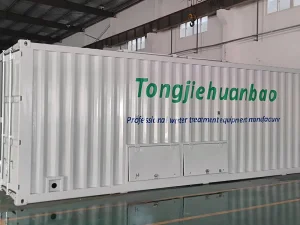
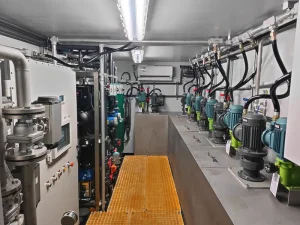
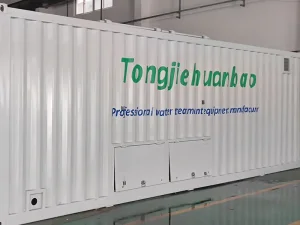
Providing centralized turn-key containerized desalination setups engineered inside standard 20ft/40ft High Cube insulated containers. Integrated remineralization (calcite filters) and pH adjustment ensure strict WHO Drinking Water Guidelines compliance.
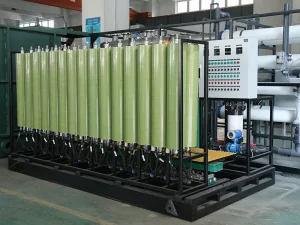
Severe-duty produced water and offshore platform drinking/injection systems. Incorporating specialized Disc Tube Reverse Osmosis (DTRO) capable of processing fluctuating total dissolved solids (TDS up to 120,000 mg/L) and eliminating residual hydrocarbons.
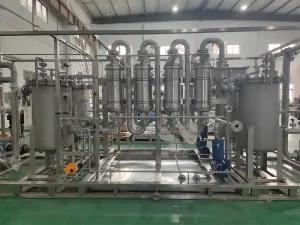
Coupling high-recovery sea water reverse osmosis with secondary electrodialysis or DTRO concentration followed by Mechanical Vapor Recompression (MVR) crystallization for industrial Zero Liquid Discharge mandates.
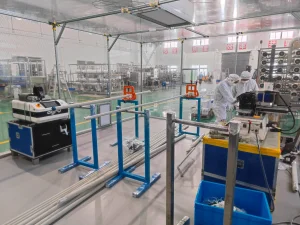
Combining world-class component sourcing, automated robotic welding, and Shanghai's maritime export logistics for unparalleled cost-to-quality performance.
Every SWRO and DTRO skid undergoes wet factory acceptance testing (FAT) with simulated hyper-saline feedwater. Flow rates, pressure stabilization, interlock safeties, and noise emission metrics are certified prior to port dispatch.
We source core components directly from leading global suppliers: Toray / DuPont FilmTec membranes, Danfoss / Grundfos high-pressure pumps, and Siemens / Schneider PLC hardware, ensuring reliable long-term service and global parts availability.
With standardized skid frames, automated laser-cutting sheet metal workshops, and pre-engineered modular piping systems, custom SWRO container production is compressed to 45–60 days, drastically reducing EPC schedule risk.
Ensuring cross-border conformity with strict environmental, pressure safety, and digital validation standards across international jurisdictions.
Full manufacturing compliance with European Pressure Equipment Directive (PED 2014/68/EU), CE Machinery Directives, and ASME Section VIII vessel standards. Electrical skids built to UL508A and IEC 60204-1 specifications for immediate operational commissioning.
Every system integrates secure cloud telemetric gateways enabling our Shanghai engineering center and client teams to monitor transmembrane pressure (TMP), normalized permeate flux, differential pressure (ΔP), and conductivity in real-time.
Complete traceability portfolios provided: 3.1 material mill test certificates, welding logs, P&ID verification, CIP cleaning manuals, and direct factory-price consumable delivery (membrane elements, cartridge filters, antiscalants).
Shanghai Tongjie's ongoing commitment to sustainable, carbon-neutral desalination architectures and smart self-optimizing water plants.
Direct coupling of variable-frequency high-pressure pumps with utility-scale Photovoltaic (PV) power systems. Advanced buffering logic accommodates solar fluctuations without dropping recovery rates or causing hydraulic water hammer.
Machine learning predictive fouling models that analyze real-time salt passage and feed osmotic pressure variations to trigger localized Clean-In-Place (CIP) sequences, prolonging membrane operational lifespans by up to 35%.
Collaboration with top academic institutes on next-gen nanocomposite biomimetic membranes offering ultra-high water flux under significantly reduced hydraulic driving pressure, driving industry-wide SEC toward 1.8 kWh/m³.
Key technical parameters global EPCs, municipal utilities, and industrial buyers must evaluate before issuing a desalination tender.
Designing an optimal SWRO system requires comprehensive chemical analysis over seasonal cycles. Key parameters include:
Evaluating long-term economic returns versus initial capital expenditure (CAPEX):
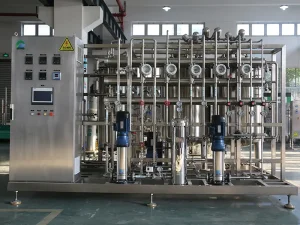
Specialized separation skids for zero liquid discharge, produced water reinjection, deoxygenation, and pharmaceutical-grade purification.
Expert insights addressing key inquiries from project managers, EPC engineering directors, and procurement teams worldwide.