
High-Priority Membrane Water Platforms for Bangkok & EEC Industrial Hubs
Engineered for high-temperature tropical operation, saline intrusion resistance along the lower Chao Phraya river basin, and zero liquid discharge regulatory mandates.
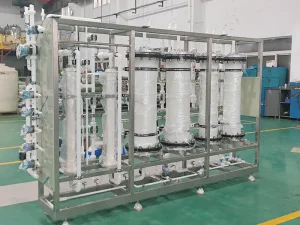
Bangkok Semi & Electronics OEM Ultra-Pure Water System
18.2 MΩ·cm resistivity multi-barrier RO+EDI platform customized for wafer fabrication and precision electronics in Chachoengsao and Chonburi industrial clusters.
Explore Specification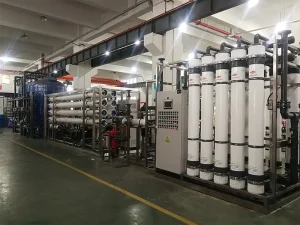
Bangkok High-Recovery UF & RO Water Reuse Plant
Advanced anti-fouling double-pass RO system delivering 85%+ recycling recovery ratios for automotive manufacturing and textile dyeing operations across Greater Bangkok.
Explore Specification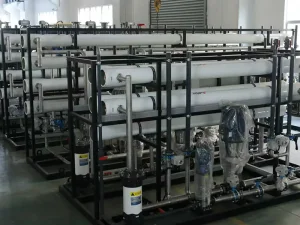
Bangkok EEC Brine Concentration & ZLD System
High-pressure disc-tube and membrane concentration technology for high-salinity industrial effluent treatment conforming strictly to Thai DIW effluent limits.
Explore Specification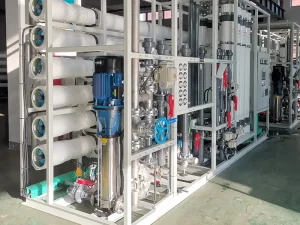
Bangkok Gulf Maritime Compact Seawater RO Plant
Skid-mounted corrosion-resistant SWRO units designed for coastal resorts, shipyards, and marine industrial parks across Samut Prakan and the Gulf of Thailand.
Explore SpecificationNavigating Bangkok's Complex Hydrological & Industrial Landscape
A rigorous engineering perspective on seasonal salinity, groundwater extraction caps, and the rapid expansion of advanced manufacturing under Thailand 4.0.
1. The Chao Phraya Estuary Salinity Intrusion Dilemma
The Bangkok Metropolitan Area (BMA), encompassing Samut Prakan, Nonthaburi, and Pathum Thani, faces acute water quality volatility driven by climate-induced seasonal salinity intrusion along the lower Chao Phraya river basin. During the dry season (typically January to May), tidal surges from the Gulf of Thailand push brackish marine water upstream into municipal and industrial raw intake stations, driving Total Dissolved Solids (TDS) levels from normal baselines of <250 ppm up to 1,800–3,500 ppm. For conventional manufacturing facilities reliant on standardized industrial water supplies, this seasonal fluctuation causes catastrophic scale deposition in boiler loops, rapid membrane biofouling, and erratic process water conductivity.
As an OEM/ODM manufacturing partner specializing in modular membrane separation, Tongjie provides pre-engineered industrial reverse osmosis (RO) systems fitted with automated conductivity-divert valves, intelligent flux balancing, and heavy-duty antiscalant dosing. By mitigating seasonal TDS volatility, our systems provide continuous water feeds with conductivities under 5 µS/cm, enabling uninterrupted operations for electronics assemblers, pharmaceutical formulators, and food processors across the Greater Bangkok perimeter.
2. The Eastern Economic Corridor (EEC) Manufacturing Boom
Adjacent to Bangkok lies the Eastern Economic Corridor (EEC), comprising Chonburi, Rayong, and Chachoengsao. Under the Thai government's "Thailand 4.0" initiative, the EEC has transformed into Southeast Asia's foremost hub for Electric Vehicle (EV) assembly, lithium-ion battery cell production, wafer/semiconductor testing, and advanced biopharmaceuticals. These advanced sectors demand water of exceptional purity, requiring Ultrapure Water (UPW) systems capable of achieving 18.2 MΩ·cm resistivity, TOC < 2 ppb, and particle limits below 0.05 microns.
Concurrently, the Industrial Estate Authority of Thailand (IEAT) enforces rigorous zero-discharge and water-recycling quotas within estates such as Amata City, WHA Eastern Seaboard, and Map Ta Phut. Factories are legally encouraged or mandated to reclaim at least 70% to 85% of their aggregate process effluent. Tongjie's high-recovery double-pass RO, Disc Tube Reverse Osmosis (DTRO), and Mechanical Vapor Recompression (MVR) platforms allow global tier-1 enterprises operating in Thailand to meet these IEAT criteria with guaranteed uptime, lower CapEx, and verifiable environmental compliance.
Global Enterprise Sourcing Demands in Tropical Developing Hubs
Understanding the critical friction points global EPCs and plant directors face when procuring water infrastructure for Southeast Asian facilities.
Tropical Biofouling & Temperature Control
Bangkok ambient feedwater temperatures routinely exceed 32°C to 36°C. High thermal conditions accelerate microbial proliferation in membrane feed lines, leading to severe biofouling, polysaccharide slime buildup, and premature transmembrane pressure (TMP) spikes.
- Sanitary 316L SS & PVDF piping designs
- Automated periodic chemical CIP dosing protocols
- Integrated UV disinfection pre-RO protection
CapEx vs. Lifecycle OpEx Balancing
Global procurement teams often fall into the trap of purchasing lowest-bid skid systems that employ substandard Chinese or non-certified components, resulting in recurring membrane replacement cycles and exorbitant power consumption rates.
- Isobaric Energy Recovery Devices (ERD) with 96% efficiency
- Dow FilmTec & Hydranautics membrane element integration
- Grundfos / Danfoss high-pressure variable speed pumps
Regulatory Validation & Engineering Traceability
Facilities backed by European, American, or Japanese FDI require strict traceability documentation, including DQ/IQ/OQ/PQ validation packs, material certs (EN 10204 3.1), and remote telemetry integration conforming to Industry 4.0 standards.
- Siemens S7-1500 / Allen-Bradley PLC architectures
- Factory Acceptance Testing (FAT) with wet simulation
- Full 21 CFR Part 11 electronic batch logging compliance
Comprehensive Industrial Water & Wastewater Treatment Configurations
Scalable, modular systems customized by Tongjie engineers to meet complex process specifications across Greater Bangkok.
A. Semiconductor & Microelectronics UPW Process Train
The standard Tongjie UPW architecture deployed for Bangkok electronics facilities combines multi-media media filtration, activated carbon, and dual-pass reverse osmosis as initial demineralization stages. The permeate is then degassed using membrane contactors (Liqui-Cel) to eliminate dissolved CO2 and O2, followed by Continuous Electrodeionization (EDI) and mixed-bed polishing. Polishing loops incorporate 185 nm TOC destruction UV reactors, ultrafiltration (UF) cross-flow polishing modules, and continuous resistivity instrumentation to ensure absolute electrical resistance of 18.2 MΩ·cm at 25°C.
B. High-Recovery Water Reuse & ZLD Membrane Concentration
For chemical, electroplating, and textile operations in Samut Sakhon and Samut Prakan, raw wastewater contains high COD, sulfate, and heavy metal concentrations. Tongjie's high-recovery train integrates chemical coagulation-flocculation, Lamella clarification, and Hollow Fiber Ultrafiltration (UF) as pretreatment. The clarified effluent feeds into specialized Disc Tube Reverse Osmosis (DTRO) modules operating at hydraulic pressures up to 90–120 bar. DTRO's open-channel geometry eliminates traditional spiral-wound spacer blockage, permitting concentration of high-salinity brines up to 80,000–120,000 mg/L TDS before passing to crystallization and falling-film mechanical vapor recompression (MVR) evaporators.
Technology Roadmap: The Next Decade of Membrane Engineering (2025–2035)
Integrating artificial intelligence, biomimetic selective membranes, and ultra-low carbon operational paradigms.
AI-Driven Predictive Flux & Antiscalant Modeling
Deployment of edge-computing IoT algorithms calculating dynamic scaling potential in real time, reducing chemical antiscalant consumption by 24% while extending membrane CIP intervals.
Ceramic Nanofiltration & Extreme pH Durability
Integration of silicon carbide (SiC) and alumina ceramic membranes capable of continuous operation in aggressive solvent, acid, and caustic environments up to 80°C.
Biomimetic Aquaporin Desalination
Commercialization of aquaporin-embedded thin-film composite membranes delivering 40% higher water permeability at equivalent salt rejection, drastically reducing SWRO pumping energy.
Grid-Independent Solar Desalination Plants
Direct coupling of high-efficiency DC-driven SWRO skids with floating offshore solar arrays along the Gulf of Thailand, enabling carbon-neutral municipal and industrial fresh water production.
Comparative Global Analysis: Why Thailand is Southeast Asia's Water Tech Focal Point
A regional overview contrasting ASEAN requirements with Middle Eastern, European, and North American industrial water demands.
The global water treatment landscape is undergoing significant regional diversification. In the Middle East (GCC region), the primary focus has historically been mega-scale thermal-to-membrane SWRO transitions to satisfy municipal base loads under severe hypersaline conditions (Arabian Gulf TDS > 45,000 ppm). In contrast, the North American and Western European markets are predominantly driven by municipal consent decrees targeting per- and polyfluoroalkyl substances (PFAS), microplastics, and micro-pollutant removal, coupled with aging municipal infrastructure revamps.
Southeast Asia—spearheaded by Thailand's Greater Bangkok metropolitan area and Vietnam's industrial corridors—occupies a unique intersection. It is experiencing rapid heavy industrialization without the luxury of vast freshwater reserves or forgiving environmental discharge assimilative capacities. The Department of Industrial Works (DIW) in Thailand has established stringent chemical oxygen demand (COD < 120 mg/L), total dissolved solids (TDS < 3,000–5,000 mg/L depending on receiving bodies), and heavy metal thresholds. Consequently, multi-national conglomerates setting up production bases in Thailand demand containerized, rapidly deployable OEM/ODM membrane systems capable of fitting into compact footprints, delivering instant regulatory compliance, and yielding rapid payback through internal water recycling.
Engineering Localization, DIW Compliance & OEM Standards
Delivering turn-key peace of mind for multinational plant managers and Thai engineering contractors.
Thai DIW & IEAT Alignment
All discharge and water reuse skids are engineered to meet or exceed Thailand Department of Industrial Works (DIW) Ministerial Regulations and IEAT Estate effluent criteria, ensuring seamless environmental operating permit sign-offs.
Electrical & Tropicalized Build
Control cabinets are manufactured to IP65/NEMA 4X standards with built-in closed-loop cabinet air conditioning to resist tropical humidity and heat. Switchgear is fully compatible with Provincial Electricity Authority (PEA) 380V/400V 50Hz 3-phase standards.
Complete FAT & Spares Stocking
Every skid undergoes comprehensive hydro-testing, electrical continuity testing, and wet performance verification in our Shanghai manufacturing facility prior to export. Common replacement membranes, cartridges, and sensors are stocked regionally for rapid dispatch.
Engineered Systems & Equipment Solutions for Bangkok & Global Projects
Explore our complete range of specialized membrane systems, thermal brine concentration packages, and oilfield fluid treatment plants.
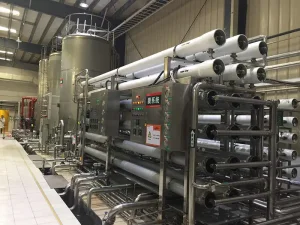
Bangkok Food & Beverage Process Water Purification System
Hygienic sanitary multi-barrier reverse osmosis system engineered for beverage bottling, brewery make-up, and dairy plants across Samut Sakhon and Pathum Thani.
Explore Specification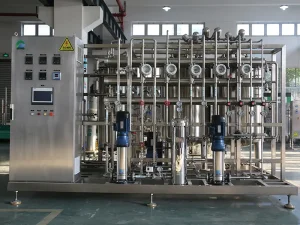
Bangkok GMP Pharmaceutical Purified Water & WFI System
Sanitary stainless steel RO+EDI generating pharmacopeia-compliant purified water and Water for Injection (WFI) with complete DQ/IQ/OQ validation dossiers.
Explore Specification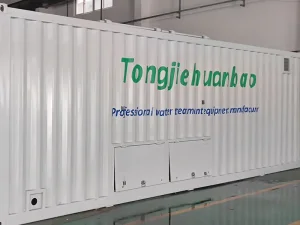
Bangkok Modular Containerized Seawater Desalination Plant
ISO containerized, plug-and-play seawater RO system designed for fast turnkey installation across Gulf of Thailand islands, coastal ports, and resort developments.
Explore Specification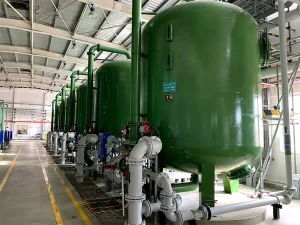
Bangkok Power & Boiler Demineralized Water RO+EDI System
High-capacity demineralization train delivering ultra-low silica and conductivity <0.1 µS/cm for high-pressure power generation boilers and chemical processing.
Explore Specification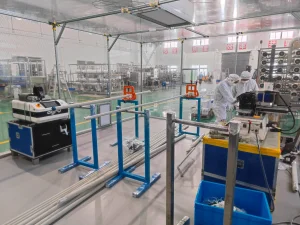
Bangkok Sustainable Eco-Friendly Industrial Wastewater Plant
Low-chemical footprint biological and membrane separation solution designed to lower sludge output and achieve compliant discharge into Thai public municipal canals.
Explore Specification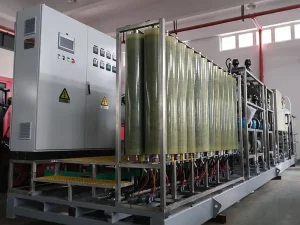
Bangkok Heavy Hydrocarbon & Flowback Fluid Treatment Unit
Engineered for petroleum refineries and storage terminals along the Gulf coast, featuring specialized de-oiling, advanced oxidation, and high-pressure membrane stages.
Explore Specification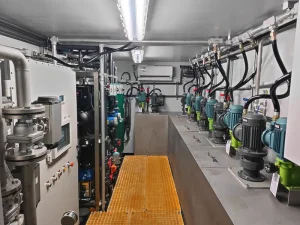
Bangkok Skid-Mounted Produced Water Reuse Treatment Unit
Mobile containerized DTRO and multi-media filtration package delivering reinjection-ready water with oil content ≤5 mg/L and suspended solids ≤1 mg/L.
Explore Specification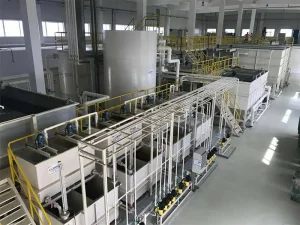
Bangkok High-Ratio High-Salinity Industrial Water Reuse System
Specialized refractory organics and high-salinity effluent treatment system built for severe wastewater conditions in chemical synthesis and metal finishing plants.
Explore SpecificationFrequently Asked Engineering & Procurement Inquiries
Direct technical answers addressing system integration, electrical standards, membrane lifespans, and logistics for Bangkok installations.
How do Tongjie systems mitigate seasonal salinity surges in the Chao Phraya river basin?
Our feed systems incorporate dual-range automated conductivity sensors paired with three-way diverter valves. When raw intake TDS exceeds predetermined setpoints (e.g., during high dry-season tidal pushes), the PLC dynamically adjusts the high-pressure VFD output, activates secondary-pass RO booster pumps, and alters antiscalant dosing ratios to maintain product water specs without manual operator intervention.
What documentation is provided to support Thai DIW and IEAT discharge permitting?
We supply comprehensive technical packages including certified Piping and Instrumentation Diagrams (P&ID), mass and chemical balances, electrical single-line diagrams, factory hydro-test certificates, material mill test certificates (EN 10204 3.1), and guaranteed effluent parameter data sheets that local Thai environmental consultants can submit directly to the DIW or IEAT.
Can you provide custom private-label (ODM/OEM) fabrication for Thai EPC contractors?
Yes. We operate extensive OEM/ODM manufacturing partnerships with major EPC engineering contractors and water equipment distribution brands across Southeast Asia. We support custom skid frame dimensions, client-specified paint colors and corporate logos, localized Thai/English HMI touchscreens, and specified instrument brands (e.g., Endress+Hauser, Siemens, Schneider).
What is the typical shipping transit time and port clearance for Bangkok-bound equipment?
Standard skid and containerized units ship directly from the Port of Shanghai to Bangkok Modern Terminal (BMT) or Laem Chabang Deep Sea Port in Chonburi. Typical ocean transit takes only 6 to 9 days. Pre-cleared customs documentation under the ASEAN-China Free Trade Agreement (Form E) is provided to minimize or eliminate import tariffs.
How does Tongjie ensure membrane longevity in ambient tropical temperatures above 35°C?
High temperatures lower feed water viscosity, which increases membrane permeability but also accelerates fouling and compaction. Our process engineering sizing calculates flux rates conservatively (e.g., 12–15 LMH rather than 18–20 LMH). We also integrate automated permeate flush cycles at every shutdown and specify fouling-resistant, wide-spacer (34 mil) membrane elements.
What remote monitoring and PLC telemetry capabilities are integrated into your skids?
All skids come equipped with an industrial cellular IoT router or Ethernet gateway supporting secure VPN tunneling. Our control systems transmit operational metrics—including transmembrane pressure, conductivity, flow rates, and chemical tank levels—to cloud SCADA dashboards, enabling our engineering team in Shanghai to assist your local operators with remote diagnostics.
Initiate Your Bangkok Water Treatment Project Today
Send our process engineering team your raw feedwater analysis, target production flow rates, and required permeate specifications. We deliver detailed membrane projection simulations, comprehensive P&IDs, and cost-optimized CapEx/OpEx proposals within 48 hours.