Flagship Engineering Systems for Brazilian Operations
Standardized and custom-built modular membrane systems engineered for Brazil's demanding environmental conditions, compliance standards, and heavy industrial applications.
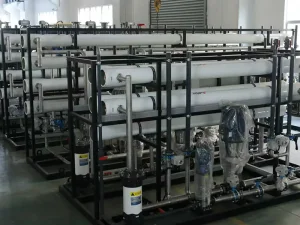
Brazil Industrial Water Dynamics & The Need for Advanced OEM/ODM Synergies
Brazil represents the largest industrial economy in South America, driven by massive expansions in deep-water offshore oil extraction (Pre-Salt / Pré-Sal Santos & Campos Basins), iron ore mining across the Quadrilátero Ferrífero and Carajás, sugarcane-ethanol biofuel refinement, pulp and paper production, and pharmaceutical manufacturing hubs centered in São Paulo, Rio de Janeiro, and Goiás.
However, Brazilian industrial enterprises face severe water management paradoxes. While Brazil possesses roughly 12% of the world's freshwater resources, over 73% of this volume is concentrated in the Amazon basin—far removed from key industrial, agricultural, and urban population hubs in the Southeast and Northeast regions. Regional droughts in Ceará, Bahia, and Pernambuco, coupled with increasing municipal tariffs and stringent regulatory frameworks established by IBAMA (Instituto Brasileiro do Meio Ambiente e dos Recursos Naturais Renováveis) and regional authorities like CETESB (São Paulo), have transformed industrial water treatment from an operational detail into a strategic priority.
To maintain global competitiveness while adhering to strict environmental, social, and governance (ESG) targets, Brazilian engineering, procurement, and construction (EPC) contractors and plant directors are aggressively transitioning toward modular, pre-fabricated membrane skids. By partnering directly with specialized China-based OEM/ODM manufacturers, Brazilian companies eliminate the inflated capital overheads associated with domestic fabrication while gaining access to world-class membrane separation, high-pressure desalination, and thermal evaporation technologies.
Local Market Compliance: Navigating Brazilian Regulatory & Technical Standards
Deploying industrial equipment in Brazil requires strict adherence to local regulatory bodies, safety norms, and technical requirements. Importing non-compliant water treatment skids can lead to costly customs holds at major ports like Porto de Santos or Paranaguá, project delays, and severe operational penalties. Our full value chain OEM/ODM factory process incorporates comprehensive Brazilian compliance engineering directly into the mechanical and electrical design phase:
NR-10 Electrical Safety & Explosive Atmospheres
All electrical control cabinets, PLC interface modules, variable frequency drives (VFDs), and wiring harnesses are designed to meet Brazilian NR-10 regulations. For offshore oil skids or mining installations with hazardous atmospheric exposure, ATEX/IECEx explosion-proof components are integrated with fully certified junction boxes and dual-grounding architecture.
NR-12 Machinery Safety Standards
Industrial water treatment machinery imported into Brazil must comply with NR-12 mechanical safety protocols. Our OEM engineering includes emergency stop circuits, physical safety guards on high-pressure positive displacement pumps, ergonomic pipe layout access, and Portuguese-language safety warning labels baked into the skid frame.
ANVISA & ABNT Compliance for Pharma & Food
High-purity water applications (RO + EDI) serving food, beverage, and pharmaceutical clients in Brazil strictly adhere to ANVISA RDC 658/2022 guidelines and ABNT NBR engineering practices. Systems feature 316L stainless steel orbital welding, surface roughness Ra ≤ 0.4 μm, sanitary clamp fittings, and complete IQ/OQ validation protocols.
Brazilian Regional Voltage & Frequency Customization Matrix
Brazil is unique in South America due to its dual-voltage and regional frequency infrastructure. Our OEM factories custom-wire and bench-test all electrical motors, pumps, and transformers prior to export:
| Brazilian Region / State | Primary Industrial Voltage | Frequency | OEM Motor & Pump Configuration Strategy |
|---|---|---|---|
| São Paulo, Rio de Janeiro (SE) | 220V / 380V (Three-Phase) | 60 Hz | 60Hz NEMA/IEC high-efficiency motors, VFD speed control |
| Minas Gerais, Paraná, RS (S/SE) | 127V / 220V / 380V | 60 Hz | Multi-voltage VFD drives with tropicalized insulation coils |
| Northeast (Ceará, Bahia, PE) | 220V / 380V / 440V | 60 Hz | Heavy-duty industrial 440V 60Hz high-pressure SWRO pump assemblies |
| Offshore Platforms (Santos Basin) | 440V / 480V / 690V | 60 Hz | Explosion-proof marine-grade motors with anti-corrosion coating |
China's Advanced Manufacturing Synergy for Brazilian Buyers
Overcoming the "Custo Brasil" (the structural cost overhead of local Brazilian manufacturing, high tariffs on raw raw materials, and complex domestic labor laws) is a major objective for Brazilian project developers. Partnering with our Shanghai-headquartered manufacturing facilities offers significant information gain and procurement advantages:
Cost & Capital Efficiency
By leveraging integrated Chinese supply chains for high-pressure stainless steel pressure vessels, specialized membrane elements, titanium heat exchangers, and high-purity valves, we achieve 30% to 45% CAPEX reductions compared to local Brazilian equipment assembly, even after accounting for maritime freight and import duties.
Pre-Commissioned Modular Assembly
All systems undergo full Factory Acceptance Testing (FAT) in Shanghai, including full hydraulic pressure testing, electrical load checks, and PLC automation sequencing. Containerized and skid-mounted designs arrive at Santos Port pre-wired and pre-piped, reducing field commissioning timelines in Brazil from months to just 10 to 15 operational days.
Full Value Chain ODM/OEM Engineering Systems & Core Process Trains
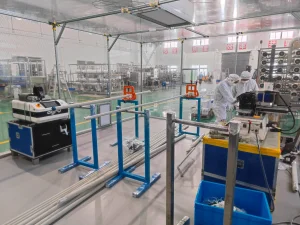
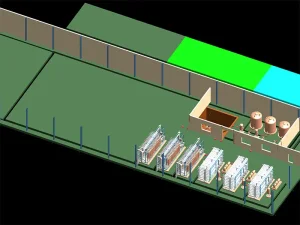
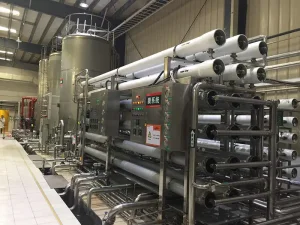
Our manufacturing facility operates as an end-to-end innovation incubator for Brazilian partners, covering raw water analysis, mass balance calculations, mechanical 3D CAD layout modeling, panel building, membrane stack assembly, and post-sale technical support. Below are the primary process trains engineered for Brazil:
1. Seawater RO (SWRO) & Desalination
Designed for coastal municipalities, resorts, and industrial ports in Northeast Brazil. Utilizes high-rejection aromatic polyamide membranes coupled with Isobaric Energy Recovery Devices (ERDs) like ERI pressure exchangers, reducing power consumption down to < 3.0 kWh/m³.
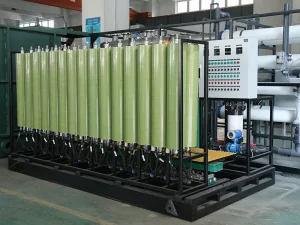
2. DTRO / STRO High-Pressure Systems
Disc Tube Reverse Osmosis (DTRO) and Spiral Tube (STRO) modules operating up to 120 bar pressure. Purpose-built for treating heavy landfill leachate, mining wastewater, and sugar-ethanol vinhaça effluent with high total dissolved solids (TDS) and extreme chemical oxygen demand (COD).
3. High-Purity RO + EDI Process Water
Continuous Electrodeionization (EDI) systems eliminating chemical regeneration tanks. Produces ultrapure water with electrical resistivity up to 18.2 MΩ·cm for semiconductor production, power generation boiler feed, and pharmaceutical compounding.
Target Applications & Industry Scenarios Across Brazil
Our custom ODM/OEM solutions are deployed across diverse regional ecosystems in Brazil, solving critical water, wastewater, and zero liquid discharge challenges:
A. Deep-Water Oil & Gas (Pre-Salt Santos & Campos Basins)
Application: Offshore Produced Water Treatment, Deoxygenation & Sulfate Removal Skids.
Engineering Scope: Containerized and skid-mounted Deoxygenation Membrane Equipment capable of degassing physical dissolved oxygen down to ppb levels (≤ 5 ppb), preventing wellbore corrosion and hydrogen sulfide scaling in deep-water reinjection pumps. Compact footprint engineered specifically for FPSO deck space restrictions.
B. Agribusiness & Sugarcane-Ethanol Distilleries (São Paulo & Central-West)
Application: Vinhaça Concentration, Evaporative Condensate Recovery & Boiler Feed Water.
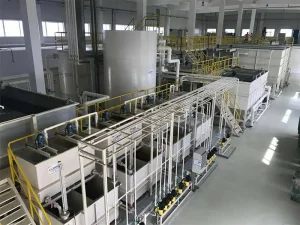
Engineering Scope: High-Ratio Water Reuse Equipment and DTRO membrane stacks designed to pre-concentrate heavy vinhaça effluent prior to fertigation, while recovering crystal-clear permeate water for reuse in high-pressure boilers and ethanol washing towers.
C. Mining & Metallurgy (Minas Gerais & Pará Iron Ore Basins)
Application: Tailings Dam Wastewater Treatment, Heavy Metal Removal & Zero Liquid Discharge (ZLD).
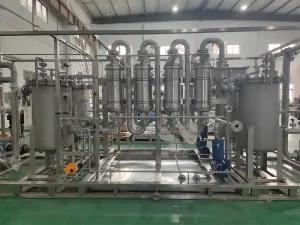
Engineering Scope: High-efficiency Brine Concentration Systems integrated with Mechanical Vapor Recompression (MVR) evaporators to process hypersaline mining runoff, recovering clean water and precipitating dry crystalline salt for ecological disposal.
Procurement, Shipping Logistics & After-Sales Engineering Support
We understand that buying equipment from overseas manufacturers involves risk management considerations regarding ocean freight logistics, spare parts availability, and technical assistance. We mitigate these risks for Brazilian buyers through a structured operational protocol:
Port Logistics Optimization
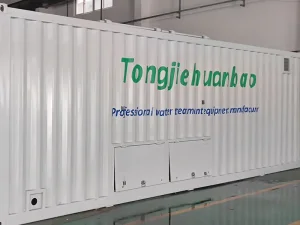
Containerized skids (20ft / 40ft High Cube ISO containers) are braced and sea-fastened for transit to major Brazilian ports: Porto de Santos (SP), Porto de Paranaguá (PR), Porto de Suape (PE), and Manaus Free Trade Zone (AM). Complete NCM tariff code mapping and commercial invoicing are provided to streamline customs clearance.
Remote SCADA & IoT Diagnostics
Every OEM skid comes standard with PLC control panels (Siemens / Allen-Bradley) integrated with secure industrial IoT routers. Our engineering team in Shanghai provides 24/7 remote diagnostic support, monitoring operational telemetry, membrane differential pressure, and conductivity alongside local Brazilian plant engineers.
Spare Parts & Consumables Warranty
We supply comprehensive 2-year maintenance spare part kits—including mechanical seals, O-rings, digital sensor probes, pressure transmitters, and cartridge filters—shipped directly with the skid to eliminate operational downtime in remote interior locations.
Frequently Asked Questions (Q&A) for Brazilian OEM/ODM Buyers
Technical, regulatory, and commercial answers for Brazilian EPC contractors, system integrators, and plant managers.
All motor pumps, blowers, energy recovery turbines, and dosing systems are natively sourced and tested for 60 Hz operation at specified voltages (220V, 380V, 440V, or 480V). Variable Frequency Drives (VFDs) are pre-programmed with appropriate torque curves and tropicalized insulation to prevent electrical overheating in high-ambient-temperature regions like Northeast Brazil and the Amazon basin.
Yes. Our software engineers customize all Siemens or Allen-Bradley HMI screens with multi-language toggle capability, including native Brazilian Portuguese interface text, alarm logs, trending graphs, and operational manuals. This ensures smooth handoff and operator adoption on site.
To prepare an accurate mass balance and membrane sizing, we require: Total Dissolved Solids (TDS) or conductivity, pH, feed water temperature range, Silica (SiO2), Hardness (Ca2+, Mg2+), Iron/Manganese levels, Oil & Grease (if oilfield/industrial), Turbidity/SDI, target product water quality (m3/h or m3/day), and site footprint constraints.
Our containerized SWRO units are built using insulated ISO shipping containers lined with anti-corrosion marine paint (C5-M specification). High-pressure piping uses Super Duplex Stainless Steel (2507) or 904L, while low-pressure lines use SCH80 PVC or UPVC. Internal air conditioning units keep control panels cool and moisture-free during hot coastal Brazilian summers.
Yes. Our double-pass RO + EDI pharmaceutical skids are designed according to USP and ANVISA RDC 658/2022 standards. They feature sanitary SS316L pipework, automatic hot-water sanitization (85°C), continuous TOC monitoring, and complete documentation packages to support FAT, SAT, IQ, and OQ qualification.
Standard containerized SWRO or RO skids have a fabrication lead time of 45 to 60 days. Complex custom ZLD or DTRO systems generally take 75 to 90 days. Maritime transit from Shanghai to Porto de Santos takes approximately 30 to 38 days via direct shipping lines.
Specialized Membrane Modules & Advanced Water Treatment Systems
Explore our comprehensive range of specialized membrane concentration, physical degassing, and high-purity water equipment for direct OEM integration.
Partner with a Premier OEM/ODM Water Treatment Factory Serving Brazil
Are you an EPC contractor, industrial plant owner, or distributor in Brazil looking for reliable, high-capacity membrane water treatment systems? Send us your raw water analysis and flow requirements today to receive a customized engineering design, P&ID schematic, and factory direct quotation within 24 hours.
Send Inquiry Now