Featured OEM Systems
Hamburg Regional Core Treatment Systems & Modular Skids
Factory-certified produced water recovery, brine concentration, and ultrapure processing platforms engineered for Northern Germany's petrochemical hubs and Baltic/North Sea offshore service fleets.
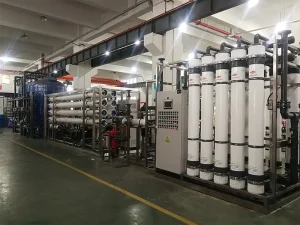
High-Ratio Industrial Water Reuse Skid - Advanced UF & Multi-Pass RO for Hamburg Refinery Effluent
View Product Specs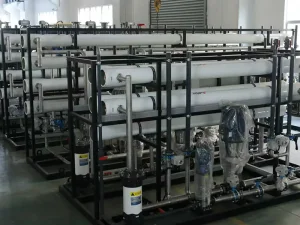
ODM High-Efficiency Heavy Brine Concentration System - High Salinity Oilfield Wastewater Solutions
View Product Specs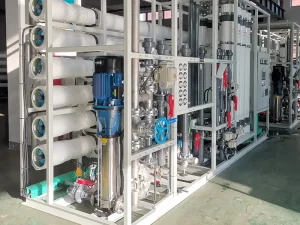
OEM Compact Marine & Offshore Seawater Desalination System for Port of Hamburg Offshore Support
View Product SpecsLocal Market Analysis
Hamburg's Energy Landscape: Environmental Directives & Port Demands
As Europe's third-largest container gateway and Northern Germany's premier refining corridor, Hamburg balances intense petrochemical throughput along the River Elbe with rigorous regulatory standards.
Refinery Corridors in Hamburg-Harburg
The industrial refinery clusters around Harburg and Moorburg process complex crude oil blends, generating produced water saturated with polyaromatic hydrocarbons (PAHs), heavy naphthenic acids, phenols, and dissolved solids. Local environmental permits enforce strict discharge thresholds before any return into the Lower Elbe estuary, necessitating robust membrane barrier systems.
MARPOL Annex I & Port Reception Logistics
The Port of Hamburg serves as a primary European reception port for oily bilge water, ballast streams, and offshore supply vessel residues under MARPOL 73/78 Annex I. OEM containerized treatment plants must continuously remediate free, emulsified, and dissolved hydrocarbons below the regional 5 ppm benchmark under fluctuating salinity profiles.
Strict WHG & HELCOM Marine Protocols
Operations interfacing with German waters fall under the Federal Water Act (Wasserhaushaltsgesetz - WHG) and the Helsinki Commission (HELCOM) marine conventions. Discharge into public sewers or aquatic ecosystems requires Zero Liquid Discharge (ZLD) or near-ZLD closed loops, avoiding biocumulative chemicals and volatile BTEX compounds entirely.
Global Industrial Macro-Dynamics
Global Shifts in Upstream Produced Water Economics
From deepwater North Sea installations to unconventionals in the Middle East and Central Asia, managing produced water has evolved from an operational disposal overhead into a circular raw-material paradigm.
Produced Water-to-Resource Paradigm
Globally, over 250 million barrels of produced water are extracted daily alongside petroleum hydrocarbons. Modern operators prioritize mineral harvesting (lithium, strontium, bromine) and high-ratio water reuse for green hydrogen electrolysis, cooling tower makeup, and steam generator loops rather than deep-well injection.
Thermal-to-Membrane OPEX Decoupling
Conventional multi-stage thermal evaporation (MED/MSF) imposes unsustainable carbon and thermal OPEX penalties. Industry front-runners rely on Disc Tube Reverse Osmosis (DTRO), Special Tubular Reverse Osmosis (STRO), and electro-dialysis reversal (EDR) to concentrate brines up to 180,000 ppm TDS at one-fourth the energy expenditure.
Stringent Seismicity & Disposal Bans
Across the North Sea basin, Netherlands, and North America, subsurface saltwater reinjection faces tightening legislative bans due to induced micro-seismicity and freshwater aquifer contamination risks. OEM skid fabricators must supply self-contained, turnkey units capable of producing boiler feed or agricultural-grade permeate.
Field Implementation Scenarios
Hamburg & Northern Germany Engineering Use Cases
Engineered specifically to solve complex wastewater realities across Northern German logistics and downstream infrastructure.
| Facility / Deployment Zone | Feed Water Characteristics | Core Process Technology | Treated Permeate Quality | Compliance Target |
|---|---|---|---|---|
| Hamburg Port Reception Facility (GDR/Altenwerder) | Bilge water, slops, variable marine salinity, Oil > 3500 mg/L | CPI Separator + DAF + Ceramic UF + Multi-Stage DTRO | Oil < 2 mg/L, TDS < 400 mg/L, COD < 40 mg/L | MARPOL / Elbe Estuary WHG |
| Harburg Downstream Processing Plant | Desalter effluent, heavy naphthenics, high phenols, high silica | Chemical Softening + Ozone AOP + High-Recovery Brackish RO | Zero scaling ions, Silica < 0.1 mg/L, Recycled to Cooling | Closed-Loop Industrial Reuse |
| Cuxhaven / Brunsbüttel Offshore Supply Base | Drilling mud slops, fracturing flowback, heavy metals, Ba/Sr scales | Coagulation / Tube Settler + Anti-Fouling DTRO (120 Bar) | TDS reduced by 99.2%, SS < 1 mg/L, Non-Toxic Permeate | HELCOM Offshore Disposal Standard |
| Underground Gas Storage (UGS) Caverns (Lower Saxony) | Saturated cavern displacement brine (TDS > 220,000 mg/L) | Pre-Filtration + High-Pressure DTRO + MVR Brine Crystallizer | Distillate TDS < 20 mg/L, Dry Solid Salt Cake (NaCl 99%) | True ZLD (Zero Liquid Discharge) |
Factory OEM Architecture
End-to-End Modular Produced Water Treatment Train
Our OEM manufacturing facility integrates raw water characterization, custom alloy fabrication, precision hydraulic modeling, and digital twin SCADA programming into plug-and-play skids.
STAGE 01
Primary Hydrocarbon De-oiling
Corrugated Plate Interceptors (CPI) paired with Dissolved Gas Flotation (DGF/DAF) strip bulk free, floating, and dispersed hydrocarbons down to ≤ 20 ppm without chemical emulsion degradation.
STAGE 02
Softening & Scaling Control
Two-stage high-density lime softening and micro-sand crystallization precipitate calcium, barium, strontium, and reactive silica, protecting downstream membranes from irreversible mineral scaling.
STAGE 03
High-Pressure DTRO Membrane Pass
Open-channel Disc Tube Reverse Osmosis (DTRO) modules operating up to 90–120 bar process high-salinity flowback. Open-channel spacers withstand high silt density without channel blinding.
STAGE 04
MVR Crystallization & ZLD Output
Mechanical Vapor Recompression (MVR) evaporation converts the terminal DTRO reject into pure condensed distillate and commercial-grade salt crystals, concluding the zero-discharge lifecycle.
Technology Roadmap 2026–2030
Next-Generation Membrane & AI-Driven Monitoring
Tongjie's engineering laboratory continuously incorporates cutting-edge separation materials and predictive neural networks to drive down operational energy demands.
Silicon Carbide (SiC) Ceramic Membranes
Transitioning from polymeric ultrafiltration to super-hydrophilic SiC ceramic tubular membranes allows our OEM skids to operate in direct contact with unrefined hydrocarbons, solvents, and pH ranges from 0 to 14 without membrane swelling or flux degradation.
AI Predictive Membrane Fouling SCADA
Edge-computing industrial IoT nodes analyze trans-membrane pressure (TMP), conductivity differentials, and feed turbidity in real-time. Automated neural algorithms optimize anti-scalant dosing and initiate precision Clean-In-Place (CIP) sequences before irreversible fouling occurs.
Forward Osmosis (FO) & Osmotic Concentration
By harnessing low-grade waste heat from refinery flue gas, our future-ready hybrid FO-RO systems extract pure water across non-pressurized draw solutions, achieving higher recovery rates on ultra-dense brines while slashing overall kilowatt-hour consumption by 35%.
Procurement & Technical FAQ
Frequently Answered Engineering Inquiries
Authoritative guidance for EPC project directors, procurement officers, and plant engineers specifying produced water treatment systems for the German and European sectors.
How do Tongjie's OEM skids achieve < 5 mg/L hydrocarbon reinjection levels required in Germany?
Our multi-barrier train pairs micro-bubble Dissolved Air Flotation (DAF) with oleophilic coalescing pre-filters, followed by tubular ceramic or Disc Tube Reverse Osmosis (DTRO) membranes. The open-channel DTRO module eliminates stagnant hydrodynamic zones, allowing rejection of free, emulsified, and complex long-chain hydrocarbons to levels consistently below 5 mg/L (and frequently < 1 mg/L), reliably meeting German WHG and EU reinjection criteria.
What documentation and compliance standards are provided for the Hamburg and EU markets?
Every OEM system exported to European destinations arrives with CE Declaration of Conformity under the Machinery Directive 2006/42/EC, Pressure Equipment Directive (PED 2014/68/EU), and ATEX 2014/34/EU compliance for explosive hydrocarbon environments. We furnish comprehensive weld maps, NDT inspection records, EN 10204 3.1 material test certificates for Super Duplex / 254SMO alloys, and Siemens/Rockwell PLC code compliant with European industrial standards.
How does the system handle high-silica and high-barium fracturing flowback?
Barium and silica scaling are the primary failure modes for standard spiral-wound membranes. Our process design introduces a specialized chemical softening reactor using caustic and sodium carbonate dosing to precipitate barium sulfate (BaSO4) and calcium carbonate. High-pH operating modes or proprietary silica inhibitors keep reactive silica in dissolved silicate form, while open-channel DTRO cushion discs allow aggressive periodic acid/alkaline CIP without delaminating the membrane composite.
Can your factory accommodate private-label ODM/OEM branding for European EPC contractors?
Yes. We act as an OEM/ODM contract manufacturer for international engineering companies, system integrators, and water utilities. We can customize skid dimensions to fit ISO standard high-cube shipping containers, paint skids according to corporate RAL codes, install designated PLC hardware, and deliver fully unbranded or private-labeled equipment accompanied by localized German/English technical documentation.
What lead times and commissioning timelines apply for containerized produced water skids?
Standard containerized skids (capacities from 50 m³/day to 1,500 m³/day) have a factory fabrication and Factory Acceptance Testing (FAT) cycle of 8 to 12 weeks. Because our equipment arrives pre-piped, pre-wired, and fully hydrostatic-tested, site installation in Hamburg terminals or offshore bases requires simple flange-to-flange connections and electrical hookup, achieving full commissioning within 10 to 15 operational days.
Ready to Engineer Your Produced Water Solution?
Submit your raw water assay (TDS, Oil Content, TSS, Silica, Barium) to our application engineers for a detailed mass balance and turnkey quote designed to German compliance specs.
Factory Equipment Portfolio
Comprehensive OEM Water Treatment & Desalination Machinery
Factory-fabricated systems engineered for high-salinity wastewater, oilfield flowback reuse, demineralized boiler water, and marine offshore installations.
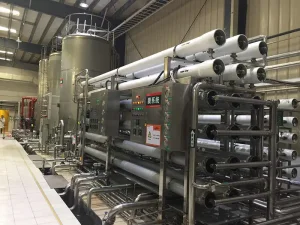
ODM Food & Beverage Process Water System - Reliable Solutions for Industrial Purified Water
View Product Specs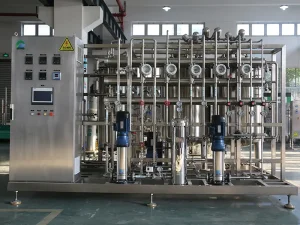
OEM Pharmaceutical Purified Water & WFI Generation Skid - Sanitary cGMP & Traceable Quality
View Product Specs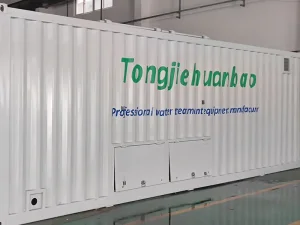
Wholesale Modular Containerized Seawater Desalination Unit - Factory-Ready for Rapid Offshore Deployment
View Product Specs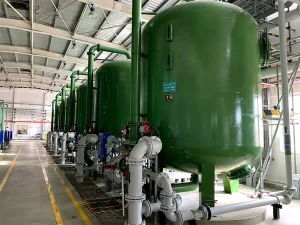
Industrial Demineralized Water Equipment - Dual Pass RO + EDI Suppliers for High-Pressure Boiler Feed
View Product Specs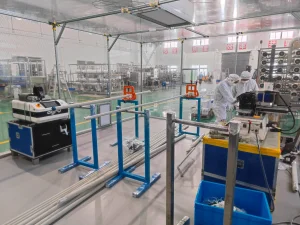
Eco-Friendly Low-Carbon Water Treatment Solutions & Factory ODM Engineering Services
View Product Specs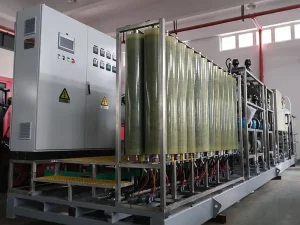
Advanced Fracturing Flowback Fluid Treatment System - High-Hardness Oilfield Saline Remediation
View Product Specs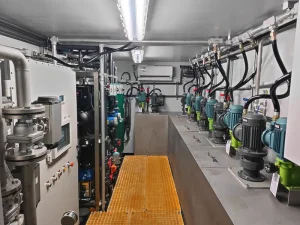
OEM Fracturing Flowback Water Reuse Treatment Equipment for Oil & Gas Field Operations
View Product Specs