Primary Industrial Water Treatment Units Serving Koror
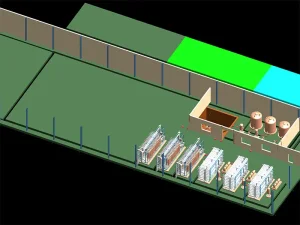
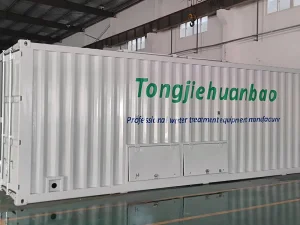
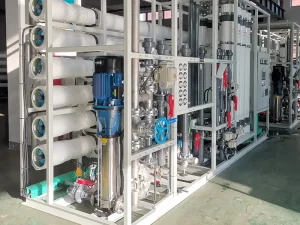
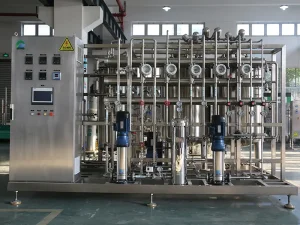
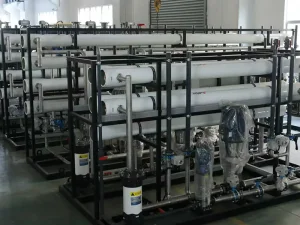
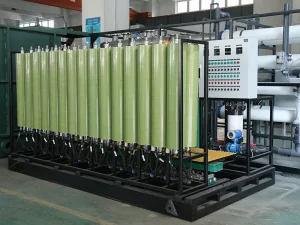
Pre-tested, skid-mounted, and containerized treatment equipment configured to meet offshore reinjection, physical degassing, and high-recovery recycling standards.
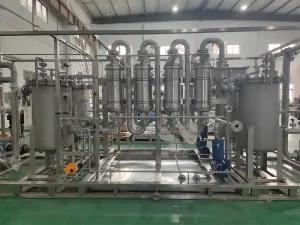
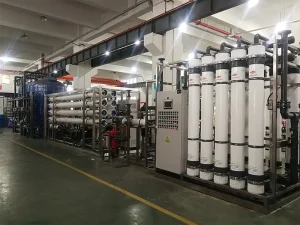
Produced Water Management in Koror: Strategic Realities & Marine Preservation
Evaluating commercial maritime support, bunkering logistics, and the rigorous environmental framework governing industrial effluent treatment across the Republic of Palau.
1. The Industrial and Logistics Status of Koror
Koror serves as the principal commercial and shipping nexus of the Republic of Palau. While not an oil-producing basin itself, Koror represents an essential logistical bridgehead for Asia-Pacific maritime transit, transshipment hubs, commercial port operations at Malakal Harbor, fuel bunkering facilities, and oceanic infrastructure supply chains. In this fragile tropical ecosystem—celebrated globally for the Palau National Marine Sanctuary—any handling of industrial hydrocarbons, bilge discharge, contaminated ballast, or off-spec industrial wash-down water must adhere to the world's most exacting ecological protections.
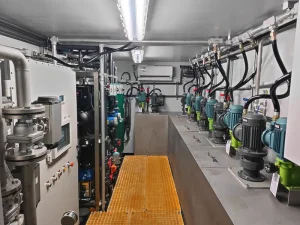
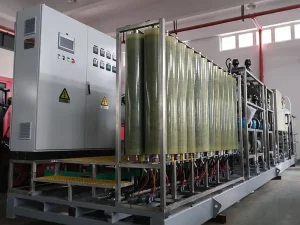
Industrial contractors, marine logistics operators, and regional EPC firms supporting oil, gas, and energy infrastructure across the Western Pacific demand modular, high-reliability wastewater treatment assets. For facilities operating out of or routing equipment through Koror, conventional onshore settling basins are impossible due to geographic and land-use constraints. Instead, compact, fully integrated, factory-assembled containerized units that combine mechanical oil-water separation, dissolved oxygen degassing, and membrane filtration are the absolute standard.
2. Global Procurement Intent & Engineering Demand Dynamics
Global energy operators and marine engineering contractors sourcing equipment for the Western Pacific are shifting purchasing behavior toward verified OEM manufacturers capable of delivering containerized Zero Liquid Discharge (ZLD) and produced water treatment systems. The primary procurement intents identified across Tier-1 contractors include:
- Modular Skid Footprint: Strict space limitations at quaysides, marine supply vessels, and decentralized processing hubs necessitate self-contained 20ft and 40ft standard ISO container solutions.
- Extreme Marine Corrosion Resistance: Exposure to hyper-saline, humid tropical sea air demands Super Duplex 2507, 316L stainless steel, or titanium piping, coupled with specialized C5-M marine anti-corrosion protective coatings.
- Full Process Verification Prior to Transit: Given the logistical isolation of island territories such as Palau, remote sites cannot tolerate on-site troubleshooting. Factory Acceptance Testing (FAT) with simulated complex feedwaters is an ironclad requirement.
Macro-Industry Solutions & Technical Flow Architecture
Our multi-stage treatment methodology is purpose-built to process highly variable chemical oxygen demand (COD), total dissolved solids (TDS), and emulsified hydrocarbons.
Primary Oil-Water Separation
Utilizing high-efficiency corrugated plate interceptors (CPI) and induced gas flotation (IGF) to strip free and dispersed oil down to ≤ 20 mg/L before entering precision polishing systems.
Catalytic Softening & Pretreatment
Automated dosing and micro-filtration remove scale-forming cations (Ca2+, Mg2+, Ba2+, Sr2+) and colloidal silica, protecting downstream membranes from catastrophic mineral fouling.
DTRO & High-Pressure RO Concentration
Open-channel Disc Tube Reverse Osmosis (DTRO) technology tolerates feed water salinities up to 120,000 mg/L TDS with superior hydraulic shear to prevent concentration polarization.
| Process Stage | Primary Unit Operations | Target Contaminants | Final Effluent Metrics |
|---|---|---|---|
| Pretreatment | CPI Coalescence + Advanced Clarification | Gross Hydrocarbons, Sand, Coarse Suspended Solids | TSS < 20 mg/L, Free Oil < 10 mg/L |
| Membrane Polishing | Ultrafiltration (UF) + Deoxygenation Degassing | Emulsified Oil, Micro-particles, Dissolved O2 | SDI15 < 3.0, O2 < 10 ppb |
| High-Recovery RO | Specialized Disc Tube Reverse Osmosis (DTRO) | Dissolved Minerals, Organic Fractions, Salts | TDS rejection > 98.5% |
| Zero Liquid Discharge | MVR Evaporator + Forced Circulation Crystallizer | Concentrated Brine, Recalcitrant Organics | Dry Salt Cake + High-Purity Condensate Reuse |
Localization Support, Quality Governance & Future Outlook
Ensuring complete lifecycle reliability through ISO-certified manufacturing controls, remote telemetry, and clean-energy integration.
Palau Environmental Compliance & Local Support
Deploying water purification and industrial wastewater machinery in Koror requires compliance with the Palau Environmental Quality Protection Board (EQPB) standards. As an OEM provider serving this corridor, our engineering teams build custom PLC monitoring systems equipped with encrypted satellite SCADA links. This permits 24/7 cloud surveillance of permeate conductivity, turbidity, total petroleum hydrocarbons (TPH), and flow balances. In an island setting with limited specialized technical staffing, our remote diagnostics allow real-time guidance for routine maintenance, CIP (Cleaning-in-Place) sequencing, and membrane servicing without requiring international technician flights.
Future Technological Trajectory: Decarbonized Water Recovery
The future of oil, gas, and maritime water treatment in remote regions centers on decarbonization and thermal minimization. As energy costs in island environments like Koror remain tied to imported fuels, our R&D is driving photovoltaic-coupled DTRO setups and Low-Temperature Mechanical Vapor Recompression (MVR). By pairing solar arrays with intelligent energy recovery turbines (reducing specific power consumption below 3.2 kWh/m³ for high-salinity brines), we provide end-users with sustainable, cost-effective water stewardship that aligns with the global shift toward maritime Net-Zero targets.
Need an Engineered System Proposal for Koror?
Submit your raw wastewater chemistry profile, expected volumetric throughput, and discharge objectives. Our chemical engineers will model an optimal process flow within 48 hours.
Frequently Asked Questions (FAQ)
Key technical, logistical, and commercial inquiries addressed by our senior water treatment design engineers.
What parameters are necessary to engineer an oil & gas produced water treatment plant for Koror?
How does Disc Tube Reverse Osmosis (DTRO) perform with high-oil produced fluids?
Can equipment arrive fully containerized and pre-commissioned for rapid deployment in Koror?
What anti-corrosion safeguards protect systems deployed in tropical marine climates?
Do you offer OEM and ODM private-label manufacturing for EPC engineering contractors?
Comprehensive Produced Water, Desalination & ZLD Equipment for Koror
Explore our full roster of industrial wastewater, high-salinity recovery, and specialized membrane skids manufactured under stringent quality protocols.