Featured Modular Systems Serving Belgian Industrial Infrastructure
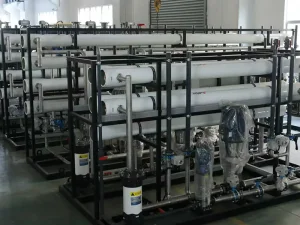
Custom-engineered membrane technology skids optimized for port logistics, chemical manufacturing clusters, and off-grid coastal deployments across Flanders and Wallonia.
Industrial Water Resilience in Belgium: Strategic Imperatives & Market Dynamics
Belgium, located at the crossroad of Western Europe's industrial engine, faces a unique paradox regarding water resources. Despite its temperate maritime climate, Flanders is classified by the European Environment Agency as one of the most water-stressed regions in Europe due to high population density, intensive agricultural activity, and massive concentration of chemical and manufacturing sectors along the Scheldt and Meuse basins. As climate volatility induces seasonal droughts and salinization of coastal aquifers around Zeebrugge and Ostend, Belgian industrial enterprises can no longer rely solely on conventional groundwater extraction or municipal mains.
The Port of Antwerp-Bruges—the second-largest port in Europe and the continent’s premier chemical cluster—requires hundreds of millions of cubic meters of process, cooling, and boiler feed water annually. To comply with Flanders' strict environmental code (VLAREM II) and the EU Water Framework Directive, companies are shifting toward alternative water security frameworks, where offshore seawater reverse osmosis (SWRO), estuarine brackish water desalination, and closed-loop Zero Liquid Discharge (ZLD) systems play a central role.
Coastal Aquifer Salinization
Rising sea levels and intensified groundwater abstraction along the Belgian coastline have caused saline intrusion into coastal freshwater lenses. Modular SWRO systems provide a stable, independent freshwater supply for port facilities and coastal infrastructure.
VLAREM II Regulatory Compliance
Strict Flemish regional discharge limits on chemical COD, heavy metals, and total dissolved solids (TDS) force industrial operations to integrate advanced brine concentration and high-ratio water reuse process trains directly into factory baselines.
Decarbonized Water Production
Aligning with Belgium's 2050 climate neutrality targets, next-generation seawater desalination plants must leverage high-efficiency Energy Recovery Devices (ERDs) and seamlessly integrate with North Sea offshore wind power grids.
Localized Application Scenarios Across Belgian Industrial Zones
From the heavily industrialized port corridors to regional manufacturing parks in Hainut and Ghent, custom seawater reverse osmosis and brine management equipment addresses precise regional water chemistry and operational constraints.
1. Port of Antwerp-Bruges Petrochemical & Chemical Complex
The Antwerp chemical cluster processes vast amounts of organic synthesis products, specialty polymers, and industrial gases. Raw water intake from estuarine zones often exhibits fluctuating salinity, organic loading, and suspended silt. Our modular containerized SWRO and UF pretreatment skids deliver continuous ultra-pure boiler feed and process water with online conductivity monitoring (<0.1 µS/cm post-EDI), shielding chemical plants from municipal tariff hikes and water rationing during summer dry spells.
2. Zeebrugge & Ostend Maritime Bunkering & Offshore Wind Support
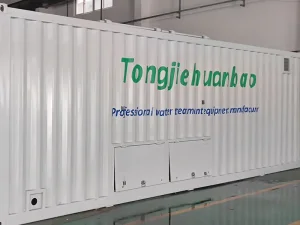
Belgian North Sea ports serve as vital offshore wind logistics hubs. Offshore construction vessels, converter platforms, and port bunkering stations demand compact, plug-and-play desalination equipment capable of withstanding harsh marine corrosion. Manufactured using Super Duplex stainless steel (2507) and marine-grade protective coatings, our containerized SWRO units operate reliably under extreme North Sea weather conditions.
3. Food & Beverage Processing in Flanders (Ghent & West Flanders)
Flanders hosts world-class food processing facilities, breweries, and agricultural processing plants that generate high-salinity organic wastewater. Integrating low-energy high-ratio water reuse equipment allows food processors to recover up to 85% of process effluent, transforming high-TDS wastewater into high-quality wash water that meets European food hygiene standard EC 852/2004.
4. Green Hydrogen Production Hubs in Benelux
As Belgium advances its National Hydrogen Strategy, planned megawatt-scale electrolyzer installations at coastal ports require massive volumes of ultrapure water (ASTM Type I/II). Our integrated seawater-to-demineralized-water process trains (SWRO + BWRO + EDI) supply continuous feedwater to electrolyzers with zero downtime and minimal energy consumption.
OEM/ODM Full Value Chain Manufacturing Excellence
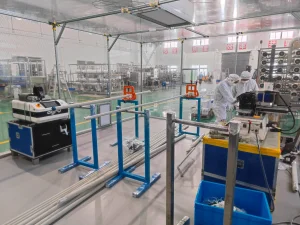
As a global leader in high-salinity membrane separation and water treatment system manufacturing, our production facility delivers end-to-end engineering, precision machining, control automation, and rigorous factory acceptance testing (FAT) before shipment to European markets.
Precision Metallurgy & Anti-Corrosion
Seawater desalination demands extreme resistance to chloride pitting. We utilize Super Duplex 2507 and 2205 stainless steels for high-pressure piping manifolds, FRP pressure vessels rated up to 1200 PSI, and specialized titanium heat exchangers for thermal crystallization loops.
Automated PLC/SCADA Integration
All units feature Siemens S7-1500 or Allen-Bradley PLCs integrated with industrial IoT gateways. Belgian plant operators benefit from real-time operational telematics, automated Clean-In-Place (CIP) sequences, predictive membrane fouling analytics, and remote diagnostic access.
CE & European Code Certification
Our OEM/ODM manufacturing processes strictly comply with European Union directives including the Pressure Equipment Directive (PED 2014/68/EU), Low Voltage Directive (2014/35/EU), Machinery Directive (2006/42/EC), and ISO 9001/14001/45001 management systems.
Technical Specifications: Standard Containerized SWRO Series
| Model Series | Daily Capacity (m³/day) | Feed Water TDS Limit | Permeate Quality | Energy Recovery System | Footprint / Container |
|---|---|---|---|---|---|
| TJ-SWRO-100 | 100 m³/d | Up to 45,000 mg/L | TDS < 350 mg/L (WHO Potable) | High-Efficiency ERD (Isobaric) | 20ft ISO High Cube Container |
| TJ-SWRO-500 | 500 m³/d | Up to 45,000 mg/L | TDS < 200 mg/L / Low Boron | PX Pressure Exchanger (>96% ERD) | 40ft ISO High Cube Container |
| TJ-SWRO-2000 | 2,000 m³/d | Up to 50,000 mg/L | Industrial Process Grade / Pure Water | Dual-Stage Isobaric Recovery System | 2 x 40ft Modular Skids |
| TJ-ZLD-BRINE | Custom Brine Loop | Up to 180,000 mg/L | Distillate < 10 mg/L TDS + Solid Salt | MVR / TVR Evaporator Integrated | Custom Skid Frame / Containerized |
Technology Roadmap: Next-Generation Desalination & Brine Recovery
The global water treatment industry is undergoing a paradigm shift driven by thermodynamic efficiency gains, material science breakthroughs, and circular resource recovery. Our R&D roadmap outlines the key technology vectors shaping industrial water systems for Belgium and the broader European market over the next decade.
1. Ultra-Low Energy SWRO & Isobaric Energy Recovery
Conventional SWRO historical power consumption (~6-8 kWh/m³) has been dramatically reduced. By integrating positive displacement high-pressure pumps with ceramic isobaric pressure exchangers (such as Danfoss APP or Energy Recovery PX devices), our latest generation systems achieve energy consumption rates below 2.8 kWh per cubic meter of treated water. This represents a game-changing operational cost structure for energy-conscious European industries.
2. Graphene & Nanocomposite Membrane Advancements
Incorporating thin-film nanocomposite (TFN) and atomic-layer graphene membranes provides superior salt-rejection performance while dramatically reducing organic biofouling. These membranes allow higher flux rates at lower operating pressures, extending chemical cleaning intervals (CIP) from quarterly to annual cycles, thereby extending operational life in variable estuarine waters.
3. High-Pressure Osmosis (HPRO) for Brine Minimization
To eliminate high-cost thermal evaporators in zero liquid discharge trains, our High-Pressure Reverse Osmosis (HPRO) units operate at pressures up to 120-150 bar using specialized disc-tube reverse osmosis (DTRO) modules. This concentrates brine to over 120,000 mg/L TDS electro-chemically before thermal crystallization, cutting capital energy costs for ZLD by up to 45%.
4. Digital Twin Telematics & AI Predictive Maintenance
Deploying cloud-connected digital twin modeling allows real-time comparison between theoretical thermodynamic performance and actual field metrics (trans-membrane pressure, normalized permeate flow, temperature-corrected flux). Machine learning algorithms predict scaling tendencies before performance degradation occurs, triggering automated dose adjustments.
Comparative Analysis: On-Site SWRO vs. Traditional Water Sourcing in Belgium
Plant managers evaluating capital investment in water infrastructure must weigh operational risk, financial expense, and long-term regulatory exposure. The matrix below compares on-site modular SWRO/ZLD systems against traditional Belgian water supply vectors.
| Evaluation Parameter | Municipal Mains (Water-link / De Watergroep) | Groundwater Extraction (Deep Aquifer) | On-Site Modular SWRO System |
|---|---|---|---|
| Supply Reliability | Subject to regional restrictions during summer droughts | Declining water tables & quota cutbacks by Flemish authorities | 100% Autonomous continuous supply from sea/estuary |
| Volumetric Cost Structure | High municipal tariffs (€2.50 – €4.50+/m³) + indexing | Pumping tax + environmental extraction levies | Stable OPEX (€0.50 – €0.85/m³ electrical/O&M) |
| Water Quality Consistency | Variable hardness & seasonal chlorination residual | Risk of heavy metal (Fe/Mn) & salinization spikes | Consistent TDS (<200 ppm) engineered to spec |
| Regulatory Exposure | Subject to municipal supply caps and local quotas | Strict extraction permit reductions under VLAREM regulations | Fully compliant with environmental framework |
| Expansion Scalability | Limited by municipal pipe diameter & network capacity | Highly restricted or prohibited for new applications | Modular containerized expansion in weeks |
Frequently Asked Questions: Technical & Commercial Guidance for Belgian Buyers
Expert insights regarding procurement, engineering customization, regulatory compliance, and operational lifecycle management for water treatment equipment serving Benelux industrial clients.
How do containerized SWRO plants handle the variable turbidity and organic load of the Scheldt Estuary and North Sea coastline?
Estuarine and coastal waters around Antwerp, Zeebrugge, and Ostend often present high total suspended solids (TSS), microalgae blooms, and fluctuating salinity. Our systems employ a multi-barrier pretreatment scheme comprising dynamic coagulation, automatic backwashing disc filters, and Ultrafiltration (UF) hollow-fiber membrane skids. This lowers the Silt Density Index (SDI) consistently below 3.0 before water enters the high-pressure SWRO membranes, preventing organic fouling and extending membrane life.
What documentation and certification are provided to comply with Belgian VLAREM II and European directives?
Every plant delivered to European clients comes complete with full CE marking, Declaration of Conformity under the Machinery Directive (2006/42/EC) and Pressure Equipment Directive (PED 2014/68/EU), complete P&ID schematics, electrical wiring diagrams certified to IEC standards, material certificates (EN 10204 3.1 for stainless steel pressure parts), and complete FAT (Factory Acceptance Test) validation protocols.
Can your OEM/ODM manufacturing facility customize skid dimensions to fit existing municipal or plant utility rooms?
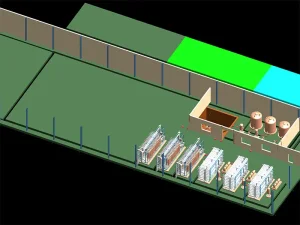
Yes. As a direct OEM/ODM manufacturer, we offer complete structural, hydraulic, and electrical customization. Whether you require standard 20ft/40ft ISO containerized mobile units for rapid plug-and-play installation or custom frame-mounted skids engineered to pass through narrow indoor industrial access doors, our engineering team tailors CAD 3D models to your exact spatial constraints.
What energy recovery technology is integrated to reduce kilowatt-hour (kWh) operational costs in Benelux?
We integrate market-leading isobaric energy recovery devices (ERDs), such as Energy Recovery PX or Danfoss iSave systems, which transfer hydraulic energy from the concentrated brine stream directly to incoming feed water with efficiencies up to 98%. This reduces high-pressure pump energy consumption by up to 60%, bringing overall specific power consumption down to 2.5 - 3.0 kWh/m³ depending on feed temperature and salinity.
How does the ZLD (Zero Liquid Discharge) brine concentration system help chemical plants avoid discharge fines?
Our ZLD process trains combine Disc Tube Reverse Osmosis (DTRO) or High-Pressure Reverse Osmosis (HPRO) with Mechanical Vapor Recompression (MVR) thermal crystallizers. By driving total system water recovery above 98-99%, the remaining liquid is converted into dry salt cake (e.g., sodium sulfate or sodium chloride) for commercial reuse or disposal, completely eliminating liquid effluent discharge into Belgian waterways and guaranteeing compliance with strict local permits.
What lead time is required from engineering design approval to delivery at Belgian ports?
Standard containerized SWRO units (100 to 1,000 m³/day) typically feature a factory manufacturing lead time of 6 to 8 weeks following CAD design approval. Maritime freight shipping from our Shanghai facility to the Port of Antwerp or Zeebrugge takes approximately 28 to 35 days. Fast-track emergency containerized units are available from stock reserves for urgent deployment.
Complete OEM/ODM Product Portfolio for High-Salinity & Industrial Water Treatment
Explore our complete manufacturing spectrum of CE-certified water treatment equipment, high-ratio water reuse skids, and advanced membrane systems engineered for Benelux industrial clients.
Empower Your Belgian Operations With Custom Water Security
Send us your raw water analysis report, daily capacity requirements, and footprint constraints. Our senior application engineers will provide a complete process proposal, 3D skid layout, and budgetary quote within 24 hours.