Specialized Core Systems for Danish Process Facilities
Engineered for precise effluent recirculation, pharmaceutical pure water, and ultra-low conductivity requirements across Kalundborg, Jutland, and the Greater Copenhagen industrial corridors.
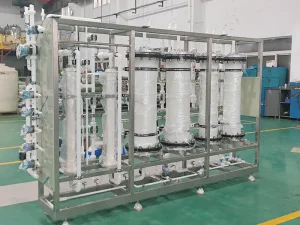
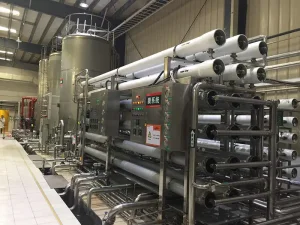
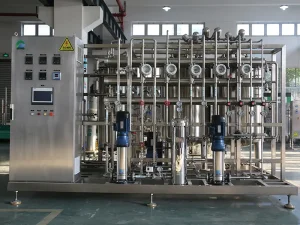
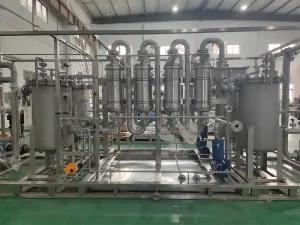
Denmark’s Industrial Purified Water Landscape: The Mandate for Closed-Loop Systems
Denmark represents the gold standard of global environmental stewardship, pioneering municipal-industrial symbiosis and strict aquatic conservation directives.
In industrial centers such as Kalundborg Symbiosis, Aarhus, Odense, and Aalborg, resource circularity is no longer an optional CSR objective; it is a legally enforced operating necessity. The Danish regulatory framework, overseen by the Ministry of Environment (Miljøministeriet) and Danish EPA (Miljøstyrelsen), enforces stringent abstraction taxes and discharge thresholds regarding chemical oxygen demand (COD), total dissolved solids (TDS), nitrogen, phosphorus, and trace active pharmaceutical ingredients (APIs).
Life Sciences & Biotech Water Constraints
Denmark's dominant pharmaceutical and biotechnology corridor requires vast volumes of compliant Purified Water (PW) and Water for Injection (WFI). However, facilities face strict municipal caps on raw municipal groundwater abstraction. The challenge is clear: plants must recover 75% to 92% of their clean process rinse water and clean utility blowdowns back into boiler feed, cooling, or secondary process loops without risking bio-burden or chemical carryover.
Power-to-X (PtX) & Green Hydrogen Demands
As Denmark expands its offshore wind infrastructure in the North Sea, massive green hydrogen and e-methanol production hubs are emerging in Esbjerg and across Western Jutland. Polymer Electrolyte Membrane (PEM) and Alkaline electrolyzers mandate high-purity demineralized feed water (<0.1 µS/cm conductivity). Sourcing demin water from delicate coastal aquifers is politically and ecologically unfeasible, rendering industrial effluent reclamation the premier feedstock for Denmark’s decarbonization vision.
Technical Roadmap: Multi-Barrier Membrane Architecture for Water Reuse
Meeting the rigorous purity demands of Danish industrial ecosystems requires a deterministic, multi-stage engineering train. Raw industrial wastewater or blowdown undergoes advanced fractionation, selective organic elimination, and phased demineralization.
| Process Phase | Core Technologies Deployed | Key Contaminants Removed | Operational Target Purity |
|---|---|---|---|
| Primary Conditioning | Electrocoagulation, Dissolved Air Flotation (DAF), Ceramic Microfiltration | Suspended Solids, Free Oils, Colloidal Silica, Heavy Flocculants | TSS < 5 mg/L, SDI < 3.0 |
| Secondary Separation | Cross-flow Ultrafiltration (UF) & Biological MBR | Macromolecules, Bacteria, Emulsified Organics, Biological Sludge | Turbidity < 0.1 NTU, MWCO 50-100 kDa |
| Desalination & Recirculation | High-Rejection Low-Fouling Polyamide Reverse Osmosis (RO) | Monovalent/Divalent Salts, Heavy Metals, Micro-pollutants | Conductivity < 10 µS/cm, >99.4% Salt Rejection |
| Brine Concentration (ZLD) | Disc Tube Reverse Osmosis (DTRO) & STRO Modules | High Osmotic Brines, Concentrated Salts, Scaling Mineral Complexes | Operating Pressures up to 120 bar; TDS > 80,000 mg/L |
| High-Purity Polishing | Membrane Contactor Degassing + Continuous Electrodeionization (EDI) | Dissolved CO2, O2, Residual Silica, Trace Ionic Species | Resistivity 15–18.2 MΩ·cm, TOC < 5 ppb |
DTRO Open-Channel Hydraulics
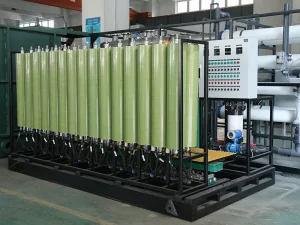
Standard spiral-wound membranes fail rapidly under heavy fouling or variable wastewater streams. Our high-pressure Disc Tube RO (DTRO) uses open-channel flow patterns that eliminate concentration polarization, tolerating high COD and silica loads without irreversible fouling.
Physical Membrane Degasification
Danish thermal energy grids and high-pressure steam boilers demand oxygen elimination down to parts-per-billion levels. Our physical deoxygenation hollow fiber contactors strip dissolved gases without toxic chemical scavenger additives.
Continuous EDI Elimination
Replacing conventional acid-caustic mixed bed demineralizers, our continuous Electrodeionization (EDI) modules eliminate hazardous chemical storage entirely on Danish production sites, maintaining stable 18.2 MΩ·cm ultra-pure water continuously.
Targeted Solutions for Key Danish Industrial Verticals
Every commercial segment across Denmark operates under distinct hydraulic profiles, contamination risks, and output criteria. We build purpose-tailored treatment systems aligned with these real-world factory workflows.
Pharmaceutical & Life Sciences
Compliant with European Pharmacopoeia (Ph. Eur.) and cGMP. Clean-in-Place (CIP) sanitization, 316L stainless steel piping with Ra < 0.5 µm surface roughness, automated orbital welding, and continuous TOC/conductivity datalogging for rapid Danish Medicines Agency auditing.
Dairy, Brewery & Food Processing
Designed to recover high-COD condensate of whey (COW water), clean-in-place rinse streams, and mash filtration effluent. Reclaims high-grade water for boiler make-up and facility cooling towers, reducing municipal surcharge penalties across Danish food clusters.
Chemical, Surface Treatment & ZLD
Engineered for electroplating, metal-finishing, and specialty chemical facilities facing zero-discharge orders. Integrates high-pressure membrane concentration with Mechanical Vapor Recompression (MVR) evaporation to crystallize discharge salts into dry, manageable solid cakes.
China Factory 4.0: Engineered Precision for Danish EPCs
Bridging high-end precision fabrication with uncompromised component traceability and aggressive delivery timetables.
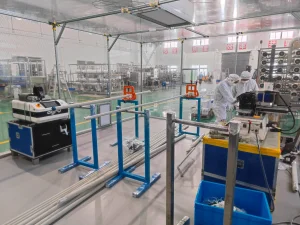
Western European capital equipment delivery schedules frequently suffer from component backlogs and prolonged engineering turnarounds. Tongjie operates an integrated Industry 4.0 smart manufacturing facility in Shanghai, combining fully automated orbital welding, automated pressure vessel winding, hydrostatic pressure proofing, and localized FAT (Factory Acceptance Testing) simulation.
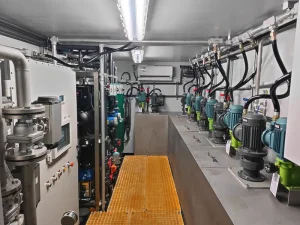
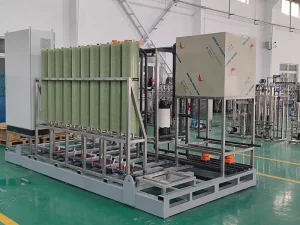
By pre-fabricating containerized and skid-mounted water reuse assemblies under strict ISO 9001, ISO 14001, ISO 45001, and CE standards, we shorten on-site installation timelines in Denmark by over 60%. Systems arrive pre-piped, pre-wired, and pressure-tested—ready for straightforward mechanical tie-in.
Direct Factory Advantages
- Full BOM Transparency: Tier-1 international components (Grundfos, Siemens, Bürkert, FilmTec, Hydranautics).
- End-to-End FAT Simulation: Complete wet hydraulic run-offs recorded and certified before vessel loading.
- Modular Skid Packaging: Rugged standard ISO container designs optimize North Sea maritime transit and site crane lifts.
- Comprehensive Digital Twin: Full 3D BIM models, P&ID schematics, and electrical loop drawings provided upfront.
Compliance, Engineering Standards & Local Danish Integration
Deploying process equipment into Denmark requires strict adherence to European standards. We engineer every system specifically to streamline local approvals, Danish working environment authority (Arbejdstilsynet) validations, and plant SCADA integration.
EU Machinery & Pressure Directives
Full compliance with Machinery Directive 2006/42/EC, Pressure Equipment Directive (PED 2014/68/EU), and Low Voltage Directive (LVD). Pressure vessels and welding procedures are fully documented with 3.1 material certificates.
Automation & SCADA Protocols
Equipped with Siemens TIA Portal or Allen-Bradley PLCs. Native industrial Ethernet support (Profinet, Modbus TCP, OPC-UA) ensures seamless integration into facility DCS platforms for remote monitoring and predictive membrane cleaning cycles.
Lifecycle Support & Field Spares
Standardized component architecture guarantees that wear items, mechanical seals, instrumentation sensors, and chemical dosing spares are globally interchangeable and available via local European industrial distribution networks.
Global Enterprises Rely on Tongjie Engineering
From regional EPC contractors in Scandinavia to multinational manufacturing conglomerates, procurement teams select our advanced membrane skids to balance rigorous technical standards with capital expenditure efficiency.
Custom ODM/OEM Capability
We provide complete white-label manufacturing services for Danish water service brands, skid fabricators, and engineering houses, including customized chassis footprints, localized paint codes, and customer-branded HMI interfaces.
Accelerated Lead Times
Pre-engineered modular skid platforms allow us to deliver bespoke industrial RO, EDI, and DTRO concentration systems within 8 to 14 weeks from approved design drawings—half the typical European machinery lead time.
Holistic Documentation Packages
Every shipment includes complete FAT documentation, welding log maps, electrical schematics, operating manuals, and risk assessments aligned with EN ISO 12100 principles to ensure smooth safety handovers.
Frequently Asked Questions: Industrial Water Reuse in Denmark
Key technical, compliance, and commercial inquiries answered by our application engineering team.
How do Tongjie systems adapt to Denmark’s strict industrial discharge limits?
Can your purified water skids meet the requirements of Danish pharmaceutical manufacturers?
What documentation and safety certifications are provided for Danish installations?
How is commissioning handled on Danish job sites?
What feed water data is required to generate an engineered proposal?
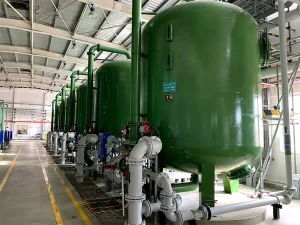
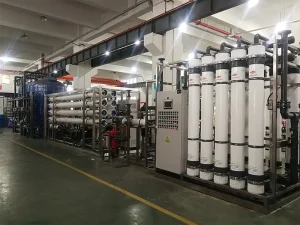
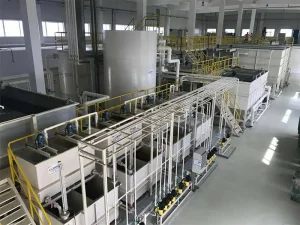
Full Industrial Water Treatment & ZLD Equipment Portfolio
Standardized and custom-built membrane separation skids engineered for demanding reuse applications across Europe.
Advance Your Water Reuse Infrastructure with Expert Engineering
Connect directly with our process design team in Shanghai. Submit your raw water parameters, daily discharge volume, and target reuse standards to receive a detailed mass-balance projection and equipment quotation.