OEM Industrial Demineralized Water Equipment Factory, Suppliers
Product Description
Product Overview and Positioning
Process Flow and Principle
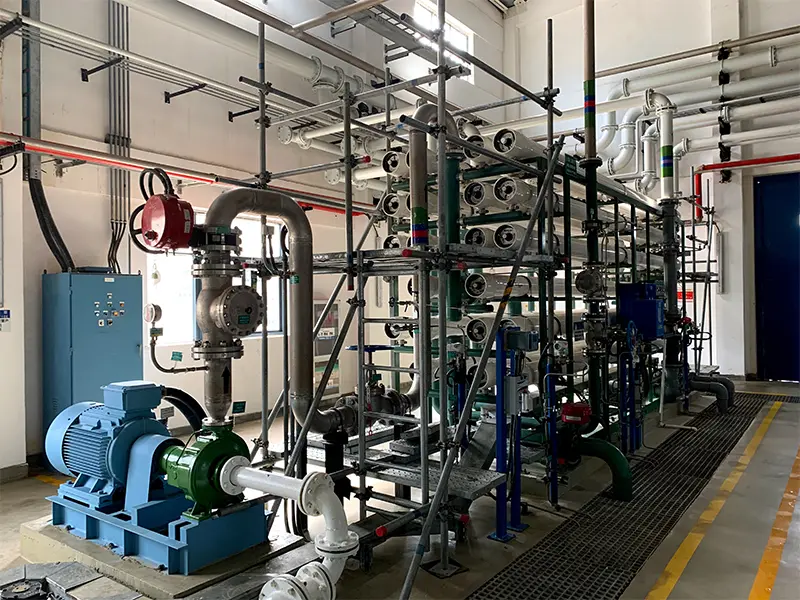
Raw water first passes through the pretreatment unit to remove suspended solids, residual chlorine, and some organic matter, then enters the Reverse Osmosis (RO) unit. The RO membrane is a polyamide composite membrane that, under an operating pressure of 1.0–1.8 MPa, removes more than 97% of dissolved salts, colloids, and microorganisms from the water. The conductivity of the RO permeate is typically reduced to below 50 μS/cm.
Depending on the final water quality requirements, the RO permeate enters a deep demineralization unit, which can be configured as either a Mixed Bed (MB) or Electrodeionization (EDI) system. The mixed bed process uses a homogeneous mixture of cation and anion exchange resins. Through ion exchange reactions, residual cations and anions in the water are replaced with H⁺ and OH⁻ ions respectively, producing water with resistivity up to 18 MΩ·cm. When the mixed bed resin becomes saturated, it is regenerated using acid and alkali. The equipment is designed with dual-bed switching operation to ensure continuous water supply.
The EDI process utilizes the selective permeability of ion exchange membranes and the continuous electrical regeneration of resins under a DC electric field to transfer residual ions from the RO permeate into the concentrate stream for discharge. EDI produces water with resistivity consistently above 17 MΩ·cm, and the process does not require chemical regeneration agents. The two deep demineralization units can be selected based on site conditions and maintenance requirements.
Equipment Structure and Core Components
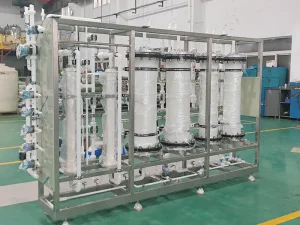
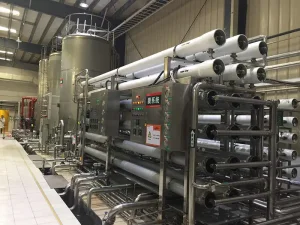
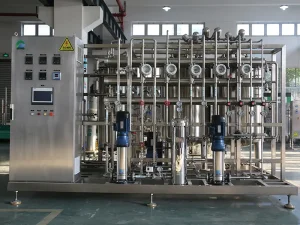
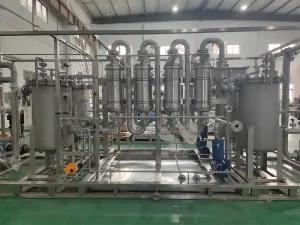
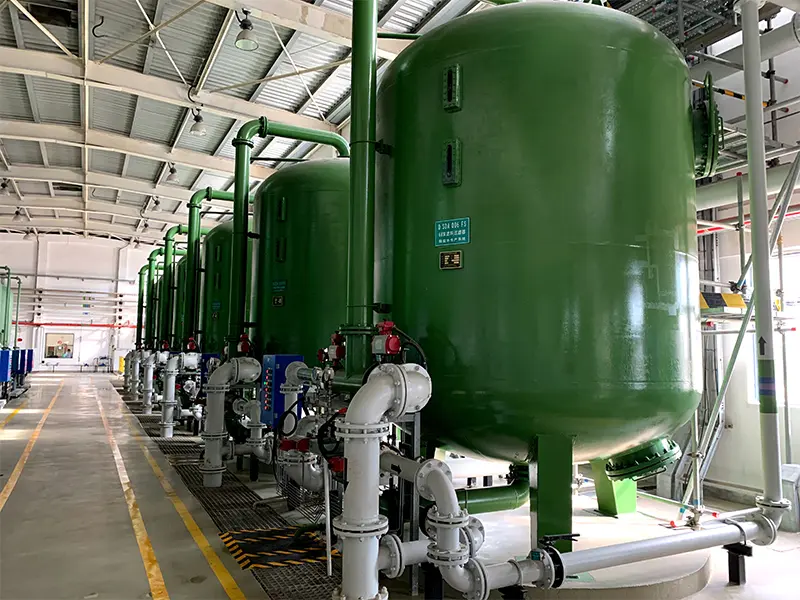
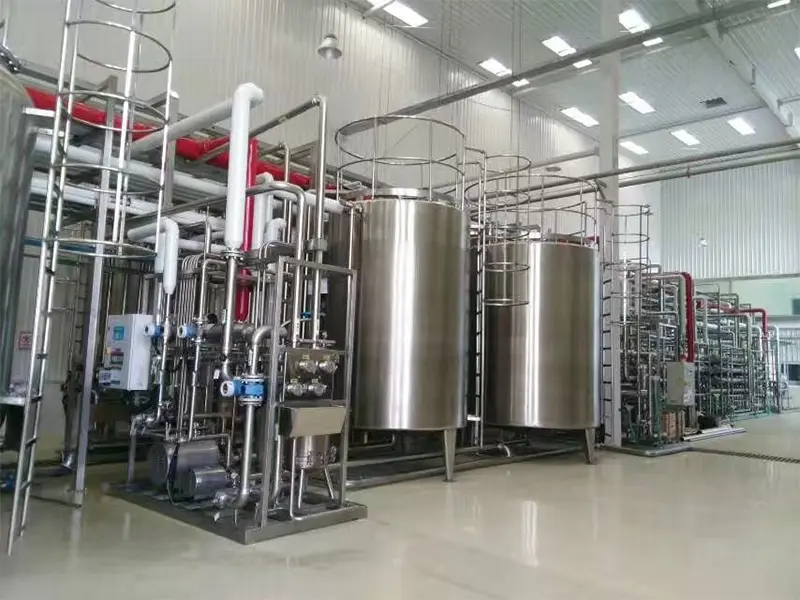
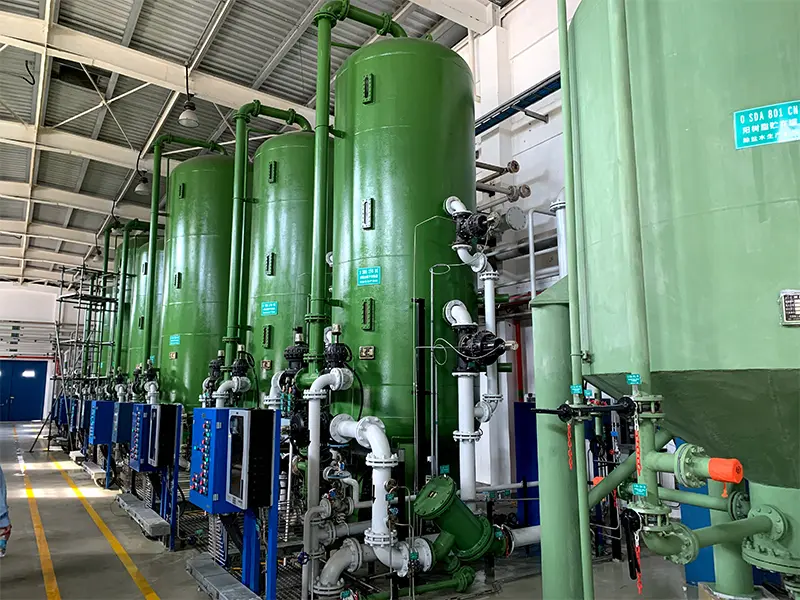
The equipment consists of pretreatment filters, RO membrane modules, mixed bed or EDI modules, a chemical dosing system, a cleaning system, and a PLC control cabinet.
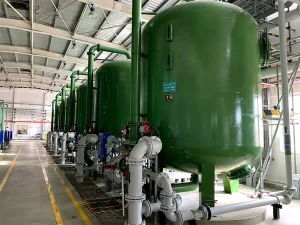
The pretreatment includes a multimedia filter and an activated carbon filter, which remove suspended solids and adsorb residual chlorine, respectively.
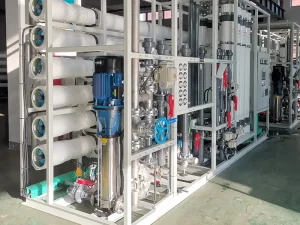
The RO membrane elements are spiral-wound brackish water membranes with FRP or stainless steel pressure vessels arranged in a single-stage, two-pass configuration.
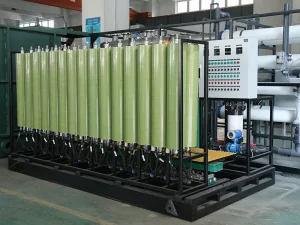
The mixed bed unit is equipped with a resin trap and a regeneration system; the EDI module adopts a plate-and-frame or spiral-wound structure with built-in ion exchange membranes and resins.
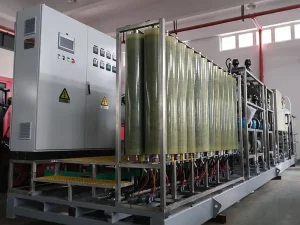
The control system uses a PLC to enable automatic operation, online conductivity monitoring, mixed bed regeneration sequence control, and fault alarms.
Key Performance Indicators and Applicable Standards
The determination of product water quality targets is based on two inputs: (1) the water quality requirements for industrial demineralized water and boiler makeup water specified in industry standards; and (2) the influent requirements of customer’s downstream equipment, the quality requirements for process media, and the characteristics of the raw water. Based on this information, the company develops a targeted indicator plan. Typical control parameters include:
EDI: < 0.06 μS/cm
EDI: ≥ 17 MΩ·cm (GB/T 12145)
Based on the customer’s complete water quality analysis report and the intended use of the product water, the company provides a process scheme and guaranteed performance values covering the above indicators during the design phase. These values are mutually confirmed and used as the acceptance criteria for the equipment.
Application Fields
This equipment is used in the power industry for high-pressure and ultra-high-pressure boiler makeup water; in the electronics industry for pretreatment and primary demineralization in ultrapure water systems; in the pharmaceutical industry for pretreatment of purified water and water for injection; in the chemical industry for process ingredient and reaction medium water; and in the food and beverage industry for production water. The product water can be directly used as boiler feed water, process rinse water, or as feed water for further polishing.
Other Products
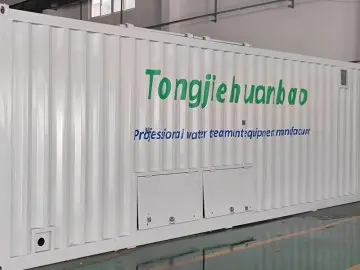
Modular Containerized Seawater Desalination Equipment
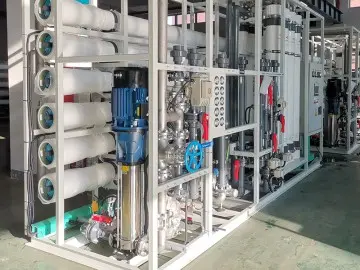
Seawater desalting equipment
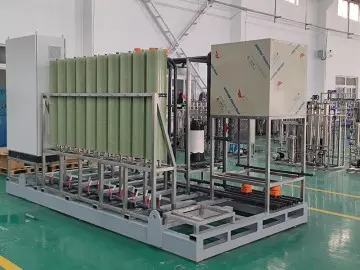
High-Salinity Wastewater Volume Reduction & ZLD System
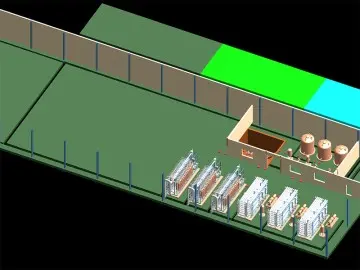
OEM Precision Manufacturing
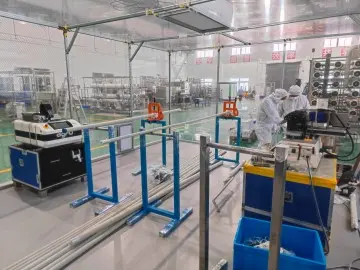
ODM Full Value Chain Innovation
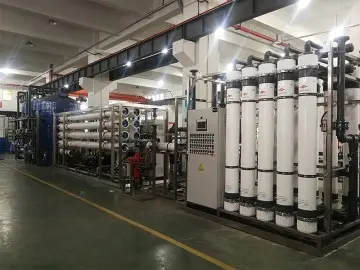
Water Reuse Equipment (Pretreatment + UF + RO Process)
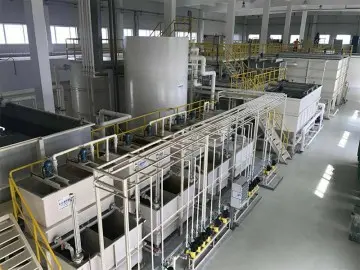
Water Reuse Equipment High-Ratio Water Reuse Process
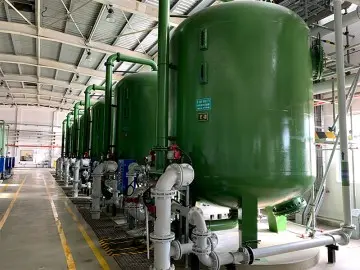
Industrial Demineralized Water Equipment
Send Inquiry
Frequently Asked Questions (FAQ)
1. What water quality levels can this demineralized water system achieve?
Depending on the configured deep demineralization process, the system produces high-purity water. The Mixed Bed (MB) option achieves conductivity below 0.1 μS/cm and resistivity up to 18 MΩ·cm. The Electrodeionization (EDI) option reaches conductivity below 0.06 μS/cm and resistivity above 17 MΩ·cm.
2. How do I choose between Mixed Bed (MB) and EDI for deep demineralization?
Mixed Bed uses cation/anion resins requiring chemical (acid/alkali) regeneration when saturated, suitable for standard site conditions with dual-bed switching. EDI uses electric fields and membrane separation for continuous resin regeneration without hazardous chemicals, making it ideal for eco-sensitive sites or lower maintenance requirements.
3. What is the salt removal efficiency of the Reverse Osmosis (RO) stage?
Operating at pressures between 1.0–1.8 MPa, the polyamide composite RO membrane removes more than 97% of dissolved salts, colloids, and microorganisms, reducing raw water conductivity down to below 50 μS/cm prior to deep demineralization.
4. Can this equipment guarantee continuous, uninterrupted water supply?
Yes, when configured with a Mixed Bed deep demineralization unit, the system utilizes a dual-bed switching operation mechanism. While one bed regenerates, the secondary bed takes over seamlessly to maintain continuous water production.
5. Which primary industries utilize this demineralized water equipment?
It is extensively applied in the power industry (high-pressure boiler makeup), electronics manufacturing (ultrapure water pretreatment), pharmaceuticals (purified water pretreatment), chemical synthesis (reaction media), and food/beverage processing.
6. How are critical parameters like silica content and hardness controlled?
Silica is controlled to strict limits (≤ 20 μg/L) to satisfy boiler feed standards. Hardness and residual ion levels are precisely calculated during system design based on your raw water analysis report to ensure zero scale formation on downstream industrial components.