Industrial Desalination & Purified Water Production Units
Explore our export-certified modular sea-to-fresh filtration arrays, pre-tested in factory-controlled cleanrooms for guaranteed plug-and-play field operations.
-
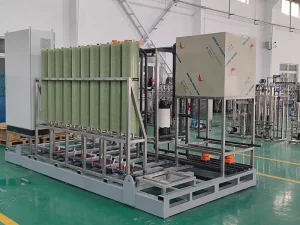
ODM High-Salinity Wastewater Treatment System | China Suppliers & Factory for ZLD Solutions Suppliers, Manufacturers
Inspect Specifications -
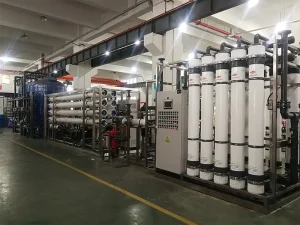
OEM High-Ratio Water Reuse Equipment - Ultrafiltration & Reverse Osmosis by China Suppliers and Factory Suppliers, Supplier
Inspect Specifications -
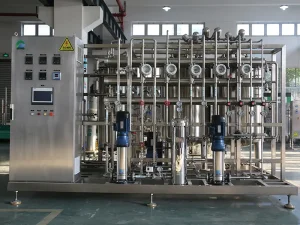
CE Certification High-Quality Pharmaceutical Purified Water & WFI System - Top China Suppliers & Factory Solutions Manufacturers, Manufacturer
Inspect Specifications -
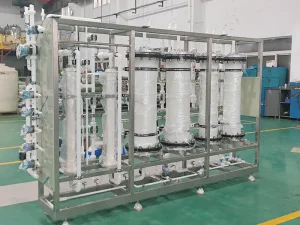
ODM Ultra-Pure Water System Semiconductor& Electronic Ultra-pure Water System Manufacturers, Manufacturer
Inspect Specifications -
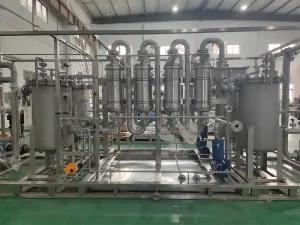
Wholesale Deoxygenation Membrane Equipment Physical degassing principle Manufacturers, Manufacturer
Inspect Specifications -
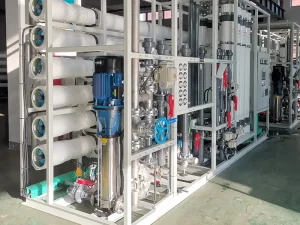
Wholesale Compact Seawater Desalination System - Efficient China Suppliers & Factory Solutions for Freshwater Needs Factories, Supplier
Inspect Specifications -
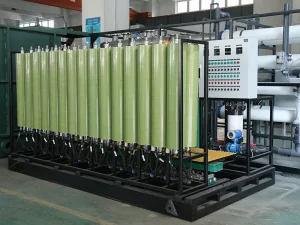
China DTRO&STRO High-pressure membrane Concentration System Factories, Manufacturers
Inspect Specifications -
CE Certification Ultra-Pure Water System for Semiconductor and Electronics Manufacturing by China Suppliers and Factory Factory, Suppliers
Inspect Specifications
Global Desalination Realities: Resolving Freshwater Scarcity
Across littoral municipalities, mega-refineries, and isolated island enclaves, transforming hypersaline seawater into high-purity potable and process water has evolved from an emergency backup to core civil and industrial infrastructure.
Escalating Baseline Water Stress
Global economic hubs, arid coastal states, and offshore energy corridors confront depleting subterranean aquifers. Seawater Reverse Osmosis (SWRO) delivers an unlimited, non-seasonal freshwater stream that guarantees uninterrupted municipal distribution and heavy manufacturing continuity.
Energy Recovery Revolution
Historical thermal evaporation systems consumed prohibitive energy. Modern isobaric Energy Recovery Devices (ERD) integrated by Tongjie recover over 95% of hydraulic reject energy, shrinking operational expenditures to under 2.8–3.2 kWh per cubic meter of finished water.
Stringent Effluent Standards
Environmental licensing requires minimal ecological disruption. Modern plants incorporate advanced intake dispersion screens and secondary brine dilution protocols to safeguard littoral biospheres from hypersaline thermal plume damage.
The Anatomy of Tongjie Industrial Desalination Trains
Robust filtration requires more than raw membrane surface area. It demands an orchestrated chemical-mechanical train tailored precisely to silt density, bio-burden, and osmotic thresholds.
| Treatment Stage | Core Technology | Operational Objective | Target Metric / Output |
|---|---|---|---|
| Primary Intake Clarification | Multi-Media Filtration (MMF) + Coagulation | Removes marine macro-particulates, silt, and algae | Turbidity < 0.5 NTU |
| Membrane Safeguard Barrier | Hollow-Fiber Ultrafiltration (UF) / 1-5μm Polishing | Eliminates colloidal silica and biological fouling vectors | SDI₁₅ < 2.5 consistently |
| Desalination Core Array | Thin-Film Composite (TFC) SWRO Membranes | High-pressure osmotic separation of dissolved salts and boron | Salt rejection ≥ 99.7% |
| Energy Reclamation Stage | Isobaric Ceramic Pressure Exchangers (ERD) | Transfers hydraulic energy from brine stream directly to feed | Energy recovery up to 96% |
| Post-Treatment Stabilization | Calcite Remineralization & UV/Chlorination | pH adjustment, mineral balancing for potable water taste and safety | Langelier Saturation Index (LSI) 0 to +0.5 |
CE Certification & International Code Conformity
Deploying pressure systems operating at 65–85 bar requires uncompromising safety engineering, validated certifications, and third-party audited documentation.
Pressure Equipment Directive (PED)
All pressure housings, manifolds, and piping circuits conform strictly to 2014/68/EU standards. Welds undergo 100% radiographic or ultrasonic testing to eliminate failure under cyclic operating stress.
Low Voltage & EMC Directives
Integrated electrical panels and PLC automation suites comply with 2014/35/EU and 2014/30/EU, featuring shielded telemetry, emergency shutdown redundancy, and surge suppressors for offshore environments.
Super Duplex Metallurgy
Seawater’s chloride load causes aggressive pitting in standard alloys. Tongjie specifies Super Duplex 2507 (UNS S32750) and high-grade titanium for high-pressure wetted circuits, extending system lifespan beyond 20 years.
ISO 9001 / 14001 / 45001 Audited
Every plant undergoes comprehensive Factory Acceptance Testing (FAT) in Shanghai, verifying flow balances, safety interlocks, and remote SCADA communications before container sealing and export dispatch.
Localized Application Frameworks
From marine vessels and mining sites to offshore petrochemical facilities, Tongjie’s skid-mounted and containerized systems operate across diverse environmental demands.
Remote Island & Coastal Resorts
Modular containerized SWRO units operate quietly and automatically, providing high-purity drinking water conforming to WHO standards for tourists and local populations, bypassing expensive mainland water barge logistics.
Thermal Power & Chemical Complexes
Coastal petrochemical facilities convert seawater into boiler feed make-up and cooling tower circulation water. Coupled with downstream EDI and polishing systems, resistivity reaches 18.2 MΩ·cm for precision chemical synthesis.
Offshore Platforms & Oilfield Fracturing
Our DTRO and SWRO mobile skids tolerate severe organic and heavy-metal contaminants. They produce both potable water for platform crews and low-salinity water required for polymer injection and reinjection wells.
Next-Generation Desalination Engineering
Tongjie’s dedicated R&D engineering center continues to pioneer advanced membrane configurations, renewable integration, and machine-learning diagnostics.
Off-Grid Solar-PV Direct Desalination
By pairing high-pressure variable-frequency drive (VFD) pumping directly with solar arrays and battery banks, our containerized units operate fully off-grid, dampening flux variations during intermittent irradiance.
AI Predictive Anti-Scalant Dosing
Real-time neural algorithms monitor feed conductivity, temperature, and transmembrane pressure (TMP) variations to optimize chemical dosing, preventing silica and calcium scale while reducing antiscalant consumption by up to 28%.
Zero Liquid Discharge (ZLD) Synergy
Concentrated reject brine from the primary SWRO array is fed to Disc Tube Reverse Osmosis (DTRO) modules operating up to 120 bar, followed by mechanical vapor recompression (MVR) for dry salt harvesting and 98%+ freshwater recovery.
Answers for EPC Contractors and Project Engineers
Detailed guidance on feed characterization, energy recovery, membrane preservation, and international certification protocols.
What minimum water analysis parameters are required to size a custom SWRO system?
Our engineering team requires a comprehensive water test showing Total Dissolved Solids (TDS), chloride concentration, silica, barium/strontium, iron, manganese, biological oxygen demand (BOD/COD), silt density index (SDI), and annual temperature swings. This data allows accurate projection of membrane recovery, staging, and antiscalant requirements.
How does Tongjie guarantee corrosion resistance in high-chloride marine environments?
All high-pressure piping circuits, manifolds, and wetted components exposed to raw seawater utilize Super Duplex Stainless Steel 2507 (UNS S32750) or Titanium Grade 2. Low-pressure circuits utilize schedule 80 PVC or CPVC. Every system receives high-grade anti-corrosive epoxy primer and polyurethane finish coats.
What is the typical deployment timeline for a containerized desalination plant?
Because Tongjie performs 100% of the mechanical mounting, electrical wiring, PLC programming, and hydraulic pressure testing in our Shanghai facility, on-site commissioning typically takes just 7–14 days. Site teams need only provide stable foundations, electrical connections, intake piping, and permeate discharge hookups.
How does the integrated Energy Recovery Device (ERD) affect operating costs?
In standard SWRO plants, the concentrated brine exits the membrane vessel at 60–75 bar. Tongjie’s isobaric ceramic pressure exchangers transfer this hydraulic energy directly to the incoming feed stream with over 95% efficiency, reducing high-pressure pump motor sizing and cutting operating energy consumption by up to 45%.
Containerized & High-Efficiency Separation Systems
Engineered for off-grid deployment, mobile emergency resilience, and challenging wastewater concentrations worldwide.
-
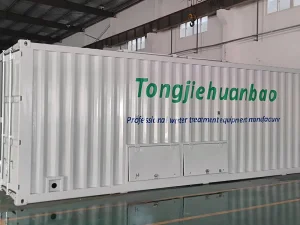
China China Suppliers: Factory-Integrated Containerized Seawater Desalination Plants for Instant Water Production Factories, Manufacturers
Inspect Specifications -
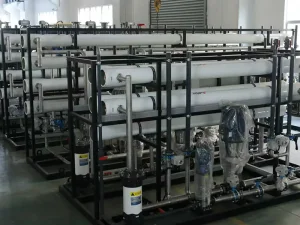
China High-Efficiency Brine Concentration Systems by China Suppliers | Factory Solutions for Wastewater Treatment Suppliers, Manufacturers
Inspect Specifications -
CE Certification China Suppliers: Factory-Integrated Containerized Seawater Desalination Plants for Off-Grid Solar Water Production Factories, Manufacturer
Inspect Specifications -
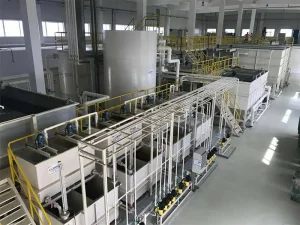
OEM High-Ratio Water Reuse Equipment from China Suppliers - Advanced Treatment Factory for High-Salinity Wastewater Suppliers, Manufacturers
Inspect Specifications -
Wholesale High-Ratio Water Reuse Equipment from China Suppliers - Advanced Pretreatment, UF, and RO Factory Solutions Factory, Manufacturer
Inspect Specifications -
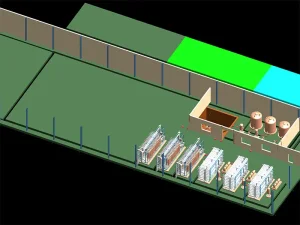
ODM China OEM Precision Manufacturing Suppliers - Custom Environmental Water Treatment Equipment Factory Solutions Factories, Supplier
Inspect Specifications -
Wholesale High-Salinity Wastewater Reduction System - ZLD Technology by China Suppliers and Factory Suppliers, Supplier
Inspect Specifications -
China China Suppliers: Factory-Direct Containerized Seawater Desalination Plants for Efficient Mobile Water Solutions Factory, Suppliers
Inspect Specifications