Industrial High Salinity
Explore Oilfield Fracturing Fluid System
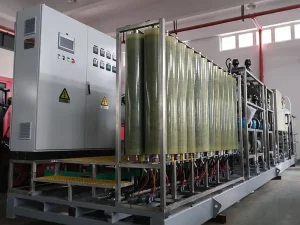
Pre-engineered skids and containerized seawater conversion plants compliant with EU Machinery Directive 2006/42/EC and Pressure Equipment Directive 2014/68/EU.
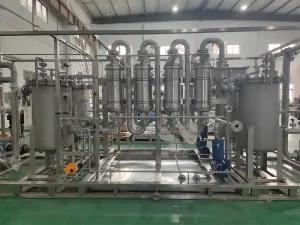
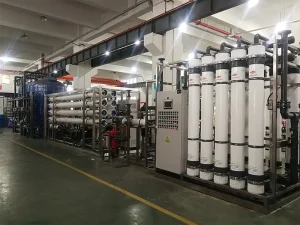
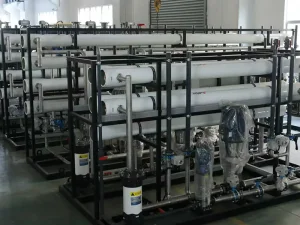
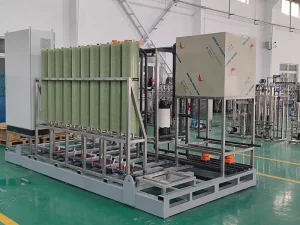
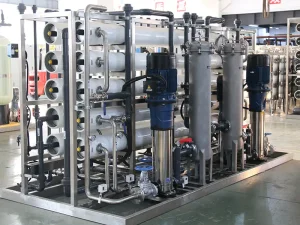
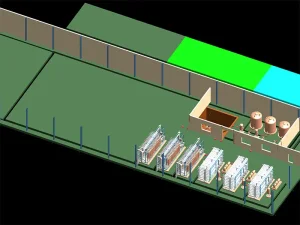
The global demand for transforming salt water into fresh water is shifting rapidly toward containerized footprint reduction, high specific energy efficiency, and strict environmental compliance.
Island resorts, maritime shipping ports, and arid coastal territories require reliable, independent freshwater generation. Decentralized reverse osmosis eliminates dependence on mainland supply lines, barge haulage, and seasonal precipitation instability, delivering consistent water security for isolated operations.
Historically, energy expenditure accounted for over 50% of SWRO operating costs. Modern factories utilize isobaric energy recovery devices (ERDs) and high-efficiency variable-frequency drive pumps to recycle brine pressure energy, slashing specific energy consumption down to commercial viability benchmarks.
Global EPC contractors and municipal utility buyers prioritize audited production pedigrees. Equipment sourcing focuses on authentic CE Certification (Directives 2006/42/EC and 2014/68/EU), comprehensive Factory Acceptance Testing (FAT), and complete traceability of duplex stainless steel alloys.
A rigorous five-stage thermodynamic and physical filtration train guarantees operational longevity, anti-biofouling performance, and low silt density index (SDI).
| Process Phase | Primary Technology | Target Metric / Elimination | System Protection Target |
|---|---|---|---|
| 1. Primary Intake & Coarse Filtration | Dual-Media (Sand/Anthracite) / Auto-Backwash Disc Filter | Suspended Solids, Turbidity < 1.0 NTU | Prevent physical abrasion of high-pressure pumps |
| 2. Membrane Guard Polishing | 5-Micron Cartridge / Pressurized Ultrafiltration (UF) | Silt Density Index (SDI₁₅) < 3.0 | Prevent particulate fouling inside membrane feed spacers |
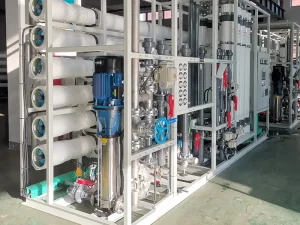
| 3. High-Pressure Separation | Polyamide SWRO Thin-Film Composite + Isobaric ERD | TDS Reduction: 38,000 ppm to < 350 ppm | Overcome seawater osmotic pressure (~2.8–6.5 MPa) |
| 4. Boron & Ionic Polishing | Second-Pass Brackish Water RO (BWRO) / EDI | Boron < 0.5 mg/L, WHO Drinking Guideline Compliant | Ensure safety for agricultural and human potable consumption |
| 5. Remineralization & Disinfection | Calcite Mineral Bed + UV / Chlorine Dosing | Langelier Saturation Index (LSI) stabilized (0.0 to 0.5) | Eliminate distribution pipeline corrosion and biological regrowth |
Stringent adherence to European safety norms and international maritime fabrication codes mitigates supply chain and operational risks for industrial stakeholders.
Every seawater plant complies with EN ISO 12100 safety risk assessments and the European Machinery Directive 2006/42/EC. High-speed rotary assemblies, positive displacement feeds, and interlocked skid panels ensure full mechanical operator safety.
Because operating pressures for SWRO reach 65 to 83 bar, all pressure vessels, flexible Victaulic couplings, and high-pressure manifolds conform to Pressure Equipment Directive (PED) 2014/68/EU, utilizing certified Super Duplex 2507 stainless steel.
Electrical control enclosures and PLC cabinets follow EN 60204-1 standards. Integrated Siemens or Allen-Bradley SCADA architectures include redundant safety relays, ground fault cutoffs, and emergency stop topologies rated for harsh maritime atmospheres.
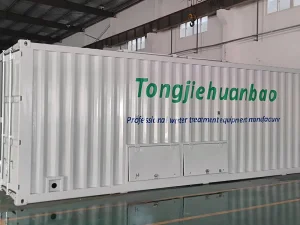
Decentralized systems arrive inside insulated 20ft or 40ft high-cube ISO containers. Factory Acceptance Testing (FAT) allows plug-and-play tie-ins to municipal intake and discharge lines, backed by multinational field engineering support teams.
Next-generation R&D pathways focus on coupling renewable energy resources with artificial-intelligence-driven antifouling algorithms and near-zero brine discharge systems.
Overcoming power grid constraints in remote coastal sectors, proprietary variable-frequency drive controls adapt high-pressure pump speeds directly to real-time photovoltaic output variations without inducing destructive pressure waves across the membrane elements.
Digital twins continuously monitor feed temperature, transmembrane pressure (TMP), normalized permeate flux, and osmotic pressure gradients. Machine learning models predict biofouling trajectories, initiating automated clean-in-place (CIP) regimens only when chemically necessary to optimize membrane longevity.
Mitigating coastal hypersalinity impacts, high-ratio brine concentration systems integrate Disc Tube Reverse Osmosis (DTRO) and Osmosis-Assisted Reverse Osmosis (OARO) to extract industrial salts and critical minerals like magnesium before crystal precipitation disposal.
Essential guidance for EPC project directors, procurement specialists, and municipal wastewater engineers.
Engineers require a comprehensive raw water analysis indicating Total Dissolved Solids (TDS), temperature variation, pH, turbidity, silica, iron, and Silt Density Index (SDI₁₅). Additionally, project teams must supply target permeate capacity (m³/day), required product water standard (WHO potable or industrial boiler-feed conductivity), and available on-site electrical parameters.
Wetted components exposed to raw seawater and concentrated brine employ specialized metallurgy. High-pressure piping utilizes Super Duplex Stainless Steel (UNS S32750 / 1.4410), while low-pressure lines are built with non-corrosive UPVC or GRP. Internal ISO container envelopes feature marine-grade anti-corrosion epoxy coatings and closed-loop HVAC climate regulation.
Yes. Custom process trains incorporate an automated DAF (Dissolved Air Flotation) stage or integrated Ultrafiltration (UF) pretreatments alongside sodium hypochlorite dosing and active carbon contactors. This multi-barrier design removes organic mucilage and protects SWRO membranes against catastrophic biofouling.
Under recommended operational conditions with automated Clean-In-Place (CIP) maintenance, reverse osmosis membranes deliver an expected operational life of 3 to 5 years. Structural stainless steel skids, Super Duplex high-pressure piping, and pressure vessels carry a baseline design life of 15 to 20 years.
Explore our complete inventory of turnkey mobile desalination systems engineered for decentralized industrial, maritime, and municipal freshwater deployment.