
Precision Separation & Gas-Fluid Management Units
Integrated skid-mounted engineering equipment designed for industrial purifications, extreme salinity recovery, and municipal biomethane projects.
Next-Generation Pressure Swing Adsorption (PSA) Technology
A rigorous, thermodynamic evaluation of gas purification mechanics, adsorbent innovations, and multi-bed cyclic operational integrity.
Selectivity & Kinetics
Modern PSA biogas upgrading relies on carbon molecular sieves (CMS) and advanced zeolites (such as 13X and titanosilicates). Separation operates on the differential diffusion rates and equilibrium adsorption capacities between polar carbon dioxide (CO2) and non-polar methane (CH4).
By optimizing pore window apertures down to 3.7 Å, kinetic mass transfer coefficients are maximized, yielding product streams surpassing 98.5% CH4 purity with exceptional caloric value.
Dynamic Cycle Optimization
Our systems incorporate dynamic 4-to-12-bed pressure equalization cycles (Dual-Bed Pressure Equalization and Rinse Step). By recycling gas from depressurizing columns to pressurize adjacent columns, mechanical recompression energy is minimized.
Parasitic power draw is brought down to ≤0.22 kWh/Nm³ of raw biogas, while maintaining aggregate methane recoveries exceeding 98.2% across fluctuating inlet conditions.
Pretreatment Integration
Raw biogas contains destructive trace contaminants: hydrogen sulfide (H2S), siloxanes, moisture, and volatile organic compounds (VOCs). Without rigorous pre-conditioning, active adsorption sites degrade irreversibly.
Our engineered trains integrate temperature-swing regenerable deep desulfurization skids, dual-stage chilling condensing units, and regenerative activated carbon guards to ensure non-detectable H2S breakthrough (<1 ppmv).
| Upgrading Technology | Methane Recovery | Specific Power Draw | Pretreatment Needs | Consumables / Chemicals | OPEX Footprint |
|---|---|---|---|---|---|
| Tongjie Multi-Bed Advanced PSA | 97.5% - 99.0% | 0.20 - 0.24 kWh/Nm³ | H2S & Condensation Dew Pointing | Zero (Dry Adsorbent Lifecycle >10 yrs) | Minimal (Fully Automated Unmanned) |
| High-Pressure Water Scrubbing (HPWS) | 94.0% - 96.5% | 0.28 - 0.35 kWh/Nm³ | Coarse Particulate & H2S | Continuous Make-Up Water & Biocides | Moderate (High Pumping & Desorption Loads) |
| Chemical Amine Absorption | 99.0% - 99.8% | 0.12 kWh/Nm³ + 0.55 kWh_th/Nm³ | Deep Desulfurization Required | High (Amine replenishment, solvent loss) | High (Thermal Reboiler & Corrosive Handling) |
| Standard Membrane Separation | 95.0% - 97.5% | 0.24 - 0.32 kWh/Nm³ | Strict Aerosol, Oil, & Dewpoint Control | Membrane element replacements (3-5 yrs) | Moderate to High (Compression dependent) |
Turnkey Biomethane Deployment Across Critical Sectors
Connecting circular bio-economy infrastructure directly with cross-border municipal gas grids, heavy industrial steam boilers, and virtual pipelines.
Agricultural & Animal Waste Biogas
Anaerobic digestates derived from livestock manure and agricultural crop residues present substantial fluctuations in CH4/CO2 ratios and heavy moisture loads. Tongjie PSA systems deploy adaptive self-compensating logic that automatically throttles valve cycle timing based on real-time infrared gas analyzers, preventing downtime caused by substrate switching.
Municipal Wastewater & Sewage Sludge
Sewage digestate gas contains volatile methyl siloxanes (D4, D5, and linear species) that combust into abrasive silica coatings in CHP engines and grid pipelines. Our integrated solution integrates chilled deep thermal-condensation combined with thermal-swing carbon traps, safeguarding PSA adsorbent beds and yielding transmission-grade renewable natural gas (RNG).
Bio-CNG & Bio-LNG Mobility Fuels
For operations located off the national gas transmission network, our skid-mounted PSA upgrading systems integrate seamlessly with multi-stage reciprocating compressors (250 bar) for mobile bottle storage cascades, or micro-scale mixed refrigerant liquefaction loops (-162°C) for high-density heavy transport decarbonization.
China Factory 4.0: Supply Chain Resilience & Precision
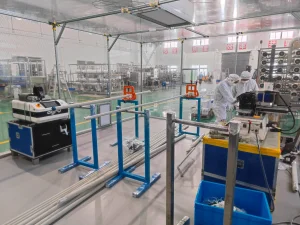
Combining domestic precision metallurgy, lean automation, and fully vertically integrated module manufacturing in Shanghai.
In-House Vessel Welding
Direct fabrication of ASME- and GB150-compliant carbon steel and austenitic stainless steel pressure vessels. Robotic sub-arc welding ensures micro-structural integrity up to 64 bar working pressures.
Automated Actuation
Utilizing high-frequency, million-cycle pneumatic angle-seat and ball switching valves featuring sub-second reaction speeds, double-acting scotch yoke actuators, and siloxanes-resistant fluoro-elastomer seals.
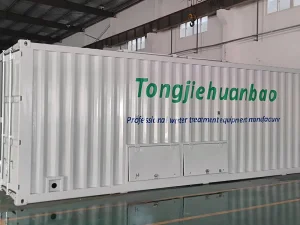
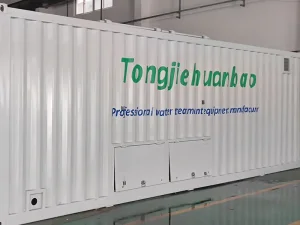
Pre-Commissioned Skids
100% factory pre-assembled, piped, and pre-wired onto standard structural steel transport skids. Units undergo full hydrostatic, pneumatic leak, and functional FAT sequence validations prior to dispatch.
Global SCM Resiliency
By housing engineering, procurement, machining, electrical integration, and software development under one organization in Shanghai, lead times are compressed by up to 40% compared to Western assemblers.
Engineering Horizons: Future of Biogas Refining
Bridging pure adsorption kinetics with advanced hybrid membranes and carbon mineralization.
Hybrid Membrane-PSA Cascades
By placing high-flux polyimide hollow-fiber membranes ahead of a compact polishing PSA, bulk CO2 removal (up to 80%) is achieved at high pressure without valve cycling, leaving the PSA to execute high-recovery polishing. This hybrid configuration drops total footprint by 35% while virtually eliminating methane slip down to <0.1%.
CCUS & Pure Food-Grade CO2
Instead of venting the PSA desorbed tail gas to atmosphere, our downstream CO2 recovery train compresses and liquefies the permeate gas through cryogenic rectification, producing 99.9% pure liquid food-grade CO2 compliant with EIGA/ISBT standards, generating an auxiliary revenue stream for the bio-refinery.
AI Cloud Edge SCADA & Self-Tuning
Incorporating embedded edge controllers running predictive machine learning models. By continuously analyzing ambient temperature, column differential pressures, and feed gas moisture, the controller dynamically fine-tunes desorption hold-times and equalization phases to maintain pipeline spec while avoiding unnecessary vent losses.
Meeting Worldwide Standards & Turnkey Procurement
Full conformance to European, American, and international statutory engineering mandates with life-cycle site support.
Explosion-Proof & Safety Codes
Complete compliance with ATEX Zone 1 / Zone 2 and IECEx specifications. All skid instrumentation, pressure transmitters, solenoid manifolds, and gas leak telemetry carry intrinsic safety (Ex i) or flameproof (Ex d) certifications.
Pressure Vessel Certifications
Fabrication inspected and verified against the European Union Pressure Equipment Directive (PED 2014/68/EU) Module H/H1, ASME Section VIII Division 1 (U-Stamp), and Canadian Registration Numbers (CRN).
Global Field Engineering Support
Backed by our Shanghai headquarters and international technical service affiliates across Europe, Southeast Asia, Central Asia, and the Americas. Providing FAT witnessing, on-site commissioning, remote telemetry, and guaranteed fast replacement parts delivery.
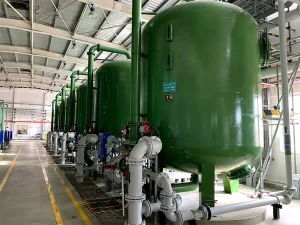
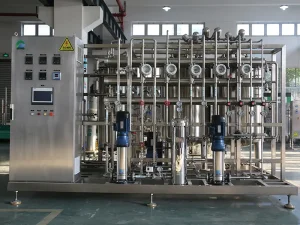
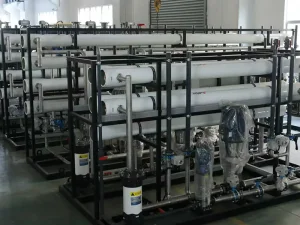
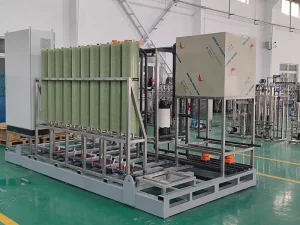
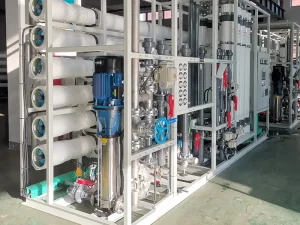
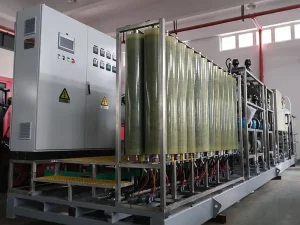
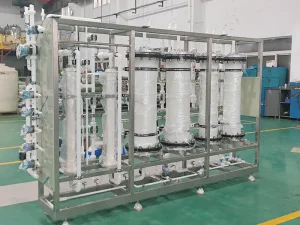
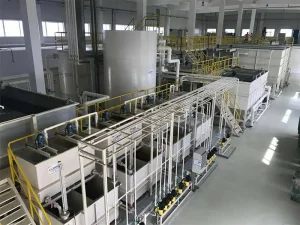
High-Efficiency Separation, Desalination & Brine Recovery
Specialized modular hardware fabricated under rigorous ISO 9001 and CE directives for global environmental engineering projects.
Engineering Inquiries & Operational Directives
Authoritative technical clarifications addressing feed specification tolerances, lifecycle costs, and commissioning protocols.
How does Pressure Swing Adsorption deal with high H2S concentrations?
Standard PSA carbon molecular sieves are poisoned by H2S in excess of 5 ppmv. Tongjie installs an upstream dual-stage chemical or biological scrubbing unit followed by an active iron oxide/regenerative carbon guard bed to reduce H2S down to <1 ppmv prior to entering the PSA upgrading columns.
What is the typical lifecycle of the adsorbent molecular sieves?
Under correct operating temperatures (15°C - 25°C) and with clean, dry biogas free of lubricating oils and condensates, our advanced carbon molecular sieves (CMS) provide an operational lifecycle exceeding 10 to 15 years before replenishment is required.
How much methane slip occurs during standard operations?
Through our multi-step vacuum-assisted desorption (VPSA) or multi-bed equalization cycles, methane slip is suppressed to below 0.5% - 1.0%. Optional downstream regenerative thermal oxidizers (RTO) or thermal catalytic oxidizers can convert residual trace slip to zero, meeting EU taxonomy standards.
Can the upgraded gas be directly injected into public gas distribution grids?
Yes. The refined biomethane stream achieves Wobbe Index, calorific value, oxygen (<0.2%), and CO2 (<2.0%) specifications matching DIN EN 16723-1, 49 CFR § 192, and national transmission grid codes. Calibration skids with odorization and fiscal metering are provided turnkey.
What utility connections and site preparation are mandatory?
Sites require an unyielding concrete pad, stable three-phase electrical supply (380V/480V, 50/60Hz), dry instrument air (ISO 8573-1 Class 1.2.1), raw biogas delivery at minimum 5-20 mbar(g), and drain provisions for automated condensate discharge separators.
What is the factory lead-time for modular containerized skids?
Standardized skids ranging from 250 Nm³/h to 2,500 Nm³/h are fabricated and factory-tested within 12 to 16 weeks from P&ID sign-off, providing unmatched timeline acceleration compared to conventional civil-built structures.