
Featured Seawater Desalination & High-Purity Water Equipment
Precision-fabricated in our Shanghai manufacturing complex under strict ISO 9001, ISO 14001, ISO 45001, and CE quality standards. Explore our modular configurations engineered for hostile marine and industrial environments.








The Paradigm Shift in Seawater Desalination: Energy Transition & High-Efficiency SWRO
As coastal industrial clusters, offshore oil extraction, and arid municipal zones face unprecedented hydrological stress, modern seawater reverse osmosis (SWRO) has decisively outpaced traditional thermal distillation (MSF/MED). Today's plants are measured not merely by throughput, but by specific energy consumption (kWh/m³), lifecycle reliability, and autonomous responsiveness.
Thermodynamic & Energy Recovery Evolution
Legacy seawater thermal distillation demanded massive steam inputs exceeding 10–15 kWh equivalent per cubic meter. Modern SWRO arrays, engineered with positive-displacement isobaric energy recovery devices (ERDs), capture up to 97.5% of rejected brine pressure, driving total plant power draw below 2.8–3.2 kWh/m³. Shanghai Tongjie pairs variable frequency drives (VFDs) with high-efficiency axial piston and split-case pumps to maximize thermodynamic efficiency across variable salinity regimes.
Advanced Pretreatment vs Harmful Algal Blooms (HAB)
Seasonal red tides, petroleum micro-droplets, and marine biological organics pose fatal fouling threats to high-pressure composite polyamide membranes. Tongjie incorporates multi-stage defensive pretreatment: coagulant-assisted dissolved air flotation (DAF), dual-media auto-backwash filtration, and pressurized hollow-fiber ultrafiltration (UF) modules, ensuring an SDI₁₅ (Silt Density Index) consistently below 2.5 even during heavy storm water ingress.
Renewable-Powered Off-Grid Modularization
With remote coastal infrastructures and island resorts detached from centralized power, the integration of photovoltaic (PV) arrays, microgrids, and battery storage with containerized SWRO units represents the frontline of modern desalination engineering. Tongjie’s skid plants dynamically ramp high-pressure pump speeds based on available renewable DC power, eliminating reliance on vulnerable diesel generation logistics.
What Global EPC Contractors & Industrial Buyers Must Verify
Procuring a seawater reverse osmosis facility from an original equipment manufacturer requires strict alignment across metallurgical integrity, membrane element selection, thermodynamic recovery, and international electrical codes.
Anti-Corrosion Metallurgy & Wet Materials Specification
In high-salinity seawater environments (TDS 35,000 to 48,000 mg/L) with dissolved oxygen and elevated chloride temperatures, standard stainless steels (SS304/SS316L) suffer severe pitting and crevice corrosion within months. Tongjie enforces strict piping metallurgy: Super Duplex Stainless Steel (UNS S32750 / 2507) or 254 SMO (UNS S31254) for all high-pressure lines (>60 bar), and rubber-lined carbon steel or heavy-wall duplex for intermediate manifolding. Low-pressure feeds utilize chemical-grade GF-UPVC or pigmented PVDF to achieve an engineered 25-year structural service life.
Boron, Bromide & Critical Ion Rejection Protocols
Meeting municipal drinking water mandates or industrial boiler makeup parameters requires precise control over non-dissociated ions. Natural boron concentrations in seawater (4.5–6.0 mg/L) pass freely through neutral-pH RO membranes, exceeding the World Health Organization (WHO) limit of ≤0.5 mg/L. Our systems implement two-pass RO arrays with caustic (NaOH) dosing in the second pass to shift boric acid to ionic borate (B(OH)₄⁻), securing rejection rates exceeding 93% while suppressing bromide to eliminate toxic bromate formation during downstream ozonation.
| System Parameter | Standard Commercial SWRO | Tongjie Heavy Industrial Modular SWRO | Tongjie High-Salinity DTRO/ZLD System |
|---|---|---|---|
| Feed Water TDS Range | 25,000 – 38,000 mg/L | 35,000 – 50,000 mg/L (Gulf Salinity) | Up to 160,000 mg/L (Concentrated Brine) |
| Permeate Recovery Ratio | 35% – 42% | 45% – 52% (Energy Optimized) | Up to 85% (Brine Minimization) |
| Specific Energy Consumption | 3.8 – 4.5 kWh/m³ | 2.7 – 3.2 kWh/m³ (PX Isobaric Device) | Customized Hybrid Thermal/Membrane |
| High-Pressure Metallurgy | SS316L / Standard Duplex 2205 | Super Duplex 2507 / Titanium Grade 2 | Hastelloy C-276 / Super Duplex 2507 |
| Boron Permeate Quality | > 1.0 mg/L (Uncontrolled) | ≤ 0.5 mg/L (Compliant with WHO) | N/A (Crystallized Salt by-product) |
| Pre-Shipment Verification | Visual & Hydrostatic Only | 100% FAT Wet Testing in Shanghai | Helium Leak, Hydraulic & PLC Validation |
Macro-Industry Engineering Solutions
Delivering tailored water treatment architectures designed for stringent sector-specific regulatory, thermal, and mechanical boundary conditions.
Municipal Potable Water for Islands & Coastal Hubs
Containerized plug-and-play reverse osmosis facilities engineered to deploy in remote islands, tourism resorts, and municipal emergency zones. Fully automated with remineralization calcite filters and chlorine dioxide disinfection, producing WHO-compliant drinking water from raw seawater within 48 hours of on-site electrical connection.
Coastal Petrochemical & Refining Complexes
Industrial giants require continuous high-volume feed for high-pressure boilers and cooling towers. Tongjie delivers integrated SWRO coupled with double-pass RO and continuous electro-deionization (EDI), driving conductivity below 0.1 μS/cm and eliminating dependency on municipal freshwater quotas.
Green Hydrogen & Offshore Wind Electrolysis
Electrolyzer stacks (PEM and Alkaline) require ultra-pure demineralized water with electrical resistivity reaching 18.2 MΩ·cm and strict dissolved silica limits (<5 ppb). Our direct seawater-to-ultrapure water skid platforms provide reliable feed streams for coastal megawatt-scale green hydrogen electrolyzer plants.
Oilfield Produced Water & Fracturing Flowback
Combines coalescing oil removal, chemical softening, and open-channel Disc Tube Reverse Osmosis (DTRO). Treats high-salinity flowback with heavy hydrocarbons down to oil content ≤5 mg/L and suspended solids ≤1 mg/L, enabling reinjection and zero-discharge compliance in extreme environments like Kazakhstan and the Middle East.
High-Salinity Wastewater & Zero Liquid Discharge (ZLD)
For chemical, pharmaceutical, and battery recycling operations facing strict environmental zero-discharge mandates, Tongjie couples high-pressure membrane concentration (DTRO/STRO up to 160 bar) with MVR (Mechanical Vapor Recompression) thermal evaporation and crystallization, generating solid salts and high-purity reusable distillate.
OEM / ODM Custom Manufacturing for EPC Partners
Serving international water treatment engineering firms, engineering distributors, and regional contractors. We provide full white-label skid fabrication, custom 3D design in SolidWorks/AVEVA, customized control architecture (Siemens, Allen-Bradley, Schneider), and exhaustive bilingual technical submittal packages.
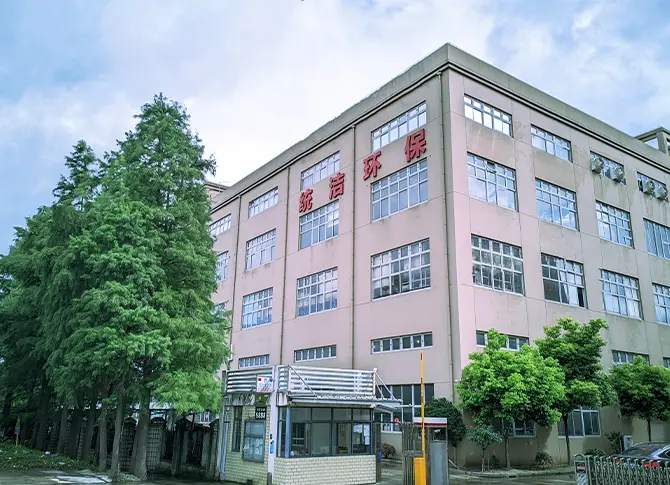
Shanghai Tongjie Environmental Protection Technology Co., Ltd.
Founded in 2010 at No. 1980 Waiqian Highway, Jiading District, Shanghai, Tongjie is a certified National High-Tech Enterprise and Shanghai Specialized & Sophisticated Enterprise. Our manufacturing and engineering scope unifies advanced membrane R&D, process thermodynamic modeling, precision welding, skid integration, and global field commissioning under a single accountable engineering management umbrella.
Direct Technical Contact: +86-13671999290 | Email: [email protected]
Regulatory Compliance & Field Engineering Support
International procurement risks dissolve when equipment is engineered to international regulatory codes from initial design submission through on-site handover.
Pressure Vessel & Piping Certifications
All high-pressure membrane housings, cartridge filter vessels, and interconnecting high-pressure piping manifolds are engineered and tested in accordance with ASME Section VIII, Division 1, ASME B31.3 (Process Piping), and European CE-PED (2014/68/EU) directives. Full mill test certificates (MTR 3.1) and non-destructive examination (NDE/RT) reports accompany each delivery.
Smart SCADA, Telemetry & Cloud Twins
Modern desalination requires intelligent automation. Our control cabinets feature PLC programming (Siemens S7-1500 / Allen-Bradley ControlLogix) with real-time Ethernet/IP or Modbus TCP integration. Embedded digital twin diagnostic algorithms monitor membrane flux decline, temperature-compensated permeability, and normalized salt passage, alerting operators before irreversible chemical fouling occurs.
Factory Acceptance Testing (FAT) in Shanghai
Prior to containerized packing and maritime dispatch, each skid undergoes exhaustive full-load FAT at our Shanghai factory. We execute 1.5x hydrostatic pressure testing, continuous 24-hour closed-loop hydraulic cycling, PLC interlock safety shutdowns, and automated CIP (Clean-in-Place) sequences. Overseas inspectors are hosted on-site or accommodated via live multi-angle HD telemetry inspection.
Technology Roadmap & Future Outlook (2026–2035)
Leading the transformation from simple seawater desalting to comprehensive seawater resource mining and minimal energy footprint architectures.
High-Efficiency SWRO + PX Devices
Full commercialization of 2.8 kWh/m³ containerized SWRO units, Super Duplex metallurgy, open-channel DTRO concentration up to 120 bar, and CE/ASME standardized skid footprints.
Biomimetic Aquaporin & OARO Integration
Introduction of biomimetic aquaporin membranes for 25% higher water flux at equivalent pressures, paired with Osmosis-Assisted Reverse Osmosis (OARO) for extreme brine volume reduction.
Brine Mining & Strategic Mineral Extraction
Coupling ZLD desalination outfalls with selective electrodialysis (EDR) and nanofiltration to recover battery-grade lithium, magnesium hydroxide, and high-purity industrial salts directly from reject brine.
Autonomous Zero-Carbon Desalination
Deep integration of floating off-grid wave/wind energy harvesting, fully autonomous self-cleaning anti-biofouling membrane surfaces, and self-optimizing AI neural controllers.
Frequently Asked Questions by Global Engineering Teams
In-depth technical answers addressing membrane life, power consumption, raw water parameters, and custom factory manufacturing.
What precise technical data is required to calculate system sizing and membrane projection?
To deliver an accurate thermodynamic process design, mass balance simulation, and equipment quotation, we require: (1) Comprehensive raw water analysis detailing Total Dissolved Solids (TDS), conductivity, pH, total hardness, silica (reactive and colloidal), barium, strontium, iron, manganese, and Silt Density Index (SDI₁₅); (2) Minimum and maximum seawater feed temperatures throughout the seasonal cycle; (3) Desired daily or hourly product capacity (m³/day or GPD); (4) Permeate purity targets (potable WHO standard, boiler feed <0.2 μS/cm, or semiconductor 18.2 MΩ·cm); (5) On-site power specifications (e.g., 380V/440V/480V, 50Hz/60Hz, 3-phase); and (6) Preferred layout constraints (containerized ISO freight vs open skid mounting).
How does Tongjie achieve high energy efficiency (<3.0 kWh/m³) in containerized SWRO units?
We achieve this by integrating isobaric energy recovery devices (ERDs), such as rotary ceramic pressure exchangers (PX) or dual-work cylinder exchangers, which transfer the hydraulic energy of the high-pressure concentrate stream directly to a portion of the incoming feed stream with over 96% efficiency. Combined with premium-efficiency IE4 motors, variable speed drives (VFD), and low-energy thin-film nanocomposite (TFN) SWRO membranes, the overall plant electrical consumption is reduced by 40% to 55% compared to throttling valves or basic Pelton wheel turbines.
What is the typical lifecycle of membranes and key wear components in marine conditions?
Under proper pretreatment maintaining an SDI <3.0 and regular automated Clean-In-Place (CIP) regimes every 3 to 6 months, high-rejection SWRO membranes have an expected operational lifespan of 3 to 5 years. Cartridge pre-filter elements are changed every 4 to 8 weeks depending on raw water suspended solids. High-pressure pump mechanical seals and ERD internal ceramic cartridges typically operate continuously for 20,000 to 30,000 hours prior to scheduled overhaul.
Can Tongjie plants handle heavy biofouling, oil contamination, or sudden red tide ingress?
Yes. In regions susceptible to algal blooms (red tides) or hydrocarbon contamination (e.g., Persian Gulf, offshore oil platforms), we implement a multi-barrier defense consisting of: (1) Electro-coagulation or automated polymer dosing; (2) Dissolved Air Flotation (DAF) to float microalgae and free oil droplets; (3) Pressurized Ultrafiltration (UF) with PVDF hollow-fiber membranes exhibiting 0.02-micron pore size; and (4) Non-oxidizing biocide injection with automated ORP monitoring. This ensures membranes remain protected from severe bio-organic blinding.
What distinguishes Disc Tube Reverse Osmosis (DTRO) from conventional spiral-wound membranes?
Conventional spiral-wound RO elements rely on narrow feed spacers (28 to 34 mil) that choke and foul rapidly when treating high-suspended-solids or scaling-prone feedstocks. DTRO features an open-channel hydraulic geometry where octagonal membrane cushions are stacked between hydraulic discs, separated by unobstructed flow channels. Operating at pressures up to 120–160 bar, DTRO generates high shear forces across the membrane surface, preventing foulant cake buildup and enabling direct concentration of raw leachate, high-salinity ZLD brine, and oilfield produced water.
How fast can a containerized seawater desalination plant be commissioned on site?
Because Tongjie containerized plants are fully prefabricated, piped, wired, and wet-tested in our Shanghai factory prior to packing, on-site mechanical and electrical installation is minimized. Upon arrival, site personnel only need to bolt down the container, connect raw water intake, concentrate discharge, product water delivery, and primary three-phase power. Full commercial water production is typically established within 3 to 7 days from offloading.
Specialized Membrane Separation & Zero Liquid Discharge Systems
Explore our extended industrial machinery portfolio covering brine concentration, osmosis-assisted recovery, water reuse, and pharmaceutical WFI systems.




Request an Engineered Process Simulation & Project Proposal
Provide your feed water quality analysis, target daily capacity, and site environmental constraints. Tongjie’s senior application engineering team in Shanghai will generate a verified membrane projection, P&ID layout, and formal equipment budget proposal within 24 business hours.