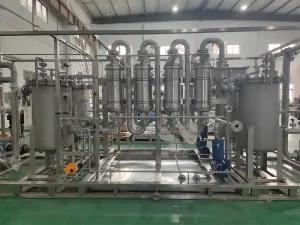
Featured Industrial Pure Water & Advanced Separation Systems
Engineered for EPC contractors, industrial facilities, and multinational technology brands requiring robust performance, automated SCADA integration, and factory-tested membrane platforms.
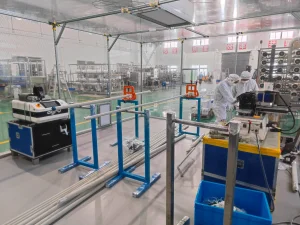
Eco-Friendly Water Treatment Solutions
View Technical Specs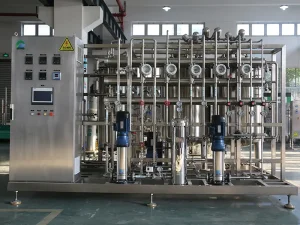
Pharmaceutical Purified Water & WFI System
View Technical Specs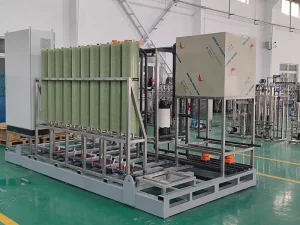
High-Salinity Wastewater Reduction System
View Technical Specs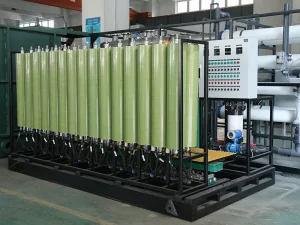
DTRO & STRO High-Pressure Membrane System
View Technical Specs
Sanitary RO-EDI Pure Water Generation Plant
View Technical Specs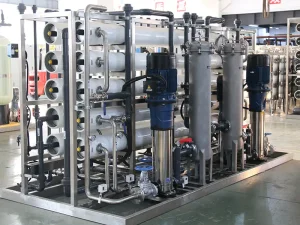
CE Certified OARO Brine Concentration System
View Technical Specs
Custom ODM Pure Water Skids for Global Brands
View Technical Specs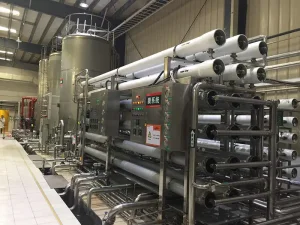
Food & Beverage Demineralized Water Skid
View Technical SpecsUltra Purified Reverse Osmosis Water: High-Purity Fluid Mechanics & Separation Physics
Navigating ionic rejection boundaries, sub-nanometer solute filtration, and electro-chemical regeneration to achieve resistivity thresholds up to 18.2 MΩ·cm with total organic carbon (TOC) levels < 1 ppb.
Dual-Pass Thin-Film Nanocomposite (TFN) Rejection
Utilizing state-of-the-art polyamide reverse osmosis membranes embedded with engineered zeolite nanoparticles, our skids achieve greater than 99.8% monovalent NaCl rejection and over 99.9% polyvalent ion mitigation. By pairing a primary brackish water stage with a secondary high-efficiency pass, our systems suppress Silt Density Index (SDI15) to below 1.5, securing exceptional permeate stability under variable raw feed water dynamics.
Continuous Electrodeionization (CEDI) Polishing
Replacing maintenance-heavy chemical mixed beds, our continuous EDI modules utilize ion-selective membranes coupled with high-exchange resin beds subjected to a continuous direct-current electrical field. This drives non-stop self-regeneration of H+ and OH- ions while flushing extracted ionic impurities to waste. Permeate resistivity consistently holds at 16.0–18.2 MΩ·cm without chemical handling hazards or plant downtime.
Sub-ppb Degasification & Organic Catalysis
Dissolved gases such as CO2 and O2 drastically impede semiconductor wafer etching and accelerate high-pressure boiler corrosion. We integrate hydrophobic hollow-fiber contactor membranes operating under dynamic liquid-ring vacuum with 185 nm / 254 nm dual-wavelength photochemical UV TOC destructors, guaranteeing dissolved oxygen (DO) < 1 ppb and TOC values < 2 ppb across continuous high-volume production cycles.
| Purification Stage | Target Contaminants | Operational Parameter | Attained Permeate Standard | Compliance Reference |
|---|---|---|---|---|
| Pretreatment + UF Barrier | Suspended solids, Colloids, Turbidity | 0.02 µm hollow-fiber cut-off, automated air-scour | SDI15 < 2.0, Turbidity < 0.1 NTU | ASTM D4189 |
| Primary Low-Energy RO Pass | Total Dissolved Solids (TDS), Silica, Organics | Flux: 14–18 LMH, Operating Pressure: 12–16 bar | 99.2% Nominal Rejection, TDS < 10 mg/L | ISO 11133 |
| Secondary High-Rejection RO Pass | Trace Minerals, Boron, Carbonates, Heavy Metals | Flux: 18–22 LMH, Interstage pH adjustment (pH > 8.2) | Conductivity < 1.0 µS/cm @ 25°C | USP <645> Stage 1 |
| Continuous EDI (CEDI) Unit | Weakly ionized species (SiO2, B, CO2), Ionic Salts | DC Voltage: 0–300V, Current: 0–6A per stack | Resistivity: 15.0 – 18.2 MΩ·cm @ 25°C | ASTM D1193 Type I |
| Liqui-Cel Degasser + 185nm UV | Dissolved Oxygen (DO), Residual TOC Compounds | Gas-to-liquid sweep ratio 1.5:1, Vacuum -95 kPa | DO < 1 ppb, TOC < 1–3 ppb | SEMI Standard F63 |
Macro Industry Solutions: Engineered for Regulated Ecosystems
Turnkey water purification infrastructure custom designed, fabricated, and validated to satisfy stringent global regulatory frameworks across critical processing industries.
Semiconductor & Microelectronics (SEMI F63)
Wafer manufacturing, photolithography, and photovoltaic cell etching mandate absolute purity. Our UPW plants deliver 18.2 MΩ·cm resistivity, particle-free output (< 0.05 µm particles < 1 per mL), and parts-per-trillion (ppt) level metallic cation detection through cleanroom-welded PVDF-HP piping, minimizing defective dies and maximizing silicon wafer yield.
Pharmaceutical & Biotechnology (WFI / cGMP)
Engineered to fulfill USP, EP, and ChP compendia, our Purified Water and Water for Injection (WFI) generators use 316L stainless steel orbital welding (internal Ra < 0.38 µm), sanitary tri-clamp connections, automated hot water sanitization (85°C), and GAMP-5 compliant PLC architecture with 21 CFR Part 11 audit trails for complete validation peace of mind.
Green Hydrogen Electrolyzer Feed Water
Proton Exchange Membrane (PEM) and Alkaline water electrolysis stacks require continuous feed water with electrical conductivity < 0.1 µS/cm to prevent catalyst degradation and membrane bipolar fouling. Our skids operate with minimal parasitical power consumption, matching the intermittent duty cycles of off-grid solar and wind hybrid farms.
Food, Beverage & Dairy Processing
Formulation water demands absolute organoleptic neutrality and total microbial exclusion. Our food-grade systems combine food-grade sanitary spiral-wound elements, ozone sterilizers, and sub-micron hollow fiber ultrafiltration to eliminate cryptosporidium, giardia, and bromate compounds without creating chemical byproducts.
High-Salinity Wastewater & ZLD Treatment
Addressing severe discharge caps in chemical and mining sectors, we combine open-channel Disc Tube Reverse Osmosis (DTRO), Osmotically Assisted RO (OARO), and Mechanical Vapor Recompression (MVR) evaporators to compress wastewater volume by up to 98%, turning hazardous high-TDS effluents into reusable boiler condensate and crystalline solid cake.
Containerized Seawater Desalination (SWRO)
Engineered for island communities, offshore drilling platforms, and coastal industrial plants. Integrated into heavy-duty 20ft and 40ft high-cube insulated ISO shipping containers with duplex/super duplex 2507 stainless steel high-pressure manifolds, energy recovery devices (ERD), and remote cloud SCADA management for autonomous off-grid operation.
Technology Roadmap & Future Outlook (2025–2030)
Leading the technological transition from conventional pressure-driven filtration toward cyber-physical membrane assets, molecular-scale sieving, and near-zero energy desalinating loops.
AI-Edge Membrane Autonomics
Integration of embedded edge-computing neural networks to dynamically adjust high-pressure pump variable frequency drives (VFDs) and antiscalant metering in real time based on optical fouling sensors, lowering power consumption by 14% and eliminating catastrophic scaling shocks.
OARO Brine Compression
Advancing Osmotically Assisted Reverse Osmosis (OARO) membranes capable of working across extreme osmotic pressure differentials (>140 bar), concentrating industrial brine solutions up to 220,000 ppm TDS without invoking high-capex thermal crystallizers prematurely.
Graphene & Biomimetic Channels
Transitioning our next-gen ODM membrane line to incorporate aquaporin-protein water channels and single-layer nanoporous graphene sheets, breaking the classic permeability-selectivity trade-off by boosting water flux by 300% at identical rejection pressures.
Ceramic Nanofiltration Pretreatment
Deploying resilient silicon carbide (SiC) and alumina tubular ceramic membranes to tackle aggressive oil-field produced waters and corrosive petrochemical solvents at up to 85°C without polymeric element compaction or hydrocarbon solvent swelling.
China Smart Factory 4.0: Unrivaled Supply Chain Resilience & Quality Rigor
Operating from our Shanghai engineering headquarters, we synthesize end-to-end proprietary fabrication, digital twin hydrostatic testing, and lean automated assembly to deliver high-capacity industrial RO water equipment faster and more reliably.
Complete In-House CNC & Orbital Welding
Unlike equipment assemblers that broker manufacturing, our Jiading production facility houses automated orbital welding stations, computerized pipe-bending machines, and specialized 316L/1.4404 stainless steel surface electropolishing tanks to maintain internal surface roughness down to Ra < 0.38 µm across every high-pressure weld seam.
Rigorous Factory Acceptance Testing (FAT)
Every skid undergoes dynamic simulation testing with actual water cycling before clearing port customs. High-pressure loops are pressurized to 1.5x design ratings (up to 120 bar for SWRO/DTRO), electrical control panels undergo complete I/O loop verification, and thermal sanitization loops are tested for temperature distribution conformity.
Vertical Supply Chain Integration & Cost Leadership
Through strategic volume agreements with global pump manufacturers (Grundfos, Danfoss), instrument makers (Siemens, Endress+Hauser), and membrane suppliers (DuPont, Hydranautics), alongside our domestic proprietary pressure vessel extrusion lines, we achieve 25–40% CAPEX savings while safeguarding delivery timelines against global logistics disruptions.
Global Enterprise Procurement Framework: Evaluating TCO & Lifecycle Efficiency
Evaluating water treatment capital investments demands looking beyond initial equipment price tags to assess long-term operational expenditures, energy utilization profiles, and membrane degradation cycles.
Energy Recovery Device (ERD) Optimization
In seawater desalination and high-pressure brine concentration, energy represents upwards of 60% of total lifecycle OPEX. We engineer isobaric ceramic pressure exchangers (PX) into all high-pressure skids, recovering up to 96% of reject concentrate hydraulic energy and slashing specific power consumption to as low as 2.4–2.8 kWh/m³.
Flux Rate & Fouling Velocity Management
Many low-bid suppliers undersize membrane square footage, operating elements at elevated flux rates (> 25 LMH) which results in premature compaction, colloidal deposition, and chemical cleaning cycles every 30 days. We design systems at conservative flux rates (12–16 LMH), extending membrane run life to 5–7 years and cutting CIP chemical demand by 70%.
Full Skid Pre-Commissioning & Plug-and-Produce Design
Field installation overhead can quickly balloon EPC project expenses. Our containerized and skid-mounted systems are delivered pre-wired, pre-piped, and pre-passivated. Site contractors simply connect raw water inlet, permeate delivery, concentrate drain, and master three-phase power lines, compressing on-site commissioning from months to under two weeks.
Localized Support, Turnkey DQ/IQ/OQ Validation & Global Compliance
Assisting overseas purchasers, validation teams, and EPC general contractors across Europe, the Americas, the Middle East, and Southeast Asia with comprehensive regulatory packages and responsive technical backup.
Full cGMP/GAMP-5 Documentation Portfolios
For regulated industries, equipment is only as viable as its documentation. We provide complete Design Qualification (DQ), Installation Qualification (IQ), and Operational Qualification (OQ) protocols, including material test reports (EN 10204 3.1 certification), weld inspection logs, boroscope inspection video files, calibration certifications, and functional loop test documentation.
Global Industrial IoT Telemetry & Remote Diagnostics
All PLC architectures (Siemens S7-1500 or Allen-Bradley ControlLogix) feature encrypted VPN connectivity for real-time remote diagnostics. Our central technical operations center monitors pressure drops (dP), normalized permeate flows, and temperature-compensated conductivity around the clock, providing predictive servicing alerts before performance drift occurs.
White-Label OEM/ODM Engineering Partnership
We partner with major engineering brand owners and regional water service companies. From CAD/BIM drawing customization with your brand title blocks to customized HMI software color schemes, custom-painted RAL structural skids, and unbranded documentation sets, we operate as an invisible, high-integrity manufacturing arm for your business.
Engineering Q&A: Technical & Sourcing Inquiries
Straightforward answers addressing design specifications, water analysis variables, and lead times from our Chief Application Engineers.
What minimum water analysis parameters are needed to begin custom OEM/ODM process design?
To generate an accurate process design, mass balance diagram, and equipment pricing, we require a recent raw water lab report including: TDS, conductivity, pH, total hardness (Ca2+, Mg2+), silica (reactive and colloidal), iron, manganese, chloride, sulfate, and Silt Density Index (SDI) or turbidity. For wastewater/ZLD or produced water applications, Total Organic Carbon (TOC), Chemical Oxygen Demand (COD), Free Oil & Grease, and dynamic operating temperatures are also necessary.
How does your high-purity RO/EDI system ensure consistent compliance with USP/EP standards?
Our systems employ a multi-barrier treatment train: dual-stage softening or scale inhibition, sub-micron precision prefiltration, two-pass reverse osmosis with intermediate degassing, and sanitary continuous electrodeionization (CEDI). The final polishing loop integrates 254nm germicidal and 185nm TOC-reducing UV reactors, continuous calibrated online conductivity sensors (NIST-traceable, temperature-compensated), and periodic hot-water sanitization cycles (85°C) that run autonomously without chemical additives.
What sets Disc Tube RO (DTRO) and OARO apart from standard spiral-wound RO in high-salinity applications?
Standard spiral-wound elements suffer irreversible physical fouling when dealing with high suspended solids (SS), high organics, or crystallization scaling. DTRO employs open-channel disc configurations with hydraulic flow paths that generate localized turbulence, preventing concentration polarization and tolerating feed water SDI up to 15. OARO operates across extreme osmotic pressures (>140 bar) by using a permeable support membrane with a counter-current draw solution, concentrating brines to >200,000 mg/L TDS at significantly lower energy use than thermal evaporation.
Can you provide customized PLC hardware, SCADA platforms, and electrical enclosure standards?
Yes. We engineer control panels to global regional standards: UL 508A for North America, CE / EN 60204-1 for the European Union, and IEC standards internationally. We support Siemens S7-1200/1500, Rockwell Allen-Bradley CompactLogix/ControlLogix, Schneider Electric, or Omron PLCs with matching touchscreen HMIs, wired to standard Profinet, EtherNet/IP, or Modbus TCP/IP fieldbuses for effortless distributed control system (DCS) plant integration.
What are the typical manufacturing lead times for customized containerized or skid-mounted units?
Standard-capacity skid-mounted industrial RO systems (5 to 30 m³/h) generally ship within 4 to 6 weeks from approval of P&ID and mechanical drawings. Customized modular containerized seawater desalination systems or complex high-salinity DTRO/ZLD treatment skids require 8 to 12 weeks, which includes comprehensive factory fabrication, orbital welding, 100% hydrostatic pressure testing, electrical FAT testing, and protective ocean-freight preservation packaging.
Industrial Separation, Water Reuse & Desalination Machinery
Expand your plant capacity with our full suite of modular water reuse, mobile desalination containers, and degassing membrane equipment engineered in Shanghai.
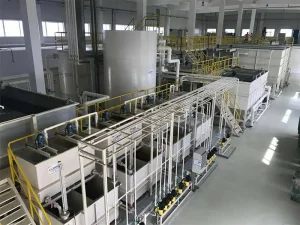
Advanced Industrial High-Ratio Water Reuse System
View Technical Specs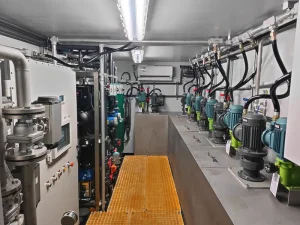
Oilfield Fracturing Flowback Produced Water Skid
View Technical Specs
Multi-Stage Membrane Industrial Wastewater Reuse Unit
View Technical Specs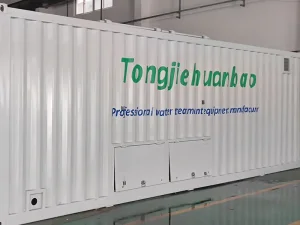
Off-Grid Ready Modular Seawater Desalination Plant
View Technical Specs
Brewery & Beverage High-Purity Process Water System
View Technical Specs
Heavy Industrial High-Efficiency Water Reclamation Skid
View Technical Specs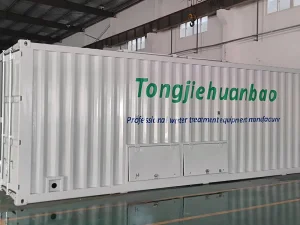
Mobile Containerized Seawater Desalination Plant
View Technical Specs