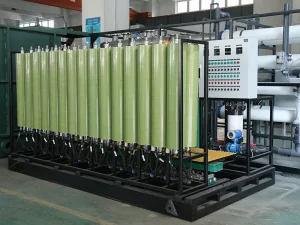
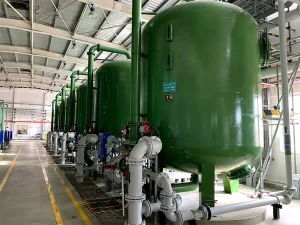
Certified Turnkey Engineering
High-Purity Process Water & Extraction Equipment
Explore our core certified manufacturing platforms designed to satisfy USP <643>, USP <645>, EP, and JP compendial purity limits.
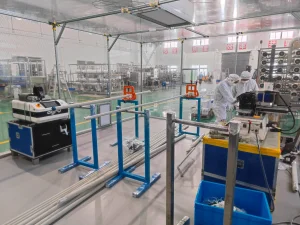
OEM ODM Full Value Chain Innovation Factories, Factory
Configure Specification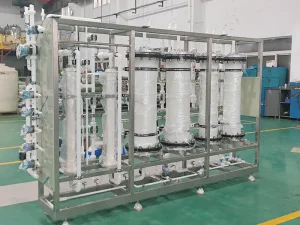
CE Certification China Suppliers Factory Electronic Ultra-Pure Water System for Semiconductor & Microelectronics with 18.2 MΩ·cm Resistivity Factories, Manufacturer
Configure Specification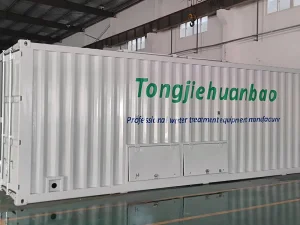
ODM China Suppliers' Factory-Direct Containerized Seawater Desalination Plants for Off-Grid Solar Solutions Factory, Suppliers
Configure Specification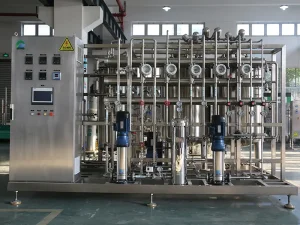
China China Pharmaceutical Purified Water & WFI System Suppliers | High-Quality Factory Solutions for the Pharmaceutical Industry Factories, Factory
Configure Specification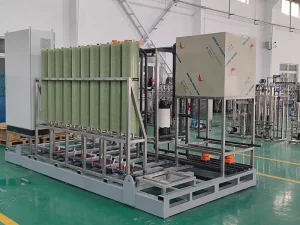
China High-Salinity Wastewater Treatment System in China | Suppliers & Factory for Zero Liquid Discharge Solutions Suppliers, Supplier
Configure Specification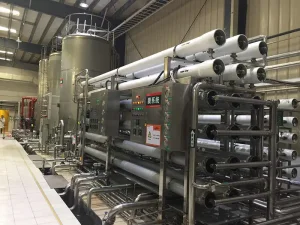
ODM China Food & Beverage Process Water System - Reliable Suppliers and Factory Solutions for Purified Water Factory, Manufacturers
Configure Specification
CE Certification Eco-Friendly Water Treatment Solutions - ODM Services from China Suppliers & Factory for Global Brands Suppliers, Manufacturer
Configure Specification
Industry Intelligence & Evolution
Technological Convergence in Biopharmaceutical Water Infrastructure
Stringent pharmacopoeial alignment, membrane innovations, and sterile processing demands are redefining how pharmaceutical water generation is commissioned globally.
Membrane-Based Ambient WFI Transition
The revised European Pharmacopoeia (Ph. Eur.) monographs allow non-distillation methods for Water for Injection production. Multi-stage Reverse Osmosis paired with Continuous Electrodeionization (CEDI) and secondary Ultrafiltration (UF) offers dramatic OPEX reductions over legacy thermal Multiple-Effect Distillation (MED) systems.
- Elimination of energy-intensive steam generation loads
- Cold WFI systems with ambient ozonation sanitization
- Endotoxin limit maintenance below < 0.25 EU/mL
Sanitization Architecture & Biofilm Prevention
Preventing microbial colonization and stubborn bio-film formation across distribution loops requires zero-dead-leg design. Utilizing 316L stainless steel orbital welding with Ra ≤ 0.4 μm electropolished finishes ensures hydraulic hygiene.
- Continuous turbulent velocity flow (> 1.5 m/s)
- Periodic hot-water thermal sanitization (≥ 80°C)
- Ozone sanitization with catalytic UV destruction
Automated In-Line Analytical Control
Next-generation pharmaceutical plants depend on direct SCADA/PLC loops with continuous Total Organic Carbon (TOC) measurement and temperature-compensated conductivity sensors compliant with 21 CFR Part 11 requirements.
- Dual-wavelength non-dispersive UV TOC analyzers
- Online conductivity checks directly inside recirculation loops
- Continuous audit trail logging for real-time release (RTRT)
38+
Invention & Utility Patents
< 0.25
Bacterial Endotoxins (EU/mL)
100%
Factory Acceptance Tested (FAT)
ISO
9001 / 14001 / 45001 & CE Certified
Global Engineering Needs
Enterprise Procurement Criteria & Technical Execution
How our OEM engineering processes address the critical risk vectors identified by biopharma procurement officers and qualification managers.
Full Lifecycle DQ / IQ / OQ Documentation
Global pharmaceutical plants cannot operate without ironclad regulatory paperwork. We provide comprehensive FAT dossiers, material test reports (MTRs), weld logs with borescope video inspection records, and calibration certificates traceable to NIST standards.
Pre-Commissioned Modular Skid Assemblies
Our skidded purified water generators arrive pre-piped, pre-wired, and fully wet-tested at our Shanghai fabrication facility. This cuts on-site installation schedules from months down to weeks, preventing costly interruptions during active facility construction.
Dead-Leg Minimization & Drainability
Piping systems follow ASME BPE standards strictly, adhering to L/D ratios below 1.5 wherever practical (never exceeding 3D). All process tanks and distribution headers feature bottom drainability slopes of ≥ 1:100 to eliminate stagnant water pockets completely.
Macro Engineered Solutions
Integrated High-Purity Water Generation & Distribution
From raw brackish, municipal, or well water feed streams to sterile points-of-use across cleanrooms and sterile filling suites.
1. Pretreatment & Conditioning Module
Features multimedia gravel/sand filtration, organic scavenger carbon beds, duplex backwash water softeners, and chemical dosing systems to remove particulate matter, free chlorine, heavy metals, and scaling ions to protect downstream membrane elements.
2. Double-Pass RO + CEDI Stage
High-efficiency spiral wound polyamide reverse osmosis membranes reject up to 99.5% of dissolved salts, silica, and TOC. The effluent feeds into continuous electrodeionization (CEDI) stacks, driving conductivity down to < 0.1 μS/cm without chemical regeneration.
3. Continuous Closed Loop Distribution
Storage tanks constructed from electropolished 316L stainless steel equipped with 0.22 μm hydrophobic vent filters and rupture discs. High-pressure sanitary centrifugal pumps maintain uninterrupted loop recirculation under constant ozone or thermal sanitization.
Global Support Network
Worldwide Regulatory Verification & Localized Technical Service
Assuring uninterrupted cGMP compliance and rapid engineering responsiveness across Europe, the Americas, the Middle East, and Asia-Pacific.
Global Standards Harmonization
Every system is architected to exceed the converging requirements of the US FDA, European Medicines Agency (EMA), WHO, and PIC/S. Systems support seamless PQ (Performance Qualification) through automated sampling protocols and integrated trend analysis tools.
Field Engineering & Commissioning Teams
Our experienced validation engineers deploy worldwide to oversee SAT (Site Acceptance Testing), perform on-site loop passivation, lead operational training programs, and provide field supervision during system handover.
Predictive Maintenance & Parts Logistics
We supply continuous spare parts depots for sanitary valves, membrane modules, EDI stacks, UV lamps, and seals, backed by secure industrial IoT gateways that provide predictive diagnostic monitoring and prompt maintenance alerts.
Forward Engineering
Technology Roadmap: Next-Gen Pharmaceutical Water Infrastructure
Continuous innovation directions shaping zero-footprint, self-optimizing high-purity water generation plants.
Phase 1: Present
Digital Twins & Dynamic Process Modeling
Integrating real-time digital twins of PW and WFI loops to simulate thermal distribution, velocity profiles, and bio-film probabilities, allowing predictive sanitization cycles without unnecessary thermal cycles.
Phase 2: Near Horizon
Zero Liquid Discharge (ZLD) RO Recovery
Coupling secondary brine recovery reverse osmosis and DTRO membrane stages to achieve water recovery rates exceeding 90% across pharmaceutical pretreatment and concentrate stages, slashing utility intake footprints.
Phase 3: Future Ready
Autonomous Self-Sanitizing Systems
Autonomous AI-driven control systems capable of modulating pump RPM, ozone dosing, and loop diverter valves dynamically in response to micro-fluctuations in TOC and bio-burden indicators.
Expert Inquiries
Pharmaceutical Water Systems & Manufacturing FAQ
Direct technical answers addressing system validation, sanitary piping, compendial standards, and international delivery protocols.
What is the standard configuration of an audit-ready pharmaceutical purified water generation skid?
A typical high-compliance skid begins with an automated pretreatment train (multimedia filter, activated carbon, and dual-bed softener), followed by cartridge filters, a double-pass RO system, continuous electrodeionization (CEDI), and an in-line 254 nm germicidal UV reactor paired with a 185 nm TOC destruction lamp.
How does membrane-based WFI satisfy Ph. Eur. and USP quality specifications?
Membrane-based WFI combines double-pass RO with EDI and an ultrafiltration (UF) polishing stage (typically with a 6,000 Dalton molecular weight cutoff). This configuration reliably limits bacterial endotoxins to well under the compendial limit (< 0.25 EU/mL) while maintaining conductivity below 1.3 μS/cm at 25°C.
What welding protocols and material certifications are provided with the skids?
All wetted surfaces are constructed from AISI 316L stainless steel (with ferrite content ≤ 1% on request). Orbital welding is executed in an argon envelope with complete documentation, including weld logs, isometric drawings, coupon samples, and borescope inspection video files for 100% of internal welds.
How are 21 CFR Part 11 requirements managed in the skid automation architecture?
Our control systems use Siemens S7-1500 or Allen-Bradley ControlLogix PLCs integrated with industrial SCADA interfaces. They feature secure, multi-tier user authentication, non-resettable electronic signatures, full chronological audit trails, and automatic encrypted batch data export.
Complete Equipment Directory
Comprehensive Industrial & Process Water Systems
Explore our complete range of specialized wastewater, membrane concentration, and high-purity water treatment skids.
Wholesale Eco-Friendly Water Treatment Solutions from China ODM Suppliers and Factory - Your Partner in Innovation Factories, Manufacturer
Configure Specification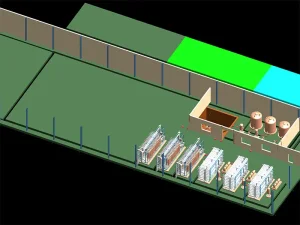
ODM OEM Precision Manufacturing Factories, Manufacturer
Configure Specification
CE Certification China Ultra-Pure Water System for Semiconductor & Electronics Manufacturing | Suppliers & Factory 18.2 MΩ·cm Resistivity Supplier, Manufacturers
Configure Specification
Wholesale High-Salinity Wastewater Volume Reduction & ZLD System Suppliers, Manufacturer
Configure Specification
OEM China Suppliers Factory Water Purification System for Food & Beverage Production - Ensuring Safety and Quality Factories, Supplier
Configure Specification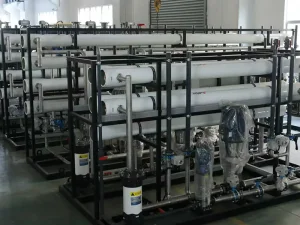
China High-Efficiency Brine Concentration Systems by China Suppliers | Factory Solutions for Wastewater Treatment Suppliers, Manufacturers
Configure Specification
Wholesale OEM Precision Manufacturing in China - Leading Suppliers & Factory for Customized Environmental Water Treatment Solutions Factories, Factory
Configure Specification