
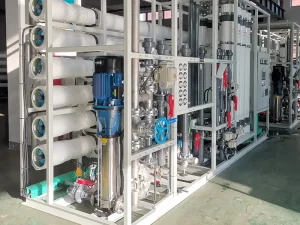
Tier-1 Engineered Systems
High-Performance Seawater & Industrial Desalination Equipment
Explore our pre-assembled modular packages, ultra-high-pressure DTRO arrays, and containerized seawater treatment skids engineered for demanding industrial water parameters.
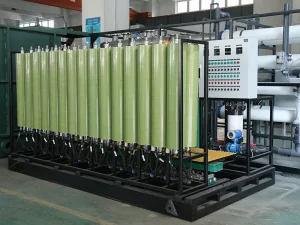
China DTRO&STRO High-pressure membrane Concentration System Factories, Manufacturers
Configure Skid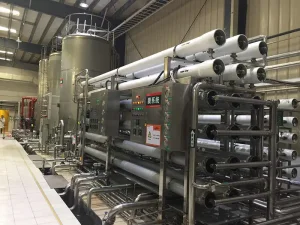
ODM China Suppliers Factory Purified Water System for Food & Beverage - Two-Stage RO and Deep Disinfection Technology Suppliers, Supplier
Configure Skid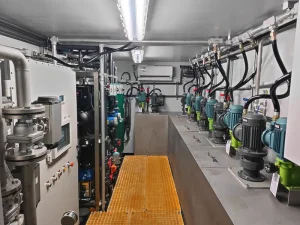
ODM China Suppliers Factory: Advanced Fracturing Flowback Water Reuse Treatment Equipment for Oil & Gas Operations Suppliers, Manufacturers
Configure Skid
Wholesale Fracturing Flowback Water Reuse Treatment Equipment - China Suppliers & Factory for Oil & Gas Field Operations Manufacturers, Manufacturer
Configure Skid
Wholesale High-Pressure DTRO&STRO Membrane Concentration System from China Suppliers & Factory for High-Salinity Wastewater Treatment Factories, Suppliers
Configure Skid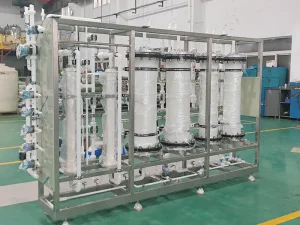
Wholesale China Ultra-Pure Water System for Semiconductor & Electronics | Top Suppliers & Factory Quality Solutions Suppliers, Manufacturers
Configure Skid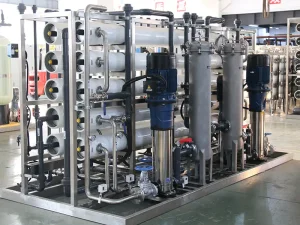
CE Certification Osmosis-Assisted Reverse Osmosis Factory, Suppliers
Configure Skid
Technical Whitepaper: Core Engineering
Thermodynamics & Process Mechanics of Industrial Seawater Distillation
In-depth comparative analysis of thermal distillation configurations: Multi-Effect Distillation (MED), Thermal Vapour Compression (TVC), Multi-Stage Flash (MSF), and Membrane Hybridization.
Low-Temperature MED (LT-MED)
Operates at top brine temperatures (TBT) below 70°C to virtually eradicate calcium carbonate (CaCO₃) and calcium sulfate (CaSO₄) crystallization. Our automated spray nozzles distribute thin-film marine feeds over horizontal titanium heat transfer tubes, achieving heat transfer coefficients between 2,800 to 4,200 W/(m²·K).
Top Brine Temp (TBT):62°C – 68°C
Gained Output Ratio (GOR):8.5 – 12.0
Tube Metallurgy:Titanium Gr. 2 / CuNi 90/10
MED with Steam Thermo-Compressor (MED-TVC)
By leveraging medium-pressure motive steam (3 to 10 bar gauge) across supersonic convergent-divergent ejectors, secondary vapour is entrained and pressurized. This recycles latent heat back to the first effect, lowering specific primary energy consumption to under 45 kWh/m³ equivalent thermal duty.
Motive Steam Pressure:3.0 – 12.0 bar(g)
Entrainment Efficiency:>94% Isentropic
Ejector Material:Duplex SS 2205 / Ni-Al Bronze
Thermal-Membrane Hybrid Architecture
Thermal distillation excels under erratic marine intake conditions (algal blooms, elevated hydrocarbons, red tides) that destabilize traditional seawater reverse osmosis (SWRO). Our hybrid trains marry SWRO reject brines (70,000 ppm TDS) directly into MED evaporators, driving overall recovery rates from 45% toward 75%.
Hybrid System Recovery:Up to 75% Total
Product Distillate TDS:<5.0 mg/L (Purity)
SDI Tolerance:SDI₁₅ > 6.5 (Direct Feed)
| Technology Process | Feed Salinity Tolerance | Distillate Purity (TDS) | Specific Electrical Consumption | Susceptibility to Fouling | Ideal EPC Application Target |
|---|---|---|---|---|---|
| Low-Temp Multi-Effect (LT-MED) | Up to 120,000 mg/L | < 5 mg/L | 1.2 – 1.8 kWh/m³ | Very Low | Refinery, Coastal Power, Waste Heat Capture |
| Thermal Vapour Compression (MED-TVC) | Up to 140,000 mg/L | < 2 mg/L | 0.9 – 1.4 kWh/m³ | Extremely Low | Petrochemical Complexes, Gas Flares, FPSO |
| Standard SWRO (Membrane) | Up to 45,000 mg/L | 200 – 450 mg/L | 3.0 – 3.8 kWh/m³ | High | Municipal Drinking Water, Low Organic Feed |
| RO-MED Hybrid Train | Up to 160,000 mg/L | < 10 mg/L (Blended) | 2.2 – 2.9 kWh/m³ | Moderate | Zero Liquid Discharge (ZLD), Brine Mining |
Enterprise Procurement Framework
Global Industrial Procurement Dynamics & Macro-Sector Solutions
Analyzing key tender metrics, total cost of ownership (TCO), and system specifications prioritized by international EPC consortia and industrial operators.
Offshore Marine & FPSO Modules
Naval architects require weight-optimized, vibration-resistant skids conforming to DNV GL and Bureau Veritas standards. Tongjie integrates compact horizontal titanium tube bundles encased in 254SMO or Super Duplex 2507 shells, delivering uninterrupted boiler feedwater and crew potable water regardless of wave motion.
Heavy Petrochemical & Refining
Refineries demand uninterrupted utility streams despite volatile coastal sea conditions. Our thermal evaporator trains tap low-pressure waste steam (0.5 to 2.5 bar) to generate high-purity boiler feedwater (<0.1 µS/cm post-polishing), cutting plant-wide primary fuel expenses and eliminating off-site fresh water dependence.
Green Hydrogen Electrolysis Integration
PEM and Alkaline electrolyzers mandate ASTM Type II / demineralized water with electrical conductivity below 0.1 µS/cm. Seawater distillation serves as the primary desalting barrier, resisting high salinity swings and delivering ultra-low ion feed streams to downstream RO-EDI polishing stages without membrane fouling.
Zero Liquid Discharge (ZLD) Brine Concentrators
Environmental directives prohibit high-salinity brine disposal in fragile ecosystems. Our multi-effect distillation process functions as an advanced pre-crystallizer concentrator, raising brine salinity from 70,000 mg/L up to 240,000 mg/L TDS before final crystallization, lowering overall ZLD CAPEX by up to 40%.
Quality Assurance & Code Compliance
Advanced Metallurgy, Factory FAT & International Standards
How Tongjie controls fabrication risks, corrosion dynamics in hyper-saline environments, and executes strict multi-point factory acceptance protocols.
Severe-Service Metallurgy Selection
Thermal evaporation vessels operate under high chloride concentrations and elevated temperatures. We manufacture chambers using solid Super Duplex 2507 (UNS S32750), 254SMO austenitic stainless steel (PREN > 42), or explosive-clad titanium (ASTM B265 Gr. 1/2) bonded to carbon steel pressure vessels.
Pitting Resistance Equiv (PREN):> 43.5
Crevice Corrosion Limit:> 50°C in Seawater
Welding Qualifications:ASME Sec IX WPS/PQR
ASME & PED Pressure Equipment Mandates
Every distillation column and flash vessel is engineered in full compliance with ASME Boiler and Pressure Vessel Code Section VIII Division 1 & Division 2, stamped with 'U' or 'UM' designators, and carries CE-PED certification (Module H/H1) for delivery into European Union and Middle Eastern projects.
Pressure Vessel Codes:ASME Sec VIII / EN 13445
NDT Testing:100% RT / UT on Welds
Design Fatigue Cycles:250,000 Full Cycles
Full Factory Acceptance Testing (FAT)
Before leaving our Shanghai manufacturing center, skids undergo hydrostatic pressure testing at 1.5x design pressure, helium mass spectrometer leak detection for vacuum chambers, loop checks on Siemens or Allen-Bradley PLCs, and dry run simulations of vacuum extraction and automated drain valves.
Hydrostatic Test Pressure:1.5 × Design Gauge
Vacuum Integrity Check:< 0.5 mbar/hr Drop
Automation Protocols:EtherNet/IP, Modbus TCP, Profinet
38+
Patents & Intellectual Rights
17+
Years Process Experience
<5 ppm
Distillate TDS Consistency
100%
Pre-Commissioned in Factory
OEM / ODM Delivery Lifecycle
End-to-End Distillation System Engineering & Execution
A rigorous, milestone-driven project methodology designed to de-risk overseas manufacturing for international procurement teams.
PHASE 01
Feed Assay & Thermodynamics Sizing
Detailed analysis of raw sea chemistry (TDS, silica, barium, strontium, COD, dissolved oxygen). ASPEN Plus and custom thermodynamic modeling calculate exact stage temperatures, vapour flashing velocities, and anti-scalant dosage regimens.
PHASE 02
Mechanical & Piping Design (P&ID)
Generation of comprehensive 3D CAD models in SolidWorks/Plant3D, finite element analysis (FEA) on vacuum vessels, CAESAR II piping stress evaluations, and complete P&ID development matching client engineering standards.
PHASE 03
Robotic CNC Machining & Automated Welding
Plasma cutting, automated orbital tube-to-tubesheet expansion, submerged arc welding (SAW) on heavy distillation vessels, followed by precision mechanical pickling and passivation to guarantee maximum localized pitting resistance.
PHASE 04
Integration, Skid Assembly & FAT
Mechanical, electrical, and pneumatic integration on rigid structural skids. Real-medium hydrostatic pressure testing, dynamic vacuum pull-down checks, and full instrument calibration verified with comprehensive FAT documentation.
PHASE 05
Global Dispatch & On-Site Commissioning
Heavy sea freight packaging inside ISO intermodal containers or break-bulk cradles. On-site commissioning oversight, supervisor deployment across the Middle East, Southeast Asia, Central Asia, and remote SCADA IoT lifecycle support.
Innovation & Future Perspectives
Next-Generation Distillation Technologies & Carbon Neutrality
Pioneering renewable integration, low-energy membrane distillation, and critical mineral recovery from hyper-saline discharge brines.
Concentrated Solar Power (CSP) Hybridization
Direct coupling of parabolic trough collectors (PTC) and evacuated tube solar fields with modular LT-MED trains. Stored thermal energy in molten salts or pressurized hot water allows continuous 24/7 freshwater distillation without consuming fossil hydrocarbons, reducing carbon offsets to zero.
Direct Contact Membrane Distillation (DCMD)
Tongjie’s R&D lab is deploying hydrophobic PVDF and PTFE electrospun nanofiber membranes for non-isothermal separation. By driving vapor transport across porous boundaries using low-grade waste heat (45°C to 65°C), DCMD achieves 99.99% ion rejection in compact footprints unattainable by traditional evaporators.
Valuable Mineral Extraction & Brine Mining
Shifting from brine disposal liability to circular revenue generation. Modern high-recovery thermal concentration extracts concentrated lithium, magnesium chloride, rubidium, and high-purity sodium chloride (industrial grade >99.2%) directly from the tailing brines of our modular multi-effect distillation skids.
Engineering Knowledge Base
Frequently Asked Questions on Seawater Distillation Systems
Exhaustive engineering insights answering technical, logistical, and operational inquiries posed by global procurement managers and consulting engineers.
What is the primary operational advantage of thermal distillation (MED) over SWRO?
While SWRO offers lower specific electrical energy consumption under clean seawater conditions, thermal distillation processes (particularly MED and MED-TVC) are remarkably resilient to severe water quality shocks. They can operate continuously with feed turbidity exceeding 20 NTU, SDI₁₅ values above 6.5, elevated organic loads, and presence of free oil—conditions that trigger rapid bio-fouling or irreversible membrane destruction in SWRO systems.
How does Tongjie prevent alkaline scale formation (CaCO₃, Mg(OH)₂) on tube bundles?
We implement a triple-barrier scaling defense: First, the maximum Top Brine Temperature (TBT) is hydraulically and thermodynamically regulated below 68°C, well below the inverse solubility precipitation curve of calcium sulfate. Second, polymaleic-based polymeric scale inhibitors are continuously metered via dual-redundant dosing skids. Third, high-velocity uniform falling film liquid distributors ensure continuous tube wetting without localized dry spots.
What materials of construction are standard for the evaporator chamber and tubes?
Our standard metallurgy utilizes seamless Titanium Grade 2 (ASTM B338) heat exchanger tubes for outstanding resistance to pitting and erosion in marine brine. The evaporator shells are fabricated using high-molybdenum austenitic stainless steel (254SMO / UNS S31254) or Super Duplex 2507 (UNS S32750). For lower salinity effects or demisters, high-grade 316L with certified post-weld pickling and passivation is utilized.
What is the expected Gained Output Ratio (GOR) and how is it optimized?
The Gained Output Ratio (mass of distillate produced per mass of motive steam injected) typically ranges between 8.0 and 12.0 in our 6-to-10 effect configurations. In configurations equipped with supersonic Thermal Vapour Compression (TVC), the GOR is boosted by 30% to 50% by re-compressing low-pressure vapor from the final effects and feeding it back into the initial heat exchangers, maximizing thermodynamic efficiency.
Can low-pressure waste heat or plant flue gas be used as the primary thermal source?
Yes. Low-temperature multi-effect distillation skids are explicitly designed to tap low-grade waste energy streams. We configure auxiliary plate heat exchangers or direct vacuum flashing chambers capable of utilizing hot water streams as low as 65°C, jacket cooling loops from heavy marine diesel engines, or exhaust steam from condensing turbines down to 0.4 bar absolute pressure.
What product water conductivity and purity are achieved without post-polishing?
Distillation inherently vaporizes only pure H₂O molecules, leaving non-volatile salts in the falling brine. Incorporating our multi-layer chevron wire-mesh demisters ensures droplet carry-over is less than 0.01% by weight. Standard single-stage distillate yields electrical conductivity under 10 µS/cm (TDS < 5 ppm). Two-stage degassing and demisting tracks can achieve <1.0 µS/cm directly from seawater.
What documentation and certifications accompany each shipment for global EPC tenders?
Tongjie delivers complete project dossiers conforming to ASME Section VIII Div 1/2 requirements, CE-PED Module H certification, EN 10204 3.1 material test certificates (MTRs) for all pressure-retaining components, non-destructive testing (NDT) reports (including 100% radiographic, ultrasonic, and dye-penetrant checks), welding log WPS/PQR dossiers, and FAT sign-off certificates witnessed by third-party agencies (SGS, TUV, DNV).
How are the skids packaged and shipped to minimize remote site installation hours?
We specialize in modular skid prefabrication. Distillation columns, vacuum ejectors, brine extraction pumps, chemical dosing skids, and PLC automation cabinets are pre-assembled on heavy-gauge structural steel chassis. Units are designed to fit standard ISO 40-foot High-Cube shipping containers or break-bulk transport dimensions, converting what used to be a 6-month field erection into a 15-day plug-and-play hookup.
Comprehensive OEM Catalog
Advanced Industrial Water Treatment & ZLD Equipment
Explore our complete spectrum of demineralization lines, zero liquid discharge concentrators, and specialized chemical separation hardware.
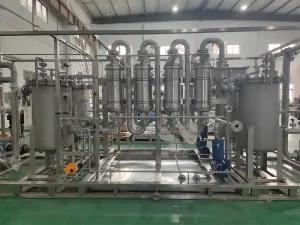
Wholesale Deoxygenation Membrane Equipment Suppliers in China - Factory Solutions for Effective Water Treatment Suppliers, Manufacturers
Configure Skid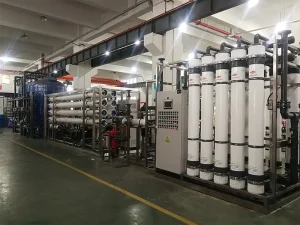
China High-Ratio Water Reuse Equipment in China - Suppliers and Factory for Pretreatment, UF, and RO Process Suppliers, Supplier
Configure Skid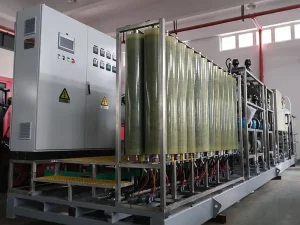
ODM China Suppliers Factory for Oilfield Fracturing Flowback Fluid Treatment System with Zero-Discharge Technology Suppliers, Manufacturer
Configure Skid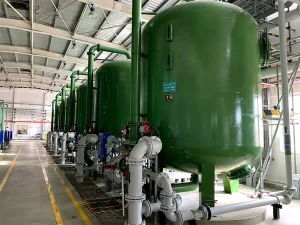
OEM Industrial Demineralized Water Equipment Factory, Suppliers
Configure Skid
OEM China Suppliers Factory Purified Water System for Food & Beverage Production – Ensure Quality and Safety Factories, Suppliers
Configure Skid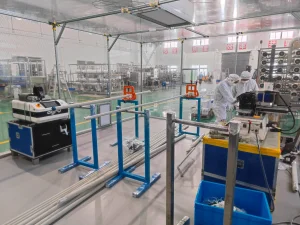
China Eco-Friendly Water Treatment Solutions from China's Leading Suppliers and Factory with ODM Services Supplier, Manufacturers
Configure Skid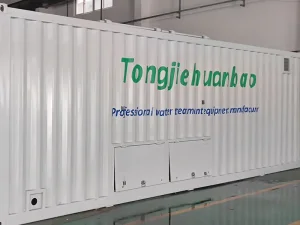
China China Modular Containerized Seawater Desalination Equipment | Rapid Deployment by Leading Suppliers and Factory Factories, Suppliers
Configure Skid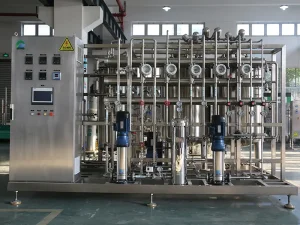
CE Certification High-Quality Pharmaceutical Purified Water & WFI System - Top China Suppliers & Factory Solutions Manufacturers, Manufacturer
Configure SkidSubmit Your Seawater Analysis & Sizing Parameters
Connect directly with our senior process engineers. Receive custom thermodynamic simulation models, mass balance diagrams, and comprehensive CAPEX/OPEX evaluations for your upcoming tender.