
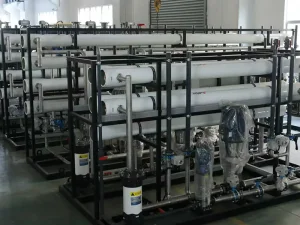
Featured Commercial Systems
Engineered Modular SWRO & High-Salinity Water Systems
Explore our core pre-assembled desalination skids, brine concentrators, and industrial ultrapure water units built under rigorous factory acceptance test (FAT) standards for seamless global commissioning.
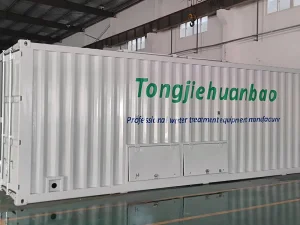
China China Suppliers: Factory-Direct Containerized Seawater Desalination Plants for Efficient Mobile Water Solutions Factory, Suppliers
View Specifications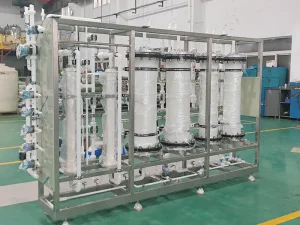
CE Certification China Suppliers Factory Ultra-Pure Water System for Semiconductor & Microelectronics Manufacturing - 18.2 MΩ·cm Resistivity Suppliers, Manufacturer
View Specifications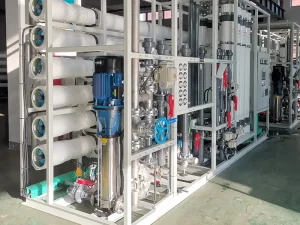
China Compact China Seawater Desalination Equipment by Suppliers - Efficient Reverse Osmosis Factory System for Freshwater Production Factories, Manufacturers
View Specifications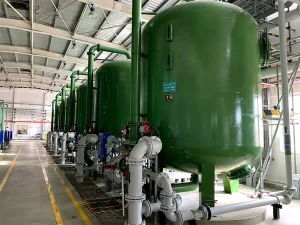
CE Certification China Suppliers Factory Industrial Demineralized Water Equipment with RO and EDI for High-Quality Purification Factory, Supplier
View Specifications
OEM Industrial Demineralized Water Equipment Factory, Suppliers
View Specifications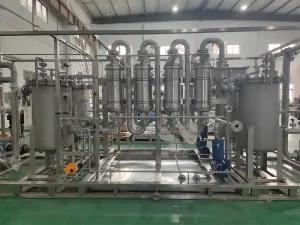
Wholesale China Deoxygenation Membrane Equipment Suppliers - Physical Degassing Technology from Trusted Factory Factory, Supplier
View Specifications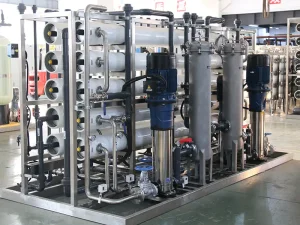
CE Certification Osmosis-Assisted Reverse Osmosis System for High Salinity Wastewater Concentration - China Suppliers & Factory Solutions Factory, Manufacturers
View Specifications17+
Years Membrane Engineering Excellence
38+
National Invention & Utility Patents
50+
Senior Process & Fluid R&D Engineers
1,000+
Global EPC & Industrial Installations
Technical Whitepaper Depth
The SWRO Process: Engineering Principles & Thermodynamics
Seawater Reverse Osmosis (SWRO) operates against high osmotic pressure thresholds (often 25 to 35 bar in standard oceans and exceeding 45 bar in the Arabian Gulf). Tongjie engineers integrate isobaric energy recovery devices, robust thin-film composite membranes, and smart PLC hydraulic modulation to achieve reliable water transformation under 2.8 to 3.2 kWh/m³ specific energy consumption.
Feed Pretreatment & SDI Management
Membrane longevity begins with precise raw water conditioning. Our SWRO trains deploy coagulant-assisted multi-media filtration (MMF) or automated Ultrafiltration (UF) skids to lower the Silt Density Index (SDI15) below 3.0, systematically intercepting colloidal particles, marine biofouling, and suspended solids before membrane entrance.
SDI15 < 3.0
Turbidity < 0.1 NTU
DAF / Dual Media
Isobaric ERD Energy Recovery
By pairing high-pressure duplex stainless steel feed pumps (up to 70–82 bar) with modern ceramic isobaric pressure exchangers (PX), high-pressure reject brine transfers mechanical energy directly to incoming seawater with over 96% hydrodynamic efficiency, radically curbing operational OPEX across lifecycle operations.
>96% ERD Efficiency
Super Duplex 2507
Low Carbon Footprint
Permeate Polishing & Boron Rejection
For municipal drinking supplies and semiconductor rinsing, boron must be controlled to <0.5 mg/L. Tongjie implements a specialized two-pass RO design with interstage pH elevation, selectively deprotonating boric acid into charged borate ions for >93% secondary pass rejection without excessive chemical consumption.
Boron < 0.5 mg/L
TDS < 200 ppm
WHO Drinking Water
Macro Industry Solutions
Global Commercial Dynamics & SWRO Deployment Scenarios
Across arid coastal territories, island resorts, and resource-intensive industrial belts, conventional freshwater supplies are exhausted. Industrial operators seek high-reliability wholesale SWRO process hardware to insulate against water tariffs, ecological discharge mandates, and supply vulnerabilities.
Mining & Smelting Complexes
Located in arid regions such as Northern Chile, Western Australia, and Sub-Saharan Africa, mega-scale copper and lithium mining operations rely on containerized SWRO plants to produce processing slurries and camp drinking water, eliminating pipeline dependencies on inland aquifers.
Autonomous SCADA
Heavy Dust Ingress Enclosures
Petrochemical & Power Utilities
Thermal power generation stations and refinery steam plants mandate continuous demineralized boiler feedwater. SWRO systems act as the primary desalinating core, coupled with downstream Mixed Bed / EDI polishing to feed high-pressure boilers without silica scaling.
Silica < 10 ppb
RO + EDI Demineralization
Islands, Resorts & Coastal Cities
Isolated island infrastructure demands compact, quiet, vibration-isolated containerized SWRO units. Pre-commissioned in Shanghai with plug-and-play flange connections, our plants generate potable water directly to local municipal grids within 72 hours of crane positioning.
20ft & 40ft HQ Standard
Acoustic Sound Insulation
Step-by-Step Architecture
Integrated SWRO Process Flow: From Deep Well Intake to Potable Tap
A comprehensive overview of the hydraulic, chemical, and membrane separation gates incorporated into Shanghai Tongjie's factory-assembled wholesale desalination trains.
Gate 01
Intake & Screen Filtration
Open sea intake or beach well extraction with self-cleaning rotary disc filters (50–100μm) to remove macroscopic debris, jellyfish, algae clusters, and coarse sediments.
Gate 02
Ultrafiltration Conditioning
PVDF hollow-fiber pressurized ultrafiltration arrays. Backwashed cyclically with automated CEB (chemically enhanced backwash) to lock SDI ≤ 2.5 before high-pressure entry.
Gate 03
High-Pressure Booster & ERD
Super Duplex high-pressure pumps boost brine to 55–75 bar. Isobaric energy recovery blocks recycle pressure from concentrated brine, slashing motor kW draws by up to 58%.
Gate 04
SWRO Membrane Array
High-rejection polyamide aromatic thin-film composite 8040 elements in ASME Sec X FRP pressure vessels (1000–1200 PSI) yielding recovery factors between 40% and 48%.
Gate 05
Remineralization & CIP
Calcite bed dissolution and CO2 dosing balance pH and hardness to drinking standards. Integrated clean-in-place (CIP) and flushing skids prevent permanent biofouling.
| Performance Parameter | Standard Tongjie Containerized SWRO | Conventional Open-Frame SWRO | High-Recovery Brine System |
|---|---|---|---|
| Nominal Permeate TDS | < 250 – 400 mg/L (WHO Potable) | < 500 mg/L | Permeate < 150 mg/L (Brine > 120,000 mg/L) |
| Specific Power Consumption | 2.8 – 3.2 kWh/m³ (with Isobaric PX) | 4.5 – 6.0 kWh/m³ (without ERD) | 6.5 – 8.5 kWh/m³ (High Salinity DTRO) |
| Pretreatment Standard | Automated UF / Dual-Media + Cartridge | Sand Media + 5μm Cartridge Filter | Softening + Microfiltration + DTRO |
| Wetted Material Metallurgy | Super Duplex 2507 / 2205 Stainless | SS316L (Pitting risk in warm seas) | Hastelloy C-276 / Titanium Grade 2 |
| Footprint & Commissioning | Factory Pre-piped (15–20 Days start-up) | Site Assembled (60–90 Days start-up) | Skid Mounted Containerized Block |
Field Engineering & Localization
Localized Engineering Adaptations for Severe Global Sea Conditions
No two oceans possess identical physical chemistry. Tongjie customizes SWRO process parameters according to regional sea temperatures, salinity variations, and biological blooming patterns.
Hypersaline Gulf Waters (Arabian Gulf & Red Sea)
TDS levels exceed 45,000–50,000 ppm with summer feed temperatures reaching 38°C. Our design increases osmotic design pressures to 80 bar, incorporates anti-scalant dosing algorithms against gypsum/barite, and selects 2507 Super Duplex alloys to counteract chloride stress-corrosion cracking.
TDS > 48,000 ppm
PREN > 42 Metallurgy
High-Temp Flux Balancing
Red Tide Algae Blooms & High Organic Influx
Coastal areas susceptible to eutrophication and algal blooms suffer rapid membrane fouling. Tongjie pre-treats raw seawater with Dissolved Air Flotation (DAF) paired with coagulant dosing, extracting over 99% of buoyant phytoplankton before entering the ultrafiltration barriers.
DAF Micro-Bubble Removal
Chlorine Shock Dosing
SBS Dechlorination Lock
Cold Seawater & Sub-Polar Operations
In high-latitude installations where seawater temperatures drop to 2°C–5°C, water viscosity increases by over 60%, drastically reducing membrane flux. We engineer variable-frequency high-pressure pumps and temperature-compensated membrane modeling to maintain rated daily outputs.
Temp Compensation SCADA
High-Pressure VFD Regulation
Winterized Container Skids
Compliance & Reliability
Global Standards Compliance & Field Engineering Support
Deploying heavy industrial membrane equipment internationally demands verified adherence to pressure safety codes, electrical harmonizations, and hygienic material certifications.
Pressure Vessels & Welding Rigor
Every high-pressure pipe manifold undergoes 100% X-ray / radiographic weld inspection, passivation, and hydrostatic pressure testing at 1.5x design pressure under ASME Section VIII and ASME B31.3 standards, eliminating leak vulnerabilities in harsh maritime conditions.
ASME Sec VIII / B31.3
Hydrotest at 1.5x Rating
NDT Weld Testing
Electrical & Control Modernization
Custom control enclosures conform to CE Machinery Directive, UL 508A, or IEC 60204-1 specifications. Standard builds feature Siemens S7-1500 or Allen-Bradley ControlLogix PLCs integrated with industrial ethernet, remote telemetry, and multi-lingual touchscreens.
CE & UL 508A Certified
Siemens / Rockwell SCADA
Cloud IoT Diagnostics
Factory Acceptance Testing (FAT)
Before container dispatch from our Shanghai manufacturing facility, systems undergo comprehensive wet-testing under simulated salinity and hydraulic loading. EPC contractors receive full mechanical clearance, electrical schematics, and P&ID verification dossiers.
Full Wet FAT Protocol
Complete O&M Manuals
Turnkey Modular Skid
Future Technology Roadmap
Next-Generation SWRO Innovations & Decarbonization
Tongjie’s dedicated membrane R&D team continuously pioneers next-generation desalination technologies designed to slash energy consumption, eliminate thermal emissions, and recover valuable mineral assets from concentrated reject brine.
Off-Grid Solar & Renewable Integration
Direct coupling of containerized SWRO units with ground-mount photovoltaic systems and lithium battery energy storage systems (BESS). Variable-frequency algorithm ramps flux in coordination with solar generation curves without hydraulic water hammer risks.
PV-Direct Variable Pumping
Zero Carbon Desalination
AI Predictive Fouling Algorithms
Machine learning neural networks analyze real-time normalized flux decline, transmembrane pressure (TMP), and differential pressure (ΔP) across vessel arrays. The system autonomously schedules clean-in-place cycles before irreversible scaling occurs, extending membrane service life beyond 5 years.
Predictive ΔP Analytics
Optimized CIP Chemical Use
Brine Mining & ZLD Desalination
Rather than discharging reject brine to the sea, our Osmosis-Assisted Reverse Osmosis (OARO) and Disc Tube Reverse Osmosis (DTRO) technologies concentrate reject brine toward 120,000–160,000 ppm, enabling economical zero liquid discharge crystallization and industrial salt extraction.
OARO & DTRO Concentration
Zero Marine Impact
Engineering Knowledge Base
Frequently Asked Questions on SWRO Procurement & Engineering
In-depth responses to critical design, electrical, hydraulic, and commercial inquiries routinely evaluated by international procurement teams and consulting engineers.
What core feed water data is required to generate an accurate SWRO quotation?
We require a comprehensive laboratory water analysis covering Total Dissolved Solids (TDS), electrical conductivity, ionic breakdown (Na, Cl, Ca, Mg, SO4, HCO3, Ba, Sr, SiO2, and Boron), temperature extremes, pH, and Silt Density Index (SDI) or turbidity. Target daily capacity (m³/day), electrical voltage/frequency (e.g., 380V/50Hz, 460V/60Hz), and preferred footprint (open skid vs. containerized enclosure) allow our engineers to model membrane projections, recovery margins, and pump specifications.
How does Tongjie prevent crevice and pitting corrosion in high-salinity seawater?
All high-pressure piping manifolds, valve internals, and pump casings contacting raw seawater and reject brine are fabricated from Super Duplex Stainless Steel (UNS S32750 / 2507) with a Pitting Resistance Equivalent Number (PREN) exceeding 42. Low-pressure manifolds utilize chemical-resistant UPVC or CPVC, while FRP pressure vessels adhere strictly to ASME Section X standards.
What is the standard delivery timeline for containerized SWRO desalination systems?
Standard containerized SWRO units (ranging from 100 m³/day to 1,000 m³/day) follow a typical fabrication schedule of 6 to 9 weeks, including full mechanical assembly, electrical wiring, PLC programming, and factory wet FAT. Emergency skid deliveries can often be accelerated utilizing pre-assembled modular inventory.
Can Tongjie provide on-site installation and field commissioning support?
Yes. Tongjie deploys multidisciplinary field commissioning engineers globally to supervise mechanical anchor positioning, pipe tie-ins, electrical hookups, membrane loading, and trial runs. Furthermore, our systems incorporate high-security cellular/satellite IoT gateways enabling real-time remote monitoring and tuning directly from our Shanghai engineering center.
Industrial & Desalination Inventory
Modular Mobile Desalination & Physical Degassing Systems
Browse our additional specialized production lines, including off-grid solar desalination containers, zero-oxygen membrane contactors, and high-salinity industrial wastewater recovery plants.
ODM China Suppliers' Factory-Direct Containerized Seawater Desalination Plants for Off-Grid Solar Solutions Factory, Suppliers
View Specifications
Wholesale China Deoxygenation Membrane Equipment Supplier - Factory for Physical Degassing to Remove Dissolved Oxygen Factories, Manufacturer
View Specifications
Wholesale Deoxygenation Membrane Equipment Suppliers in China - Factory Solutions for Effective Water Treatment Suppliers, Manufacturers
View Specifications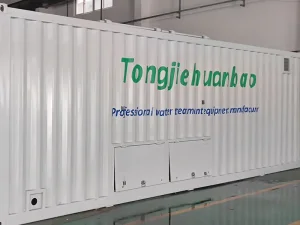
Wholesale Modular Containerized Seawater Desalination Equipment from China Suppliers | Factory-Ready for Rapid Deployment Supplier, Manufacturer
View Specifications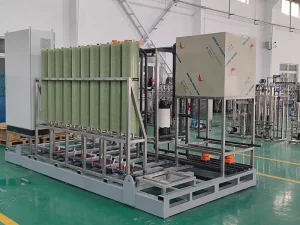
ODM China High-Salinity Wastewater Reduction System by Leading Suppliers | Zero Liquid Discharge Factory Solution Factories, Supplier
View Specifications
Wholesale China Suppliers for Factory-Integrated Containerized Seawater Desalination Plants – Mobile Water Production Solution Factories, Factory
View Specifications
Wholesale Deoxygenation Membrane Equipment Physical degassing principle Manufacturers, Manufacturer
View Specifications
Wholesale China Suppliers of Factory-Integrated Containerized Seawater Desalination Plants for Off-Grid Solar Solutions Factories, Manufacturer
View SpecificationsRequest an Engineered SWRO Process Proposal
Provide your raw water analysis and target permeate output. Our Shanghai engineering division will return a comprehensive thermodynamic simulation, membrane projection report, P&ID layout, and detailed equipment scope within 24 hours.