
Primary High-Pressure Membrane & Desalination Modules
Pre-tested containerized and skid-mounted skids built to handle complex feed waters: high organics, concentrated halides, and stringent discharge requirements under Costa Rica's Decree No. 39887-S-MINAE.
-
High Pressure • DTRO/STRO
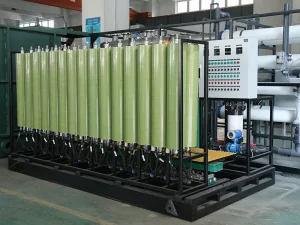 China DTRO&STRO High-pressure membrane Concentration System Factories, Manufacturers
Costa Rica Industrial DTRO & STRO Membrane Concentration Systems
Pressure: Up to 120 bar TDS Rejection: >99.2% Anti-Fouling Channel -
ZLD • Brine Reduction
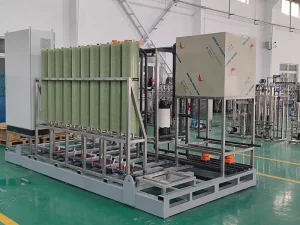 Wholesale High-Salinity Wastewater Volume Reduction & ZLD System Suppliers, Manufacturer
Costa Rica Free Trade Zone High-Salinity Volume Reduction & ZLD System
Recovery: 90% – 98% MVR / Crystallization Zero Effluent Runoff -
OARO Tech • CE Certified
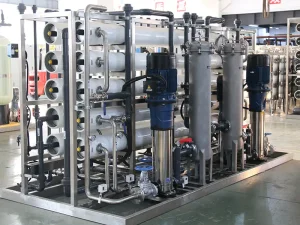 CE Certification Osmosis-Assisted Reverse Osmosis Factory, Suppliers
Osmosis-Assisted Reverse Osmosis (OARO) Hyper-Saline Concentrator
CE Certified Unit TDS > 120,000 mg/L Low Thermal OPEX -
Coastal SWRO • Compact
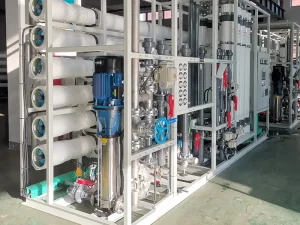 Wholesale Compact Seawater Desalination System from China Suppliers - Efficient Factory Solutions for Small Freshwater Needs Supplier, Manufacturers
Guanacaste & Puntarenas Compact Seawater Desalination Plant
Capacity: 50–500 m³/d Duplex 2507 Steel Skid Plug & Play
The Industrial Water & High-Salinity Wastewater Landscape in Costa Rica
Bridging Latin America's strictest ecological commitments with rapid high-tech manufacturing growth across Coyol, Cartago, and coastal hospitality hubs.
Industrial Drivers: Free Trade Zones, MedTech, and Agricultural Processing
Costa Rica represents Central America's most dynamic industrial ecosystem. Driven by the expansion of designated Free Trade Zones (Zonas Francas) such as Coyol Free Zone (Alajuela), Global Park, and Zeta Free Zone (Cartago), the nation has transitioned into a global manufacturing center for tier-1 medical devices (MedTech), precision electronics, and pharmaceutical formulations. Alongside this, Costa Rica maintains world-renowned agricultural exports, including pineapple processing, coffee wet-milling (beneficios), palm oil extraction, and high-volume dairy processing.
These dual economic pillars generate unique, heavy wastewater burdens:
- MedTech & Precision Electronics: Surface finishing, micro-machining, passivation, and cleanroom sanitization produce toxic, high-conductivity effluents rich in heavy metal salts, sulfates, and surfactants that exceed municipal sewer absorption thresholds.
- Agro-Industrial Processing: Wet-milling and fruit concentration streams carry exceptionally high Chemical Oxygen Demand (COD > 8,000–25,000 mg/L) combined with aggressive salinity and organic acidity, rapidly overwhelming conventional biological aeration lagoons.
- Pacific Coastal Aquifer Vulnerability (Guanacaste & Puntarenas): Massive tourism development, resort properties, and coastal aquaculture are driving over-extraction of coastal groundwater tables, inducing severe seawater intrusion and resulting in brackish groundwater with TDS oscillating between 3,500 and 15,000 mg/L.
Strict Regulatory Baseline: MINAE, AyA, and Decree No. 39887-S
Costa Rica's environmental governance is spearheaded by the Ministerio de Ambiente y Energía (MINAE), Dirección de Agua, and AyA (Instituto Costarricense de Acueductos y Alcantarillados). The country operates under the revised Reglamento de Vertido y Reúso de Aguas Residuales (Decree No. 39887-S-MINAE), setting uncompromising standards on industrial discharges into natural watercourses, sanitary sewers, and infiltration basins:
- Aquifer Protection: Deep injection or ground absorption of high-salt brines is strictly constrained to protect volcanic aquifers that supply the Great Metropolitan Area (GAM).
- Direct Surface Water Vertido: Stringent discharge limits on Conductivity, Total Dissolved Solids (TDS), Biochemical Oxygen Demand (BOD5), and Total Suspended Solids (TSS) prevent enterprises from discharging untreated brine concentrate or RO reject.
- National Decarbonization & Circularity Mandate: The Costa Rican Decarbonization Plan 2018–2050 incentivizes Zero Liquid Discharge (ZLD) architectures and closed-loop water recovery to minimize freshwater extraction.
Technical Roadmap: From High-Pressure Membrane to Thermal Crystallization
Systematic salt concentration, organic oxidation, and thermodynamic recovery designed to lower total cost of ownership (TCO) and ensure continuous regulatory compliance.
Stage 1: Advanced Pretreatment & Softening
Alkaline precipitation, high-density clarification, and ultrafiltration (UF) systematically strip calcium, magnesium, barium, and reactive silica (SiO2), mitigating gypsum and silicate scaling before feeding downstream high-pressure RO trains.
Stage 2: DTRO & STRO Hyper-Concentration
Disc Tube RO (DTRO) and Spacer Tube RO (STRO) utilize open-channel hydrodynamics to eliminate dead zones. Operating up to 90–120 bar, they concentrate brine up to 100,000–140,000 mg/L TDS, slashing thermal evaporator feed volume by over 75%.
Stage 3: Osmosis-Assisted Reverse Osmosis (OARO)
Patented OARO membrane circuits use counter-current sweep solutions to reduce net transmembrane osmotic pressure. This extends membrane dewatering beyond the hydraulic limits of standard RO, driving TDS up to 160,000 mg/L with a fraction of thermal energy.
Stage 4: MVR Mechanical Vapor Recompression
Mechanical Vapor Recompression (MVR) evaporators compress secondary vapor using high-efficiency titanium alloy centrifugal blowers. Sensible heat is completely recycled, achieving an ultra-low energy footprint of 28–45 kWh/m³ of evaporated distillate.
Stage 5: Forced-Circulation Crystallizer
High-velocity axial circulation prevents heating-tube incrustation while precipitating mixed or separated salts (NaCl, Na2SO4). Dewatering via centrifuge yielding dry, cake-form salts for industrial reuse or non-hazardous landfill disposal.
Stage 6: IoT Remote Telemetry & Scada
Integrated Siemens S7-1500 / Allen-Bradley PLC architectures equipped with 4G/LTE cloud gateways. Provides 24/7 autonomous monitoring of flux decay, differential pressure, and automated CIP chemical flushing directly from our Shanghai command hub.
Technology Comparison: Conventional Thermal Evaporation vs. Tongjie Membrane-Enhanced ZLD
| Process Parameter | Standard Multi-Effect Evaporation (MEE) | Traditional RO + Direct Evaporation | Tongjie DTRO/OARO + MVR Hybrid ZLD |
|---|---|---|---|
| Final Recovery Rate | 80% – 88% | 85% – 90% | 96% – 99% |
| Thermal Energy Burden | High (Steam intensive: ~0.3–0.4 t steam/t water) | Moderate (Significant boiler demand) | Zero Live Steam Needed (100% Electric MVR) |
| Electrical Specific Power | 12 – 18 kWh/m³ | 35 – 50 kWh/m³ | 18 – 28 kWh/m³ (Membrane-thermal blend) |
| Footprint / Containerization | Extremely large field assembly | Mixed skid and field erection | 100% Modular ISO Containerized Skid |
| Resistance to Heavy Fouling / Oil | Moderate; tube scaling prevalent | Poor; frequent spiral RO irreversible fouling | Superior (DTRO 1.5mm open flow spacer) |
| Costa Rica Site Work Time | 4 – 7 Months | 3 – 5 Months | 10 – 20 Days (Plug & Play Handover) |
China Factory 4.0: Supply Chain Resilience & OEM/ODM Agility
Leveraging world-class manufacturing integration in Shanghai to deliver custom, heavy-duty water treatment skids with reduced lead times and certified precision.
Industrial Metrology, Dual-Duplex Metallurgy, and Digital Twin Testing
Handling hyper-saline wastewater, mining runoffs, and ocean brines in Central America's tropical climate requires premium metallurgy and manufacturing discipline. At Shanghai Tongjie Environmental Protection Technology Co., Ltd. (founded 2010), our Industry 4.0 production framework delivers unparalleled quality assurance for Costa Rican EPCs and industrial end-users:
- Corrosion-Resistant Metallurgy: Every high-pressure manifold, pump casing, and membrane housing header is fabricated from Duplex 2205, Super Duplex 2507, Titanium Grade 2, or Hastelloy C-276. Orbital TIG welding is conducted in an argon-purged chamber, followed by 100% X-ray radiographic weld inspection and chemical passivation according to ASTM A380 standards.
- Digital Twin Hydraulic Simulation: Prior to CNC frame fabrication, every fluid circuit undergoes computational fluid dynamics (CFD) modeling to analyze shear distribution across membrane leaves and eliminate stagnation vortices, protecting membranes from fouling.
- Full Factory Acceptance Testing (FAT) with Raw Water Simulation: Skids are loaded into our test bays, connected to simulated Costa Rican water chemistries (adjusting silica, sulfates, and hardness), and pressurized to 120% of operational design pressure for 72 continuous hours. Control sequences, sensor calibrations, and automated safety interlocks are validated prior to containerization.
Localized Support & Costa Rica Regulatory Safeguards
Engineered to endure tropical humidity, volcanic seismic activity, and coastal salinity without operational downtime.
Tropicalization & Seismic Design Code Compliance
Costa Rica's climate presents challenging environmental parameters: ambient humidity exceeding 90% in coastal zones, persistent maritime salt mist, and active seismic fault lines requiring adherence to the Código Sísmico de Costa Rica (CSCR-2010):
- C5-M Marine Coastal Coating: Containerized housings and structural skids undergo sandblasting to SA 2.5 standard, followed by a multi-layer epoxy-polyurethane coating system rated for ISO 12944 C5-M marine extreme environments.
- Electrical Enclosures & Tropicalized Electronics: VFD drives, PLCs, and power distribution busbars are enclosed in IP66 stainless-steel cabinets equipped with industrial thermoelectric dehumidifiers and conformal-coated printed circuit boards (PCBs) to resist fungal growth and corrosive tropical dampness.
- Structural Seismic Hardening: Piping loops, membrane pressure vessels, and high-pressure boosters are braced with dynamic flexible couplings and reinforced steel saddles calculated for Zone 3 and Zone 4 seismic acceleration profiles.
- SETENA Permitting Documentation: Full engineering packages—including comprehensive Mass & Water Balance flowcharts, P&ID drawings, noise footprint data, and chemical reagent MSDS profiles—are provided in standardized bilingual (Spanish/English) format to accelerate review by the Secretaría Técnica Nacional Ambiental (SETENA).
Need an Engineered Proposal for a Costa Rica Project?
Share your feed water lab report (TDS, silica, hardness, COD), daily target volume, and discharge constraints. Our Shanghai engineering headquarters will return an optimized mass balance projection and comprehensive scope within 48 hours.
Send Inquiry NowFrequently Asked Questions: Industrial Water Engineering in Costa Rica
Technical, procurement, and compliance answers for plant directors, EPC contractors, and environmental managers.
Why is DTRO preferred over conventional spiral-wound RO for high-salinity wastewater in Costa Rica?
How do your systems comply with Costa Rica Decree No. 39887-S-MINAE?
What is the typical shipping lead time and import route to Costa Rica?
Can Tongjie provide OEM/ODM branding for local Costa Rican engineering contractors?
How does Tongjie support maintenance, spare parts, and remote troubleshooting from China?
Comprehensive Water Treatment, Reuse & Desalination Machinery
Explore our certified product line engineered for municipal water utilities, pharmaceutical cleanrooms, oilfield recovery, and regional ZLD applications.
-
Containerized SWRO
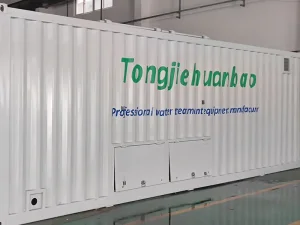 ODM China Modular Containerized Seawater Desalination Equipment | Rapid Deployment by Trusted Suppliers and Factory Factory, Manufacturer
Costa Rica Coastal Resort Modular Containerized Seawater Desalination
Plug & Play ISO Container 40ft Insulated Shell Low Specific Power -
Industrial DTRO • 90 Bar
Wholesale High-Pressure DTRO&STRO Membrane Concentration System from China Suppliers & Factory for High-Salinity Wastewater Treatment Factories, Suppliers
Alajuela Heavy Landfill Leachate & High-Salinity DTRO Concentration Skid
TDS Up to 100,000 ppm Chemical CIP Integrated Dual-Pass Option -
Pharma Grade • WFI / EDI
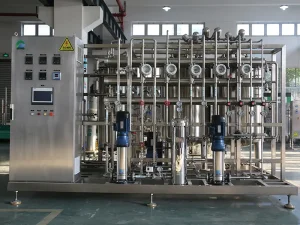 OEM China Pharmaceutical Purified Water & WFI System - Reliable Suppliers and Factory for Quality Water Solutions Factories, Suppliers
Coyol MedTech Pharmaceutical Purified Water & Water For Injection (WFI)
Sanitary 316L SS Conductivity < 1.3 μS/cm FDA / cGMP Ready -
Energy Sector • Heavy Duty
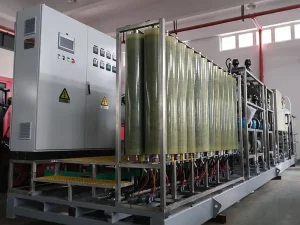 China China Suppliers: Advanced Fracturing Flowback Fluid Treatment System from Reliable Factory Suppliers, Supplier
Complex Produced Water & Hydrocarbon Flowback Recovery Skid
Oil ≤ 5 mg/L Suspended Solids ≤ 1 mg/L Skid Enclosure -
ODM ZLD Solutions
ODM High-Salinity Wastewater Treatment System | China Suppliers & Factory for ZLD Solutions Suppliers, Manufacturers
Costa Rica Food & Beverage Brine Crystallization & ZLD System
Zero Liquid Effluent Recovered Salt Quality >95% Corrosion-Proof -
OARO Technology
CE Certification Osmosis-Assisted Reverse Osmosis System for High Salinity Wastewater Concentration - China Suppliers & Factory Solutions Factory, Manufacturers
High-Efficiency Osmosis-Assisted Reverse Osmosis System
CE Conformity Massive Energy Reduction High-Brix Solution -
Compact Marine Desal
China Compact China Seawater Desalination Equipment by Suppliers - Efficient Reverse Osmosis Factory System for Freshwater Production Factories, Manufacturers
Pacific Coast Marine Seawater Desalination Equipment Skid
Duplex High-Pressure Pump Potable WHO Standard Automated Salinity Divert -
Advanced Circularity
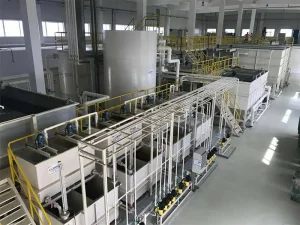 China Water Reuse Equipment High-Ratio Water Reuse Process Supplier, Manufacturer
High-Ratio Industrial Water Reuse & Circular Process Train
Internal Recycle >90% Dual RO Barrier AyA Discharge Aligned