
High-Efficiency Membrane Systems Serving Milan
Plug-and-play skid and containerized configurations designed to integrate seamlessly into Northern Italy's manufacturing supply chains, offering real-time monitoring and high thermodynamic recovery rates.
-
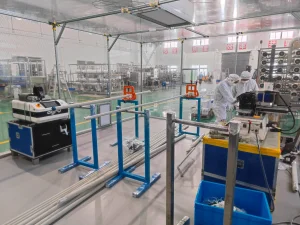 OEM ODM Full Value Chain Water Reuse Innovation Plant Serving Milan ManufacturingConfigure System
-
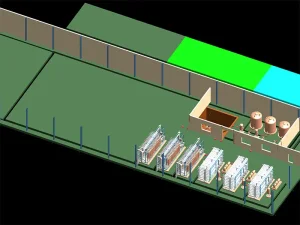 ODM OEM Precision Manufacturing Demineralized Water Skid for Lombardy Industrial HubsConfigure System
-
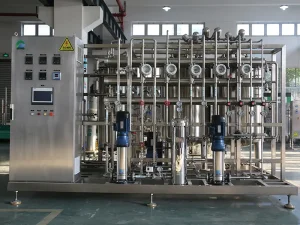 Pharmaceutical Purified Water & WFI Generation Systems for Milan Biotech & API ClustersConfigure System
-
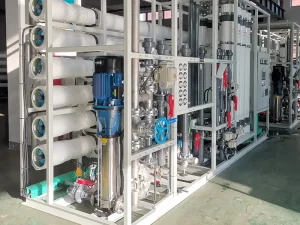 CE Certified Compact Membrane Separation & High-Recovery Desalination Units for Industrial UseConfigure System
The Hydro-Economic Realities Facing Milan & Lombardy Industry
Lombardy represents the economic powerhouse of Italy, generating upwards of 22% of national GDP. From the chemical and pharmaceutical manufacturing belts around the metropolitan territory of Milan to the precision metal finishing clusters in Brescia and Monza Brianza, industrial production hinges on continuous, high-volume process water. However, the hydrology of the Po River Basin has reached a structural inflection point.
Prolonged seasonal droughts, compounded by increasingly stringent runoff regulations enacted by the Lombardy Regional Environmental Protection Agency (ARPA Lombardia) and the EU Water Reuse Regulation (Regulation EU 2020/741), have inverted the economics of industrial water management. Industrial water abstraction permits are being curtailed, while wastewater discharge tariffs and penal surcharges for high Chemical Oxygen Demand (COD), Total Dissolved Solids (TDS), and heavy metal traces continue to climb at compounding annual rates.
Lombardy Industrial Water Directives: Operational Impact
-
!Escalating Municipal & Groundwater Tariffs Industrial well abstraction rights face dynamic metering, seasonal extraction caps, and higher volumetric surcharges across the Milan metropolitan belt.
-
✓Mandated Industrial Water Circularity Enterprises adopting Closed-Loop Water Recycling (CLWR) qualify for regional eco-incentives and avoid costly compliance sanctions.
-
⚡Zero Liquid Discharge (ZLD) Transition High-salinity effluent from galvanic, specialty chemical, and pharmaceutical synthesis requires mechanical vapor recompression and membrane dewatering.
Global Macro Trends in Advanced Industrial Water Recycling
The transition from basic municipal clarification to ultra-pure, multi-stage advanced recycling systems is transforming factory utility floors worldwide.
Intelligent Modular Skids & Containerization
Conventional on-site civil concrete construction has been superseded by factory-prefabricated, containerized membrane modules. Pre-tested hydronic systems reduce field commissioning overhead by up to 85%, ensuring that systems shipped to Italian industrial sites achieve stable operational flux within days of arrival.
High-Pressure DTRO & Brine Concentration
Disc Tube Reverse Osmosis (DTRO) operates up to 120 bar, handling raw wastewater with elevated scaling potential, high Silt Density Index (SDI > 5), and massive total dissolved solids. In combination with Mechanical Vapor Recompression (MVR), this forms the backbone of modern Zero Liquid Discharge (ZLD) architectures.
AI-Driven Clean-in-Place (CIP) Diagnostics
Digital twin integration and multivariate pressure/conductivity transponders continuously track normalized permeate flux and salt rejection. Autonomous algorithms trigger targeted chemical Clean-in-Place sequences, extending high-spec polyamide membrane lifespan by up to 40% while slashing chemical waste volumes.
China Factory 4.0: Scale, Precision, and Agility for European Partners
The global procurement landscape has evolved: international EPC contractors, plant directors, and OEM distributors serving the Italian market can no longer tolerate 10-12 month lead times for custom-engineered industrial water skids. Tongjie's advanced Shanghai manufacturing facility bridges this gap through a vertically integrated Industry 4.0 manufacturing complex.
Operating under ISO 9001, ISO 14001, and ISO 45001 accreditations, alongside full CE certification, our facility combines automated orbital welding for hygienic stainless piping (AISI 316L, 1.4404), CNC robotic cutting, and rigorous hydro-testing bays capable of validating ultra-high-pressure membrane vessels under realistic operational conditions before dispatch.
For our clients across Milan and Western Europe, this translates to guaranteed metallurgical integrity, rapid project execution, and seamless conformance to the European Pressure Equipment Directive (PED 2014/68/EU) and Machinery Directive (2006/42/EC).
Send Inquiry Now| Engineering Dimension | Conventional Site Build | Tongjie Factory 4.0 Modular |
|---|---|---|
| Engineering Lead Time | 32 - 48 Weeks | 8 - 14 Weeks (Standardized Platforms) |
| FAT Validation | Partial or Cold-only | 100% Wet-Tested, Live Sensor Calibrated |
| Material Metallurgy | Variable Local Subcontracting | Certified Duplex 2205 / 316L / PVDF |
| Automation & PLC | Fragmented Integration | Siemens S7-1500 / Allen Bradley Pre-Programmed |
| On-site Civil Disruption | Extensive (4 - 8 Months) | Minimal (Tie-in & Plug-and-Play) |
Localized Water Reuse Architecture in Lombardy
Engineered process trains calibrated to solve the distinct chemical and organic profiles generated across Milan's core industrial sectors.
High-Purity API Loop Water Recovery (Milan Metro)
The concentrated pharmaceutical synthesis clusters around Milan require high-grade Water for Injection (WFI) and Purified Water (PW). Downstream, complex process streams with residual active ingredients, extreme COD spikes, and variable pH present treatment hurdles.
Tongjie Process Train: Multi-Media Primary Filtration → Low-Fouling UF → High-Rejection Polyamide RO (Pass 1) → Degasification → Electro-deionization (EDI) → Terminal Ozone/UV. Recoveries exceed 85%, feeding utility cooling towers and steam generation loops while slashing raw municipal water draw.
Color, Salt, and Surfactant Removal (Como - Milan Corridor)
Textile dyeing, washing, and finishing operations generate highly colored effluent saturated with disperse dyestuffs, surfactants, sulfates, and sodium chloride. Traditional biological plants struggle to meet rigorous discharge color metrics.
Tongjie Process Train: Electro-Coagulation → Dissolved Air Flotation (DAF) → Ceramic Membrane MBR → Nanofiltration (Dye/Salt Fractionation) → High-Pressure RO. Purified permeate returns directly to hot wash cycles, reducing both thermal energy load and fresh intake demand.
Galvanic, Degreasing & Rinse Recovery (Brescia / Monza)
Surface treatment, plating, and passivation baths discharge toxic heavy metal ions (Ni, Cr, Zn, Cu) coupled with elevated conductivity. Environmental penalties under ARPA directives for trace discharges are severe.
Tongjie Process Train: Selective Ion Exchange Resin → Cross-flow Tubular Ultrafiltration → DTRO (Disc Tube Reverse Osmosis) → High-Vacuum Evaporator. Yields demineralized water (<5 μS/cm) recycled to final rinse baths, producing dried crystalline salts for controlled disposal.
Pasteurizer, Evaporator Condensate & CIP Loop Reclamation
Food processing plants south of Milan demand massive volumetric throughput for clean-in-place (CIP) regimens, bottle washing, and boiler feed, facing stringent microbiological and bio-film restrictions.
Tongjie Process Train: Rotary Drum Screening → Enzymatic Bio-oxidation → Submerged Hollow Fiber MBR → Two-Pass Brackish Water Reverse Osmosis (BWRO) with intermittent automated chemical sanitation. Complies fully with strict sanitary standards for non-product contact reuse.
What International EPCs & Industrial Owners Require
When engineering directors and supply chain executives evaluate high-value membrane water reuse systems, evaluations extend well beyond nominal equipment quotes.
Total Cost of Ownership (TCO)
Evaluating specific energy consumption (kWh/m³ of recovered permeate), anti-scalant consumption metrics, and membrane lifecycle amortizations. Tongjie systems leverage Energy Recovery Devices (ERDs) that recycle hydraulic pressure, cutting overall plant electrical demands by up to 35%.
Regulatory Compliance & Traceability
CE marking, PED certification for pressure vessels, full weld seam radiographic/dye penetrant logs, material test reports (EN 10204 3.1 certification), and electrical panels engineered to IEC 60204-1 specifications for immediate hook-up approval across European industrial zones.
Lifecycle Support & Telemetry
Continuous industrial IoT connectivity. Tongjie systems are provisioned with secure VPN routers enabling Shanghai process engineers to run parallel SCADA diagnostics, review flux decline trends, and support local Italian technical teams during planned preventative maintenance.
Custom Engineered for Your Specific Feed Water Analysis
Send our process team your water characterization report (TDS, COD, Hardness, Silica, Chloride, pH). We deliver a complete mass balance, process flow diagram (PFD), and technical proposal within 48 hours.
Send Inquiry NowFrequently Asked Questions: Industrial Water Reuse
Detailed engineering responses to key inquiries raised by plant managers and procurement professionals.
How do Tongjie water reuse plants comply with EU Regulation 2020/741 and Italian environmental norms? ▼
Tongjie systems are designed directly around the validation parameters set out in EU Regulation 2020/741 and Italian Legislative Decree no. 152/2006 (Testo Unico Ambientale). Our multi-barrier approach incorporates ultrafiltration (UF) for pathogen and turbidity reduction (<0.2 NTU), high-rejection reverse osmosis membranes for dissolved inorganic salt and organic micropollutant extraction, and secondary ultraviolet (UV) or ozone disinfection to maintain Class A reclaimed water standards. Online instrumentation continuously records TOC, conductivity, and flow rates with fail-safe automatic divert loops to prevent non-compliant discharges.
What specific raw water data is necessary to size a bespoke membrane recovery skid? ▼
To deliver an accurate thermodynamic and hydraulic simulation (including projection software files, mass balance sheets, and footprint layouts), our engineering department requires: (1) A comprehensive water analysis including TDS, specific conductivity, COD, BOD5, total hardness, silica, iron, manganese, chlorides, sulfates, oil and grease, and SDI; (2) Feed water temperature fluctuations (minimum and peak values); (3) Target permeate flow rate (m³/hr or m³/day) and required recovery percentage; (4) Desired permeate quality parameters; (5) Site utility voltages (e.g., 400V 50Hz 3-phase) and footprint limitations.
How does containerization benefit factories operating within dense brownfield facilities around Milan? ▼
Industrial real estate in the Greater Milan area is space-constrained and brownfield facilities frequently lack the indoor floor area for large civil water treatment buildings. Tongjie pre-packages entire water treatment and ZLD trains inside standard ISO 20-foot or 40-foot sea containers (or custom high-cube enclosures) featuring integrated climate control, internal drainage, acoustic dampening, and pre-wired motor control centers (MCC). These units can be stationed outdoors on a reinforced concrete pad, requiring only raw water, permeate outlet, concentrate reject, and power tie-ins.
What provisions ensure high energy efficiency in high-pressure DTRO and RO concentration systems? ▼
High-salinity concentration and seawater-grade recovery require elevated operational pressures (60 to 120 bar). To offset energy costs, Tongjie integrates positive displacement and isobaric Energy Recovery Devices (such as pressure exchangers or hydraulic turbochargers) that transfer hydraulic energy from the high-pressure concentrate stream directly into the incoming feed stream. This recovers up to 95% of hydraulic energy, slashing specific energy consumption down to economical levels (as low as 2.0 - 3.2 kWh/m³ depending on salinity).
What after-sales, commissioning, and replacement membrane logistics are provided for Italian clients? ▼
Tongjie offers a dual-track support structure. For field installation, our factory dispatch engineers supervise mechanical hook-up, electrical loop testing, and live functional commissioning alongside local engineering contractors. Simultaneously, our systems utilize internationally standardized membrane form factors (standard 8040, 4040, and DTRO elements) sourced from tier-one global suppliers (such as DuPont FilmTec, Hydranautics, or Toray) alongside proprietary Tongjie configurations. Consumable filter cartridges, dosing chemicals, and replacement modules are supported with rapid-dispatch warehouse logistics.
Comprehensive Water Treatment & ZLD Equipment
Explore our complete manufacturing spectrum of industrial pure water, high-salinity dewatering, and specialized fluid separation equipment built to global standards.
-
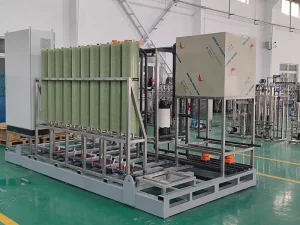 High-Salinity Wastewater Reduction System | Zero Liquid Discharge Factory SolutionConfigure System
-
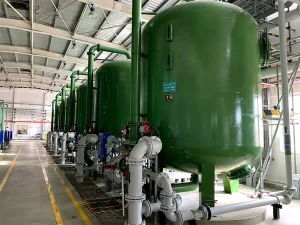 OEM Industrial Demineralized Water Generation Equipment for Boiler & Turbine FeedConfigure System
-
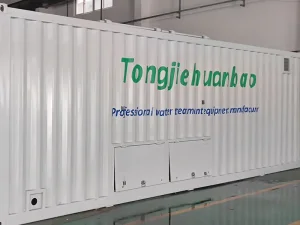 Modular Containerized Seawater Desalination Plant & Rapid Deployment Process SkidsConfigure System
-
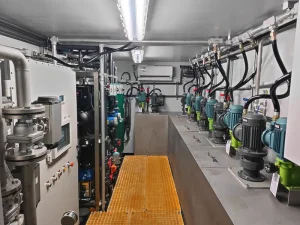 Industrial Produced & Flowback Water Reuse Treatment Unit for Severe EffluentsConfigure System
-
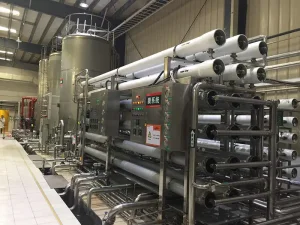 Two-Stage Reverse Osmosis & Deep Disinfection Purified Water System for Food ProcessingConfigure System
-
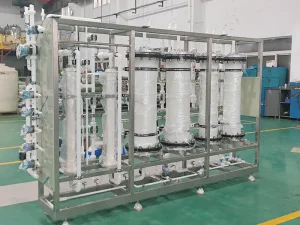 18.2 MΩ·cm Ultra-Pure Water System for Semiconductor & Electronics Wafer FabricationConfigure System
-
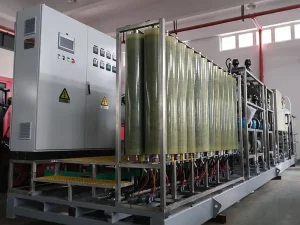 CE Certified Heavy Industrial Flowback & High Salinity Fluid Zero-Discharge SkidConfigure System
-
Hygienic Grade Food & Beverage Water Purification System for Compliant Water ProductionConfigure System
Initiate Your Milan Water Recycling Project Specification
Connect directly with senior membrane application engineers at Shanghai Tongjie. We review your site metrics, raw effluent chemistry, and target reuse standards to supply rapid sizing projections, P&ID blueprints, and transparent commercial proposals.
Send Inquiry Now