
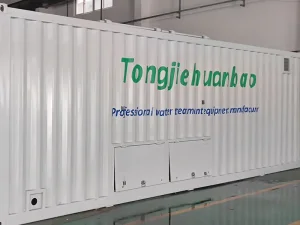
Direct Factory Deployments
Industrial Skid-Mounted & Modular Treatment Systems
Pre-engineered, fully shop-assembled, and factory-acceptance-tested (FAT) treatment systems ready for rapid global site commissioning.
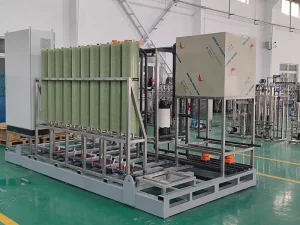
ODM China High-Salinity Wastewater Reduction System by Leading Suppliers | Zero Liquid Discharge Factory Solution
Inspect Technical Scope →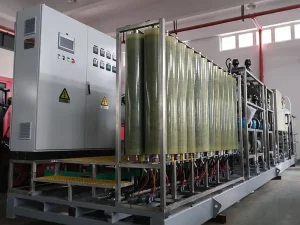
CE Certification China Oilfield Fracturing Flowback Fluid Treatment System - Reliable Suppliers & Factory Solutions
Inspect Technical Scope →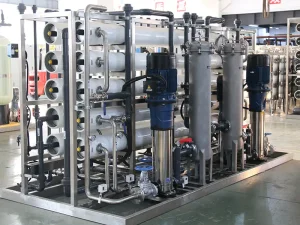
CE Certification High Salinity Brine Concentration System | OARO Technology from China Suppliers & Factory for ZLD
Inspect Technical Scope →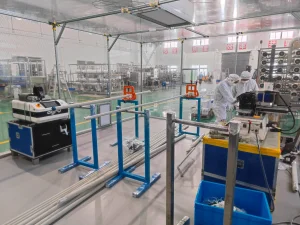
OEM China ODM Suppliers: Eco-Friendly Water Treatment Solutions from a Trusted Factory for Global Markets
Inspect Technical Scope →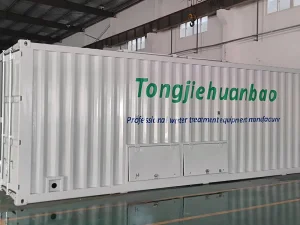
China China Suppliers: Factory-Integrated Containerized Seawater Desalination Plants for Off-Grid Solar Solutions
Inspect Technical Scope →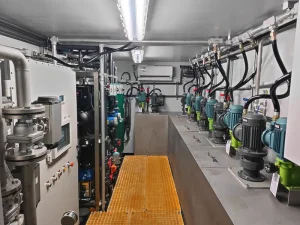
OEM Drilling, Completion, and Workover Waste Fluids Supplier, Manufacturers
Inspect Technical Scope →
China China Suppliers: Advanced Fracturing Flowback Fluid Treatment System from Reliable Factory Suppliers
Inspect Technical Scope →Technical White Paper
High-Salinity Wastewater Treatment Engineering Framework
Understanding thermodynamic thresholds, boundary layer fouling kinetics, and mass-balance strategies in industrial brine treatment.
High-salinity industrial wastewater—commonly defined as aqueous effluents bearing total dissolved solids (TDS) exceeding 35,000 mg/L up to saturation limits (>250,000 mg/L)—presents extreme chemical, hydraulic, and osmotic engineering hurdles. Traditionally handled through energy-inefficient direct thermal evaporation or environmentally vulnerable deep-well injection, modern industrial requirements now necessitate closed-loop circular recovery governed by strict environmental directives.
As a certified manufacturing leader, our engineering approach integrates advanced membrane concentration (such as Disc Tube Reverse Osmosis [DTRO] and Osmotically Assisted Reverse Osmosis [OARO]) with Mechanical Vapor Recompression (MVR) and multi-effect fractional crystallization. This thermodynamic hierarchy compresses operating expenditure (OPEX) by up to 62% compared with traditional straight-line thermal evaporation trains, transforming concentrated waste brines into reusable industrial process condensate and purified, marketable solid salts (NaCl, Na₂SO₄).
⚙
Osmotic Pressure Bridging
Overcoming hydraulic barriers up to 160 bar using high-pressure specialized membrane configurations, enabling chemical concentration prior to thermal treatment stages.
🛡
CE Directive Compliance
Pressure Equipment Directive (PED 2014/68/EU), Machinery Directive (2006/42/EC), and Low Voltage Directive fully integrated with full material traceability (EN 10204 3.1).
♻
Selective Salt Partitioning
Fractional nanofiltration and specialized eutectic freeze/thermal crystallization that segregates sodium chloride and sulfate salts into commercial-grade commodities.
Macro Market Analytics
Global Status & Industrial Trends in High-Salinity Processing
Regulatory pressures, water stress metrics, and technological paradigm shifts shaping wastewater governance across primary continents.
📊
Tightening Global Zero Discharge Mandates
Regulatory authorities across the European Union (IED Directive 2010/75/EU), North America (EPA Effluent Guidelines), and Asia-Pacific are enforcing zero or near-zero liquid discharge mandates. Industrial facilities can no longer discharge untreated saline streams into natural aquifers or municipal infrastructure due to severe soil salinization and aquatic toxicity risks.
🔋
The Decarbonization-Desalination Nexus
The historical Achilles' heel of high-salinity wastewater remediation has been specific energy consumption (SEC). The transition from legacy thermal flash distillation to mechanical vapor recompression (MVR) tied with high-efficiency variable-frequency drive pumps and membrane brine squeezers has pushed SEC from >60 kWh/m³ down to <22 kWh/m³.
💎
Resource Harvesting: Beyond Disposal
Modern plants treat brine not as a liability, but as liquid ore. Global demand is pivoting sharply toward the recovery of high-purity lithium from battery recycling flowback, critical minerals, and industrial chemicals (HCl and NaOH generated via bipolar electrodialysis), transforming wastewater plants into revenue-generating processing hubs.
Procurement Intelligence
Procurement Criteria: What Global EPCs & Industrial Buyers Demand
In-depth insights into the technical metrics, qualification audits, and total-cost-of-ownership variables driving international selection.
| Evaluation Parameter | Legacy Supplier Metric | Tongjie Engineered Factory Standard | Operational Impact |
|---|---|---|---|
| Metallurgical Integrity | Standard 316L Stainless Steel | Titanium Gr. 2, 2507 Super Duplex, Hastelloy C-276 | Eliminates pitting and crevice corrosion under high chloride concentrations (>80,000 ppm Cl⁻). |
| Pre-assembly & FAT | Loose knock-down components | 100% Skid/Container Integration with Full Wet FAT | Cuts field installation schedules from 6 months down to under 30 days. |
| Compliance Certification | Self-declared declarations | Notified-Body CE Certification (PED + MD + LVD) | Guarantees legal compliance and fast-tracked site permitting throughout the EU and OECD territories. |
| Membrane Anti-Fouling | Standard Spiral Wound RO | Open-Channel DTRO & High-Shear Fluid Dynamics | Sustains run times 3-4x longer between Clean-In-Place (CIP) cycles on refractory organic feeds. |
| Automation Architecture | Basic Relay / Standalone PLC | Industrial IoT / Siemens S7-1500 / Cloud SCADA | Enables continuous autonomous operation with real-time dynamic anti-scaling dosage loops. |
Manufacturing Infrastructure
China Factory 4.0: Supply Chain Resilience & Precision Execution
Leveraging deep industrial clusters, automated fabrication, and vertical integration to provide predictable project timelines.
17+
Years Continuous Manufacturing
38+
Core Patents & IP Assets
100%
Shop Integrated Pre-Commissioning
<15
Days Standard On-Site Plug-In Time
🤖
Vertical Supply Integration
Direct sourcing networks for titanium metallurgy, automated robotic orbital welding, and high-precision CNC tube-sheet drilling ensure zero reliance on fractured subcontracting chains, stabilizing delivery schedules even in turbulent trade environments.
🔬
Digital Twin Simulation
Prior to physical steel cut, proprietary hydraulic simulation engines model exact thermodynamic evaporation vapor vectors, anti-scaling boundary turbulence, and chemical dosing regimes based on client-provided raw water chemistry.
🚢
Turnkey Containerized Engineering
By transforming complex civil wastewater treatment works into standard 20ft/40ft high-cube insulated container modules, shipping becomes standard freight logistics, bypassing multi-year construction permitting cycles.
Applied Engineering
Localized Application Scenarios & Tailored Configurations
Specific field configurations designed to resolve complex organic, scaling, and operational matrices across diverse environments.
⛽
Oil & Gas Fracking Flowback
Addresses hypersaline produced water saturated with hydrocarbons, barium, and strontium. High-shear multi-phase separation followed by open-channel DTRO produces reinjection water with oil ≤5 mg/L and SS ≤1 mg/L.
🧪
Chemical & Pharmaceutical ZLD
Formulated for refractory COD and corrosive salt streams. Combines advanced catalytic oxidation, softening, brine concentration, and automated crystallizers to ensure no liquid leaves the factory gates.
⚡
Power & Flue Gas Desulfurization
Treats highly corrosive FGD blowdown wastewater saturated with calcium sulfate and chlorides. Employs softeners and OARO concentration to extract >90% water recovery prior to final flash drying.
🏕
Island & Remote Coastal Mining
Self-contained, off-grid containerized SWRO and brine densification plants powered by solar/hybrid microgrids, supplying uninterrupted potable and process water in hostile marine environments.
Engineering Knowledge Base
Frequently Asked Technical & Commercial Questions
Critical engineering considerations, validation protocols, and operational facts for project decision-makers.
What technical data is required to design and quote an accurate ZLD or High-Salinity treatment system?
To provide an exact mass-balance model, we require a comprehensive water analysis: Total Dissolved Solids (TDS), specific ionic profile (Ca²⁺, Mg²⁺, Na⁺, Cl⁻, SO₄²⁻, SiO₂, Ba²⁺, Sr²⁺), Chemical Oxygen Demand (COD), suspended solids (TSS), pH, operating temperature variations, plant capacity (m³/day or GPD), discharge limits, and available site utility specs (low-pressure steam, natural gas, power voltage/frequency).
How does Tongjie guarantee compliance with CE and European Union Directives?
All high-pressure membrane housings, piping manifolds, and thermal vessels are engineered according to the Pressure Equipment Directive (PED 2014/68/EU), complete with hydrostatic pressure validation, non-destructive weld examinations (NDT), and EN 10204 3.1 material certificates. Control cabinets and rotating machinery strictly follow the Machinery Directive (2006/42/EC) and Low Voltage Directive (2014/35/EU).
What is the advantage of OARO and DTRO compared to standard Spiral-Wound RO membranes?
Standard spiral-wound elements plug rapidly in high-salinity feeds with elevated organic and scaling loads due to narrow feed spacer channels. DTRO utilizes open-channel plate disc geometry, allowing high cross-flow velocities that resist fouling and withstand hydraulic pressures up to 160 bar. OARO (Osmotically Assisted Reverse Osmosis) allows brines to be concentrated beyond traditional osmotic pressure cut-offs, drastically cutting downstream thermal evaporative duty.
What metallurgy is used to resist severe pitting in boiling chloride environments?
Standard stainless steels like 304 or 316 fail via pitting and stress corrosion cracking within weeks under concentrated hot brine. We fabricate heat exchangers, falling-film vapor heads, and thermal circulation lines using Titanium Grade 2, 2507 Super Duplex, or Nickel-base alloys like Hastelloy C-276, matched rigorously to calculated chloride and temperature thresholds.
Can the systems operate unmanned in remote or hostile regional climates?
Yes. Every unit is engineered with integrated Siemens or Allen-Bradley programmable controllers coupled with fail-safe remote telemetry. Real-time online instrumentation monitors conductivity, differential pressure, chemical dosage levels, and vibration. Automatic Clean-in-Place (CIP) sequences and automated scale mitigation ensure smooth, unattended operation in desert, offshore, or high-altitude mine locations.
Specialized Catalog Portfolio
Advanced Separation, Pure Water & Desalination Inventory
Explore our full range of membrane degassing, demineralization, and custom OEM/ODM process systems built for industrial specifications.
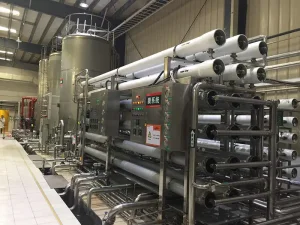
ODM China Food & Beverage Process Water System - Reliable Suppliers and Factory Solutions for Purified Water
Inspect Technical Scope →
Wholesale China Suppliers for Factory-Integrated Containerized Seawater Desalination Plants – Mobile Water Production Solution
Inspect Technical Scope →
CE Certification Fracturing Flowback Water Reuse Treatment Equipment - China Suppliers & Factory for Oil & Gas
Inspect Technical Scope →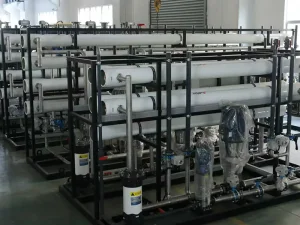
China High-Efficiency Brine Concentration System for Wastewater Treatment | China Suppliers & Factory Solutions
Inspect Technical Scope →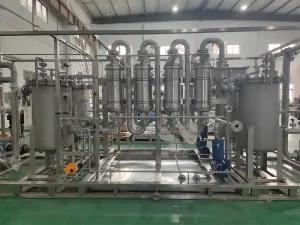
Wholesale China Deoxygenation Membrane Equipment Supplier - Factory for Physical Degassing to Remove Dissolved Oxygen
Inspect Technical Scope →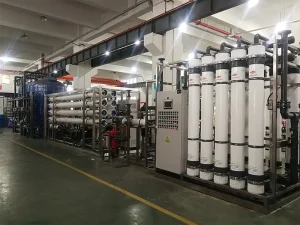
ODM High-Ratio Water Reuse Equipment Suppliers in China - Factory Direct Ultra-filtration & Reverse Osmosis Solutions
Inspect Technical Scope →
Wholesale China Eco-Friendly Water Treatment Solutions: Leading ODM Suppliers and Factory for Your Brand
Inspect Technical Scope →
China China Suppliers Deoxygenation Membrane Equipment Factory for Efficient Physical Degassing of Water
Inspect Technical Scope →Direct Factory Engineering Access
Initiate Your Process Simulation & System Layout
Submit your comprehensive water test report and flow parameters. Our team will return a certified mass balance, P&ID layout, and detailed investment overview within 48 hours.