High-Performance Seawater & Industrial Treatment Systems
Pre-assembled, factory-tested, skid-mounted and containerized water purification assets engineered to comply with EU directives, PED pressure guidelines, and international marine water standards.
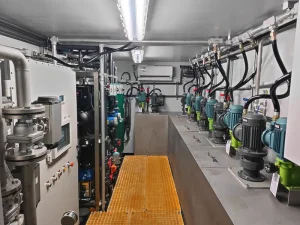
Fracturing Flowback Water Reuse Treatment Equipment for Oil & Gas
Explore Technical Specs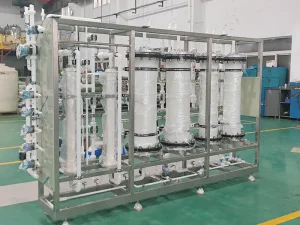
CE Certification Ultra-Pure Water System for Semiconductor & Electronics
Explore Technical Specs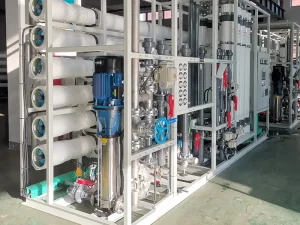
OEM Compact Seawater Desalination Equipment for Small-Scale Freshwater
Explore Technical Specs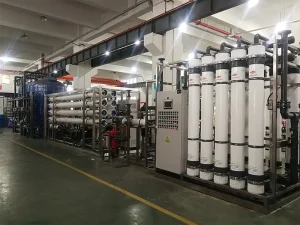
Water Reuse Equipment (Pretreatment + UF + RO Integrated Process)
Explore Technical Specs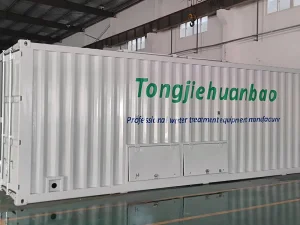
Containerized Seawater Desalination Plants - Factory-Integrated Mobile Unit
Explore Technical Specs
Factory-Integrated Containerized Seawater Plants for Off-Grid Solar Setup
Explore Technical Specs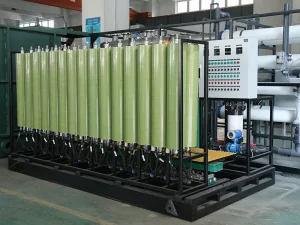
High-Pressure DTRO & STRO Membrane High-Salinity Concentration Unit
Explore Technical Specs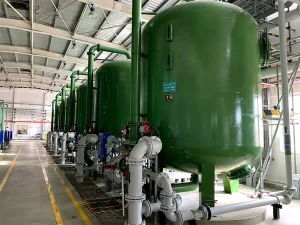
CE Certification Industrial Demineralized Water Unit with RO & EDI
Explore Technical SpecsGlobal Enterprise Procurement Demands for Seawater Treatment Systems
The transition toward membrane-driven desalination in mega-utility scale complexes and coastal industrial facilities demands deterministic operating costs, metallurgy lifecycle security, and strict regulatory validation.
Life-Cycle OPEX Minimization
Global procurement teams prioritize Specific Energy Consumption (SEC) below 3.0 kWh/m³. The incorporation of isobaric Energy Recovery Devices (ERD) capturing up to 97% of concentrate hydraulic power transforms project economics from energy drains into viable long-term infrastructure investments.
- High-Efficiency ERD: Rotary isobaric pressure exchangers.
- Optimized Flux: Membrane surface loading balanced between 12-15 LMH to defer irreversible scaling.
Metallurgical Rigor & Anti-Corrosion
Treating high chloride seawater (TDS 35,000–45,000 mg/L) at extreme pressures (65–85 bar) requires metallurgy resistant to pitting and crevice corrosion. Systems integrate Super Duplex Stainless Steel (2507/UNS S32750) and SMO 254 for high-pressure headers and wet zones.
- PREN Index: Pitting Resistance Equivalent Number > 42.
- Low-Pressure Piping: High-density polyethylene (HDPE 100) and GRP/FRP composite ducting.
Smart Automation & CE Harmonization
Cross-border EPC operations mandate compliance with EU Machinery Directive (2006/42/EC), Low Voltage Directive (2014/35/EU), and PED (2014/68/EU). Automated telemetry leverages Siemens S7-1500 or Allen-Bradley PLCs for autonomous turbidity management and CIP sequencing.
- Real-time SDI Monitoring: Automated continuous Silt Density Index trending.
- Remote SCADA Connectivity: Secure cellular/satellite link for predictive maintenance.
The 5-Stage Sea Water Reverse Osmosis (SWRO) Engineering Train
A multi-barrier technological sequence designed to protect the active polyamide membrane layer, guarantee chemical stability, and produce ultra-pure or potable water across fluctuating feed oceanographies.
Intake & DAF Coagulation
Raw seawater intake equipped with hypochlorite shock dosing, coagulant injection, and Dissolved Air Flotation (DAF) to eliminate algae blooms, organics, and heavy particulates.
Dual Pretreatment (DMF + UF)
Pressurized multimedia sand/anthracite depth filters paired with pressurized PVDF hollow-fiber Ultrafiltration (UF) delivering feed water with SDI15 < 2.5 and turbidity < 0.1 NTU.
Chemical Stabilization & Cartridge
Continuous anti-scalant dosing (phosphonate-free for sensitive outfalls), sodium metabisulfite for ORP neutralization, and 1-5 micron absolute polypropylene safety melt-blown filters.
High-Pressure SWRO + ERD
Multi-stage variable frequency drive (VFD) booster pumps and isobaric pressure exchangers passing water through high-rejection brackish/seawater polyamide thin-film membranes.
Post-Treatment & EDI Polishing
Permeate remineralization (calcite dissolution, CO2), boron rejection adjustment via high pH second-pass RO, and optional EDI polishing for ultra-pure boiler and semiconductor feeds.
Technical Whitepaper: Mitigating Membrane Degradation and Energy Density in Desalination
In sea water treatment engineering, operational instability originates predominantly from biological foulants and precipitation of multivalent scalants (CaSO4, BaSO4, and silicate complexes). When raw ocean water exhibits dynamic seasonal shifts—such as marine heatwaves triggering Red Tide phytoplankton surges—standard cartridge filtration cascades experience catastrophic plugging. Tongjie implements an automated coagulant-optimized Dissolved Air Flotation (DAF) upstream of pressurized PVDF ultrafiltration modules with an asymmetric nominal pore size of 0.02 microns. This process configuration guarantees that colloidal silica and particulate biological macromolecules are intercepted long before reaching high-pressure membrane matrices.
From an thermodynamic vantage, driving seawater beyond its natural osmotic threshold (approximately 27–32 bar for standard 35,000 mg/L salinity) requires high-pressure feed pumps generating upwards of 65 to 80 bar. By routing the pressurized reject brine directly into isobaric ceramic rotary pressure exchangers (ERD), hydraulic momentum is transferred directly to the incoming feed stream with mechanical efficiency exceeding 96.5%. This reduces the gross power absorbed by the high-pressure motor skid by up to 58%, lowering overall system operating costs to an industry-leading benchmark of 2.65 to 2.95 kWh per cubic meter of clean permeate produced.
Global Commercial & Industrial Operational Environments
Engineered modular skids and containerized SWRO platforms adapted to site-specific physical constraints, remote geography, and extreme thermal conditions across the globe.
Coastal Power & Heavy Industry
Continuous production of boiler feed makeup and cooling tower replenishment. Integrates two-pass SWRO followed by Continuous Electrodeionization (EDI) to strip conductivity to < 0.1 µS/cm and silica to < 10 ppb.
Remote Islands & Off-Grid Resorts
Ultra-compact, acoustic-insulated containerized desalination plants directly coupled with photovoltaic (PV) solar and battery arrays. Automated load-following systems manage fluctuating direct-current power inputs without risking membrane water hammer.
Offshore Platforms & Marine Vessels
Lightweight marine-grade skid constructions built inside Class 1 Div 2 / ATEX Zone explosion-proof environments. Features automated dynamic fresh-water flushing protocols during intermittent operational shutdowns.
Mining Leach & Tailings Recovery
Treating high-saline coastal estuarine water and hypersaline aquifer discharge for mineral processing, ore flotation, and Zero Liquid Discharge (ZLD) closed-loop tailings pond stabilization.
Technology Roadmap: Next-Gen Seawater Desalination (2025–2035)
Advancing past conventional mechanical constraints through biomimetic membrane matrices, high-salinity Osmosis-Assisted Reverse Osmosis (OARO), and algorithmic self-optimizing plants.
Biomimetic Aquaporin Membranes
Integration of natural protein water-channel architectures into synthetic thin-film composite matrices. Delivers up to 40% higher water flux per bar of net driving pressure while maintaining near-perfect salt rejection at elevated oceanic temperatures.
OARO for Hypersaline Concentration
Osmosis-Assisted Reverse Osmosis (OARO) structures capable of handling extreme brine concentrations (120,000–180,000 mg/L TDS) without requiring energy-intensive thermal evaporators, slashing the capital barrier for coastal Zero Liquid Discharge plants.
AI Digital Twin Operational Steering
Machine-learning neural models deployed onto industrial edge gateways that correlate real-time UV254 absorption, turbidity, seawater conductivity, and feed temperature to autonomously trim pump frequencies and anti-scalant dosing in sub-second intervals.
CE Conformity, Pressure Vessel Codes & Quality Engineering
Stringent factory standards guaranteeing total trace liability, structural pressure integrity, and worker safety across every skid fabricated inside our Shanghai production base.
CE Mark & Directives
Certified conformity under the European Machinery Directive 2006/42/EC, Low Voltage Directive 2014/35/EU, and Electromagnetic Compatibility Directive 2014/30/EU. Complete Technical Construction Files (TCF) provided with every delivery.
PED (2014/68/EU) & ASME
Pressure vessels, cartridge housings, and high-pressure pipe manifolds fabricated to ASME Section VIII / Section X and European Pressure Equipment Directive (PED) Category III/IV, with full hydro-testing records at 1.5x design pressure.
ISO Tri-System Certification
Strict quality (ISO 9001:2015), environmental lifecycle governance (ISO 14001:2015), and occupational health & safety (ISO 45001:2018) frameworks verified across design, mechanical fabrication, assembly, and testing phases.
Class II Engineering Contractor
Accredited with Chinese Class II Professional Contracting Qualifications in Environmental Protection Engineering and Mechanical & Electrical Installation Engineering, backed by 38+ national utility model and invention patents.
Frequently Asked Questions on Seawater Treatment Systems
Comprehensive answers addressing membrane selection, energy recovery integration, boron rejection, metallurgical durability, and CE delivery requirements.
Precision Manufacturing: Industrial & Seawater Desalination Plants
Explore our extended series of CE-certified brine concentrators, food and beverage process water systems, and ultra-high recovery water reuse equipment.
OEM Compact Seawater Desalination System for Reliable Drinking Water
Explore Technical Specs
CE Certification Fracturing Flowback Water Reuse Treatment System
Explore Technical Specs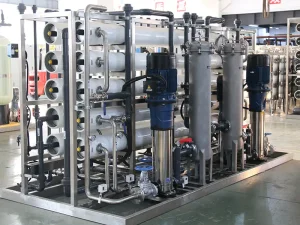
ODM High Salinity Brine Concentration System (Osmosis-Assisted RO)
Explore Technical Specs
ODM Osmosis-Assisted Reverse Osmosis for High-Salinity Wastewater
Explore Technical Specs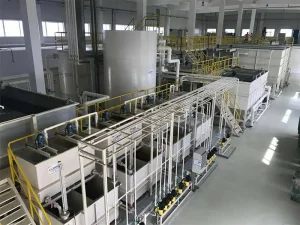
OEM High-Ratio Water Reuse Equipment for High-Salinity Discharge
Explore Technical Specs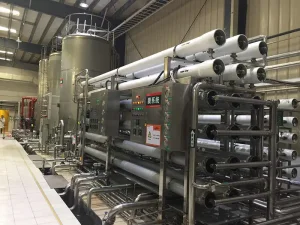
ODM Food & Beverage Process Water System for High Purity Standards
Explore Technical Specs
CE Certification Ultra-Pure Water System for Semiconductor Fabrication
Explore Technical Specs