
Engineered Water Treatment & Separation Equipment (Part I)
Pre-tested modular skids and containerized process plants fabricated under stringent ISO 9001, ISO 14001, ISO 45001, and CE manufacturing standards.
-
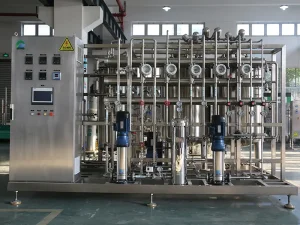 Wholesale China Pharmaceutical Purified Water & WFI System - Reliable Suppliers & Factory Solutions for Quality Water Production Manufacturers, ManufacturerView Specifications
-
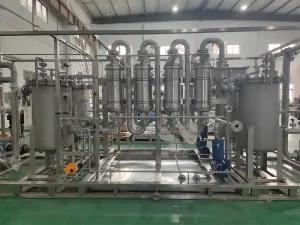 Wholesale Deoxygenation Membrane Equipment Suppliers in China - Factory Solutions for Effective Water Treatment Suppliers, ManufacturersView Specifications
-
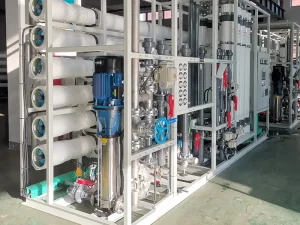 OEM China Suppliers Factory Compact Seawater Desalination Equipment for Small-Scale Freshwater Applications Supplier, ManufacturersView Specifications
-
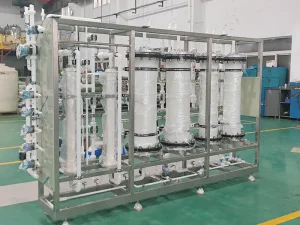 CE Certification China Suppliers Factory Electronic Ultra-Pure Water System for Semiconductor & Microelectronics with 18.2 MΩ·cm Resistivity Factories, ManufacturerView Specifications
-
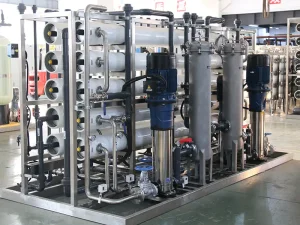 CE Certification Osmosis-Assisted Reverse Osmosis System for High Salinity Wastewater - China Suppliers & Factory Factories, ManufacturerView Specifications
-
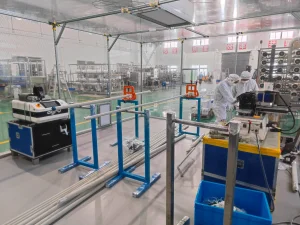 Wholesale China Eco-Friendly Water Treatment Solutions: Leading ODM Suppliers and Factory for Your Brand Suppliers, ManufacturersView Specifications
-
ODM High Salinity Brine Concentration System - China Factory Suppliers for Osmosis-Assisted Reverse Osmosis Solutions Factory, ManufacturerView Specifications
-
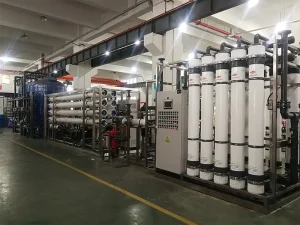 China High-Ratio Water Reuse Equipment Supplier in China - Advanced Pretreatment, UF, and RO Factory Solutions Manufacturers, ManufacturerView Specifications
Offshore Produced Water Treatment: Engineering Realities & Marine Paradigms
As offshore hydrocarbon reservoirs mature across global basins, the produced water cut (PWC) regularly exceeds 80% to 95% of total wellhead fluid output. Transforming this chemically aggressive effluent into reinjection-ready fluid or compliant marine discharge demands sophisticated process intensification.
Complex Fluid Chemistry
Offshore produced water is not conventional wastewater. It contains dispersed and dissolved hydrocarbons, polycyclic aromatic hydrocarbons (PAHs), heavy metal complexes, naphthenic acids, high total dissolved solids (TDS up to 250,000 mg/L), scale ions (Ca²⁺, Mg²⁺, Ba²⁺, Sr²⁺), and volatile organic compounds (VOCs).
- Sheared micro-oil droplets down to <2 μm
- Supersaturated barium and strontium sulfates
- Corrosive dissolved hydrogen sulfide and carbon dioxide
Severe Topside Footprint Caps
Every kilogram of payload and square meter of deck space on Floating Production Storage and Offloading (FPSO) units, tension-leg platforms (TLPs), and fixed steel jackets carries immense capital costs. Equipment must operate reliably despite dynamic pitch, roll, and yaw sea motions.
- Dynamic acceleration resistance up to 0.5g
- Compact footprint: >60% smaller than API separators
- Slosh-baffled vessel internal hydraulics
Stringent Marine Discharge Norms
Regulatory frameworks such as the OSPAR Convention for the North East Atlantic impose a 30 mg/L monthly average dispersed oil-in-water (OIW) limit, with operators increasingly mandating <15 mg/L or <5 mg/L to avoid sheen formation. China's Bohai Bay enforces strict zero-discharge or reinjection standards.
- Continuous fluorescence or UV-absorption monitoring
- Zero visible rainbow sheen guarantees
- Removal of dissolved toxic aromatic fractions (BTEX)
Why Tier-1 Offshore Operators Source Treatment Packages From China
The convergence of advanced marine heavy engineering, complete metallurgical supply chains, and specialized membrane R&D has positioned leading Chinese manufacturers as premier partners for global offshore water solutions.
Full In-House Engineering & FAT
Established Chinese manufacturing bases integrate multi-discipline engineering under one roof: process simulation (Aspen HYSYS), CFD multiphase hydrodynamic modeling, structural finite element analysis (FEA), and pipe stress verification (Caesar II). Systems undergo comprehensive string testing and wet Factory Acceptance Testing (FAT) before coastal dispatch.
- Single-point accountability from P&ID to validation
- Closed-loop wet hydrotesting with offshore simulant brine
- Comprehensive NDT (RT, UT, PMI) traceability dossiers
Advanced Metallurgy Mastery
Offshore produced water accelerates pitting and crevice corrosion under sour (H₂S) and high-chloride conditions. Chinese fabricators excel in processing advanced anti-corrosion alloys in certified cleanroom fabrication bays to prevent ferritic cross-contamination.
- Super Duplex Stainless Steel (UNS S32750 / 2507)
- Grade 2 and Grade 7 Titanium fabrication
- High Nickel Alloys: Hastelloy C-276, Inconel 625
- Glass Flake Vinyl Ester and PTFE internal linings
Aggressive Lead Times & Modularization
By leveraging dense industrial clusters across Shanghai and the Yangtze River Delta, procurement and fabrication lead times are reduced by 30% to 45% compared to Western European yards. Modularized skid frames are designed directly for ISO container slots or standard heavy sea-fastening.
- Pre-commissioned plug-and-play architectural packages
- Class-approved lifting lugs, padeyes, and slings (DNV GL-ST-E271)
- Direct deep-water port access for oversized charter shipping
Macro-Industry Separation Solutions & Process Architectures
A comprehensive offshore produced water scheme utilizes a multi-barrier treatment train engineered for progressive phase separation: primary bulk de-oiling, secondary polishing, and tertiary membrane desulfation/concentration.
| Separation Stage | Primary Technologies Employed | Typical Oil / TSS Cut | Marine Platform Footprint | Motion Sensitivity |
|---|---|---|---|---|
| Primary Separation | Hydrocyclones (De-oiling Liners), Corrugated Plate Interceptors (CPI), Slosh-Baffled Degassers | Oil: 1,000–5,000 ppm → 100–200 ppm Cut point: >20 μm |
Ultra-compact, horizontal or vertical manifold vessels | Virtually immune to offshore motion when centrifugal forces exceed 1,000g |
| Secondary Clarification | Compact Flotation Units (CFU), Dissolved Gas Flotation (DGF), Swirl Micro-bubble Inducers | Oil: 200 ppm → 15–29 ppm Cut point: 5–15 μm |
Moderate; pressurized vertical cyclone-flotation vessels | Low; requires engineered vortex stabilization baffles |
| Tertiary Polishing | Ceramic Microfiltration (CMF), Polymeric Ultrafiltration (UF), Regenerable Walnut Shell Filters | Oil: <5 ppm TSS: <1 mg/L Cut point: >0.1 μm |
Medium; skid-mounted skid banks with automated CIP/backwash | Zero motion sensitivity; completely solid-state flooded flow |
| Desalination & Reinjection | Disc Tube Reverse Osmosis (DTRO), Osmosis-Assisted Reverse Osmosis (OARO), High-Pressure RO | TDS reduction up to 90% Permeate recovery 50–75% Removal of all divalent ions |
Containerized modular high-pressure skids (up to 160 bar) | Zero motion sensitivity; robust hydraulic spacer cushions |
| Dissolved Organics & Degas | Degasification Contactors, Gas-Stripping Towers, Biological Fluidized Beds, Catalytic Ozonation | BTEX >95% reduction Dissolved O₂ <10 ppb H₂S stripped to non-detect |
Slim footprint vertical contactor skids with vacuum pumps | Low; hydrophobic hollow fiber membranes operate without liquid free-surfaces |
Localized Applications & Emerging Industry Megatrends
From shallow closed bays to ultra-deepwater presalt fields, offshore water engineering must adapt to localized environmental sensitivities, reservoir geology, and global carbon reduction mandates.
Bohai Bay & Semi-Enclosed Sea Protection
In environmentally fragile shallow marine basins like China's Bohai Bay, regulatory authorities enforce zero liquid discharge (ZLD) of oily wastewater into the marine environment. Produced water must be conditioned to stringent specifications and reinjected into tight reservoirs without causing formation face plugging or souring.
- Membrane-assisted deep injection clarification
- Oil-in-water guaranteed ≤ 5 mg/L, suspended solids ≤ 1 mg/L
- Scale inhibition for high-temperature, low-permeability reservoirs
South China Sea Deepwater FPSO Integration
Deepwater operations (water depths >1,500 meters) in the South China Sea face severe typhoon seasons and high sea states. Produced water treatment skids on newbuild or converted FPSOs must maintain high de-oiling performance even under continuous 15-degree dynamic deck rolls.
- Motion-tolerant swirl-flow Compact Flotation Units
- Automated chemical injection feedback loops
- Anti-vibration structural skid baseframes designed for 25-year fatigue life
Decarbonization, Low Chemical O&M & Digital Twins
Next-generation offshore units prioritize lowering the chemical footprint by replacing conventional coagulants with physical acoustic, hydrodynamic, or ceramic membrane separation. Digital twins and AI-driven predictive fouling algorithms minimize human offshore intervention.
- Edge-computing SCADA with automated CIP sequencing
- Low specific energy consumption: <1.8 kWh/m³ for full treatment
- Unmanned platform readiness with remote satellite diagnostics
Global EPC Procurement Prerequisites & Engineering Standards
Supplying water systems to offshore oil and gas operators requires strict adherence to international classification societies and marine engineering codes. Our systems comply with the following standards:
Marine Classification & Safety
Every pressurized boundary, relief line, and structural skid conforms to classification society rules, including DNV, ABS, Lloyd’s Register (LR), or Bureau Veritas (BV).
- Pressure Vessels: ASME Section VIII Div 1 & Div 2 with U-Stamp
- Piping Fabrication: ASME B31.3 Process Piping (Severe Cyclic Condition)
- Lifting Frames: DNV GL-ST-E271 / EN 12079 offshore certification
Hazardous Area Electrics (IECEx / ATEX)
Topsides produced water units frequently handle volatile flash gas (methane, ethane, propane) and are placed within Zone 1 or Zone 2 hazardous areas.
- Flameproof/Purged Enclosures: Ex d / Ex p local control consoles
- Instrumentation: Ex ia intrinsically safe loops with galvanic isolators
- Motors & Pumps: Heavy-duty marine Ex d IIB+H₂ / T4 ratings
Traceability & Material Test Reports
Stringent procurement quality systems ensure complete metallurgical traceability from raw billet to final hydrostatic weld testing.
- EN 10204 Type 3.1 & 3.2 Material Test Certificates (MTC)
- 100% Positive Material Identification (PMI) on all alloy components
- Welding Qualifications: ASME Section IX, NORSOK M-601 standard
Frequently Asked Questions: Offshore Produced Water Engineering
Clear, engineering-driven answers to technical, operational, and commercial questions asked by international offshore EPC contractors and platform operators.
How do Chinese manufacturers address marine motion and sloshing inside separation vessels?
What metallurgy is selected for sour (H₂S) produced water containing high chloride ions?
Can membrane filtration (UF/DTRO) resist irreversible organic and heavy oil fouling?
How are explosion-proof certifications (IECEx / ATEX) verified during factory testing?
What testing documentation is provided with an offshore produced water equipment package?
Advanced Separation, Pure Water & Desalination Systems (Part II)
Explore our high-recovery membrane systems, thermal brine concentrators, and customized marine water treatment machinery for global EPC projects.
-
CE Certification China Suppliers Factory Deoxygenation Membrane Equipment for Physical Degassing of Water to ppb Levels Suppliers, ManufacturersView Specifications
-
CE Certification High Salinity Brine Concentration System | OARO Technology from China Suppliers & Factory for ZLD Treatment Factories, ManufacturersView Specifications
-
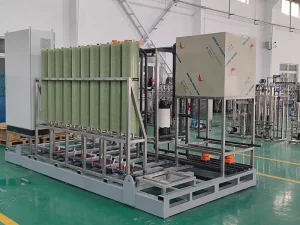 Wholesale High-Salinity Wastewater Reduction System - ZLD Technology by China Suppliers and Factory Suppliers, SupplierView Specifications
-
Wholesale China Deoxygenation Membrane Equipment Suppliers - Physical Degassing Technology from Trusted Factory Factory, SupplierView Specifications
-
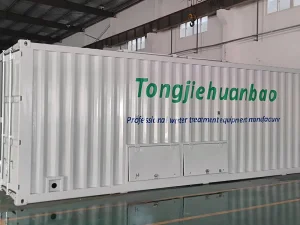 OEM Containerized Seawater Desalination Plants from China Suppliers: Factory-Ready Mobile Water Production Solutions Factory, ManufacturersView Specifications
-
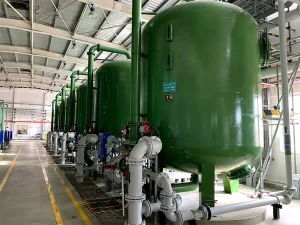 Wholesale China Industrial Demineralized Water Equipment Factory - RO + EDI Suppliers for High-Quality Water Solutions Factory, ManufacturerView Specifications
-
ODM High Salinity Brine Concentration System - OARO Technology by China Suppliers and Factory for ZLD Treatment Factory, SupplierView Specifications
-
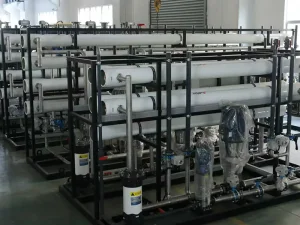 ODM High-Efficiency Brine Concentration System - China Suppliers & Factory for Wastewater Treatment Solutions Factory, ManufacturerView Specifications