Standardized & Skid-Mounted SWRO Systems: Part I
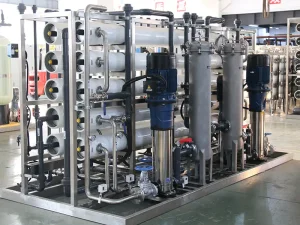
Engineered for high energy recovery, chemical-free pretreatment stability, and robust saline separation across maritime, power, and oil & gas industries.
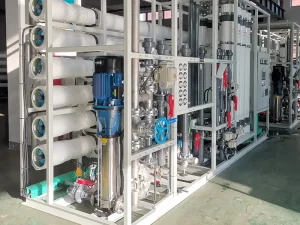
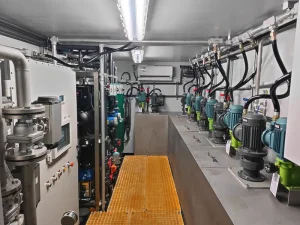
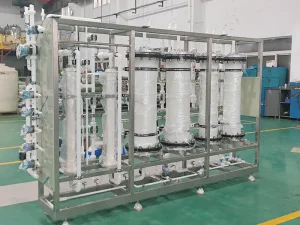
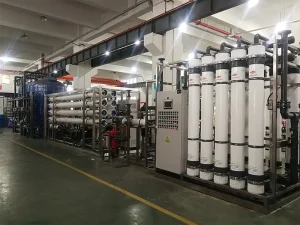
Global Enterprise Procurement Demands for Seawater RO
Addressing supply-chain security, regional salinity variations, water stress resilience, and strict operational expenditure mandates for industrial operators worldwide.
Island & Remote Resorts
High seasonal tourist fluctuations dictate decentralized, quiet, containerized SWRO units with small physical footprints, low noise, and minimal local civil engineering requirements.
Coastal Energy & Power
Demands continuous boiler-feed make-up and turbine cooling. Requires duplex stainless steel wetted parts (e.g., 2507, 1.4410) resistant to severe chloride corrosion and biological fouling.
Offshore Oil & Gas
Stringent reinjection and rig potable standards require ATEX/IECEx explosion-proof components, compact footprint skid integration, and proven durability against variable heavy-oil feeds.
Green Hydrogen Production
Electrolyzer feed requires ultra-pure, demineralized water derived sustainably from seawater. SWRO coupled with secondary pass RO and EDI ensures zero damage to sensitive catalytic stacks.
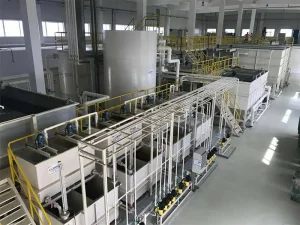
Macro Industry Solutions: Integrated Pretreatment to Permeate
Systemic flow architectures designed to mitigate membrane scaling, bio-fouling, and high osmotic pressure spikes across varying marine water matrices.
Pretreatment & UF Conditioning
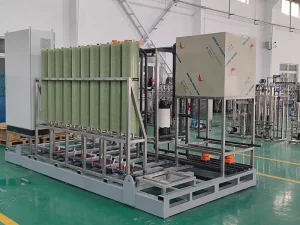
Using DAF (Dissolved Air Flotation) and pressurized Ultrafiltration (UF) hollow fiber barriers to guarantee Silt Density Index (SDI < 3.0), drastically extending downstream membrane run-time.
Isobaric Energy Recovery (PX)
State-of-the-art ceramic rotor isobaric pressure exchangers transfer energy directly from the high-pressure concentrate stream to the incoming raw feed, achieving energy recovery efficiencies up to 98%.
Post-Treatment & Remineralization
Calcite dissolution contactors, carbon dioxide dosing, and sodium hypochlorite injection balance total alkalinity, adjust Langelier Saturation Index (LSI), and ensure corrosion-free potable delivery.
Technical Roadmap & Performance Benchmark
A comparative engineering matrix mapping typical seawater reverse osmosis setups against next-generation smart-monitored high-efficiency systems.
| Performance Parameter | Legacy Thermal Desalination (MED/MSF) | Standard SWRO Package | Tongjie Engineered Smart SWRO Plant |
|---|---|---|---|
| Specific Energy (SEC) | 10.0 - 16.0 kWh/m³ equivalent | 3.8 - 4.5 kWh/m³ | 2.2 - 2.8 kWh/m³ (Isobaric PX) |
| Pretreatment Tolerance | High solids, but severe thermal scaling | Dual media filter, SDI < 5.0 | Integrated UF/Microfiltration, SDI < 2.5 |
| Feed Salinity Dynamic Range | Static (restricted thermal envelope) | 32,000 - 38,000 ppm | Up to 45,000+ ppm (Red Sea / Arabian Gulf) |
| Automation & Maintenance | Manual intervention intensive | Standard PLC, scheduled CIP | AI Predictive Fouling, Auto-Flushing & CIP |
| Footprint & Delivery | Extensive civil construction required | Static open skid frames | Fully modular, ISO Containerized Plug-and-Play |
Localized Support, Engineering Standards & Compliance
Ensuring complete legal, environmental, and functional alignment for offshore developers, government agencies, and general procurement contractors.
Global Certifications
Complies strictly with CE machinery, pressure equipment directives (PED 2014/68/EU), ISO 9001, ISO 14001, and ISO 45001. Welding and piping conform to ASME Section IX and B31.3 standards.
Remote SCADA & AI Telemetry
Cloud-connected IoT modules provide continuous logging of differential pressures, flow rates, salt passage, and normalized flux, triggering remote factory troubleshooting anywhere in the world.
On-Site Commissioning
Expert engineering teams deploy across the Middle East, Southeast Asia, Africa, and Latin America for complete FAT/SAT performance verifications, membrane loading, and local team training.
Frequently Asked Questions: SWRO Systems & Engineering
Clear, technical explanations answering critical questions raised by project developers, site managers, and mechanical consultants.
How does the system mitigate boron concentrations to satisfy strict drinking water or agricultural criteria?
Standard seawater reverse osmosis elements remove 80–90% of naturally occurring boron at normal ocean pH. To hit international WHO drinking water guidelines (<0.5 mg/L) or agricultural criteria for sensitive crops, we engineer a secondary pass RO stage combined with caustic (NaOH) dosing to elevate the pH to 9.5–10.0, converting uncharged boric acid into charged borate ions that are rejected at over 99% efficiency.
What specific metallurgical selections prevent pitting corrosion in high-salinity marine environments?
For all wetted sections exposed to pressurized raw seawater (>50 bar), we strictly utilize Super Duplex Stainless Steel (UNS S32750 / EN 1.4410) with a Pitting Resistance Equivalent Number (PREN) > 42. Non-pressurized feed lines use High-Density Polyethylene (HDPE) or UPVC, whereas high-pressure concentrate discharge headers are constructed from Duplex 2205 or Super Duplex, guaranteeing zero localized pitting.
How are temperature-induced flux fluctuations managed across seasons?
Seawater viscosity and membrane permeability depend directly on feed temperature; colder seawater necessitates higher driving pressure, while warm tropical water increases salt passage. Our plants utilize variable frequency drives (VFDs) on high-pressure pumps coupled with automated PLC normalization curves, dynamically tuning operating pressure to maintain constant permeate volume without exceeding membrane flux limits.
Can containerized SWRO units operate reliably on fluctuating off-grid generator power?
Yes. Our modular units are specifically built with soft-start protocols, low inrush current VFDs, and smart sequencing logic that eliminates high starting electrical spikes. They seamlessly synchronize with industrial diesel gensets, hybrid microgrids, or utility-scale photovoltaic solar systems equipped with buffer storage.
High-Recovery Membrane & Produced Water Equipment: Part II
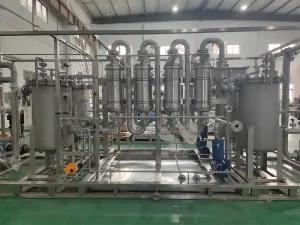
Engineered for complex wastewater matrices, oil-water separation, fracturing flowback, zero liquid discharge, and physical degassing installations.