
Engineered High-Purity Water Systems & Membrane Solutions
Explore standard and modular containerized systems ready for direct export, built strictly under ISO 9001 and CE compliance for mission-critical industrial duties.
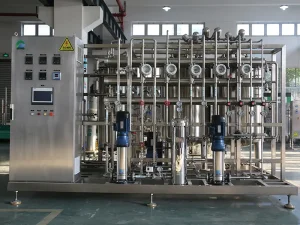
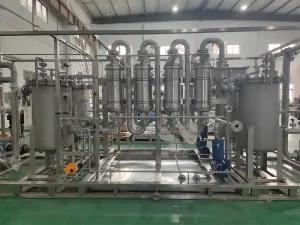
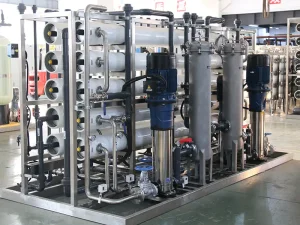
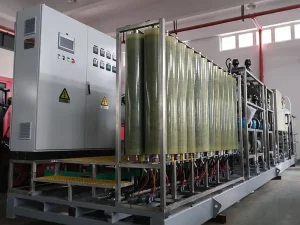
Global Industrial Landscape of Ultrapure Water (UPW) Systems
From sub-nanometer semiconductor wafer fabrication to injectable bio-therapeutics, ultrapure water is no longer a utility—it is a critical yield-determining chemical input.
In advanced industrial engineering, Ultrapure Water (UPW) refers to water purified to the ultimate theoretical limits of analytical chemistry. Unlike municipal potable water or standard demineralized water, industrial UPW must maintain an electrical resistivity of 18.2 MΩ·cm at 25°C, approaching total ionic absence, while simultaneously eliminating non-ionic impurities: Total Organic Carbon (TOC) down to < 1 ppb (parts-per-billion), dissolved oxygen (DO) to < 1 ppb, and micro-particulates to < 0.05 µm.
Across North America, Western Europe, and East Asia, mega-scale semiconductor foundries (producing 3nm and 2nm node architectures) and advanced biopharmaceutical facilities are consuming between 5 to 20 million gallons of UPW daily. Concurrently, high-efficiency N-type photovoltaic wafer processing and ultra-supercritical thermal generation loops require unprecedented volumes of high-purity permeate. The global market is characterized by stringent purity benchmarks defined by SEMI Standard F63 (for microelectronics), ASTM D5127, and international pharmacopeias (USP, Ph. Eur., JP for Water for Injection / Purified Water).
| Water Quality Grade | Resistivity (MΩ·cm @ 25°C) | Conductivity (µS/cm) | TOC Target | Primary Industrial Application |
|---|---|---|---|---|
| SEMI F63 Electronic Grade (UPW) | 18.2 MΩ·cm (Theoretical Limit) | 0.055 µS/cm | < 1 to 2 ppb | Sub-7nm Lithography Rinsing, Silicon Wafer Etching |
| ASTM D5127 Type E-1.2 | > 18.0 MΩ·cm | 0.056 µS/cm | < 5 ppb | Micro-fabrication, MEMS, Photovoltaic Wafer Slicing |
| USP / Ph. Eur. Purified Water (PW) | > 1.0 MΩ·cm | < 1.3 µS/cm @ 25°C | < 500 ppb | Pharmaceutical Compounding, Oral Formulations |
| Water for Injection (WFI) | > 1.0 MΩ·cm (Initial) | < 1.1 µS/cm @ 20°C | < 500 ppb (Endotoxin < 0.25 EU/ml) | Biologics, Injectable APIs, Dialysis Formulation |
| Supercritical Boiler Feed Water | > 5.0 to 10.0 MΩ·cm | < 0.1 to 0.2 µS/cm | < 100 ppb | Zero-Silica Supercritical Steam Turbines |
Why International EPCs & Industrial Owners Partner with Tongjie
Shanghai Tongjie Environmental Protection Technology Co., Ltd. (est. 2010) combines advanced polymer membrane science, precision mechanical manufacturing, and Class II industrial contracting under one roof.
Full-Chain Vertical Integration
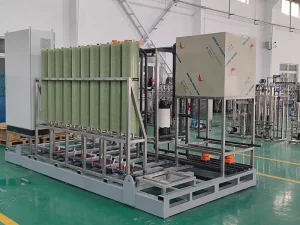
Unlike regional system integrators that outsource pressure vessels and frame welding, Tongjie manufactures skids, high-purity piping (PVDF infrared butt-welding and SS316L orbital welding), and automated control panels in our Shanghai factory. This reduces procurement lead times from 40+ weeks to just 8-12 weeks.
Stringent FAT & Digital Validation
Every system undergoes rigorous 100% full-capacity Factory Acceptance Testing (FAT) before export. We simulate site raw water conditions, calibrate online sensors (conductivity, TOC, resistivity, flow, pressure), test automated CIP loops, and supply comprehensive documentation packs (IQ/OQ/PQ) ensuring seamless cGMP and CE certification compliance.
Class II Contracting & Global Certs
Tongjie holds official Class II Contracting Qualifications in Environmental Protection Engineering and M&E Installation. Certified under ISO 9001, ISO 14001, and ISO 45001, we ensure all pressure vessels conform to ASME / PED criteria, and electrical cabinets feature UL508A / CE compliant wiring and Siemens/Allen-Bradley PLC architectures.
Multi-Stage Process Architecture: From Raw Feed to Sub-ppb Permeate
A reliable Ultrapure Water System is not a single piece of equipment, but an unbroken chain of barrier stages engineered to prevent ionic leakage and microbial colonization.
1. Primary Pretreatment Train
Mitigates SDI (Silt Density Index), suspended solids, and scaling ions. Includes automatic backwash multimedia filtration (sand, anthracite), activated carbon adsorption for chlorine reduction, and ultrafiltration (UF) hollow-fiber membrane barriers (0.02 µm) to guarantee SDI < 2.5 ahead of high-pressure membranes.
2. Double-Pass RO (DPRO)
Primary demineralization stage eliminating over 99.5% of dissolved inorganic salts, silica, and colloids. Tongjie utilizes high-rejection polyamide thin-film composite membranes, optimized with variable-frequency energy recovery devices (ERD) to maximize recovery rates up to 75–85% while cutting specific energy consumption.
3. Vacuum / Membrane Degassing
Crucial for semiconductor and boiler specs. Utilizing hollow-fiber contactor membranes (Liqui-Cel type), dissolved carbon dioxide (CO₂) and dissolved oxygen (DO) are physically extracted under deep vacuum. This stage prevents carbonate fouling downstream and drives DO levels down to < 1 ppb to eliminate wafer oxidation risk.
4. CEDI Continuous Demineralization
Continuous Electrodeionization (CEDI) replaces hazardous acid/caustic regenerable mixed beds. Under a constant DC electric field, ion-exchange resins continuously capture residual ions while water is split into H⁺ and OH⁻ ions, regenerating the resin in-situ. Delivers consistent product water at 15–17.5 MΩ·cm without chemical waste streams.
5. Point-of-Use TOC UV & Polishing
The final sub-ppb loop combines dual-wavelength (185nm/254nm) UV reactors that break down trace organic compounds via hydroxyl radicals (reducing TOC to < 1 ppb), followed by non-regenerable nuclear-grade virgin mixed-bed polishers and ultra-filtration point-of-use modules (0.02 µm) for absolute particle capture.
Engineered for High-Consequence Manufacturing Sectors
Water quality tolerances vary dramatically by industrial sector. Tongjie engineers bespoke process trains matched exactly to the regulatory and operational risks of your industry.
Semiconductor & Microelectronics
Silicon wafers are washed dozens of times between photolithography, chemical mechanical polishing (CMP), and wet etching steps. Any dissolved mineral or ionic silica leaves destructive bridge defects across nanoscale circuit paths. Tongjie systems deliver stable 18.2 MΩ·cm resistivity, TOC < 1 ppb, and zero detectable heavy metal ions.
Pharmaceutical Purified Water & WFI
Compliant with cGMP Annex 1, USP, and EP standards. Systems incorporate orbital-welded 316L stainless steel loops (Ra < 0.4 µm interior polish), continuous thermal sanitization at 85°C, or cold ultrafiltration membrane generation of Water for Injection (WFI) with total endotoxin removal (< 0.25 EU/ml) and tamper-proof electronic audit trails.
Solar PV (TOPCon & HJT) Manufacturing
Gigawatt-scale crystalline photovoltaic cell production demands huge volumes of continuous high-purity water for wafer cleaning, texturing, and diffusion processes. Tongjie supplies containerized and skid-mounted high-recovery systems that lower water consumption per megawatt produced while resisting volatile chemical feed conditions.
Supercritical Power & Steam Turbines
High-pressure boilers operating above critical pressure cannot tolerate silica deposits or dissolved oxygen, which cause catastrophic blade embrittlement and scale formation. Our deoxygenation membrane contactors and EDI trains maintain reactive silica below 3 ppb, extending turbine overhaul intervals.
Lithium Battery Cathode/Anode Materials
Synthesis of precursor materials for lithium iron phosphate (LFP) and ternary NMC batteries requires demineralized process water free of iron, copper, and halogen ions. Our systems provide closed-loop demineralization and effluent volume reduction, safeguarding battery energy density.
Emerging Technological Trends in Ultrapure Water Infrastructure
The convergence of water scarcity, zero-liquid discharge regulations, and industrial digitalization is reshaping global water treatment paradigms.
Coupled ZLD & High-Ratio Water Reuse
Modern mega-fabs can no longer discharge UPW reject brine into municipal sewers. Tongjie integrates secondary Osmosis-Assisted Reverse Osmosis (OARO), Disc Tube Reverse Osmosis (DTRO), and MVR crystallization systems. By concentrating reject brine to crystallization limits, facilities achieve > 95% total plant water recovery, closing the loop on freshwater withdrawal.
PFAS & Trace Chemical Destruction
Global regulatory bodies are targeting per- and polyfluoroalkyl substances (PFAS) in industrial discharge. Future UPW systems incorporate advanced oxidation processes (AOP), utilizing vacuum-UV and catalytic ceramic membrane filtration to destroy recalcitrant fluorinated compounds ahead of primary RO trains.
AI-Powered Autonomous SCADA & CIP
Tongjie’s latest skid assemblies integrate smart sensors measuring differential pressure (ΔP) and salt passage across individual stages in real time. Proprietary predictive algorithms compute membrane fouling trends, automatically triggering temperature-optimized Clean-In-Place (CIP) sequences before irreversible biological or scale fouling impairs permeate quality.
Engineering Specifications Checklist for Overseas Procurement
Avoid costly project scope gaps. Before issuing an RFQ to an ultrapure water equipment supplier or factory, ensure your engineering team has defined these key project boundary parameters.
| Procurement Parameter | Critical Engineering Detail Needed | Tongjie Standard Supply Guarantee |
|---|---|---|
| Raw Water Assay | Comprehensive TDS, silica (reactive & colloidal), TOC, hardness, heavy metals, seasonal temperature range. | Pre-proposal computerized RO/EDI projection simulations (FilmTec ROSA / Hydranautics IMSDesign). |
| Product Permeate Target | Resistivity (MΩ·cm), TOC limit, DO limit, particle size threshold, bioburden/endotoxin limit. | Dual online analytical instrumentation with traceable NIST-calibrated sensors and alarm interlocks. |
| Wetted Materials of Construction | Pretreatment: FRP / Carbon steel rubber-lined; High-Purity: SS316L electropolished or PVDF-HP. | Orbital welding with boroscope inspection logs, 3.1 material test certificates, and roughness test reports. |
| Controls & SCADA Architecture | Preferred PLC brand (Siemens S7-1500, Allen-Bradley), communication protocol (Profinet, Modbus TCP). | Custom software programming with CFR 21 Part 11 electronic records, multi-level password security, remote telemetry. |
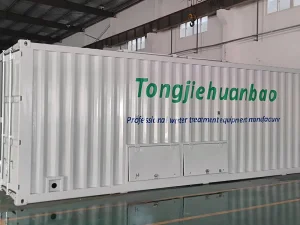
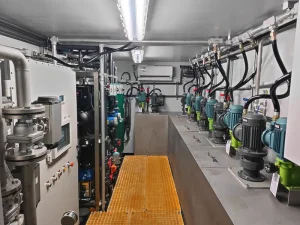
| Skid vs. Containerized Modular | Indoor cleanroom footprint constraints vs. outdoor plug-and-play ISO containerized installation. | Pre-assembled, hydro-tested, insulated 20ft/40ft standard ISO container plants with HVAC and lighting. |
Frequently Asked Questions: Industrial UPW Engineering & Sourcing
In-depth technical answers addressing the critical sizing, operation, and validation questions asked by global procurement specialists and EPC engineers.
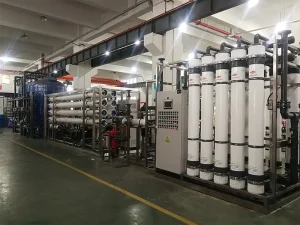
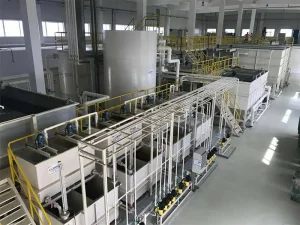
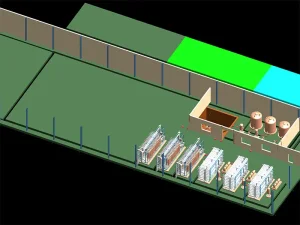
High-Salinity, Desalination & Reuse Systems Showcase
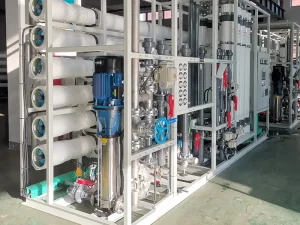
Review additional field-proven water treatment architectures fabricated and tested in our Shanghai manufacturing headquarters.
Submit Your Water Assay for an Engineered Proposal
Send our senior engineering team your raw water quality report, target flow capacity (m³/h), and industry compliance requirements. We will return a complete computerized membrane projection, P&ID layout, and formal factory-direct quotation within 48 hours.
Request Technical Proposal & Sizing