
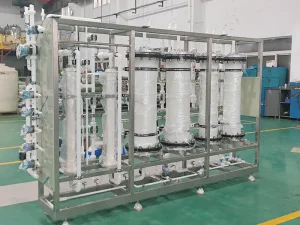
Primary Solutions
Flagship Industrial Pure Water Systems for Ethiopia
Pre-engineered, modularized water purification plants customized for direct deployment across Ethiopian manufacturing and special economic zones.
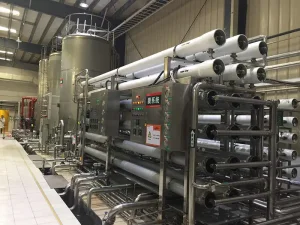
Ethiopia Agro-Industrial OEM Food & Beverage Process Water System
View Product Specs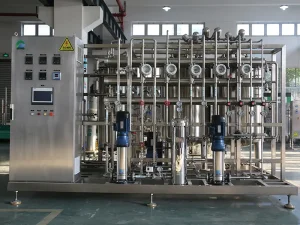
Kilinto IP Certified Pharmaceutical Purified Water & WFI System
View Product Specs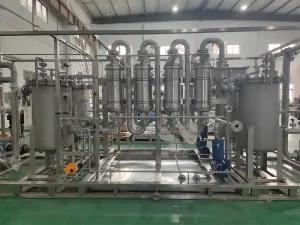
Ethiopia Power & Geothermal Deoxygenation Membrane Equipment
View Product SpecsMarket Insight
Industrial Water Ecosystem & Infrastructure Realities in Ethiopia
Balancing economic acceleration, landlocked geographical limitations, and acute water salinity in the Horn of Africa.
Geographical & Strategic Realities
As a landlocked sovereign state in East Africa, Ethiopia manages raw water resources through complex hydrologic networks, primarily relying on surface rivers and deep aquifers across the Great Rift Valley. High mineralization, excessive fluoride concentrations (often exceeding 5–15 mg/L), and elevated silica levels present severe fouling obstacles for conventional industrial setups.
Industrial Park Expansions
From Hawassa Industrial Park to Kilinto Industrial Zone and Bole Lemi, Ethiopia’s national manufacturing strategy prioritizes textile spinning, pharmaceutical synthesis, food and beverage processing, and chemical production. These facilities require uninterrupted streams of low-conductivity demineralized water and ultrapure water to protect capital equipment.
Regional Desalination Dynamics
Industrial operations situated along cross-border economic transit corridors—interfacing directly with logistics arteries connecting Addis Ababa to the port systems of Djibouti and Berbera—rely heavily on robust seawater reverse osmosis (SWRO) modular packages to convert coastal maritime waters into potable and industrial-grade supplies before interior delivery.
Technical Architecture: Industrial Purified Water & Desalination Systems
To withstand fluctuating feed water parameters from Rift Valley boreholes (TDS: 1,500–6,500 ppm, reactive silica >60 ppm) or heavy coastal saltwater conditions (TDS: 38,000–45,000 ppm), Shanghai Tongjie configures rigorous, multi-barrier separation trains.
| Process Stage | Standard Configuration | Advanced Ethiopia-Engineered Scope | Performance Deliverable |
|---|---|---|---|
| Pretreatment | Single Multimedia Filtration (Sand/Anthracite) | Ultrafiltration (UF) hollow-fiber + Anti-Scalant Dosing + Disc Pre-Filter | SDI < 2.5; Turbidity < 0.1 NTU; Complete Bio-fouling Suppression |
| Membrane Demineralization | Single-Pass Polyamide Brackish Water RO | High-Rejection Double-Pass RO + Energy Recovery Device (ERD) | 99.6% TDS Rejection; Recovery Rates Optimized to 75-80% |
| High-Purity Polishing | Mixed-Bed Chemical Ion Exchange (IX) | Chemical-Free Continuous Electrodeionization (EDI) + Membrane Degassing | Resistivity up to 18.2 MΩ·cm; Zero Chemical Regeneration Down-time |
| Concentrate & Brine Abatement | Surface Evaporative Holding Ponds | High-Pressure DTRO + Mechanical Vapor Recompression (MVR) Crystallizer | Complete Zero Liquid Discharge (ZLD); Dry Solid Salt Residuals Only |
Engineering Excellence
China Factory 4.0: Resilient Supply Chains & Macro Industrial Solutions
Direct manufacturing prowess integrating ISO-certified fabrication, IoT-automated automation, and precision components for demanding international projects.
Supply Chain Resilience & Cost Parity
Sourcing directly from our state-of-the-art manufacturing center in Shanghai mitigates supply volatility. With full ownership over laser cutting, CNC robotic welding, high-pressure piping assemblies, and Class 100,000 cleanroom testing for membrane manifolds, we deliver 30% to 45% capital expenditure advantages compared to European or North American skid builders without sacrificing components.
Containerized Skid Plug-and-Play Philosophy
Given logistical friction points and remote geographic layouts in the Horn of Africa, modular engineering is paramount. Our containerized SWRO and industrial RO skids are installed inside insulated, anti-corrosive ISO containers. Every pump, valve, PLC panel, and sensor undergoes strict Factory Acceptance Testing (FAT) with hydraulic wet runs prior to port departure.
Compliance & Future Scope
Localization Support, Regulatory Compliance & Green Roadmap
Ensuring Ethiopian enterprises achieve environmental compliance and low total cost of ownership across multi-decade operational horizons.
Local Operations & Spares Logistics
Navigating East African customs procedures and remote installation challenges requires dedicated project oversight. We provide complete commissioning support via dedicated field engineering dispatch, virtual real-time SCADA integration, and strategic wear-and-tear component packages (including 5-micron pre-filters, seal kits, and chemical reagents) tailored for year-long operating stability.
Global & Ethiopian Regulatory Compliance
Our units align with international benchmarks (CE, ISO 9001, ISO 14001, ISO 45001) as well as the Environmental Protection Authority (EPA) of Ethiopia and industrial park discharge mandates. Pharmaceutical setups feature fully documented validation packs adhering strictly to WHO-GMP and FDA USP-grade specifications for Purified Water and Water for Injection.
Solar-Powered Desalination Roadmap
In step with Ethiopia’s vast renewable energy investments—ranging from the Grand Ethiopian Renaissance Dam (GERD) to expansive solar farms in Somali and Afar regions—our next-generation SWRO systems integrate intelligent variable-frequency drives (VFD) optimized for off-grid hybrid photovoltaic arrays, radically decreasing carbon footprints and stabilizing power spikes.
Procurement & Engineering FAQ
Frequently Asked Questions: Industrial Water Systems for Ethiopia
Key technical, financial, and logistical insights for plant managers, procurement executives, and EPC contractors.
Why would Ethiopian facilities need seawater desalination if the country is landlocked?
While inland Ethiopia utilizes reverse osmosis primarily for brackish groundwater, river surface water, and wastewater recycling, Ethiopian enterprises maintain heavy infrastructure, supply hubs, and joint operations along transit corridors connecting to ports in Djibouti, Berbera, and Assab. Furthermore, hyper-saline ground aquifers in the Afar Depression and Danakil Basin mirror seawater mineral concentrations (TDS > 35,000 mg/L), demanding SWRO equipment to produce viable industrial process water.
How do your systems address the elevated fluoride and silica levels common in Rift Valley water?
Rift Valley water frequently contains elevated fluoride and reactive silica that can rapidly scale standard reverse osmosis elements. We employ targeted chemical dosing protocols (specialized silica-dispersant antiscalants), elevated pH controls to keep silica soluble, and secondary filtration using specialized selective ion resins or nanofiltration stages preceding the high-pressure RO skids, prolonging membrane life to 3–5 years.
What documents and validation dossiers are supplied for pharmaceutical factories in Kilinto IP?
For pharmaceutical applications, Shanghai Tongjie provides full validation packages compliant with cGMP, WHO, and FDA standards. This includes Design Qualification (DQ), Installation Qualification (IQ), Operational Qualification (OQ), and Performance Qualification (PQ) support, alongside electrical schematics, 316L stainless steel material certs (heat numbers, surface roughness Ra < 0.4 µm), and calibration reports for online conductivity and TOC meters.
Can the systems operate stably despite municipal power outages and voltage dips?
Yes. Every control cabinet integrates industrial-grade Siemens or Schneider PLCs with built-in power surge suppression, uninterrupted power supply (UPS) back-ups for the processing brains, and soft-start variable frequency inverters. This design cushions the high-pressure multi-stage pumps against brownouts and allows smooth transitions to auxiliary generator sets without hydraulic shock or membrane water hammer damage.
What are the typical lead times and logistics routes from Shanghai to Ethiopia?
Fabrication and FAT validation of standardized containerized plants typically span 30 to 45 business days. Sea freight ships directly from Shanghai Port to the Port of Djibouti (approx. 20–28 days transit), followed by road transit along the established corridor to the Modjo Dry Port or straight to site in Addis Ababa, Hawassa, or Dire Dawa. Skids are fully weatherized for long-distance transport.
Extended Catalogue
Comprehensive Industrial Water, Demineralization & ZLD Equipment
Complete series of certified skid-mounted platforms engineered for heavy manufacturing, chemical treatment, and zero liquid discharge.
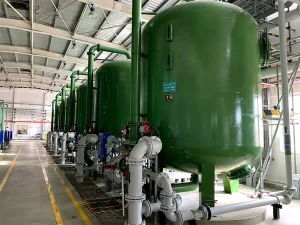
OEM Industrial Demineralized Water Equipment
View Product Specs
Ethiopia Factory-Direct RO & EDI Demineralized Water Solutions
View Product Specs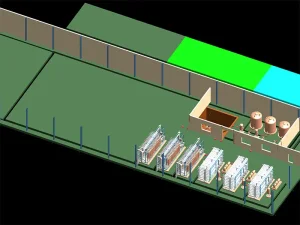
Customized Environmental Water Treatment Equipment for Ethiopia
View Product Specs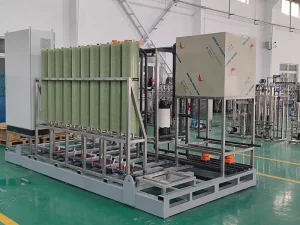
Ethiopia High-Salinity Wastewater Volume Reduction & ZLD System
View Product Specs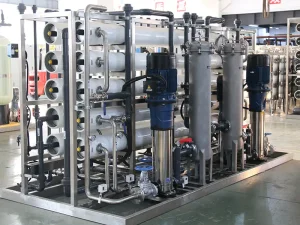
CE Certification Osmosis-Assisted Reverse Osmosis (OARO) System
View Product Specs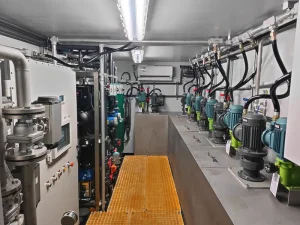
Energy Operations Fracturing Flowback Water Reuse Equipment
View Product Specs
High-Efficiency Physical Degassing Deoxygenation Equipment
View Product Specs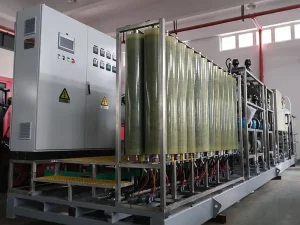
CE Certified Oilfield Fracturing Fluid & Heavy Produced Water Plant
View Product SpecsEngineering Your Custom Industrial Water Solution
Submit your raw water chemical analysis (TDS, silica, hardness, conductivity) and design capacity requirements. Our process engineering team delivers custom P&ID drawings, mass balances, and detailed quotations within 24 hours.
Send Inquiry Now