
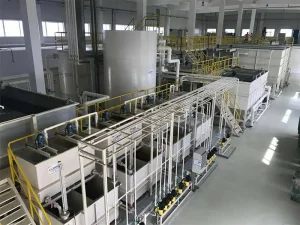
Sweden High-Ratio Water Reuse System | Advanced Industrial Membrane Recovery Process
View Technical Train →Containerized and skid-mounted solutions engineered for severe Nordic operating environments, industrial feed reuse, and API pharmaceutical manufacturing.
Sweden High-Ratio Water Reuse System | Advanced Industrial Membrane Recovery Process
View Technical Train →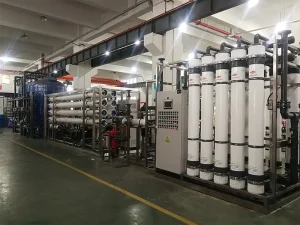
Nordic Specification Water Reuse Skid (Pretreatment + UF + RO Multi-Stage Protection)
View Technical Train →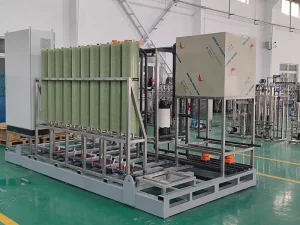
Sweden Heavy Industry High-Salinity Wastewater Concentration & ZLD Evaporative System
View Technical Train →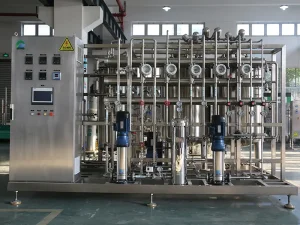
Pharma-Grade Purified Water & WFI Generation Skid for Scandinavian Life Science Parks
View Technical Train →Adapting membrane physics to the unique conditions of Gotland, Öland, and the Baltic littoral where climate variations and stringent environmental policies mandate ultra-efficient treatment.
Unlike Arabian Gulf brine (~45,000 ppm TDS), the Baltic Sea presents brackish characteristics ranging from 3,000 to 8,000 ppm TDS. Standard SWRO arrays suffer from thermodynamic inefficiencies when fed low-salinity water. Tongjie engineers configure dual-stage hybrid seawater-brackish (BWRO/SWRO) membranes that balance lower operating pressures (15–28 bar) while guarding against severe osmotic flux swings and irreversible compaction.
Near-freezing winter seawater temperatures (0.5°C to 4°C) dramatically increase water viscosity, causing a drop in membrane permeate flux of up to 3% per degree Celsius. Our Swedish-deployed skids incorporate specialized feed heating via heat exchanger integration, low-fouling high-surface area polyamid membranes, and automated variable-frequency high-pressure pumps that dynamically match seasonal viscosity fluctuations.
Brine discharge permits along the Swedish coast are governed strictly by the Environmental Code (Miljöbalken) and HELCOM marine recommendations. Concentrated brine outfalls must avoid dense thermohaline stratification. Tongjie systems are paired with multi-port high-velocity diffuser manifolds or routed through industrial wastewater dilution circuits to ensure negligible environmental impact on local benthic ecosystems.
Decoupling industrial production from finite municipal aquifers through advanced closed-loop membrane technologies.
Karst limestone hydrogeology creates severe summer water stress when tourism surges. Tongjie containerized plug-and-play SWRO systems enable localized, seasonal capacity scaling from 500 m³/day to 10,000 m³/day with remote SCADA automation and unattended continuous operation.
Sweden’s forestry and bio-refineries consume vast water volumes. Our ultrafiltration + disc-tube RO (DTRO) process trains recover up to 85% of bleaching and processing effluent, slashing chemical oxygen demand (COD) and recycling warm process condensate directly into boiler loops.
Northern Sweden’s fossil-free steel plants (e.g., Norrbotten clusters) require ultra-pure cooling water and heavy metal separation. Tongjie membrane-based ZLD skids recover process brine and concentrate heavy sulfates into solid, dewatered salts suitable for dry disposal.
Serving pharmaceutical hubs around Uppsala and Stockholm, our double-pass RO + continuous electrodeionization (EDI) systems deliver purified water compliant with European Pharmacopoeia (Ph. Eur.) standards, complete with full 21 CFR Part 11 automation and audit trails.
How Tongjie combines world-class automated precision fabrication with global component traceability to safeguard Nordic project capital budgets.
We source pressure vessels, high-pressure pumps, and energy recovery devices from globally verified makers: Danfoss APP pumps, FEDCO energy recovery, Grundfos booster pumps, and DuPont FilmTec / Toray membranes. Swedish buyers receive complete material test reports (MTR) and 3.1 certification verifying 2507 Super Duplex and 1.4404 (316L) metallurgy resistance to pitting in saline waters.
Before any modular container leaves our Shanghai facility, it undergoes wet testing with simulated saline feed. Flow rates, pressure stabilization, power draw, PLC code logic, and automated safety interlocks are fully validated. This minimizes high-cost Nordic on-site commissioning time down to 3–7 business days.
Capital equipment expenditure (CAPEX) savings of 25%–40% compared to local Northern European integrators, coupled with standardized spare parts and modular skid interchangeability, dramatically cuts the lifetime levelized cost of water (LCOW) for Swedish plant owners.
Uncompromising compliance documentation pre-engineered into every sub-assembly, control cabinet, and pressure pipe weld.
Full CE certification adhering to Machinery Directive 2006/42/EC, Low Voltage Directive 2014/35/EU, and Electromagnetic Compatibility (EMC) 2014/30/EU.
High-pressure piping, ASME Section X FRP vessels, and manifold welds inspected under module H/H1, compliant with strict Pressure Equipment Directives.
For municipal systems, materials in contact with drinking water comply with Swedish National Food Agency regulations and positive list hygienic polymers.
Control systems built on Siemens S7-1500 or Allen-Bradley PLCs featuring standard Profinet/Modbus TCP protocols for integration with Swedish municipal control rooms.
Select from our complete range of high-efficiency reverse osmosis, modular containerized units, and high-pressure membrane concentration systems.
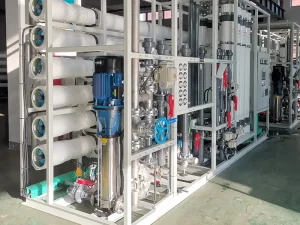
Compact Seawater Desalination Skid | High-Efficiency Reverse Osmosis Fresh Water System
View Technical Train →
Industrial Seawater Desalting Plant | Multi-Pass Marine Desalination Equipment
View Technical Train →
High-Salinity Wastewater System | Osmotically Assisted Reverse Osmosis (OARO) Technology
View Technical Train →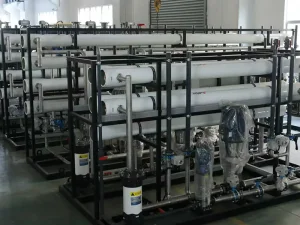
High-Efficiency Brine Concentration Skid | Zero Liquid Discharge Industrial Solutions
View Technical Train →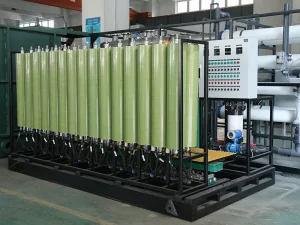
High-Pressure DTRO & STRO Membrane Concentration Skid for Heavy Industrial Leachate
View Technical Train →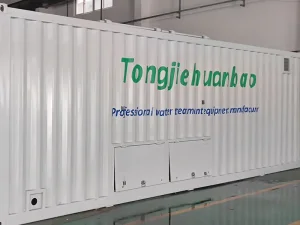
Modular Containerized SWRO Plant | Insulated Nordic Design for Rapid Site Deployment
View Technical Train →
DTRO & STRO High-Pressure Multi-Stage Membrane Unit (Operating Up to 120 Bar)
View Technical Train →
Turnkey High-Ratio Water Reuse Equipment | Integrated DAF + UF + RO Industrial Package
View Technical Train →Pioneering ultra-low energy and digitalized membrane systems aligned with Sweden's 2045 net-zero greenhouse gas target.
Sweden's abundant wind resources enable direct-coupled off-grid desalination. Tongjie's dynamic control software handles sudden power swings without causing membrane back-pressure shocks, ensuring stable operations even with variable green power inputs.
Integrating machine-learning models to predict bio-fouling and mineral scaling in cold Baltic waters. Our algorithm tracks real-time normalized flux decline, scheduling micro-CIP (Clean-in-Place) intervals precisely when required, saving 20% in chemical consumption.
Moving beyond basic disposal to mineral valorization. Next-generation systems incorporate selective nanofiltration (NF) to extract pure magnesium and calcium prior to crystallization, providing industrial salts back to Sweden’s de-icing and chemical synthesis sectors.
Clear, technical guidance on specifying, importing, and commissioning Chinese membrane systems in Sweden.
Baltic Sea water typically ranges between 3,000 and 8,000 mg/L TDS, vastly lower than standard oceanic seawater (35,000 mg/L). Designing for the Baltic requires a hybrid approach. Standard high-pressure SWRO pumps operate below their optimal curve in low-salinity ranges. We employ medium-pressure brackish/seawater crossover elements and variable frequency drives (VFD) to achieve recoveries of 65%–75% with energy consumption under 2.5 kWh/m³, while avoiding high membrane replacement overheads.
Seawater temperatures in the Swedish archipelago drop below 2°C in winter, which nearly halves membrane flux due to increased fluid viscosity. Our systems feature automatic pressure compensation via PLC logic and optional shell-and-tube or plate heat exchangers connected to plant waste heat loops. If heat recovery is unavailable, we oversize membrane active area by 18%–25% based on winter simulation projections.
Yes. Our Nordic-spec containerized plants utilize fully insulated ISO standard containers with 50–100 mm rockwool or polyurethane insulation, internal thermostatically controlled HVAC/heating systems, frost-protected pneumatic drains, and automatic drainage sequences upon shutdown to prevent freeze cracking in piping and instrumentation.
We supply complete engineering dossiers: General Arrangement (GA) drawings, 3D BIM models, Piping & Instrumentation Diagrams (P&ID), electrical schematics (EPLAN), EN 10204 3.1 material test certificates for wetted metals, CE Declaration of Conformity, noise emissions ratings, and brine dispersion analysis data to facilitate Miljöbalken permitting.
Standard containerized systems require 8–10 weeks for fabrication and factory wet testing. Ocean freight from Shanghai to Port of Gothenburg or Port of Stockholm takes approximately 32–38 days. Customs clearance and transit documentation are supported under DDP, CIF, or FOB incoterms with full import compliance.
Every plant is equipped with an encrypted industrial 4G/5G remote telemetry module enabling real-time remote diagnostics, code updates, and troubleshooting directly from our engineering center. For on-site commissioning, our multilingual field service engineers can deploy to Sweden, or partner with local mechanical installation contractors.
Send your feed water parameters, required capacity (m³/day), and target permeate specifications. Our technical engineering group will provide a complete process mass balance, P&ID, and cost projection within 48 hours.
Send Inquiry Now