
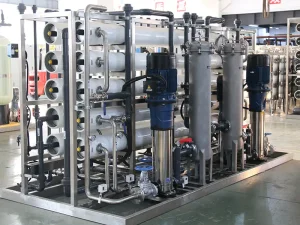
Flagship Desalination & High-Salinity Solutions
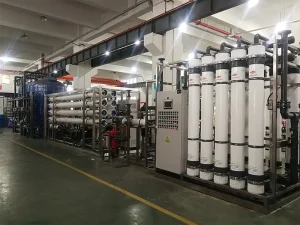
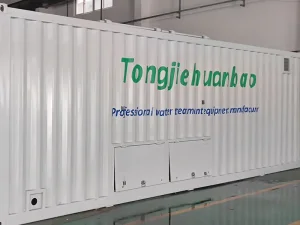
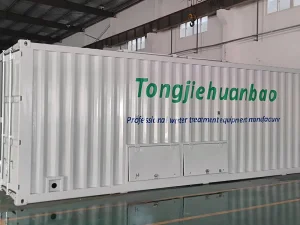
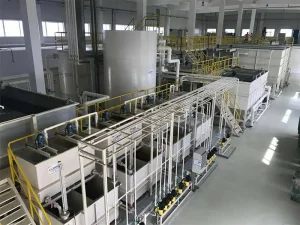
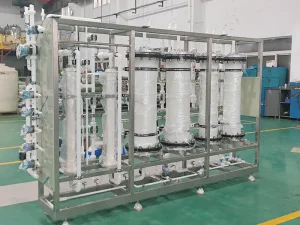
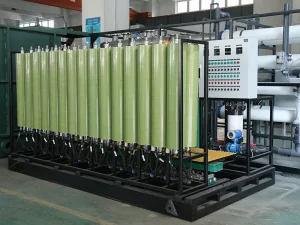
Precision Modular Desalination Units Ready for Global Deployment
Engineered to international potable standards (WHO & EU Drinking Water Directive) with robust marine corrosion resistance and high energy recovery efficiency.
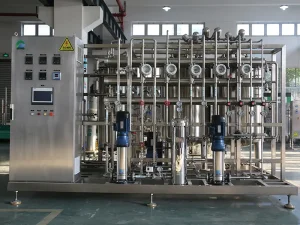
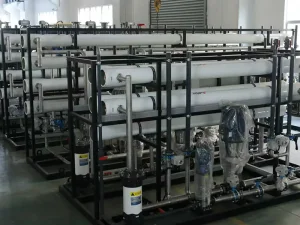
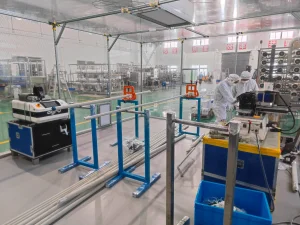
Market Dynamics & Global Industry Context
Turning Ocean Water Into Drinking Water: The Global Commercial Shift
A comprehensive technical and industrial evaluation of high-salinity seawater desalination infrastructure, macro trends, and regulatory imperatives driving modern municipal and corporate water security.
The Geopolitics and Economics of Ocean-to-Potable Conversion
Global freshwater scarcity no longer threatens only hyper-arid climates. Climate-induced precipitation volatility, industrial groundwater overdraft, and rising coastal populations have transformed seawater reverse osmosis (SWRO) from an emergency fallback into a baseline infrastructure mandate.
Modern commercial desalination facilities demand strict compliance frameworks. For suppliers exporting to the European Economic Area, the Middle East, Latin America, and Southeast Asia, possessing a fully certified CE mark (covering the Machinery Directive 2006/42/EC, Low Voltage Directive 2014/35/EU, and Pressure Equipment Directive 2014/68/EU) is essential for operational risk management and international EPC financing approval.
- Total Dissolved Solids (TDS) Elimination: Systems engineered to step down open-ocean salinity (35,000 to 45,000 mg/L) to ultra-safe potable drinking water (under 300 mg/L TDS).
- Energy Transition Synergy: Integration with Isobaric Energy Recovery Devices (ERD) capturing up to 98% of brine pressure energy to lower kWh/m³ consumption.
- Chemical-Free Disinfection: Synergistic secondary barriers integrating UV-C reactors and electro-chlorination modules for residual bacteriological safety.
Desalination Operational Benchmarks (2025–2030)
Key operational performance indicators achieved across Tongjie factory-tested, skid-mounted, and containerized multi-stage reverse osmosis networks:
< 2.8 kWh/m³
Specific Energy Consumption (SWRO + Dual ERD)
> 99.75%
Mean Chloride & Monovalent Ion Salt Rejection
17+
Years Membrane R&D & Engineering
38+
Invention & Utility Model Patents
1,000+
Global Installations in 40+ Nations
100%
Factory Acceptance Tested (FAT)
Strategic Procurement Value
Why Tier-1 Global Contractors Source Desalination Equipment from China
Combining complete vertical supply chain integration, precision metallurgic manufacturing, and rapid containerized prefabrication for reduced CapEx and fast commissioning schedules.
Vertical Supply Chain Synthesis
Our Shanghai facility directly integrates pressure vessel production, specialized automated pipe spooling (Duplex 2205 and Super Duplex 2507 stainless steel), automated electrical control assembly, and factory test bays. Eliminating third-party subcontracting ensures unmatched production cadence and precision quality control.
Severe Corrosion Engineering
Seawater desalination requires robust metallurgical protection. We manufacture utilizing certified 2507 Super Duplex wetted components, high-grade FRP housings rated up to 1200 PSI, and customized epoxy interior container coatings capable of resisting coastal marine salinity and hot, humid tropical climates.
Factory Acceptance Testing (FAT)
Every modular seawater system completes full hydrostatic pressure testing, dynamic wet-load trials with synthetic saline mixtures, electrical safety loop verification, and SCADA automation calibration in our factory before container seal and ocean dispatch, eliminating costly on-site startup delays.
Versatile Industrial Scenarios
Localized Engineering Use Cases Across Dynamic Operating Environments
From isolated islands to offshore petrochemical platforms, our CE-certified plants convert harsh marine feeds into reliable, crystal-clear drinking water.
Island Resorts & Eco-Communities
Decentralized, containerized SWRO systems deliver stable municipal-grade drinking water for luxury coastal resorts and island communities, eliminating the carbon cost and vulnerability of barge water delivery.
Offshore Oil Platforms & Marine Fleets
Compact skids built to marine classifications produce safe potable water and low-conductivity turbine-wash feed, featuring automated chemical dosing, CIP flushing, and explosion-proof control panels.
Coastal Mines & Refining Complexes
Large-scale coastal industrial installations rely on our dual-pass SWRO systems to supply continuous potable utility water for workforces and high-volume process feed for mineral processing and chemical synthesis.
Disaster Response & Military Camps
Trailer-mounted and self-contained 20ft/40ft shipping containers equipped with diesel generators or solar hookups provide immediate, life-sustaining potable drinking water within 24 hours of arrival at disaster zones.
Technology Horizon
Emerging Trends Shaping Next-Generation Desalination Infrastructure
How automation, renewable microgrids, and advanced membrane materials are reducing the carbon intensity and lifecycle cost of ocean water purification.
Solar & Wind Direct-Coupled Desalination
Grid-independent SWRO is accelerating. We engineer specialized dynamic variable-frequency drive (VFD) high-pressure pumping sets that ramp production up and down smoothly based on solar photovoltaic output, eliminating battery bank CapEx while safeguarding membrane integrity from abrupt pressure shocks.
Biofouling-Resistant Nanomembranes
Membrane biofouling accounts for significant chemical and downtime expenses in tropical seawater applications. Modern installations integrate low-fouling aromatic polyamide composite membranes and advanced biocidal pre-oxidation regimens that double the interval between clean-in-place (CIP) cycles.
Autonomous SCADA with Predictive Diagnostics
Our plants integrate cloud-linked PLC telemetry running machine learning algorithms. By monitoring normalized permeate flow, temperature-corrected differential pressure, and salt passage in real time, the control system forecasts mineral scaling and membrane fouling 14 days before performance declines occur.
Engineering Architecture
The Complete Industrial Seawater-to-Drinking Water Flow Path
A rigorous, multi-barrier purification sequence engineered to eliminate suspended solids, pathogenic organisms, and dissolved minerals to produce mineralized, pleasant-tasting water.
Stage 1: Pre-Treatment
Multi-media sand filters and self-cleaning disc micro-filters remove coarse particulate matter, algae, and marine silt, lowering the Silt Density Index (SDI15) below 3.0 to protect downstream elements.
Stage 2: High-Pressure RO
Super Duplex positive displacement or multi-stage centrifugal pumps push pre-treated seawater up to 65–80 bar across polyamide spiral-wound membranes, rejecting 99.7% of dissolved salts.
Stage 3: Energy Recovery
Ceramic isobaric pressure exchangers capture high pressure from the concentrated reject brine stream, transferring fluid energy directly to the incoming feed stream and cutting energy demands by up to 60%.
Stage 4: Remineralization
Pure RO permeate is stripped of excess CO2, then passed through limestone/calcite beds for calcium, magnesium, and pH adjustment, followed by inline disinfection to ensure clean, balanced potable water.
EPC Due Diligence
Global Enterprise Procurement Matrix for Seawater Desalination
A structured technical assessment framework to evaluate equipment bids, reduce lifecycle expenses, and avoid common procurement errors.
Crucial Engineering Specifications When Evaluating Suppliers
Industrial buyers often focus on initial capital cost, underestimating lifecycle OpEx. Over a 15-year operational lifecycle, energy consumption accounts for 45–55% of the total water cost, while initial capital expenditure represents only 20–25%.
- Metallurgical Documentation: Require EN 10204 3.1 material test certificates for all Super Duplex (PREN ≥ 42) components to prevent pitting corrosion under warm seawater conditions.
- CE Compliance Dossier: Confirm that the manufacturer provides a genuine CE Declaration of Conformity with an authorized EU Notified Body number for pressurized housings and systems.
- Membrane Flux Rate Limits: Ensure design flux does not exceed 12–14 LMH (liters per square meter per hour) for open seawater intakes, preventing rapid fouling.
- Pre-Wired Control Automation: Look for modular systems pre-wired to Siemens or Allen-Bradley PLCs with Profinet/Modbus capability for seamless DCS integration.
Lifecycle Cost Breakdown (15-Year Horizon)
Optimizing plant architecture and energy recovery early directly preserves corporate operating margins:
- Electrical Energy: 48% (Significantly lowered using modern ERDs)
- Capital Amortization: 22% (Optimized via Chinese factory prefabrication)
- Membrane Replacements: 14% (Preserved through proper automated CIP flush)
- Labor & Consumables: 16% (Reduced via automated, unattended PLC run)
Expert Insights
Frequently Asked Questions on Seawater Desalination Procurement
In-depth technical answers addressing operational mechanics, regulatory requirements, logistics, and on-site integration.
What specific standards does CE Certification mandate for seawater reverse osmosis equipment?
A verified CE certification for industrial desalination systems ensures conformity with three essential directives: The Machinery Directive (2006/42/EC) ensuring operator safety around rotating high-pressure pumps; the Low Voltage Directive (2014/35/EU) governing electrical enclosure insulation and safety; and the Pressure Equipment Directive (PED 2014/68/EU). Under PED, membrane pressure vessels, high-pressure piping manifolds, and pulsation dampeners operating above 0.5 bar must undergo strict hydrostatic design verification and quality certification to ensure safety during high-pressure operation.
How is the problem of boron and bromide removal solved to meet drinking water standards?
Natural seawater contains approximately 4.5 to 5.5 mg/L of boron. While standard seawater membranes reject around 90–93% of boron at neutral pH (yielding permeate with 0.8–1.2 mg/L), the World Health Organization (WHO) and EU drinking water regulations mandate levels below 0.5 mg/L. Our factory engineers resolve this by employing a dual-pass reverse osmosis design. The first pass desalinates raw seawater, and the second pass operates at an elevated pH (>9.5) using caustic soda dosing. At this alkaline pH, uncharged boric acid converts into charged borate ions, allowing the second-pass brackish water membranes to reject over 99% of boron and comfortably satisfy international drinking water standards.
What is the difference between open intake and beach well intake systems?
Open sea intakes draw water directly from the open ocean using submerged screening structures. While they can deliver high volume, they are exposed to seasonal algae blooms, seasonal temperature shifts, oil slicks, and marine organisms, requiring comprehensive coagulant dosing, dissolved air flotation (DAF), and ultrafiltration pre-treatment. Beach wells or subsurface intakes filter raw seawater naturally through coastal sand and seabed geology. This geological filtration delivers water with lower turbidity, minimal biological activity, and an SDI consistently under 2.0, substantially simplifying surface pre-treatment and lowering chemical consumption.
What makes containerized desalination plants preferable over civil-built plants for remote sites?
Containerized desalination units offer major advantages for off-grid coastal, mining, and island locations. Over 95% of piping, electrical wiring, instrument calibration, and mechanical fabrication is completed inside our climate-controlled factory in Shanghai. On site, contractors only need to prepare a simple concrete foundation pad, hook up raw water intake, plug in the main power source, and connect the permeate output line. This cuts on-site installation schedules from 9–14 months down to just 2–3 weeks, avoiding high remote labor and engineering costs.
How does Tongjie support overseas commissioning, field operations, and replacement parts?
We provide full lifecycle operational support. Every system includes dual remote-access gateways, enabling our Shanghai automation engineers to troubleshoot PLC diagnostics, sensor drift, and alarm logs in real time. We provide complete factory-certified validation documentation, mechanical drawings, and step-by-step video procedures. When required, our field service engineers can deploy globally for on-site commissioning, cold-weather or tropical tuning, and comprehensive operator training. Replacement membrane elements, cartridge filters, high-pressure seals, and specialty chemicals are stocked and dispatched internationally with short lead times.
Comprehensive Product Portfolio
High-Efficiency Membrane Water Treatment Systems
Explore our certified solutions for zero-liquid discharge, high-purity industrial process feed, and specialized membrane separation.
Request a Custom Engineering Design & Mass Balance Calculation
Send your raw ocean water analysis (TDS, temperature range, SDI, organics, and biological load) along with your daily capacity requirements. Our process engineers will return a complete preliminary design, P&ID diagram, and equipment proposal within 24 hours.