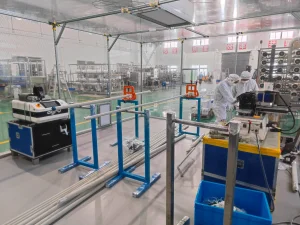
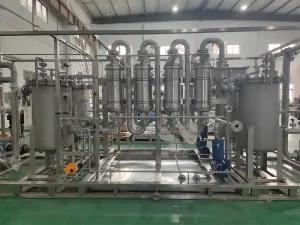
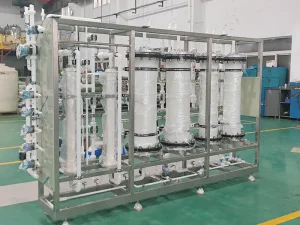
High-Efficiency Offshore Water Separation Systems
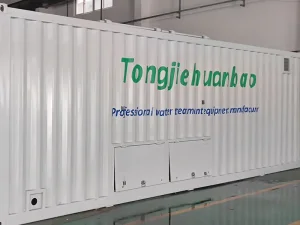
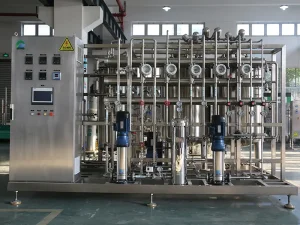
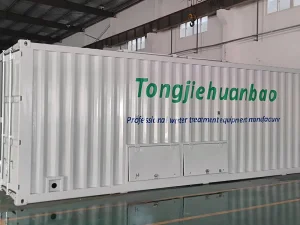
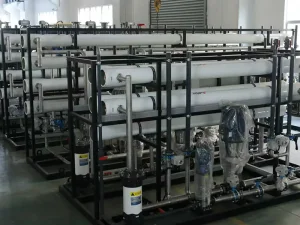
Pre-tested modular skids and containerized treatment packages engineered for rigorous offshore operational conditions, drilling recovery, and marine zero liquid discharge.
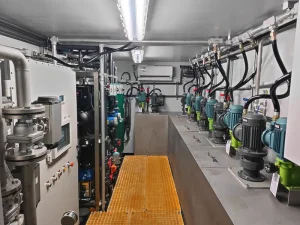
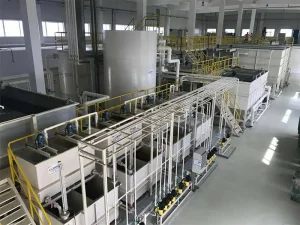
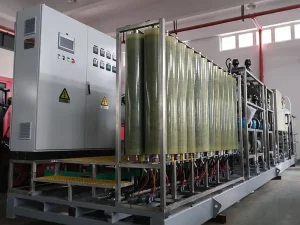
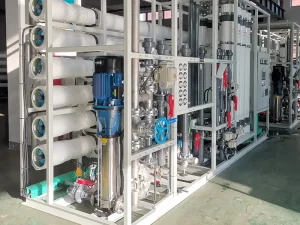
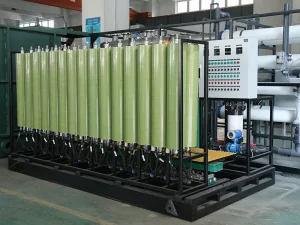
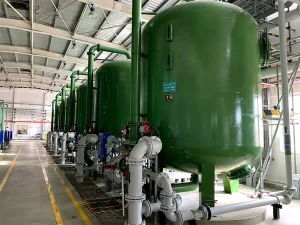
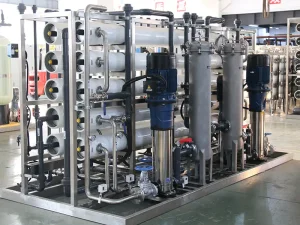
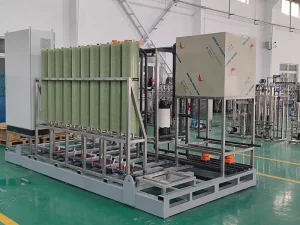
Overcoming Offshore Produced Water Complexities: The Modern Engineering Paradigm
Offshore oil and gas operators face escalating challenges balancing tightening environmental regulations, aging deep-well reservoirs with 90%+ water cuts, and severe topside spatial constraints.
Offshore produced water (OPW) represents the largest volume liquid waste stream generated in offshore exploration and production operations. As hydrocarbon fields mature across the Bohai Bay, South China Sea, North Sea, Persian Gulf, and Gulf of Mexico, the water-to-oil ratio escalates exponentially, frequently yielding 8 to 10 barrels of contaminated brine for every barrel of crude lifted. This effluent comprises an extremely complex physicochemical matrix: dispersed and dissolved aliphatic/aromatic hydrocarbons, heavy polycyclic aromatics (PAHs), heavy metals, suspended formation fines, volatile organic acids, production chemical residues (corrosion inhibitors, demulsifiers, biocides), and high total dissolved solids (TDS) exceeding 30,000 to 220,000 mg/L.
Historically, offshore platforms relied primarily on physical gravity separation systems—such as API separators, corrugated plate interceptors (CPI), and hydrocyclone liners—supplemented by induced gas flotation (IGF). However, conventional technologies are designed to isolate dispersed oil droplets larger than 10–20 microns. Under modern regulatory frameworks (such as the OSPAR Convention requirement of < 30 mg/L dispersible oil-in-water, and progressive zero-harm standards demanding sub-5 ppm thresholds), traditional gravity trains fail completely against soluble BTEX fractions, micro-emulsions, and chemical-stabilized colloidal species.
As an internationally acknowledged leader among China offshore produced water treatment manufacturers, Shanghai Tongjie bridges this technology gap through advanced membrane metallurgy, Disc Tube Reverse Osmosis (DTRO), specialized polymeric ultrafiltration, and multi-stage desulfurization skids. By integrating full structural engineering compliance (DNV GL, ABS, CE) with high-efficiency hydrodynamics, Chinese manufacturing ecosystems deliver modularized, low-footprint solutions capable of achieving subsea reservoir reinjection standards or non-toxic open-ocean environmental disposal.
Why Tier-1 EPCs Partner with Chinese Manufacturers
Consolidating high-grade metallurgy, rapid fabrication capacity, and end-to-end proprietary membrane technology under one roof.
Vertically Integrated Value Chains
Unlike Western equipment assemblers who rely on fragmented third-party component sourcing, premier Chinese factories house core membrane casting, automated skid structural fabrication, explosion-proof electrical assembly, and digital SCADA integration within unified manufacturing facilities.
Anti-Corrosion Metallurgy Mastery
Offshore environments present acute challenges with sour gas (H2S), high carbon dioxide partial pressures, and seawater chloride attack. Chinese fabrication yards maintain extensive automated orbital welding credentials for Super Duplex 2507, 2205 stainless steels, Titanium Grade 2, and Hastelloy C-276.
Cost-to-Performance Optimization
Modularized manufacturing allows international oil operators to reduce CapEx by up to 35-50% relative to traditional European or North American yards, without sacrificing ASME Section VIII, DNV offshore lifting, or ATEX/IECEx Zone 1/Zone 2 explosion-proof standards.
End-to-End Offshore Produced Water Treatment Train
A multi-barrier engineered sequence designed for extreme variable feedwater fluctuations and unattended offshore operations.
Primary Deoiling & Desanding
Compact dynamic hydrocyclones and ceramic cross-flow microfiltration extract free crude and abrasive silica fines down to < 2 microns, reducing inlet hydrocarbons below 50 mg/L.
Catalytic Softening
In-line targeted chelation eliminates scale-forming divalent cations (Ca²⁺, Mg²⁺, Ba²⁺, Sr²⁺) that cause catastrophic irreversible scaling on high-pressure membrane surfaces.
DTRO & STRO Membrane Core
Open-channel Disc Tube Reverse Osmosis (DTRO) handles severe organic fouling loads up to 160 bar, recovering clean water while concentrating hypersaline retentate efficiently.
Reinjection & ZLD Output
Treated permeate achieves ultra-pure parameters (≤ 5 mg/L Oil, ≤ 1 mg/L Suspended Solids), fully compatible with polymer flooding, reinjection, or zero-impact sea discharge.
Deployment Scenarios for International Energy Operators
Modular installations tailored for deepwater FPSOs, unmanned fixed jackets, and remote coastal reception terminals.
FPSO Topside Retrofits
Floating Production Storage and Offloading vessels face intense weight and deck footprint restrictions. Skid-mounted DTRO packages replace massive gravity vessels, saving up to 60% weight while operating unaffected by high sea-state roll and pitch dynamics.
Subsea Tight Reservoir Reinjection
Deep injection wells with permeabilities < 10 mD plug rapidly under conventional OPW. Tongjie’s advanced micro-clarification guarantees total suspended solids (TSS) ≤ 1 mg/L and median particle diameter < 0.5 μm, safeguarding reservoirs from costly formation damage.
Coastal Liquefaction & Petrochemical Hubs
Coastal receiving stations process combined multi-field crude streams containing complex emulsion polymers. Our multi-stage high-recovery membrane trains recover water for industrial cooling makeup and boiler feed, reducing freshwater consumption.
Frequently Asked Questions (FAQ)
Essential guidance for project directors, lead process engineers, and offshore procurement managers.
How does DTRO tolerate heavy oil and high-fouling feedwater without clogging?
Conventional spiral-wound RO elements have narrow spacer channels (28–34 mil) that trap suspended hydrocarbons, causing rapid irreversible fouling. Tongjie’s Disc Tube Reverse Osmosis (DTRO) features open-channel hydraulic geometry where fluid flows across flat octagonal cushion membranes separated by flow-directing discs. This induces high shear turbulence that continuously scours foulants off the membrane surface.
What quality certifications are supplied with offshore membrane packages?
Every offshore skid manufactured in our Shanghai facility complies with ISO 9001, ISO 14001, and ISO 45001. System designs meet CE conformity, ASME Section VIII (pressure vessels), API 610/674/675 (pumping equipment), and ATEX/IECEx certifications for explosive environments. Third-party verification with societies such as DNV, ABS, or Lloyd's Register is available.
Can Chinese manufacturers customize metallurgy for sour gas service?
Yes. We engineer skid frames, piping networks, valve bodies, and vessel shells according to NACE MR0175/ISO 15156 standards for sour environments (H2S and CO2). Material selections include 2205/2507 Super Duplex, Titanium, Hastelloy C-276, or internally rubber-lined/PTFE-lined vessels, backed by radiographic and liquid penetrant testing (NDT).
What is the typical fabrication and factory acceptance testing (FAT) lead time?
Thanks to integrated supply chains and dedicated skid framing infrastructure in Shanghai, standard containerized or modular OPW skids typically reach completion within 12 to 18 weeks. FAT testing includes hydrotesting, helium leak detection, instrument loop checks, and automated control sequence validations prior to international export.
Advanced Separation, EDI & Concentration Solutions
Explore our extended series of deoxygenation, seawater conversion, and industrial demineralized water skids engineered for global infrastructure.