
High-Efficiency Desalination & High-Pressure Systems
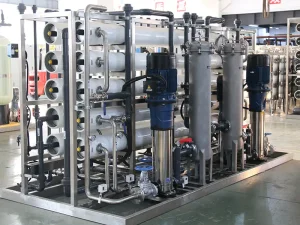
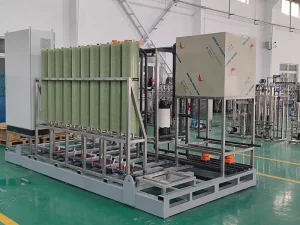
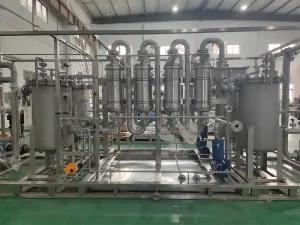
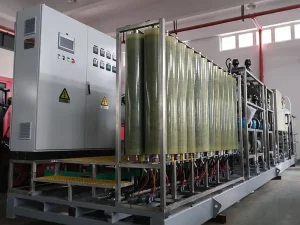
Factory-prefabricated, pressure-tested, and fully integrated membrane skids designed to withstand extreme osmotic gradients, chlorination resistance, and dynamic marine conditions.
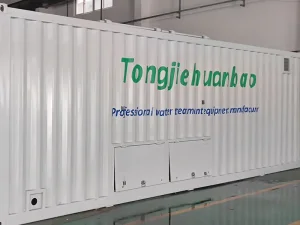
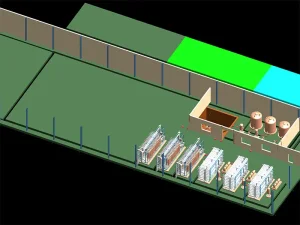
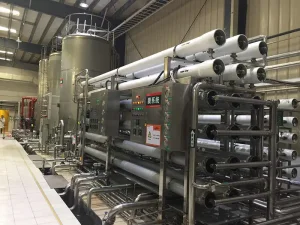
Precision Manufacturing Standards for Global Water Challenges
Seawater Reverse Osmosis (SWRO) operates under rigorous thermodynamic, hydraulic, and chemical stresses. Shanghai Tongjie Environmental Protection Technology Co., Ltd. (established in 2010) brings over 17 years of specialized membrane engineering expertise to address coastal water scarcity, industrial high-salinity discharge, and severe brackish environments.
Full CE & PED Conformity
Every seawater membrane pressure vessel, high-pressure booster manifold, and structural skid conforms directly to EU Directive 2014/68/EU (Pressure Equipment Directive), EN ISO 12100 safety of machinery, and EN 60204-1 electrical compliance. We eliminate export-import bottlenecks through documented Declaration of Conformity and full European third-party audit trails.
Metallurgical Superiority
Seawater containing up to 45,000 ppm TDS induces aggressive pitting and crevice corrosion. Tongjie utilizes UNS S32750 / Super Duplex 2507 stainless steel for all high-pressure piping circuits, 904L, and Duplex 2205 for medium-pressure junctions, guaranteed to resist chloride stress corrosion cracking under operating pressures reaching up to 8.3 MPa (1,200 psi).
Isobaric Energy Recovery Integration
Energy constitutes upwards of 60% of seawater desalination operating expenditure. Our SWRO systems natively integrate ceramic isobaric rotary pressure exchangers (ERD), recovering up to 96% of the hydraulic energy contained within the concentrate brine stream. Specific energy consumption is routinely driven down below 2.8 – 3.2 kWh/m³ permeate produced.
Strategic Manufacturing Advantages: Why Global EPCs Partner with Chinese Factories
The geopolitical reorientation of industrial water infrastructure procurement has made China the global epicenter for cost-effective, high-reliability membrane system fabrication. Tongjie leverages this industrial matrix to pass unmatched value to EPC partners worldwide.
Complete Cluster Ecosystem
From automated spiral-wound polyamide composite membrane fabrication lines to precision FRP pressure vessels and Class II high-pressure piping fabrication, Shanghai’s industrial basin permits 100% component availability without cross-border lead-time delays.
35%–45% Capex Optimization
By coupling localized precision CNC machining, standardized skid frame fabrication, and internal software automation programming, Tongjie delivers tier-one engineering quality at 35% to 45% lower capital expenditure compared to Western European or North American assembly yards.
Accelerated Commissioning Sched
Where conventional European manufacturers require 9 to 14 months for SWRO skid delivery, Tongjie's modular pre-engineering pipelines achieve containerized plant testing and dispatch in under 12 to 16 weeks, backed by standard DNV/ISO certified structural containers.
Stringent Quality Traceability
Full digital traceability is maintained for every heat number of duplex piping, weld joint X-ray / dye-penetrant inspection (NDT), hydrostatic burst testing certificates, and factory acceptance test (FAT) reports supervised by certified ISO 9001/14001/45001 auditors.
Technological Frontiers in High-Recovery Seawater Desalination
Addressing boron limitations, thermal energy costs, biofouling rates, and mineral recovery through multi-stage hybrid membrane architectures.
Nanocomposite TFN Membranes (Thin-Film Nanocomposite)
The transition from conventional Thin-Film Composite (TFC) aromatic polyamides to Thin-Film Nanocomposite (TFN) structures represents a monumental leap in flux density. By dispersing functionalized zeolite, metal-organic frameworks (MOFs), or graphene oxide nanoparticles into the polyamide layer, water permeability rises by 25–40% without compromising NaCl or trace contaminant rejection. This decreases dynamic feed pressures across high-salinity seawater arrays.
Targeted Boron and Silica Rejection Chemistry
Agricultural irrigation and drinking water guidelines (WHO limit ≤ 0.5 mg/L Boron) present severe challenges for standard seawater RO membranes due to the neutral charge of boric acid (H₃BO₃) at ocean pH (8.1). Tongjie deploys proprietary pH-elevated second-pass membrane configurations and specialized tight aromatic polymer cross-linking that yields single-pass boron rejection rates over 93% and second-pass rejection exceeding 99.2%.
Hybrid SWRO-OARO-DTRO for Zero Liquid Discharge
Conventional SWRO is hydraulically restricted to approximately 40%–50% recovery due to osmotic backpressure surpassing membrane mechanical limits (83 bar). By cascading Seawater Reverse Osmosis with Osmosis-Assisted Reverse Osmosis (OARO) and high-pressure Disc Tube Reverse Osmosis (DTRO), brine salinity is safely concentrated to >130,000 mg/L TDS at 120 bar, reducing crystallizer thermal load by 70%.
| Performance Vector | Legacy SWRO (Standard TFC) | Tongjie Advanced CE-SWRO Series | OARO / DTRO Brine Concentration |
|---|---|---|---|
| Operating Pressure Range | 55 – 65 Bar (800 – 940 psi) | 65 – 83 Bar (940 – 1,200 psi) | 90 – 130 Bar (1,300 – 1,885 psi) |
| Nominal Salt Rejection (NaCl) | 99.50% – 99.70% | 99.80% – 99.88% | 99.20% – 99.50% (Under high osmotic loads) |
| Boron Rejection (pH 8.0, 5mg/L) | 80.0% – 88.0% | 91.0% – 94.5% | 88.0% – 92.0% |
| Specific Energy Consumption | 3.8 – 4.5 kWh/m³ | 2.6 – 3.1 kWh/m³ (with PX ERD) | 6.0 – 9.5 kWh/m³ (Thermal displacement mode) |
| Pretreatment SDI₁₅ Tolerance | < 3.0 Required | < 3.0 (Continuous) / < 5.0 (Peak) | < 5.0 (Open-channel disc structure) |
| Feed Salinity Threshold | Up to 38,000 mg/L TDS | Up to 48,000 mg/L TDS | 45,000 – 140,000 mg/L TDS |
Engineered for Critical Environments: Localized Deployment Scenarios
Deploying high-pressure membrane systems demands fine-tuning across geochemical parameters, feed turbidity, power stability, and discharge environmental limitations.
Island & Remote Coastal Potable Supply
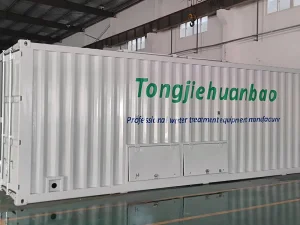
Off-grid archipelagos, coastal tourist developments, and remote military installations require ruggedized, containerized SWRO units capable of fully automated operation. Tongjie’s skid-mounted container systems feature built-in media filtration, ultrafiltration (UF) pretreatment, energy recovery devices, remineralization (calcite contactors), and UV/chlorination dosing, producing potable drinking water conforming directly with WHO standards.
Offshore Oil & Gas Platforms
Severe spatial limitations, hazardous Class 1 Div 2 electrical zone requirements, and high ambient vibration define offshore exploration vessels and floating production storage and offloading (FPSO) units. Tongjie provides ATEX and CE-compliant SWRO skids engineered with explosion-proof electric motors, 316L/Duplex skid frames, and ultra-compact disc-tube membrane housings for drilling mud make-up and crew potable water.
Coastal Thermal & Nuclear Power Plants
Boiler feed water demands sub-ppb concentrations of silica, sodium, and chloride to safeguard turbine blades from stress corrosion and scaling. Our two-pass SWRO systems coupled downstream with continuous Electro-deionization (EDI) produce high-purity demineralized boiler water (< 0.1 μS/cm conductivity, silica < 5 ppb) directly from ambient seawater feedstocks, completely replacing chemical-intensive ion exchange resin beds.
Mining Tailings & Hydrometallurgical Elution
In arid mining districts across South America and Western Australia, hyper-saline pit water and leaching solutions contain high concentrations of heavy metals, sulfates, and silica. Tongjie engineers specialized high-pressure DTRO and OARO membrane trains capable of concentrating mine tailings fluids, producing clarified reusable process water while isolating mineral salts for crystallization recovery.
Chemical & Petrochemical ZLD Schemes
Zero Liquid Discharge (ZLD) regulations prohibit surface water discharge of high-salt industrial effluent. By deploying seawater membrane modules as pre-concentrators ahead of thermal multi-effect distillation (MED) or mechanical vapor recompression (MVR), industrial plants reduce thermal evaporator volumetric sizing by over 60%, drastically slashing steam consumption and capital outlay.
Renewable-Powered Solar Desalination
Remote coastal communities often lack access to an electrical grid. Tongjie provides direct solar photovoltaic (PV) coupled containerized SWRO units equipped with variable-frequency drive (VFD) pressure pumps. The automated control system continuously tracks solar irradiance fluctuations, dynamically modulating pump speed and operating recovery to sustain continuous water production without reliance on battery banks.
End-to-End SWRO Process Train Engineering
A dependable seawater membrane system relies upon rigorous pretreatment and precision automation. Here is how Tongjie structures every industrial-grade seawater reverse osmosis train:
Intake & Coarse Screening
Open ocean or deep beach-well intake engineered with self-cleaning rotary strainers (200 – 500 μm) to protect downstream equipment from marine debris.
DAF / Dual Media Filtration
Dissolved Air Flotation (DAF) for red tide/oil algae removal, followed by pressurized anthracite-sand filters or pressurized hollow-fiber Ultrafiltration (UF).
Chemical Conditioning
Scale inhibitor dosing to prevent calcium sulfate / barium sulfate precipitation, and sodium bisulfite (SMBS) injection to neutralize free chlorine down to < 0.02 ppm.
Cartridge Filtration (1μm – 5μm)
Melt-blown polypropylene high-flow cartridge housings serving as the final physical guard against colloidal fouling ahead of the high-pressure pumps.
High-Pressure Booster & ERD
Super Duplex positive displacement or multi-stage centrifugal pumps coupled to isobaric rotary pressure exchangers, feeding the primary SWRO array.
Seawater Membrane Separation
Multi-element 8-inch spiral-wound polyamide elements housed in ASME Sec X code-stamped FRP vessels operating at 65 – 83 Bar.
Post-Treatment & Remineralization
Permeate degasification (CO₂ stripping), pH correction, and limestone calcite bed remineralization with calcium/magnesium for human consumption or steam usage.
Global Enterprise Technical Audit Checklist: Sizing, Compliance & Guarantees
When multinational EPC contractors and municipal utilities audit seawater membrane manufacturers, technical compliance extends far beyond standard marketing claims. Tongjie fulfills every parameter within global bidding criteria.
Hydraulic & Fouling Projections
Prior to contract execution, our chemical engineers calculate comprehensive membrane array projections using ROSA / IMSDesign platforms, incorporating real-world SDI₁₅, temperature variability (10°C to 38°C), flux rate conservatism (12 – 15 LMH max), and conservative 3-year fouling factors (≥0.85) to guarantee continuous design output.
Welding & Non-Destructive Testing (NDT)
Super Duplex 2507 and Duplex 2205 welding is performed by EN ISO 9606-1 and ASME Section IX certified welders under inert gas purging. 100% of high-pressure welds undergo liquid penetrant testing (PT) and 20% to 100% radiographic testing (RT) to ensure zero intergranular cracking or sigma-phase embrittlement.
PLC Automation & SCADA Architecture
Control systems are built around Siemens S7-1500 or Allen-Bradley GuardLogix PLCs with industrial Ethernet profinet networking. Standard controls integrate auto-flushing, automated clean-in-place (CIP), high-pressure interlocks, vibration monitoring on pumps, and real-time remote cloud diagnostics via encrypted OPC-UA telemetry.
Frequently Asked Questions: Industrial Seawater Membrane Systems
Direct, mathematically grounded answers to the technical inquiries raised by EPC procurement officers, plant operations managers, and consulting engineers.
What specific CE directives apply to Tongjie Seawater Reverse Osmosis equipment?
Our systems comply fully with the European Pressure Equipment Directive (PED 2014/68/EU) under Module H/H1 for high-pressure piping assemblies and pressure vessels, the Machinery Directive (2006/42/EC), the Low Voltage Directive (LVD 2014/35/EU), and the Electromagnetic Compatibility Directive (EMC 2014/30/EU). All equipment carries valid CE markings and technical construction files (TCF).
How does Tongjie prevent biofouling on thin-film composite polyamide membranes?
Polyamide SWRO membranes degrade permanently upon exposure to free chlorine. Tongjie enforces a multi-tier defense: upstream intermittent shock chlorination or DBNPA biocidal dosing, granular activated carbon (GAC) or sodium bisulfite (SMBS) stoichiometric neutralization to reach an Oxidation-Reduction Potential (ORP) < 200 mV, coupled with automatic low-salinity permeate displacement flushing whenever the system shuts down.
What is the typical specific energy consumption (SEC) of your containerized SWRO?
By pairing premium-efficiency IE4 motors, multi-stage axial piston or centrifugal pumps, and cutting-edge ceramic isobaric rotary pressure exchangers (ERD), our containerized SWRO units achieve an SEC between 2.8 and 3.2 kWh per cubic meter of potable permeate when treating standard 35,000 ppm seawater at 25°C and 42% recovery.
Can your systems reach potable standards for boron without a second-pass system?
If raw seawater temperature is below 22°C and feed salinity does not exceed 35,000 ppm, our proprietary high-rejection SWRO membranes can maintain boron levels at ≤0.8 – 1.0 mg/L in a single pass. However, to guarantee compliance with the strictest WHO standard (≤0.5 mg/L) across summer peak temperatures (up to 35°C), we install a partial second-pass brackish water RO (BWRO) with caustic dosing to elevate pH to 9.5 – 10.0.
How are the membrane pressure vessels certified for mechanical safety?
All FRP (Fiberglass Reinforced Polymer) pressure vessels incorporated into Tongjie SWRO skids are certified in accordance with ASME Boiler and Pressure Vessel Code Section X, rated for 1,000 psi or 1,200 psi (69 to 83 bar) service. Each vessel undergoes proof pressure hydrostatic qualification at 1.5 times design pressure before leaving the factory.
What is the standard lifetime and replacement interval of Tongjie seawater membranes?
Under recommended operational conditions—preserving Silt Density Index (SDI₁₅) < 3.0, continuous antiscalant dosing, zero free halogen oxidants, and performing periodic Clean-In-Place (CIP) every 3 to 6 months—our seawater reverse osmosis elements routinely exhibit an industrial operating lifespan of 3 to 5 years before exceeding threshold salt-passage limits.
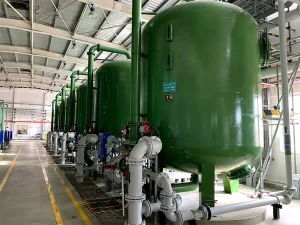
Demineralized Water, High-Purity RO-EDI & Tailored Industrial Systems
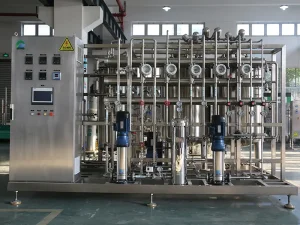
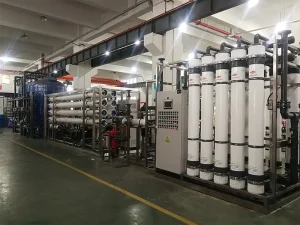
Explore our complete range of pharmaceutical, boiler makeup, flowback reuse, and custom OEM manufacturing solutions delivered directly from our Shanghai manufacturing center.
Initiate Your Turnkey Desalination or ZLD Project
Share your water assay report (TDS, temperature, hardness, silica, organics, and target permeate standard). Our Shanghai application engineering team will deliver a comprehensive project dossier within 48 hours—including membrane sizing projections, P&ID schematics, isobaric energy recovery mass-balances, and transparent factory direct pricing.