
High-Efficiency Desalination & High-Purity Water Equipment
Explore our factory-integrated skid-mounted and containerized water solutions designed for severe marine, industrial process, and zero-discharge environments.

Industrial Demineralized Water Equipment - RO & EDI Systems
Explore Technical Specs
High-Capacity RO + EDI Demineralized Water Manufacturing Skid
Explore Technical Specs
Full Value Chain OEM/ODM Membrane Water Engineering Station
Explore Technical Specs
Physical Degassing Deoxygenation Membrane Contactor Plant
Explore Technical Specs
Industrial Wastewater High-Ratio Recycling & Water Reuse Train
Explore Technical Specs
Electronic Grade Ultra-Pure Water (UPW) System for Semiconductor Fabs
Explore Technical Specs
Oilfield Fracturing Flowback Produced Water ZLD System
Explore Technical Specs
Containerized Mobile Seawater Desalination Plant (Plug & Play)
Explore Technical SpecsCommercial & Industrial Landscape of Saltwater Desalination
A macroeconomic paradigm shift from thermal multi-stage flash to high-flux, low-energy reverse osmosis architectures engineered in China.
Grid Decoupling & Global Water Deficit
Over 2.3 billion people currently reside in water-stressed nations, and critical heavy industries—such as green hydrogen generation, petrochemical refining, and lithium chemical processing—demand uncompromising volumes of low-conductivity feed water. Traditional freshwater extraction from depleted aquifers is facing regulatory bans and prohibitive ecological depletion costs across MENA, Central Asia, and Latin American coastal zones.
Consequently, Seawater Reverse Osmosis (SWRO) has evolved from an emergency civil intervention into a fundamental industrial utility, growing at a CAGR of 9.4% through 2032.
- Municipal and remote island drinking water security
- Industrial baseline feed for petrochemical and chemical parks
- Direct integration with coastal solar PV and wind microgrids
Energy Recovery Devices (ERD) & Specific Energy (SEC)
Historically, the operational expense of desalination was dominated by the thermal requirements of Multi-Stage Flash (MSF) systems consuming upwards of 15 to 25 kWh/m³. The transition to high-pressure Thin-Film Composite (TFC) aromatic polyamide membranes combined with isobaric energy recovery devices (pressure exchangers) has dropped specific power consumption to below 2.8 to 3.2 kWh/m³.
Shanghai Tongjie integrates precision rotary energy recovery chambers that transfer the hydraulic energy of high-pressure reject brine directly to incoming feed seawater with greater than 96.5% hydrodynamic efficiency.
- Isobaric positive-displacement ceramic rotor mechanics
- Reduction of high-pressure pump motor sizing by up to 55%
- Extended membrane operational lifespans via hydraulic damping
China's Advanced Manufacturing & Global Supply Role
China has established itself as the world’s preeminent manufacturing center for specialized water purification skids, hyperbaric membrane vessels, titanium valves, and automated control switchgear. By centralizing full value-chain engineering—from computational fluid dynamics (CFD) simulation to automated fabrication and in-house hydro-testing—Chinese suppliers deliver up to 40% capital savings over traditional European and North American EPC contractors.
Shanghai Tongjie operates a heavy-duty production hub in Shanghai, adhering strictly to ASME, CE, and ISO directives to provide plug-and-play containerized modularity ready for instant export.
- Complete Class II M&E installation & environmental qualifications
- Factory Acceptance Testing (FAT) with simulated seawater chemistries
- Pre-commissioned SCADA setups with remote telemetry gateways
Engineering Architecture & Membrane Innovations
A rigorous examination of multi-stage pre-treatment, thermodynamic energy balancing, and disc-tube hyper-concentration.
Multi-Barrier Pretreatment & Anti-Fouling
Membrane fouling remains the greatest hazard in commercial saltwater desalination. Ingress of high silt density index (SDI), colloidal silica, marine micro-algal blooms (red tides), and suspended organics can cause irreversible bio-fouling and physical destruction of spiral-wound elements within hours.
Tongjie engineers deploy a multi-barrier defense matrix consisting of Dissolved Air Flotation (DAF) for hydrocarbon and algal separation, followed by pressurized Dual-Media Anthracite/Quartz Sand Filtration, and finished with Hollow-Fiber Ultrafiltration (UF) having a nominal pore size of 0.02 microns. This ensures feed water continuously maintains an SDI < 2.5 and turbidity < 0.1 NTU before reaching the high-pressure skids.
High-Pressure Hydraulics & Metallurgy
Operating pressures in seawater reverse osmosis frequently range from 55 bar to 83 bar (800 to 1200 psi) depending on feed water osmotic pressure, salinity (32,000 to 45,000 mg/L TDS), and winter temperature fluctuations. Pumping corrosive seawater at hyper-pressures necessitates state-of-the-art metallurgical choices.
Tongjie systems utilize 2507 Super Duplex Stainless Steel (UNS S32750) and 2205 Duplex Stainless Steel for high-pressure piping manifolds, high-pressure booster feeds, and high-pressure valves. All welded joints undergo 100% radiographic or dye-penetrant inspection to guarantee zero pitting and crevice corrosion under continuous high-chloride exposure.
DTRO & STRO Open-Channel Concentration
For hypersaline brines and heavy wastewater recovery where standard spiral-wound spacer channels fail due to immediate particulate clogging, Tongjie integrates Disc Tube Reverse Osmosis (DTRO) and Spacer Tube Reverse Osmosis (STRO) systems.
With an open-channel hydrodynamic design featuring octagonal flow discs, turbulence is maintained across the membrane leaf, disrupting laminar boundary layer concentration polarization. This allows operation up to 90 to 120 bar, concentrating brine TDS beyond 100,000 mg/L directly upstream of thermal crystallizers.
Sector-Specific Industrial Scenarios & Localization
Engineered to resolve region-specific salinity spikes, temperature swings, and uncompromising effluent compliance metrics.
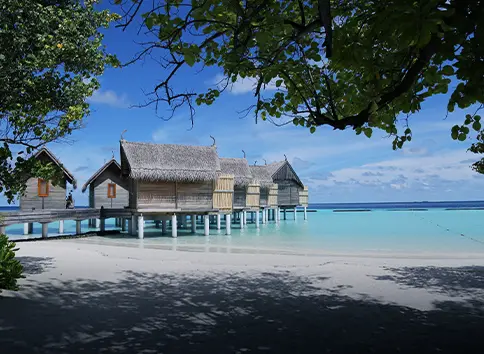
Remote Islands, Resorts & Ports
Off-grid coastal installations require minimal site civil works and swift deployment. Tongjie containerized SWRO units are housed in insulated, marine-grade anti-corrosive containers equipped with integrated variable-speed drives (VFD), automated CIP flushing cycles, and remote satellite SCADA telemetry. Designed for off-grid hybrid power systems in the Caribbean, Southeast Asia, and Pacific archipelagos.
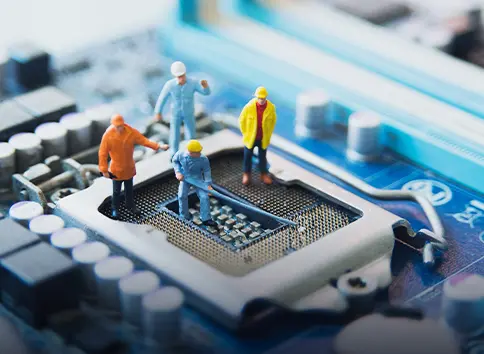
Semiconductor & Electronics (UPW)
Manufacturing modern microelectronics demands water stripped of ionic impurities down to the parts-per-trillion (ppt) threshold. Tongjie delivers integrated primary two-pass SWRO/BWRO trains paired with Continuous Electrodeionization (EDI), vacuum membrane degassing, and non-regenerative mixed-bed polishers, achieving 18.2 MΩ·cm resistivity and ultra-low TOC (< 2 ppb).
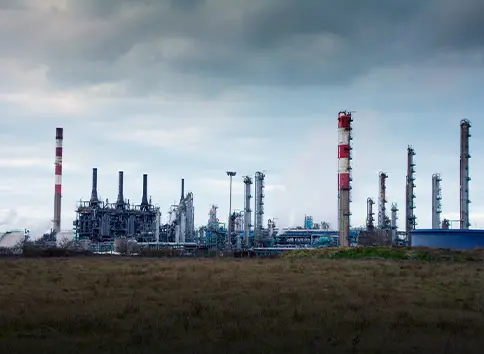
Chemical Park Wastewater & ZLD
Tightening environmental legislation prohibits high-salinity discharge into inland waterways. Tongjie deploys integrated Zero Liquid Discharge architectures combining chemical softening, dual-stage RO membrane concentration, and mechanical vapor recompression (MVR) falling film evaporators to separate mixed salts into crystallized industrial-grade byproduct and reusable distillate.
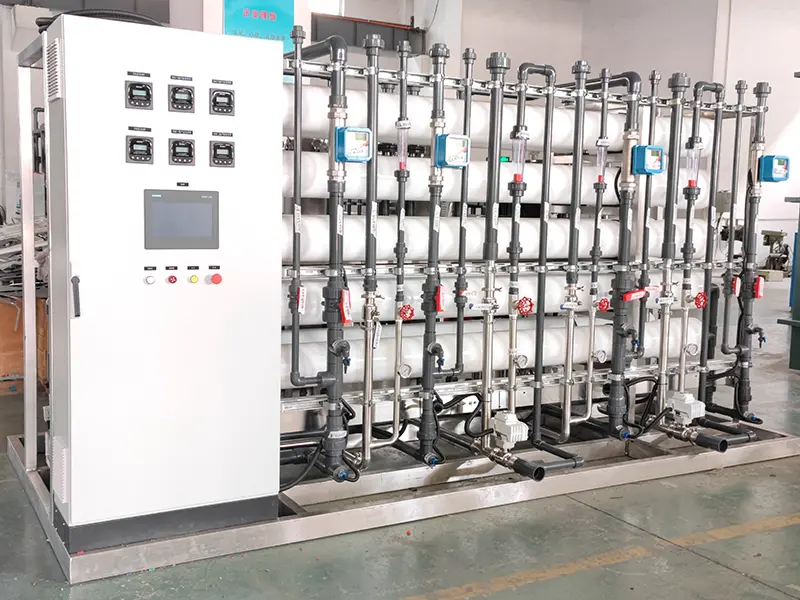
Oil & Gas Produced Water & Frac Flowback
Produced oilfield flowback contains severe hydrocarbons, toxic phenols, and extreme salinity (TDS up to 120,000 mg/L). Tongjie skid-mounted DTRO systems strip oil content to ≤5 mg/L and suspended solids to ≤1 mg/L within 15 days of site placement, enabling 100% reinjection compliance and green oilfield reuse across the Middle East and Central Asia.
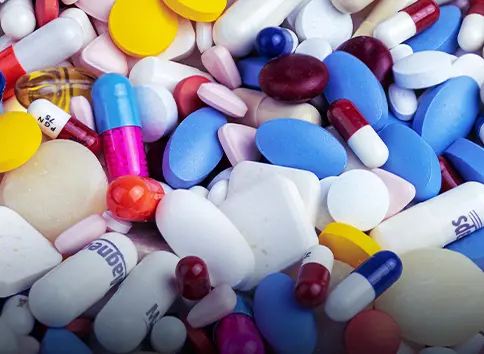
Pharmaceutical Formulation & API
Meeting GMP, USP, and EP compendial monographs requires fully verifiable water generation. Our pharmaceutical systems feature orbital welding, 316L stainless steel contact surfaces with Ra < 0.4 µm mechanical polish/electropolish, sanitary clamp connections, and online conductivity/TOC data loggers calibrated for direct DQ/IQ/OQ/PQ validation.
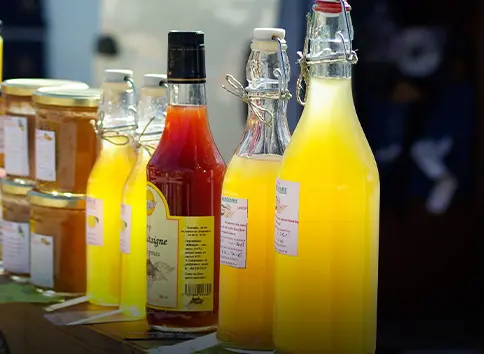
Food, Dairy & Beverage Processing
High-capacity food production demands stringent bacteriological and chemical purity without residual chloramines or organoleptic defects. Our custom food-grade systems combine activated carbon adsorbers, warm-water sanitized RO membranes, and sterile UV irradiation to deliver stable water chemistry for continuous bottling lines.
Technology Roadmap & Decarbonization Blueprint (2025–2035)
How Tongjie is advancing membrane materials, machine-learning flux optimization, and zero-discharge minerals extraction.
Variable-Speed Renewable Interfacing
Eliminating costly battery storage by linking PV inverter DC outputs directly to variable-frequency driven high-pressure positive displacement pumps. Tongjie dynamic algorithms adjust operating pressures in real time matching irradiance curves, maximizing clean water production during daylight peaks.
Aquaporin & Graphene Composite RO
Partnering with domestic research institutes to pilot synthetic aquaporin water channels and graphene oxide nano-laminated thin-film membranes. These breakthrough matrices exhibit up to 40% higher water permeability at identical salt rejection, slashing hydraulic pressure requirements by 20%.
Predictive Biofouling & Auto-CIP
Cloud-connected IoT neural networks continuously ingest feed temperature, feed turbidity, transmembrane pressure (TMP), and differential pressure (dP) across membrane vessels to predict fouling cascades 72 hours in advance, triggering micro-dosing and targeted sanitization autonomously.
Selective Resource Recovery from Reject
Evolving past passive brine disposal. Developing selective electrodialysis (SED) and membrane crystallization steps to isolate high-purity magnesium hydroxide, lithium ions, and technical-grade gypsum from hyper-concentrated seawater reject plumes before marine discharge.
Cascading STRO / DTRO > 85% Recovery
Pioneering multi-stage staged hydraulic pressure booster trains that surpass traditional 45-50% seawater recovery caps, reaching up to 65% seawater recovery and over 85% on brackish water, shrinking plant footprints and halving chemical pretreatment expenses.
Net-Zero Desalination Infrastructure
Combining waste heat recovery from adjacent industrial plants (such as combined-cycle gas turbine exhausts or data centers) to preheat feed waters and power thermal crystallizers, creating fully balanced, self-sustaining circular water-energy nodes.
International Certifications & Engineering Credentials
Fabricated under stringent quality, environmental, and occupational safety frameworks with verified export compliance.
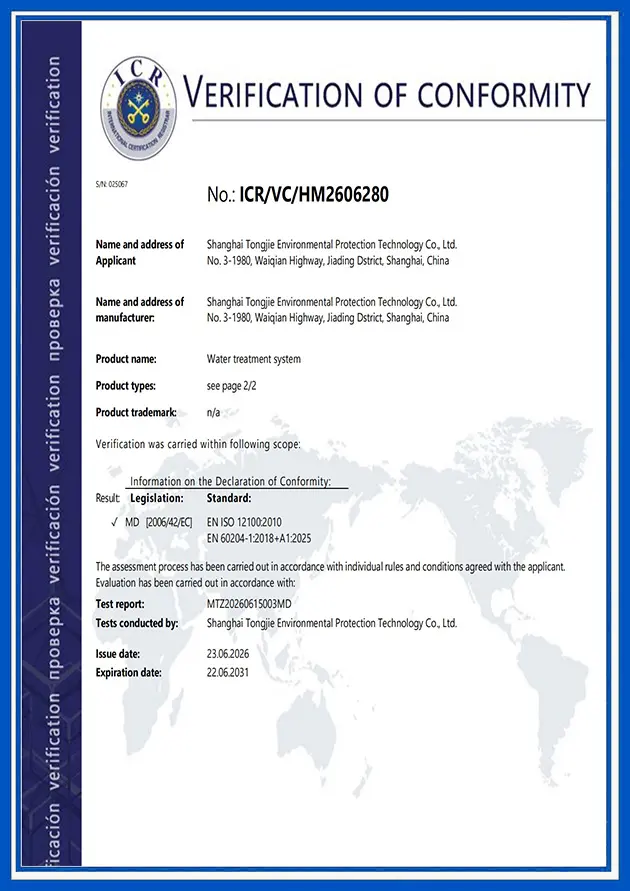
CE Conformity
European Directive Conformity for Industrial Pressure Machinery & Low-Voltage Controls
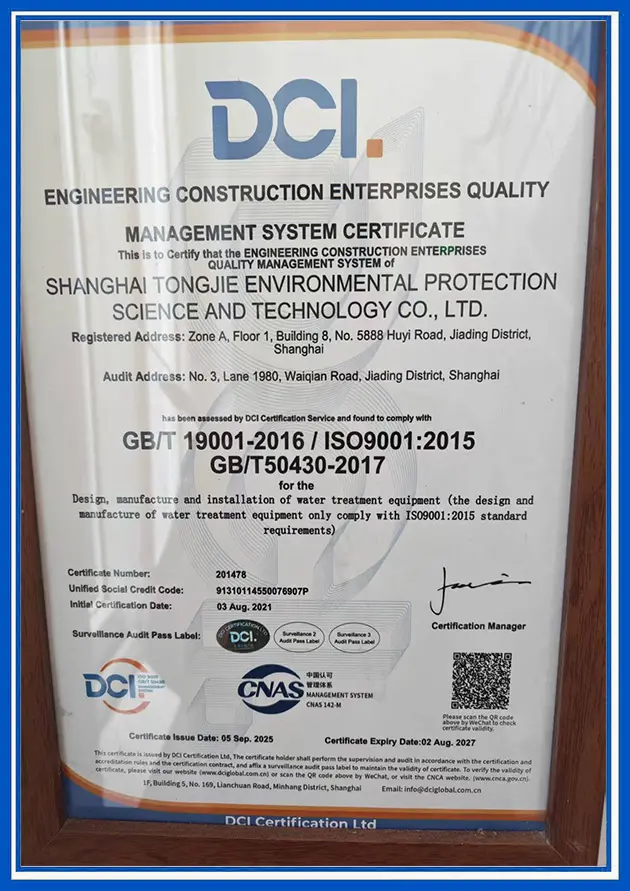
ISO 9001:2015
Certified Quality Management Systems Governing Design, Production, & Commissioning
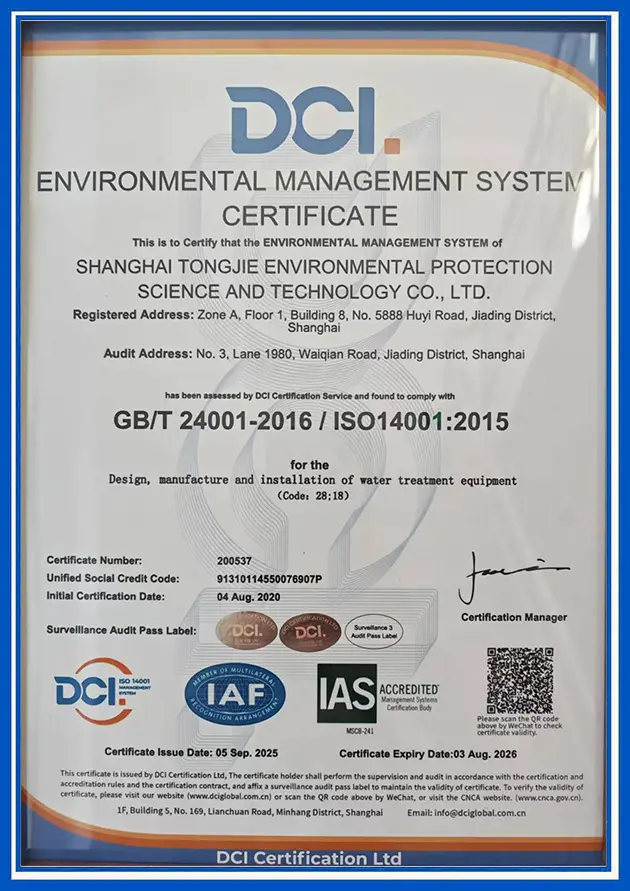
ISO 14001:2015
Environmental Management Framework Ensuring Sustainable Production Methodologies
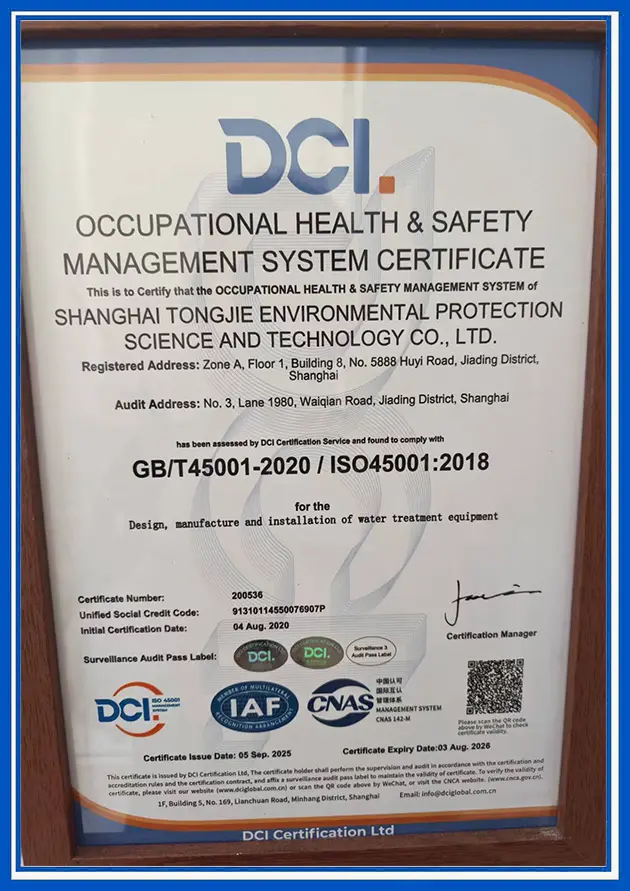
ISO 45001:2018
Occupational Health & Safety Standard Validating Heavy Manufacturing Operations





Frequently Asked Questions on Desalination Plant Engineering
Technical clarity for international EPC contractors, plant operators, and municipal water authorities.
How does Tongjie resolve boron rejection challenges in drinking water SWRO?
Boron occurs naturally in seawater as uncharged boric acid (B(OH)3), which easily passes through standard reverse osmosis membranes. Tongjie implements a specialized two-pass SWRO train where the permeate of the first pass is dosed with sodium hydroxide (NaOH) to raise pH above 9.5 to 10. This ionizes boric acid into negatively charged borate ions (B(OH)4-), which are rejected at greater than 99% efficiency by the second pass, comfortably achieving the WHO guideline (< 0.5 mg/L).
What is the standard life cycle of your SWRO membranes and cartridges?
With our automated multi-media sand filters and secondary 0.02-micron Ultrafiltration pre-treatment maintaining feed SDI < 2.5, Tongjie spiral-wound aromatic polyamide membrane elements typically achieve 5 to 7 years of continuous operational life. Spun-bonded 5-micron safety security filter cartridges are replaced on average every 3 to 6 months depending on local marine bio-turbidity events.
How are containerized plants protected against marine atmospheric corrosion?
All mobile desalination units are housed inside ISO shipping containers sandblasted to Sa 2.5 standard and coated with a 320-micron multi-coat marine epoxy/polyurethane C5-M system. Internally, air conditioning and dehumidification units maintain stable environments, and all high-pressure components use Super Duplex 2507 while low-pressure lines use schedule 80 PVC or CPVC.
Can Tongjie systems handle severe seawater temperature fluctuations?
Yes. Seawater viscosity and osmotic pressure shift drastically between winter and summer (e.g., 5°C to 38°C in northern coastal sites or the Persian Gulf). Our process engineering software generates dynamic membrane projections across seasonal limits. We incorporate variable frequency drives (VFD) on high-pressure pumps to modulate pressure smoothly without risking membrane compaction or flux starving.
What documentation and validation packages are supplied for export projects?
Every shipment includes an engineering binder: P&ID schematics, 3D GA drawings, electrical wiring diagrams, mass balance sheets, pump head calculations, weld maps with NDT/X-ray reports, raw material MTR (Mill Test Reports) for Super Duplex piping, CE declarations of conformity, factory hydrostatic test certificates, and complete operation & maintenance manuals.
How fast can a containerized plant be commissioned upon arrival at site?
Because all equipment is fully assembled, piped, wired, and factory-tested with simulated salinity at our Shanghai manufacturing facility, on-site commissioning typically takes just 5 to 10 days. The site team only needs to connect raw seawater intake piping, brine discharge, permeate lines, and primary power supply to the main breaker.
High-Pressure Membrane, Concentration & Offshore Skids
Engineered for high-salinity wastewater volume reduction, off-grid water production, and specialized food/industrial purified water.
Off-Grid Solar-Ready Containerized Seawater Desalination Plant
Explore Technical Specs
DTRO & STRO Hyper-Pressure Brine Concentration System
Explore Technical Specs
Boiler Feed High-Purity RO & EDI Demineralized Water Train
Explore Technical Specs
Compact Marine Skid Desalination Equipment for Ships & Resorts
Explore Technical Specs
Low-Conductivity Industrial Pure Water Generation Equipment
Explore Technical Specs
Dissolved Oxygen Removal Membrane Contactor Physical Degasser
Explore Technical Specs
High-Salinity Wastewater Concentration System (ZLD Upstream)
Explore Technical Specs
Food & Beverage Pure Water Generator System (Sanitary Standard)
Explore Technical SpecsSubmit Your Water Chemistry For Process Sizing
Provide your raw water analysis (TDS, temperature, SDI, iron, silica, and daily required output in m³/day). Our technical design team in Shanghai will formulate an engineering projection report, P&ID overview, and transparent factory-direct commercial proposal within 24 hours.